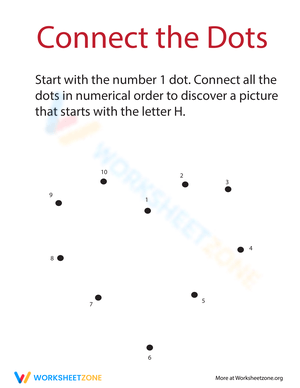
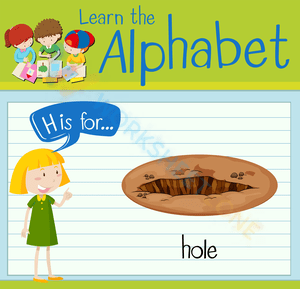
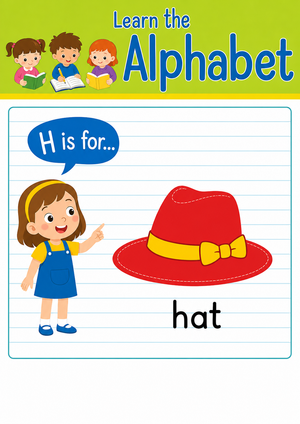
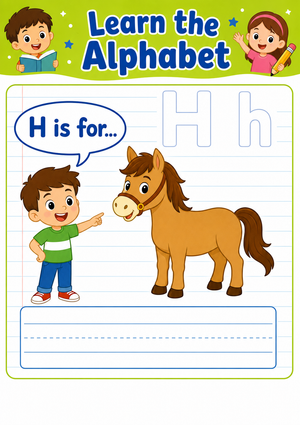
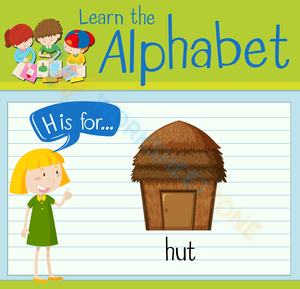
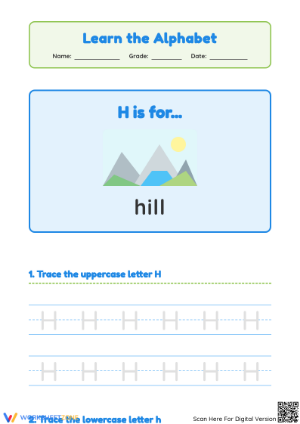
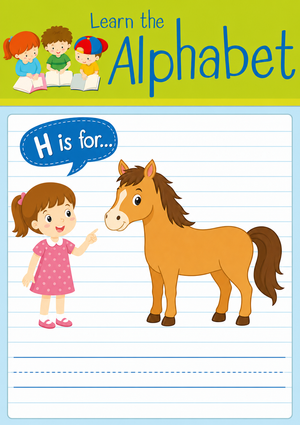
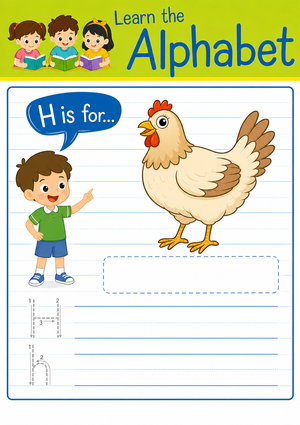
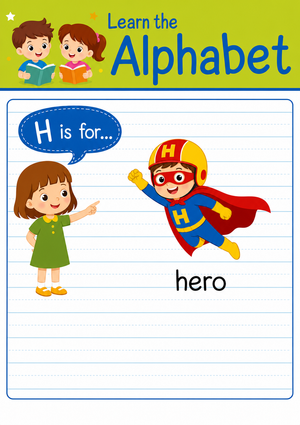
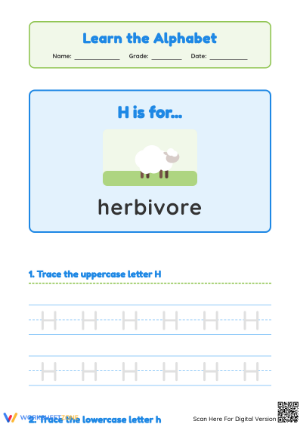
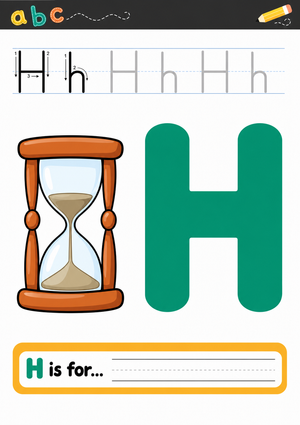
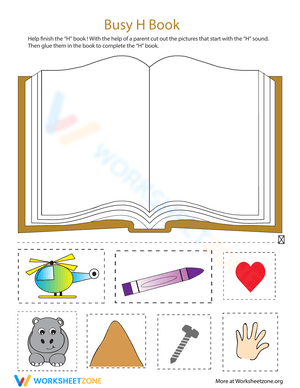
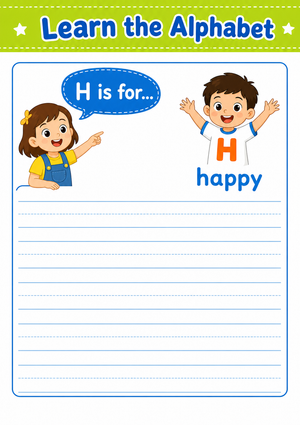
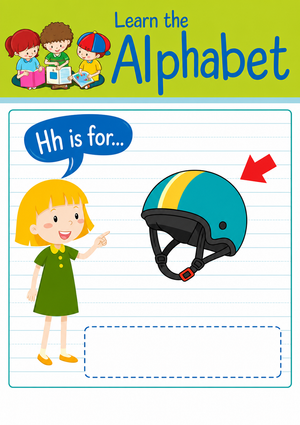
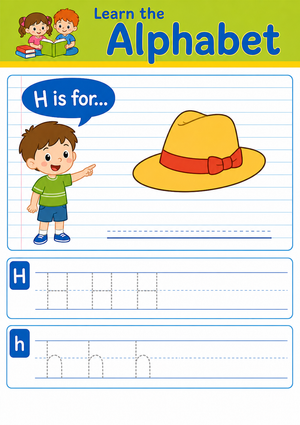
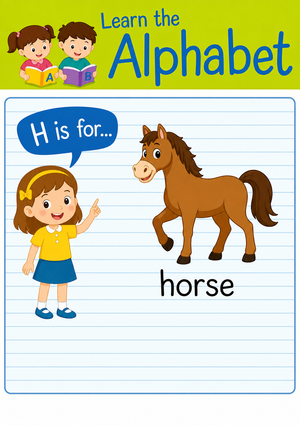
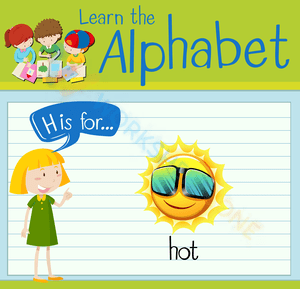
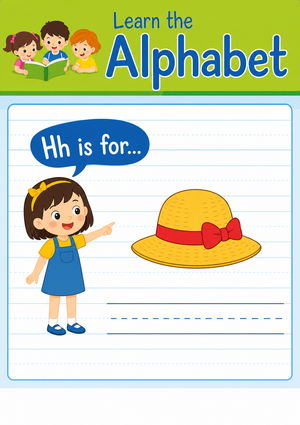
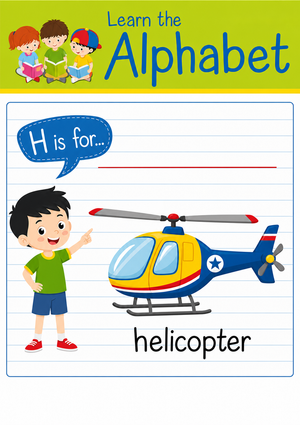
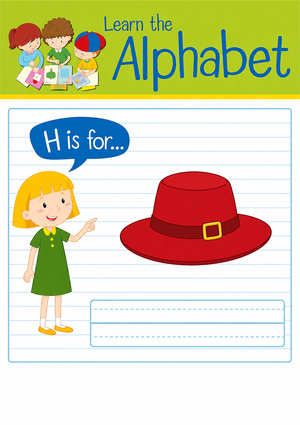
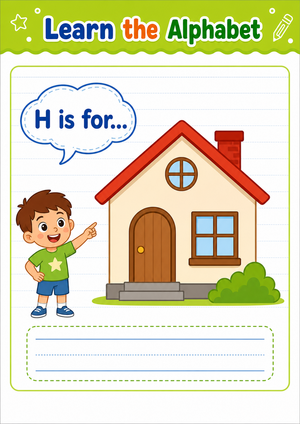
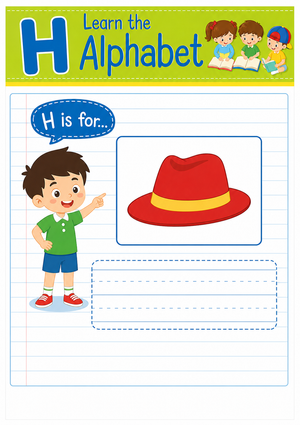
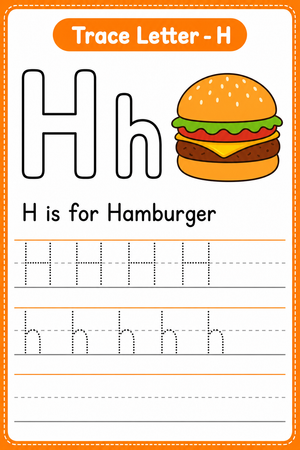
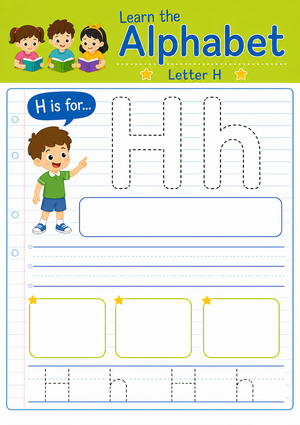
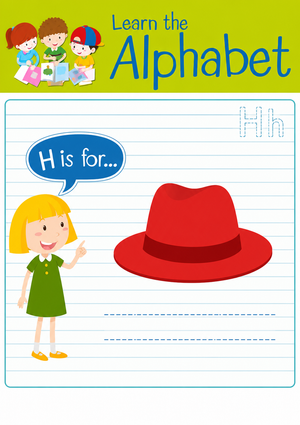
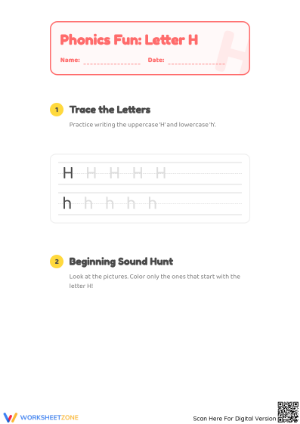
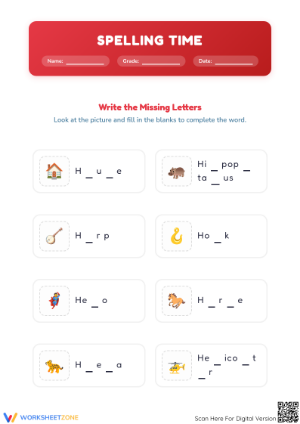
These kindergarten letter h beginning sound printable worksheets give teachers a focused way to build phonemic awareness around one of the more unusual consonant sounds in English — the breathy, aspirated /h/. Unlike stops such as /b/ or /p/, the /h/ sound cannot be sustained in isolation, which means oral warm-up and the written task have to work together. What each worksheet delivers is a picture-based activity with one narrow goal: hear the word, find the first sound, decide whether it matches Hh.
Mistakes Students Make Before the Pencil Moves
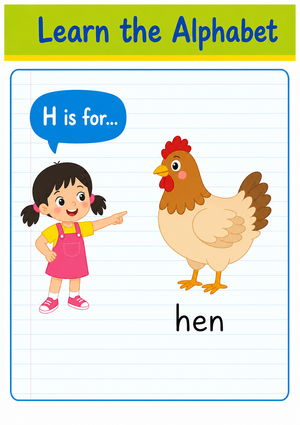
The most common error on these beginning-sound worksheets has nothing to do with the phoneme itself. It comes from picture-naming failure. A student who looks at a drawn hen and calls it a "bird" or "chicken" is now doing a vocabulary task, not a phonics task — and any data collected from that worksheet reflects word knowledge, not sound awareness. Previewing every image orally before students work independently is not optional warm-up; it is the step that makes the results usable for instruction.
A second pattern worth watching: some students — particularly those whose home language does not include /h/ as a distinct phoneme — drop the initial consonant entirely when they speak. "House" becomes "ouse"; "hand" becomes "and." They are not mishearing the picture name. They are producing it without the breath-onset consonant. A brief articulation check — have students hold a palm near their mouth and feel the air when they say h-hat — can surface this before they mark any answers.
Third, students sometimes circle images that begin with a vowel because most letter H target words put a vowel immediately after the initial sound. "Hat," "hen," "hippo," "house" — the vowel is what sticks in working memory. When "apple" or "elbow" appears as a nonexample, students tracking the vowel onset rather than the consonant will mark it as an H word. Naming the nonexamples clearly during the oral preview, and keeping the contrast obvious early on, reduces this error significantly.
What Each Worksheet Asks Students to Do
The tasks across this set stay tightly focused on one skill: connecting the spoken /h/ sound to the printed letters H and h. Each worksheet targets that connection through a different activity format, which lets teachers use multiple worksheets without repeating the same student experience.
- Picture circling: Students scan a row of images, name each one aloud, and circle only those that begin with /h/. This format works well immediately after oral modeling in a whole-group lesson.
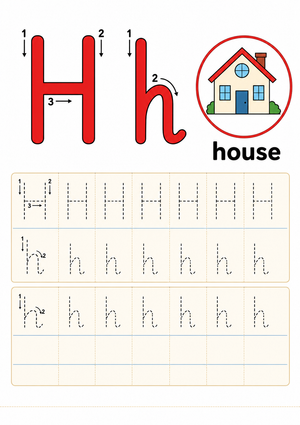
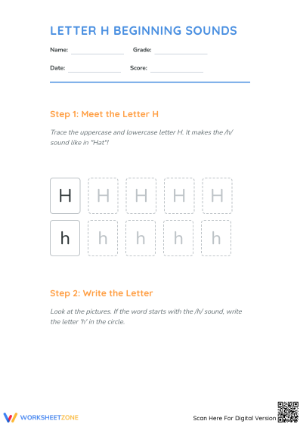
- Letter tracing with an oral cue: Students trace uppercase H and lowercase h while saying the sound, linking the motor act of writing to the phoneme itself.
- Color-by-sound: Students color only the /h/ pictures on a mixed-image worksheet, leaving non-H images blank. The coloring step slows students down enough to make a deliberate judgment before they act.
- Cut-and-paste sort: Students cut pictures apart and place them under an H column or a Not H column — the most kinesthetic option in the set and often the clearest for seeing who is sorting by sound versus by visual pattern.
- Line matching: Students draw a line from the letter Hh to pictures that begin with that sound. Quick to complete, this format works well as a brief independent check at the end of a lesson.
Fitting These Worksheets Into Your Lesson Planning
The set fits most naturally into the 8–10 minutes right after morning meeting, before the formal phonics block begins. Because each worksheet has one task and relies on familiar picture vocabulary, students can start without much setup. That makes the resources practical during the transition window when not everyone is ready for direct instruction but the day needs to move.
For whole-group lessons, show three to five picture cards before releasing any worksheet. Name each picture aloud as a class and stretch the first sound: h-h-hat, h-h-hand. Then hand out the worksheet so students apply the same listening they just practiced. The worksheet becomes the application step in a gradual-release sequence, not an isolated task dropped into a lesson without context.
Small-group reteaching is where these resources show their clearest diagnostic value. Sit with three or four students, point to each picture one at a time, and use a consistent prompt: "Does hen start with /h/?" Wait for a verbal answer before anyone marks anything. This reveals whether a student is identifying pictures correctly but still missing the initial phoneme — a distinction the completed worksheet alone would not show. Used that way, kindergarten letter h beginning sound printable worksheets become less of a practice activity and more of a real-time listening check, which changes how teachers respond to what they see.
Standard Alignment
RF.K.3a — Demonstrate basic knowledge of one-to-one letter-sound correspondences by producing the primary sound for each consonant. This is the core standard the set addresses. When students look at a picture of a hat, say the word, and mark the letter H, they are doing exactly what RF.K.3a describes. Tracing and matching tasks reinforce the pairing from both directions: sound to letter and letter to sound.
RF.K.2d — Isolate and pronounce the initial sound in spoken words. This is the phonemic awareness prerequisite. Students who cannot yet isolate an initial sound in speech will struggle to match a picture to a letter on the page. These worksheets are most effective after RF.K.2d work has begun orally. Teachers who introduce picture-based letter tasks before students can isolate phonemes in speech will see high error rates — not because the format is wrong, but because the oral groundwork is not yet in place.
Adapting the Set for Different Learners
For students still developing phoneme isolation, narrow the field. Use only three or four pictures per worksheet, stick to very high-frequency vocabulary — hat, hand, house — and preview each image together before releasing students to work. Fewer choices reduce the chance that an unfamiliar picture name creates a false negative in what should be a phonics task.
Students who are moving faster through beginning-sound work can go further with each worksheet. After completing the core task, ask them to write one H word they know on a handwriting line at the bottom, or sort pictures by the vowel that follows /h/ — "hat" and "hand" in one group versus "hen" and "hill" in another. That extension keeps them in phonics territory without needing a separate activity.
For English language learners, kindergarten letter h beginning sound printable worksheets are most reliable when the picture vocabulary has already been introduced. Two minutes with a student before independent work — naming every image on the worksheet together — separates the language demand from the phonics demand. A student who does not recognize a drawn hen in English is not practicing beginning sounds; they are working out what the image means. That distinction matters when teachers interpret results.
Frequently Asked Questions
What picture vocabulary appears most often on letter H worksheets for Kindergarten?
The most dependable choices are words students recognize without hesitation: hat, hen, hand, house, horse, and hippo. Words like "hinge" or "harbor" are phonemically correct but rarely useful because five-year-olds do not typically carry those images in their vocabulary yet. Clear pictures tied to words students already know keep the task focused on the sound, not on naming a drawing.
Should these worksheets come before or after oral phoneme practice?
After. Students need to isolate and say /h/ in speech before a printed worksheet has much instructional value. Teachers who introduce a worksheet on the same day they first model the sound will often see high error rates — not because the format is wrong, but because the oral groundwork has not been laid. Use whole-group and small-group oral practice for at least one or two sessions before bringing in written tasks.
Can these worksheets serve as a quick informal assessment?
Yes, with one condition: the pictures must be previewed first. A worksheet where students name their own pictures introduces too much variability for the data to mean anything reliable. Preview the images together, then send students to work independently. The results show who can identify /h/ as a beginning sound without a prompt — which is exactly what RF.K.3a asks for.
How do these worksheets fit within a structured phonics program?
Most structured programs introduce letter H in the first trimester of Kindergarten, often alongside early CVC work. Kindergarten letter h beginning sound printable worksheets work as supplemental practice and review material within any program sequence — not a replacement for explicit phonics instruction, but support for the repeated exposure that helps early sound-letter connections hold. Centers, morning warm-ups, and take-home review are the most natural placements.