


























Views
Downloads

Preschool Letter A — Printable No-Prep Worksheet
Paste this activity's link or code into your existing LMS (Google Classroom, Canvas, Teams, Schoology, Moodle, etc.).
Students can open and work on the activity right away, with no student login required.
You'll still be able to track student progress and results from your teacher account.
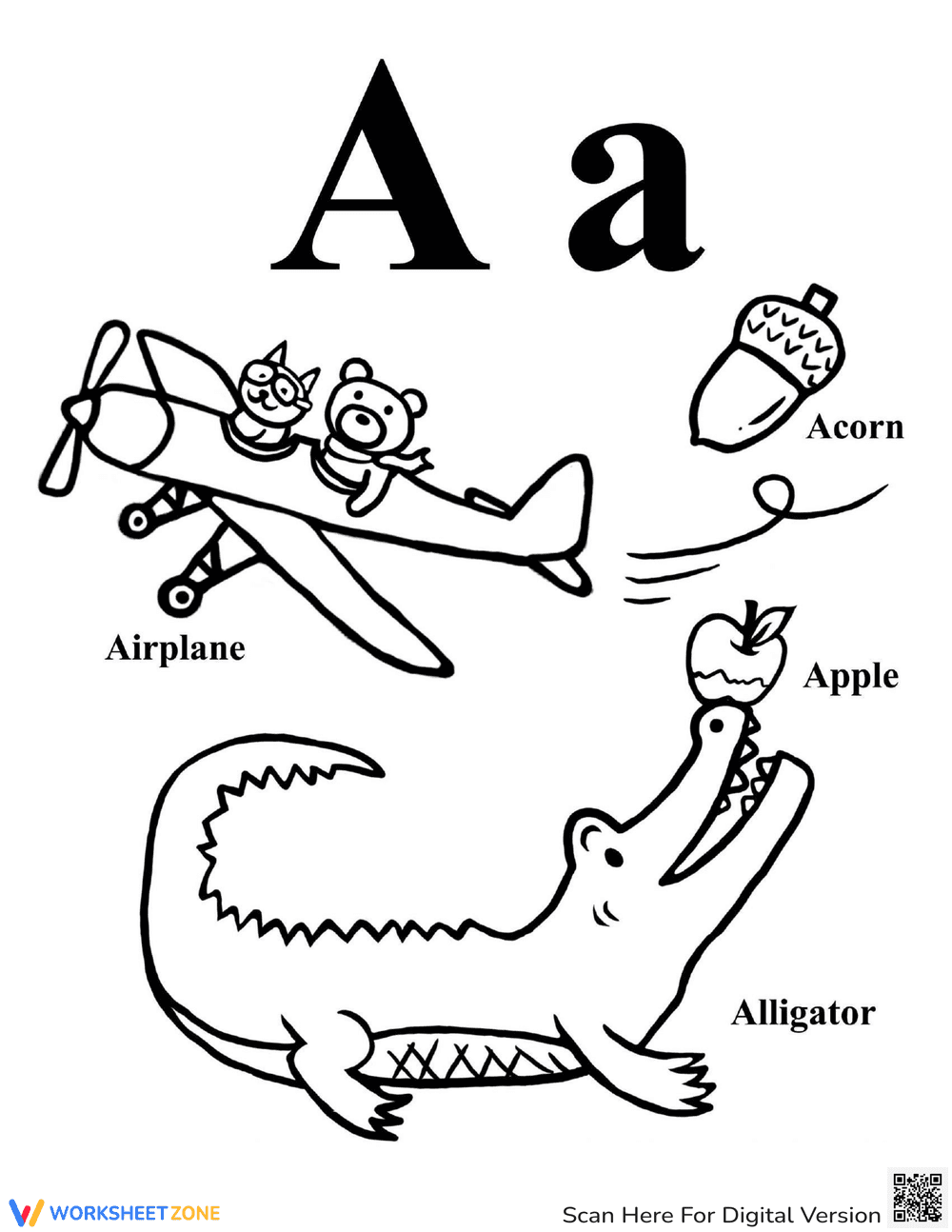
This printable Preschool ELA worksheet helps early learners master letter recognition and initial letter sounds. Students color four familiar objects starting with the letter A, building phonemic awareness and fine motor skills. This activity connects visual cues with letter shapes to reinforce early reading foundations.
At a Glance
- Grade: Preschool · Subject: Early Literacy
- Standard:
CCSS.ELA-LITERACY.RF.K.1.D— Recognize and name uppercase and lowercase letter A- Skill Focus: Letter A recognition and initial sound identification
- Format: 1 page · 4 tasks · No answer key required · PDF
- Best For: Morning work or independent letter practice
- Time: 10–15 minutes
This single-page PDF features large uppercase "A" and lowercase "a" letters at the top to establish visual recognition. Below the letters, students find four clear, high-quality illustrations to color: an airplane, an acorn, an apple, and an alligator. Each illustration is paired with its printed word label, helping children associate the written word with the corresponding image and the starting letter sound.
This resource requires zero teacher preparation, making it ideal for busy classrooms or sudden sub plans.
- Print (1 minute): Select the single-page PDF and print enough copies for your class. No collating or stapling needed.
- Distribute (1 minute): Hand out the sheets along with crayons, colored pencils, or markers.
- Review (5 minutes): Guide students to point to each object, say the word aloud, and emphasize the initial /a/ sound before they begin coloring.
Total teacher prep time is under 2 minutes, allowing you to transition smoothly into your phonics block.
This worksheet aligns directly with `CCSS.ELA-LITERACY.RF.K.1.D`, which focuses on recognizing and naming uppercase and lowercase letters of the alphabet. Additionally, it supports `CCSS.ELA-LITERACY.RF.K.3.A` by introducing the common short vowel sound associated with the letter A. Both standard codes can be copied directly into lesson plans, IEP goals, or district curriculum mapping tools.
Use this worksheet during your direct instruction phonics block as a guided practice activity. Introduce the letter A, model the sound, and have students color the items as you read the labels together. Alternatively, assign it as a formative assessment during independent center rotations. Observe whether students can independently identify the letter A and name the objects to gauge their phonemic awareness. Expect completion within 10 to 15 minutes.
This worksheet is designed for preschool and pre-kindergarten students who are beginning their letter recognition journey. It serves as an excellent resource for English language learners needing vocabulary support. Pair this worksheet with a read-aloud book about the letter A or an anchor chart displaying words starting with the letter A to reinforce the lesson.
Early literacy development relies heavily on multisensory activities that combine visual, auditory, and fine motor tasks. According to research from Fisher & Frey (2014) on gradual release of responsibility, scaffolding letter recognition with clear visual illustrations helps young learners build strong orthographic mapping skills. This worksheet targets standard CCSS.ELA-LITERACY.RF.K.1.D by presenting uppercase and lowercase letter forms alongside concrete vocabulary words like apple and alligator. By coloring these images, preschool students engage in active learning that reinforces the connection between graphemes and phonemes. This structured approach ensures that children develop the foundational phonics skills necessary for reading readiness. Educators can confidently integrate this resource into early childhood curricula to support systematic letter introduction and phonological awareness development.


