


























Views
Downloads
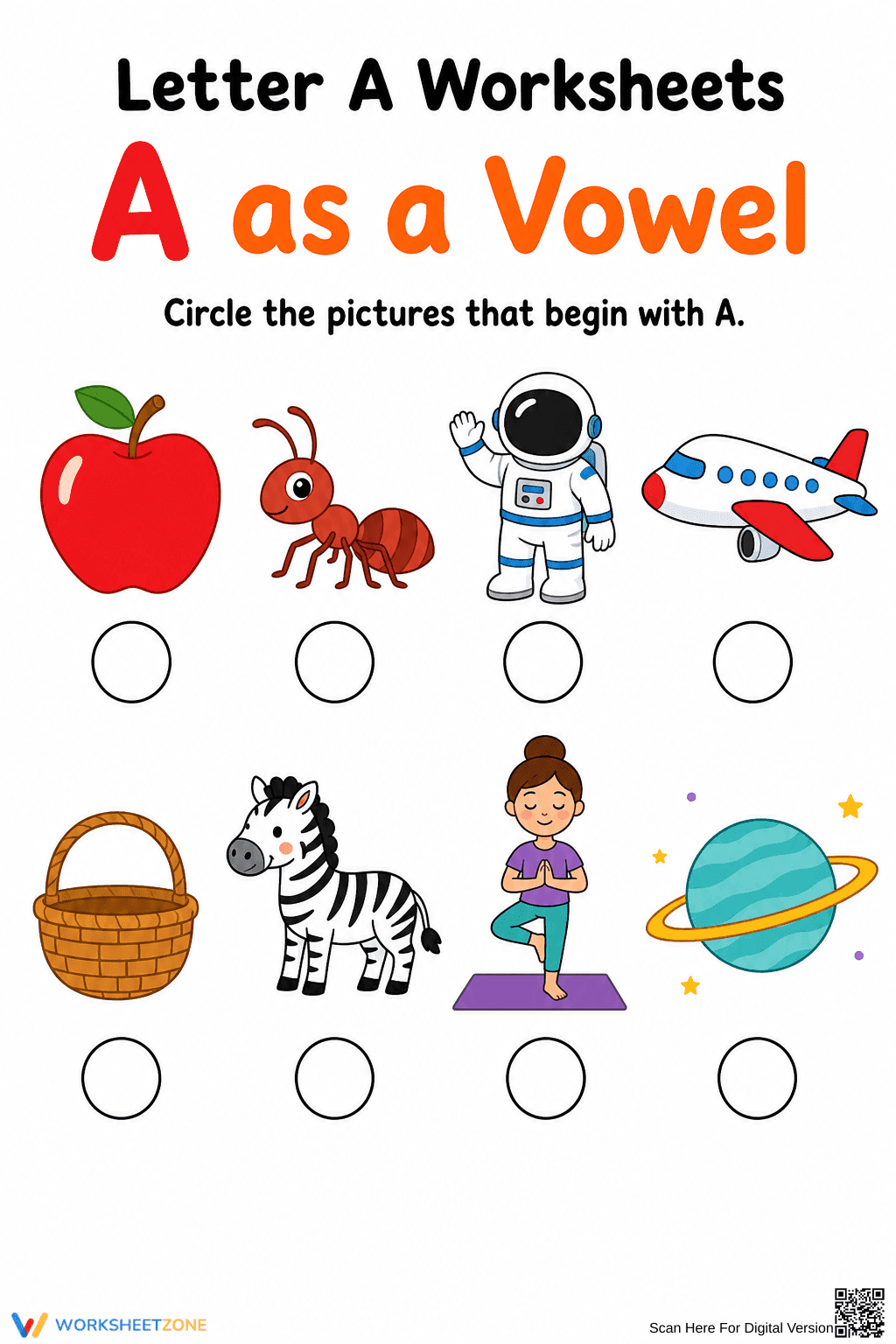

Essential Letter A Beginning Sound Worksheet | Kindergarten
Paste this activity's link or code into your existing LMS (Google Classroom, Canvas, Teams, Schoology, Moodle, etc.).
Students can open and work on the activity right away, with no student login required.
You'll still be able to track student progress and results from your teacher account.
Mastering the short vowel sound for the letter A is a foundational milestone in early literacy. This worksheet provides targeted practice for Kindergarten students to recognize and isolate the beginning /a/ sound through visual identification. By connecting the letter A to familiar objects like apples and astronauts, students strengthen their phonemic awareness and prepare for successful decoding.
At a Glance
- Grade: Kindergarten · Subject: ELA Phonics
- Standard:
CCSS.ELA-LITERACY.RF.K.3.A— Demonstrate basic knowledge of one-to-one letter-sound correspondences for vowels and consonants- Skill Focus: Beginning Letter A Sound
- Format: 1 page · 8 problems · Answer key included · PDF
- Best For: Independent phonics practice or morning work
- Time: 5–10 minutes
The worksheet features a clean, engaging layout with 8 high-quality illustrations. Students are presented with a mix of A words, such as an apple, ant, astronaut, and airplane, alongside non-A words like a basket and zebra to test their discrimination skills. Below each image is a clear circle for marking, and the document includes a full answer key for quick grading or self-correction.
This resource is designed for a zero-prep classroom environment. Step 1: Print the single-page PDF in less than 30 seconds. Step 2: Distribute to students during your phonics block or as a transition activity. Step 3: Review the answers as a whole group to reinforce the /a/ sound. Total teacher preparation time is under 2 minutes, making this an ideal solution for busy mornings or unexpected substitute teacher plans.
This activity is directly aligned with `CCSS.ELA-LITERACY.RF.K.3.A`, which requires students to demonstrate basic knowledge of one-to-one letter-sound correspondences. It specifically targets the initial vowel sound, a core component of the Kindergarten ELA curriculum. This standard code can be copied directly into lesson plans, IEP goals, or district curriculum mapping tools.
Use this worksheet as a formative assessment after introducing the letter A. Observe students as they work to see if they can name the objects and hear the initial sound. It also works well as a quiet bell-ringer activity to settle the class. Expected completion time is between 5 and 10 minutes depending on the student's familiarity with the vocabulary.
This resource is tailored for Preschool and Kindergarten students who are just beginning their journey into phonics. It is also suitable for Grade 1 students needing remedial support or English Language Learners building basic vocabulary. Pair this worksheet with a letter A anchor chart or a read-aloud book focused on vowel sounds for a complete instructional experience.
According to research by Fisher & Frey (2014) on the gradual release of responsibility, early literacy success depends heavily on explicit phonemic awareness and the ability to isolate beginning sounds. This worksheet aligns with CCSS.ELA-LITERACY.RF.K.3.A by requiring students to demonstrate basic knowledge of one-to-one letter-sound correspondences. By evaluating 8 distinct visual stimuli, learners practice the critical skill of mapping the phoneme /a/ to its grapheme. Studies from the NAEP suggest that early mastery of vowel sounds is a significant predictor of later reading fluency. This resource provides the structured, low-stakes practice necessary for students to build confidence in their phonetic decoding abilities. The clear visual cues ensure that even emerging readers can engage with the content independently, making it a reliable tool for formative assessment in early childhood classrooms.


