


























Views
Downloads
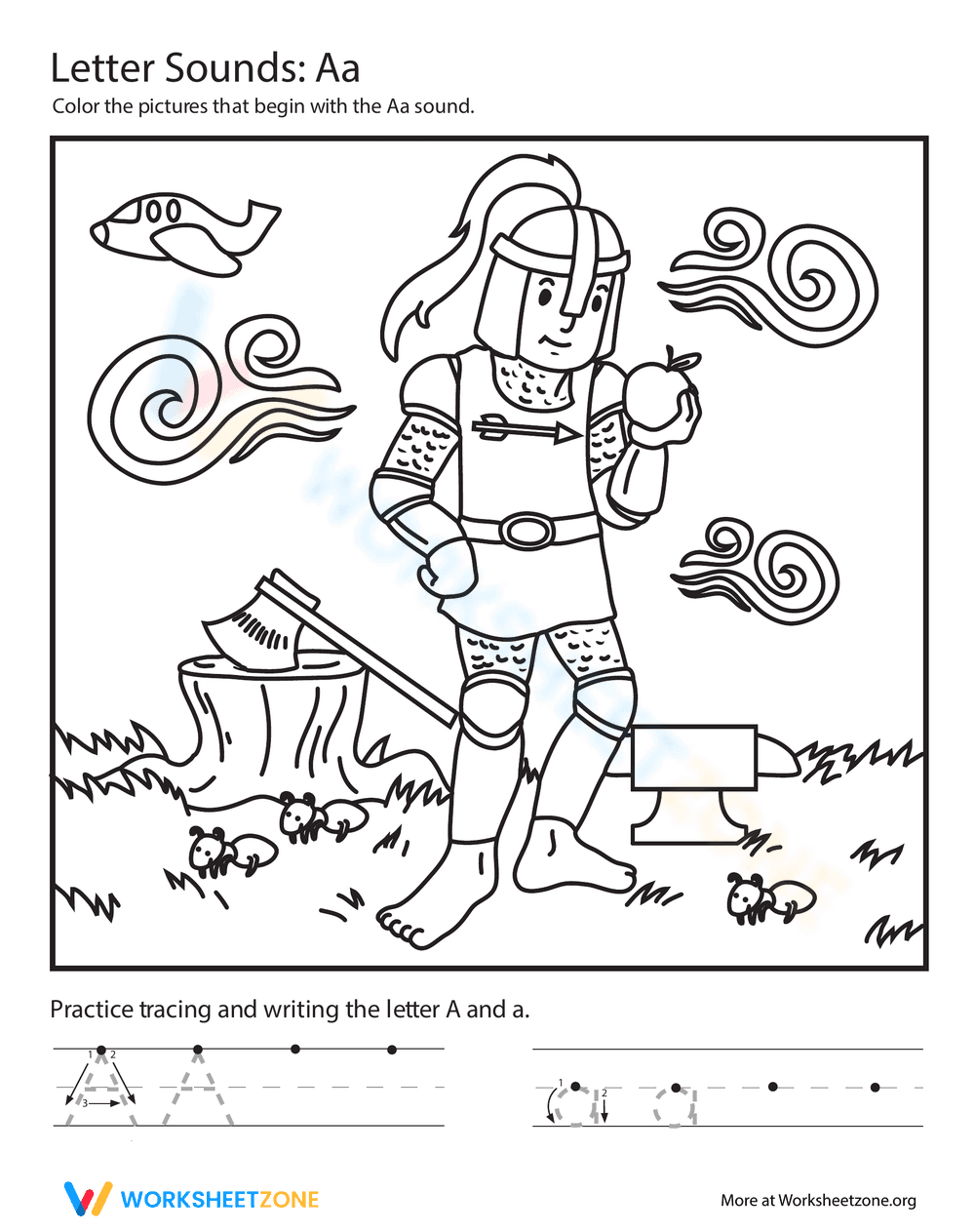

Grade K Letter A Sound — Printable No-Prep Worksheet
Paste this activity's link or code into your existing LMS (Google Classroom, Canvas, Teams, Schoology, Moodle, etc.).
Students can open and work on the activity right away, with no student login required.
You'll still be able to track student progress and results from your teacher account.
This foundational phonics worksheet develops early literacy by connecting letter sound recognition with handwriting practice. Kindergarten students identify and color pictures beginning with the /a/ sound, then transition to tracing uppercase and lowercase letters. This approach solidifies letter-sound correspondence while establishing proper stroke mechanics.
At a Glance
- Grade: Kindergarten · Subject: Phonics
- Standard:
CCSS.ELA-LITERACY.RF.K.3.A— Demonstrate basic knowledge of one-to-one letter-sound correspondences- Skill Focus: Letter A beginning sounds and letter tracing
- Format: 1 page · 14 problems · Answer key included · PDF
- Best For: Independent practice and morning work
- Time: 15–20 minutes
This single-page resource combines a visual search activity with structured handwriting practice. The top half features an illustrated scene containing six items beginning with the letter A sound: apple, axe, ant, airplane, anvil, and archer. The bottom half provides explicit handwriting instruction with numbered directional arrows for uppercase A and lowercase a, followed by dotted starting points. A complete answer key is included.
Zero-Prep Classroom Workflow
- Print (30 seconds): Generate the single-page PDF for the class without needing specialized materials.
- Distribute (30 seconds): Hand out the activity alongside crayons and pencils. The clear layout requires minimal verbal instruction.
- Review (1 minute): Use the provided answer key to quickly check student work during independent rotations.
With a total teacher preparation time under two minutes, this worksheet serves as an excellent emergency substitute plan or morning work assignment.
Standards Alignment
This worksheet aligns directly to CCSS.ELA-LITERACY.RF.K.3.A, requiring students to demonstrate basic knowledge of one-to-one letter-sound correspondences. By pairing phoneme identification with physical letter formation, the activity reinforces the link between the spoken phoneme /a/ and its written grapheme. Both standard codes can be copied directly into lesson plans, IEP goals, or district curriculum mapping tools.
How to Use It
This resource functions effectively during literacy centers or following direct instruction on the letter A. Teachers can guide students through pronouncing each picture's name before independent coloring. For formative assessment, observe students as they trace to ensure they follow the numbered directional arrows rather than forming letters from the bottom up. Expected completion time ranges from 15 to 20 minutes.
Who It's For
This worksheet is designed for kindergarten students mastering early phonics and handwriting fundamentals. For students requiring additional support, teachers can highlight the starting dots on the tracing line with a marker. This activity pairs naturally with classroom alphabet anchor charts or introductory phonemic awareness picture books.
Establishing robust letter-sound correspondence through integrated multimodal practice is essential for early reading acquisition. This worksheet targets CCSS.ELA-LITERACY.RF.K.3.A by combining visual phoneme identification with tactile letter tracing, ensuring students connect the verbal /a/ sound directly to its written symbol. According to research from Fisher & Frey (2014), instructional materials that integrate gradual release mechanics and immediate application significantly improve skill retention in early foundational literacy. By engaging students in simultaneous phoneme recognition and fine motor execution, the activity strengthens neural pathways associated with decoding and encoding. This dual-modality approach ensures young learners build the automaticity required for future reading fluency. The structured format supports independent mastery while providing educators with clear, actionable evidence of early literacy progress.


