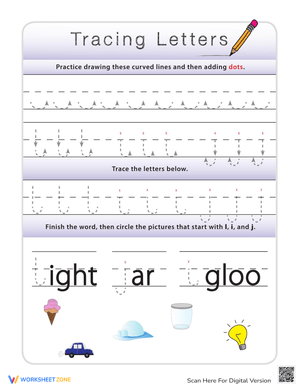
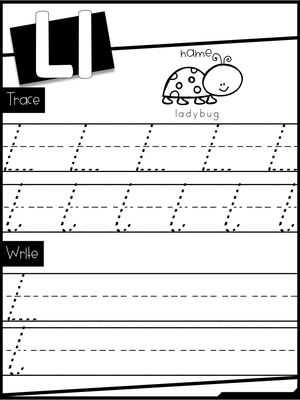
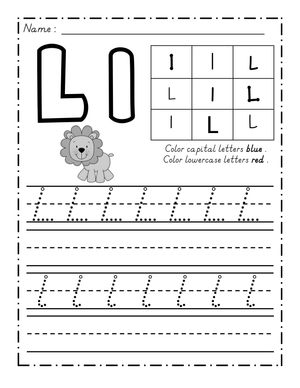
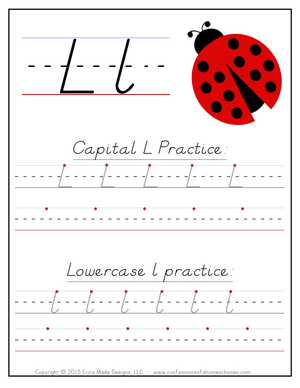
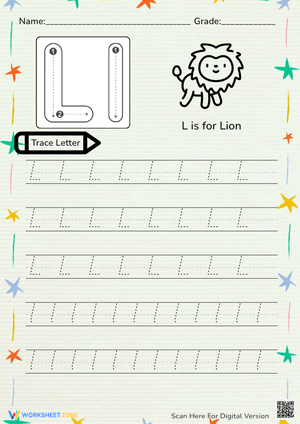
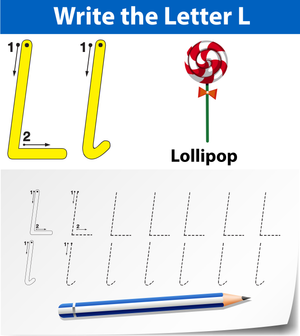
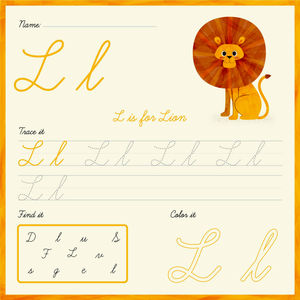
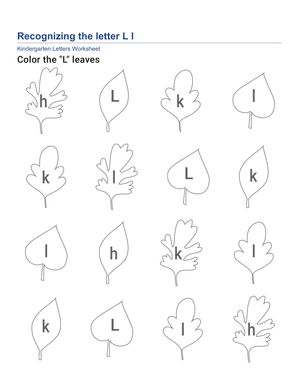
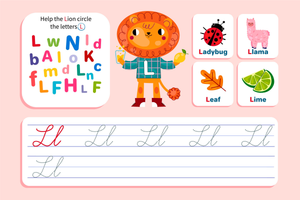
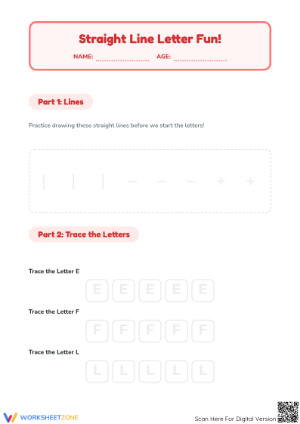
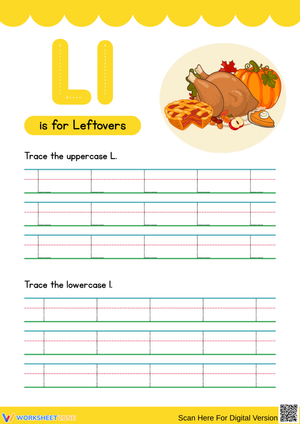
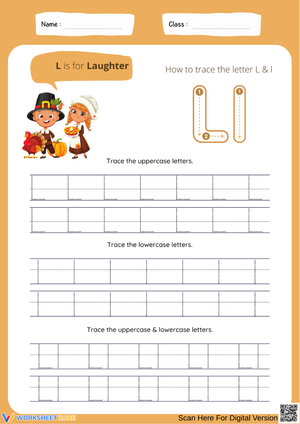
Letter L is one of the friendliest letters to teach early in a kindergarten alphabet rotation. Its two straight strokes make it a natural follow-up to letters like I and T, giving students a chance to build confidence before tackling curves and diagonals. When you introduce letter L handwriting worksheets for kindergarten as part of a broader unit, students transfer the top-to-bottom, left-to-right motion they already practiced, rather than learning an entirely new motor pattern. This kind of sequencing keeps cognitive load low so children can focus on pencil control instead of relearning basic direction rules with every new letter.
Building the Fine Motor Foundation Before Pencil Practice
Before handing out a tracing sheet, spend a few minutes on warm-up activities that prepare small hand muscles for controlled strokes. Playdough rolling, finger tracing in sand trays, and air writing all activate the same muscle groups needed for a stable pencil grip. Kindergartners are still developing in-hand manipulation and finger isolation, so skipping this step often leads to shaky lines and inconsistent letter size on the worksheet itself.
Research on preschool-age children has found that fine motor skills such as finger accuracy and in-hand manipulation are directly linked to how clearly and consistently children form letters on paper, which means a five-minute warm-up routine can measurably change the quality of a child's L before the pencil ever touches the worksheet.
Teaching Correct Letter L Stroke Order Step by Step
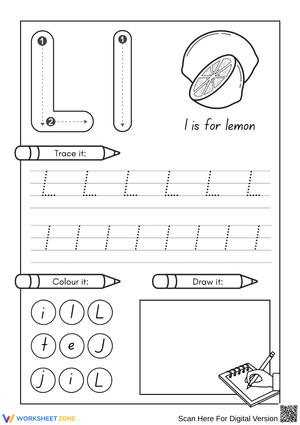
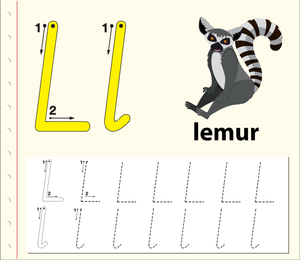
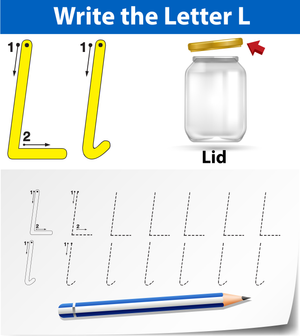
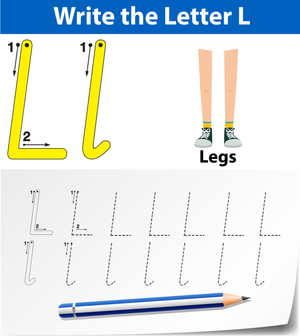
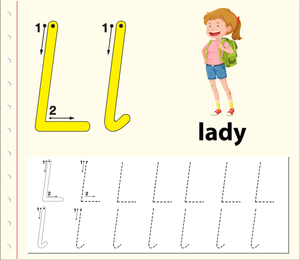
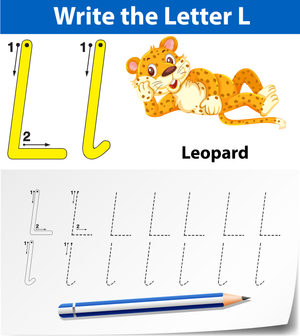
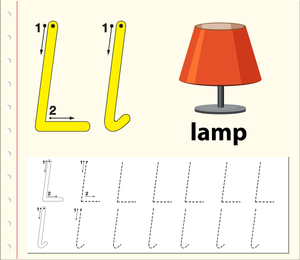
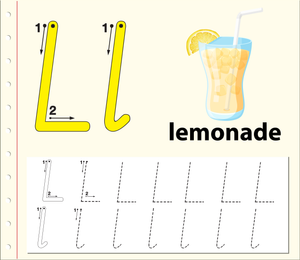
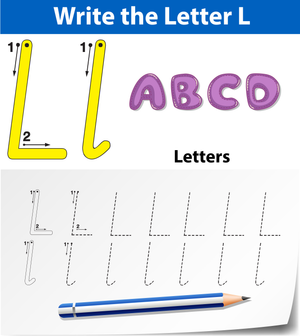
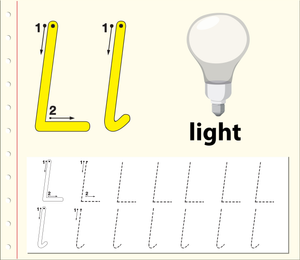
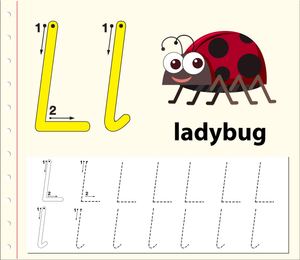
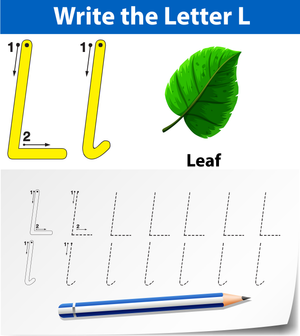
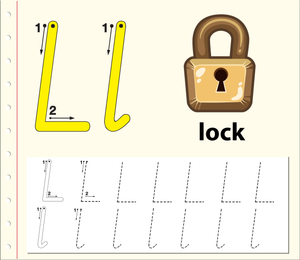
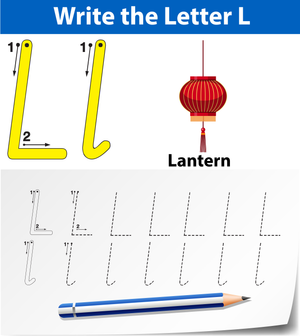
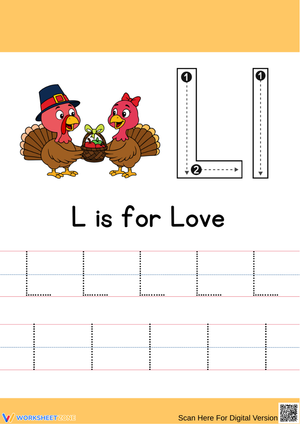
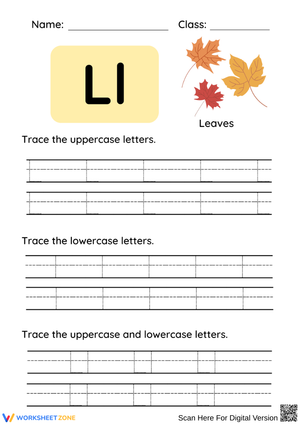
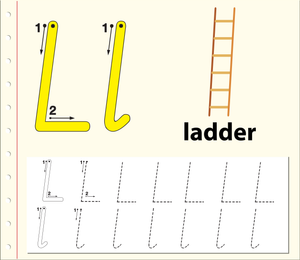
Model the uppercase L first: a straight vertical line drawn top to bottom, followed by a straight horizontal line drawn left to right along the bottom. Say the motion out loud as you draw, such as down then across, so students connect language to movement. Once uppercase L feels automatic, introduce lowercase l as a single tall vertical stroke. Letter L handwriting worksheets for kindergarten that include directional arrows and starting dots reinforce this same stroke order independently, which matters because children who practice the wrong stroke order tend to repeat that error even after they can produce a recognizable letter shape.
Teacher Tips for Letter L Handwriting Practice
- Model the letter on a whiteboard or chart paper before distributing worksheets so students see the stroke order at full size.
- Use a formation chant like down, across for uppercase L to give students a verbal cue they can repeat independently.
- Rotate practice formats across the week: tracing on day one, copying with a model on day two, and independent writing on day three.
- Keep a few adapted versions on hand, such as thicker guidelines or shorter practice rows, so every student can complete the page at their own pace without singling anyone out.
- Send a take-home version of the worksheet for extra repetition, since most kindergartners need multiple exposures to a letter before formation becomes automatic.
Frequently Asked Questions
1. How should teachers introduce letter L formation to kindergartners for the first time?
Start with a whole-group demonstration on a large surface like a whiteboard, saying the stroke order aloud as you write. Have students trace the letter in the air or on a table before moving to a worksheet, so the motion is familiar before pencil and paper are involved.
2. What common mistakes do kindergartners make when writing letter L and how can worksheets help correct them?
Common errors include drawing the horizontal stroke first, making the vertical line too short, or placing the horizontal stroke in the middle instead of the bottom. Worksheets with numbered arrows and starting dots give students a visual reference that corrects these habits during independent practice.
3. How many times should students practice letter L before moving to the next letter?
Most kindergarten programs allow two to four practice sessions across a few days, combining tracing, copying, and independent writing. Students who still reverse strokes or struggle with sizing after this window likely need an extra guided session before advancing.
4. How can letter L worksheets be adapted for students with different fine motor skill levels?
Offer versions with thicker starting lines, larger practice boxes, or fewer repetitions per row. Some students benefit from tracing with a finger or highlighter before using a pencil, while others are ready for standard-lined practice rows right away.
5. How do letter L handwriting worksheets support broader literacy and phonics goals?
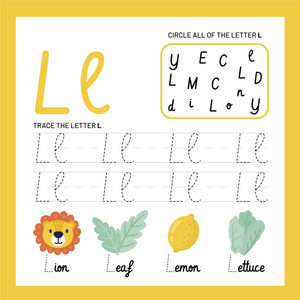
Pairing letter formation with the /l/ sound and beginning-sound pictures strengthens the connection between print and speech. This dual practice supports print awareness, which research links to emerging reading skills, making handwriting practice a meaningful part of early literacy rather than an isolated motor task.