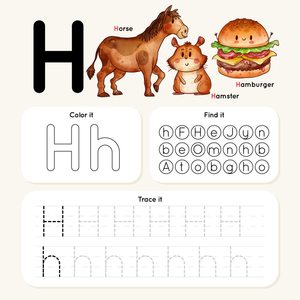
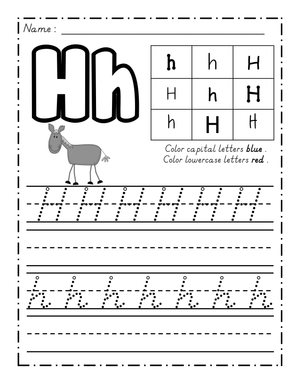
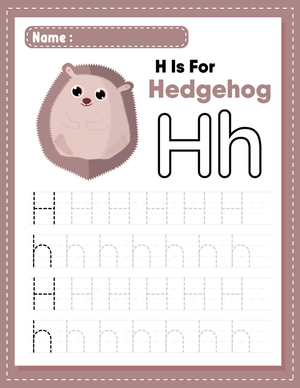
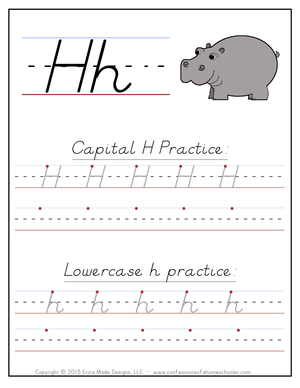
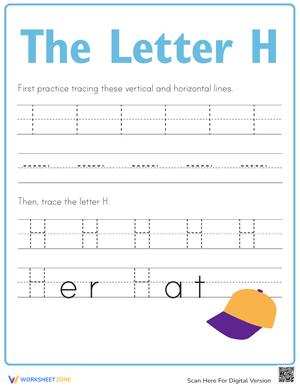
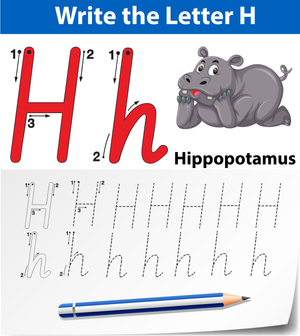
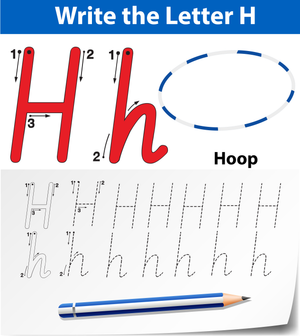
Kindergarten teachers introducing letter H often notice two very different challenges at once: some students confuse the two vertical lines with letter N or M, while others rush the horizontal crossbar and end up with a shape that barely resembles an H. Letter H handwriting worksheets for kindergarten give you a structured way to slow that process down, so students build accurate stroke order before speed becomes the goal.
Why Letter H Deserves Dedicated Practice Time
Letter H is one of the more geometrically demanding letters in the early alphabet sequence. Uppercase H requires two separate vertical lines plus a horizontal crossbar connecting them in the middle, while lowercase h asks students to start with a tall vertical stroke and then add a rounded hump. That combination of straight lines and a curve makes H a useful checkpoint letter: if a student can form H correctly, they are usually managing both line control and spatial planning on the page.
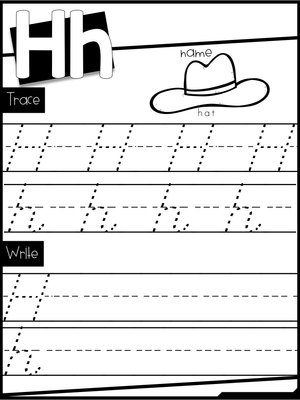
Because kindergartners are still building basic pencil control, worksheets that isolate this one letter let you watch stroke order, starting point, and directionality without the added demand of writing whole words. That focused repetition is what turns a shaky first attempt into a habit the student can produce without thinking about it.
Connecting Letter H Practice to Alphabet Recognition Standards
Letter H handwriting worksheets do more than build fine motor skill; they also support the alphabet recognition expectations kindergarten teachers are already tracking. CCSS.ELA-LITERACY.RF.K.1.D calls for kindergartners to recognize and name all upper- and lowercase letters of the alphabet by the end of the year, and pairing visual recognition with physical formation reinforces both goals in the same lesson block.
When students trace and name a letter in the same sitting, they are rehearsing the letter through two different memory pathways at once, visual and motor, rather than treating recognition and writing as separate skills taught on separate days. For a letter like H, which shares visual features with N and M, that dual rehearsal is especially useful for reducing letter confusion during independent writing later in the year.
Modeling Correct Stroke Order Before Handing Out Worksheets
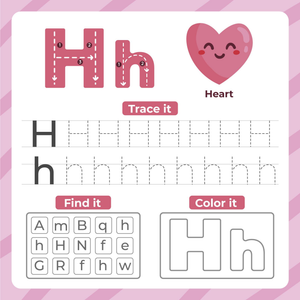
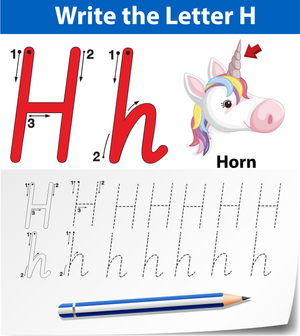
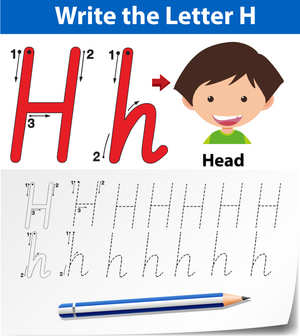
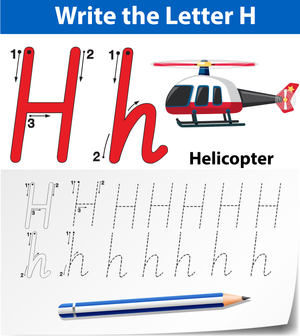
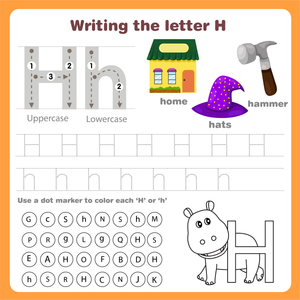
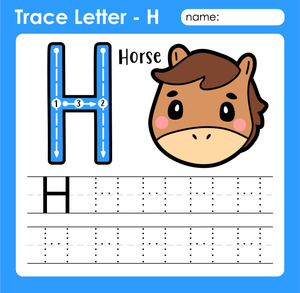
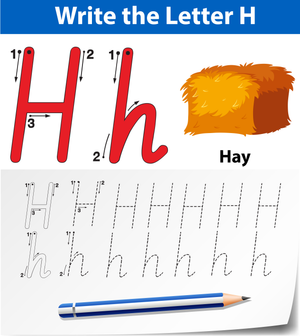
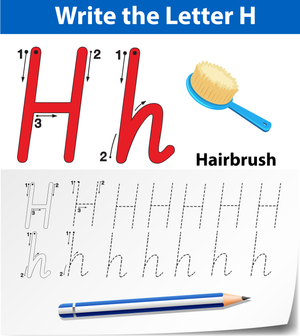
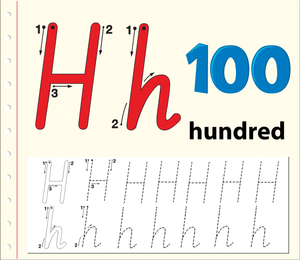
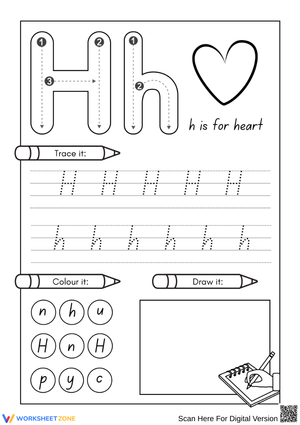
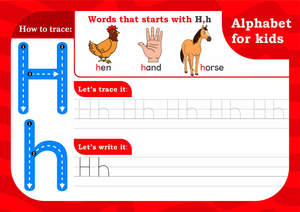
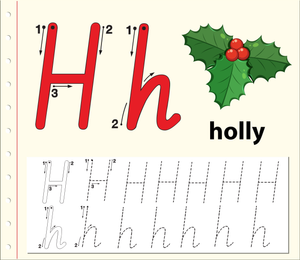
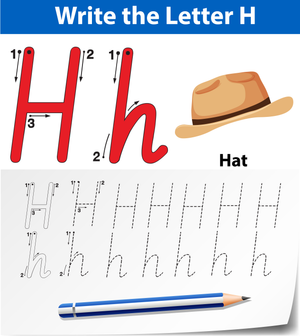
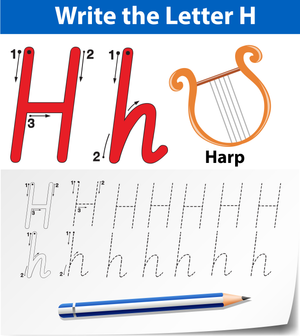
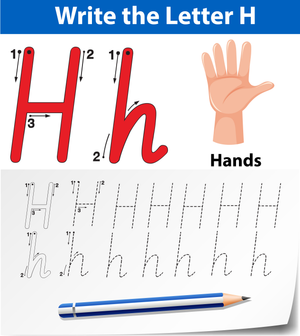
A worksheet is only as effective as the modeling that comes before it. Before students pick up a pencil, walk through the stroke order on a whiteboard or chart paper: for uppercase H, down the first vertical line, down the second vertical line, then across the middle for the crossbar. For lowercase h, down the tall vertical line, then up and over into the hump.
Research on early handwriting instruction is consistent on this point: the more often a child practices a letter formation incorrectly, the harder that motor habit is to correct later. That makes explicit modeling of stroke order essential from the very first exposure, not something to fix after mistakes appear on a worksheet. A quick three-step chant, such as down, down, across, gives students a verbal cue to repeat as they write, which anchors the motor sequence in language they can recall independently.
Classroom Implementation
Letter H worksheets fit most naturally into a letter-of-the-week or systematic alphabet sequence rather than as an isolated activity. A few practical notes for pacing:
- Plan for five to ten minutes of focused letter H practice per session rather than one long block; kindergarten fine motor stamina is limited, and shorter, more frequent practice tends to hold formation quality better than a single long worksheet session.
- Use the first worksheet of the week for guided tracing with teacher narration of stroke order, then move to more independent practice pages later in the week once the motor pattern is established.
- Keep a small set of letters students are actively working on visible at a writing center, so students who need a bit more repetition, including those receiving extra small-group support, can revisit H without singling anyone out in front of the whole class.
- Check pencil grip and paper position during letter H practice specifically, since the two vertical strokes reveal grip and wrist rotation issues more clearly than curved letters do.
- Save a few finished worksheets across the week as a quick formative record of whether a student is ready to move from tracing to independent writing.
Teachers frequently ask how much repetition is enough. As a general guide: Reading Universe's overview of handwriting instruction notes that automaticity in letter formation frees up cognitive resources for spelling and composing, meaning repeated, correctly modeled practice with individual letters like H in kindergarten pays off later when students are writing full sentences rather than single letters. That framing helps justify spending real instructional minutes on a single letter rather than rushing through the alphabet.
Frequently Asked Questions
1. How should teachers introduce uppercase and lowercase H before handing out tracing worksheets?
Model the stroke order aloud on a whiteboard first, using a simple verbal cue like down, down, across for uppercase H, and down, then hump for lowercase h, before students pick up a pencil.
2. How many minutes of letter H practice per day is appropriate for kindergarten fine motor development?
Five to ten minutes per session works well, given typical kindergarten fine motor stamina; shorter, repeated sessions across the week generally hold formation quality better than one long block.
3. What common formation mistakes do kindergartners make with letter H and how can worksheets help correct them?
Common errors include uneven vertical lines, a crossbar placed too high or low, and confusing H with N or M. Worksheets with clear directional arrows and guided tracing lines let teachers catch and correct these patterns early.
4. How can letter H worksheets be paired with phonics instruction on the /h/ sound?
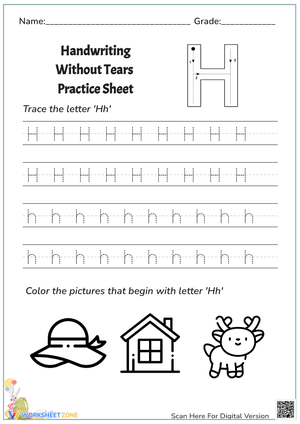
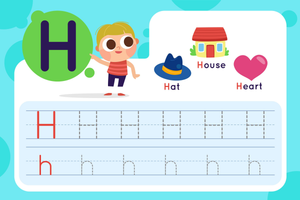
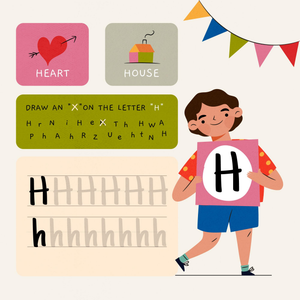
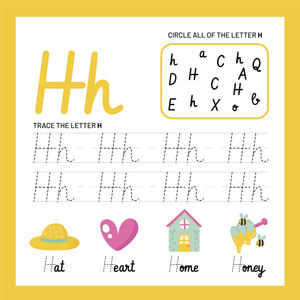
Add a picture cue, such as hat or house, next to each tracing line and have students say the /h/ sound aloud while forming the letter, linking the shape to the sound in the same practice moment.
5. When should teachers move from tracing to independent letter H writing?
Move students to independent writing once they can reproduce correct stroke order and proportion across two or three tracing sessions without prompting, using fading-support worksheets as a bridge step.