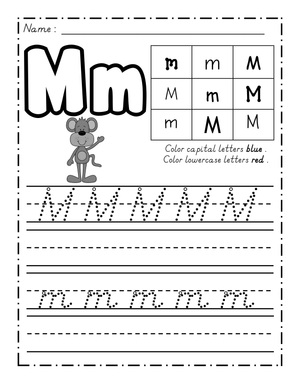
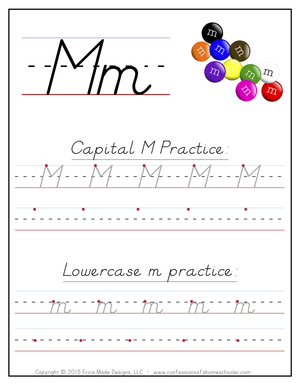
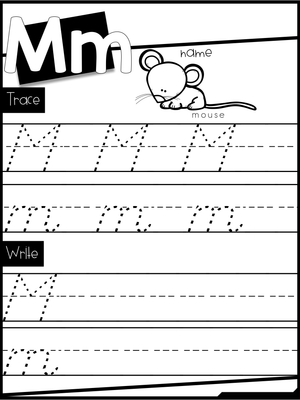
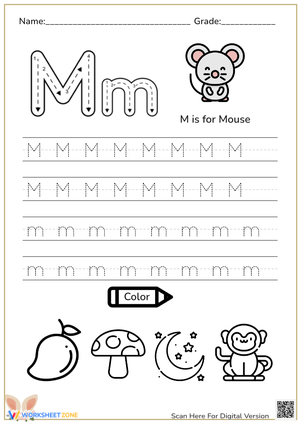
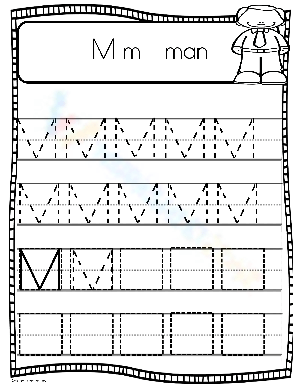
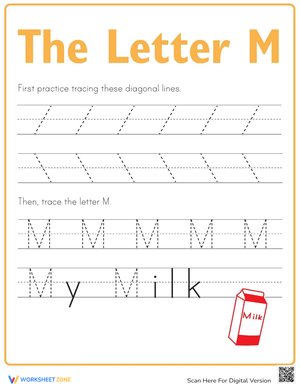
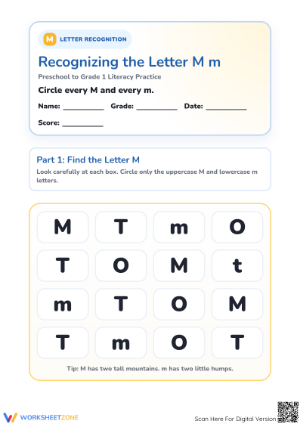
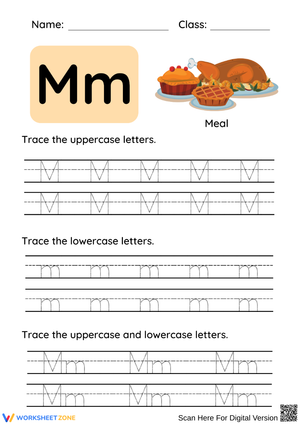
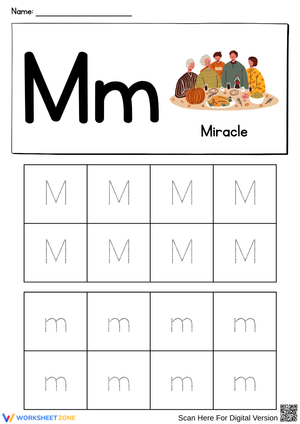
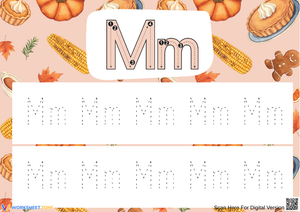
Letter M shows up early in most kindergarten alphabet sequences because its straight lines and simple diagonal strokes make it a strong bridge between letters like L and N. For teachers building a handwriting scope and sequence, letter M handwriting worksheets for kindergarten give students a low-pressure way to practice the top-to-bottom and left-to-right movement patterns that carry over into nearly every other capital and lowercase letter they will learn this year.
Kindergarten teachers already know that handwriting is not a side activity squeezed into free time. It is a core part of the school day. Fine motor and paper-and-pencil tasks take up a substantial share of classroom minutes, and letter formation work like tracing M and m directly supports the pencil control students need for later writing, drawing, and even cutting tasks.
Correct Stroke Order for Uppercase M and Lowercase m
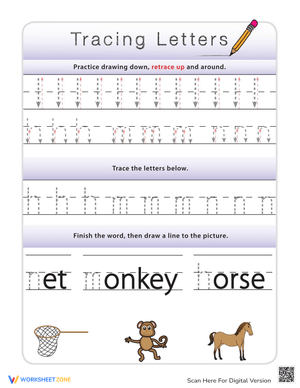
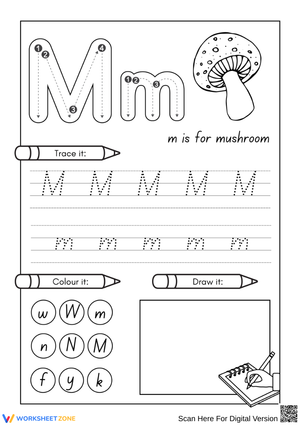
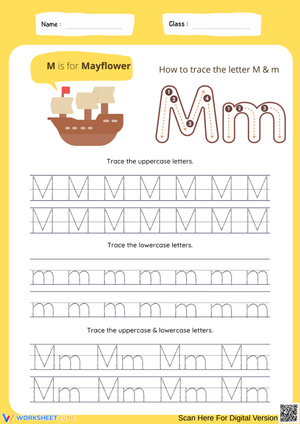
Uppercase M is formed with four strokes: a straight line down, a diagonal line down to the center, a diagonal line back up, and a final straight line down. Lowercase m follows a similar logic but starts with a short vertical stroke, then two rounded humps that echo the shape of lowercase n. Teaching this stroke order explicitly, rather than letting students draw the letter however feels natural, builds consistent motor memory.
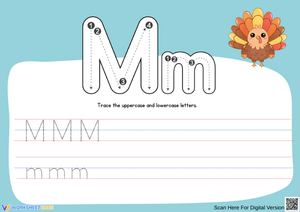
Worksheets that show numbered arrows for each stroke give students a visual script to follow before they attempt the letter independently. Repetition with the correct order, even for a letter that looks simple, reduces the odds that a student develops an inefficient or backward habit that is harder to correct in first grade.
Building Fine Motor and Visual-Motor Skills with Letter M Practice
Handwriting worksheets are only useful when they target the actual skills behind legible writing. Visual-motor integration, meaning the ability to look at a shape and reproduce it with a pencil, is one of the strongest predictors of handwriting quality in kindergartners. Letter M tracing pages ask students to watch a model, plan the stroke path, and execute it with their hand, which is exactly the kind of practice that strengthens this skill.
A ten-week occupational-therapy-based intervention with kindergarten students produced measurable gains in visual-motor integration scores, which suggests that short, structured, repeated practice sessions, such as a five-minute letter M worksheet routine several times a week, can meaningfully move the needle on formation skills rather than one-off practice sheets used in isolation.
Letter M in the Kindergarten Alphabet Handwriting Sequence
Letter M rarely stands alone in a well-planned handwriting unit. Most kindergarten sequences group letters by stroke similarity, so M often appears near N, or is paired with a review of vertical and diagonal lines already practiced with letters like A and V. Sequencing worksheets this way lets teachers reinforce prior motor patterns instead of introducing a completely new stroke every single day.
When letter M worksheets are placed in this kind of sequence, teachers can use quick formative checks, such as a one-minute independent trace, to confirm students are ready to move on rather than assuming mastery after a single practice sheet.
Using These Worksheets in Kindergarten Handwriting Classes
Letter M worksheets work best as part of a short, predictable routine rather than a standalone worksheet dropped into a folder. Consider these classroom moves:
- Model the stroke order on a whiteboard before handing out the worksheet, saying the stroke directions aloud as you write.
- Follow up tracing practice with multisensory reinforcement, such as forming letter M in a sand tray, with playdough ropes, or through large air-writing motions.
- Rotate letter M into a literacy center alongside phonics cards so students revisit the letter across multiple contexts, not just one worksheet.
- Use the worksheet as a quick informal check by watching pencil grip and stroke direction while students work, noting any student who needs a small-group follow-up later in the day.
- Keep sessions short, around five to eight minutes, since young students lose formation accuracy once fine motor fatigue sets in.
Frequently Asked Questions
1. What is the correct stroke order for writing an uppercase and lowercase letter M?
Uppercase M uses four strokes: a vertical line down, a diagonal to the center point, a diagonal back up, and a final vertical line down. Lowercase m starts with a short vertical stroke, then adds two rounded humps moving left to right, similar to writing two connected n shapes.
2. How much handwriting practice time should kindergarten teachers dedicate to a single letter like M?
Short, frequent sessions of about five to eight minutes, repeated across two or three days, tend to build stronger motor memory than one long practice block, especially when paired with multisensory follow-up activities.
3. What are signs a kindergartner needs more support with letter M formation?
Watch for consistent stroke reversals, inability to stay within guide lines after multiple practice sessions, or ongoing difficulty with pencil grip during tracing tasks. A single messy attempt is normal; a repeated pattern is the signal worth noting.
4. How can letter M worksheets be paired with phonics or vocabulary instruction?
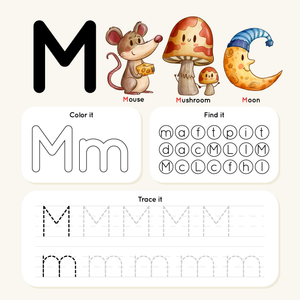
Add a short word list of M words for students to trace or label alongside the letter practice, so the same worksheet reinforces both motor formation and the /m/ sound during literacy block.
5. How often should teachers rotate handwriting worksheets in a kindergarten writing center?
Most kindergarten teachers rotate letters every few days as part of a broader alphabet sequence, revisiting earlier letters like M periodically through mixed review sheets so the skill stays fresh rather than fading after one unit.