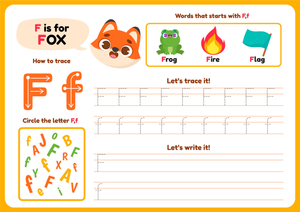
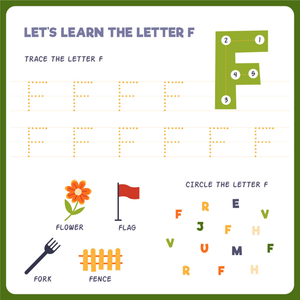
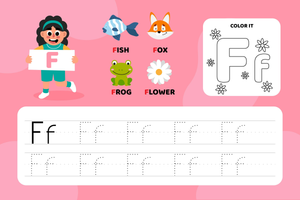
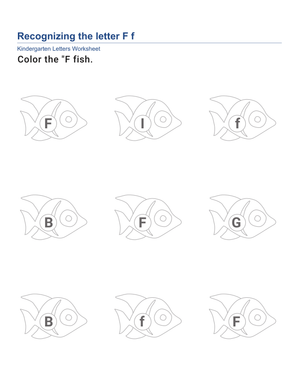
Letter F looks simple on an alphabet chart, but it is one of the trickier letters for five- and six-year-old hands to produce. Unlike rounder letters such as O or C, F asks a young writer to make a single vertical downstroke and then return twice to add two horizontal crossbars. That combination of a straight line plus two separate lift-and-place motions makes F a useful benchmark letter for checking pencil control, not just letter recognition.
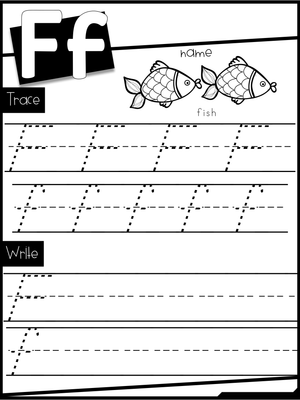
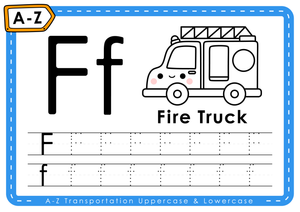
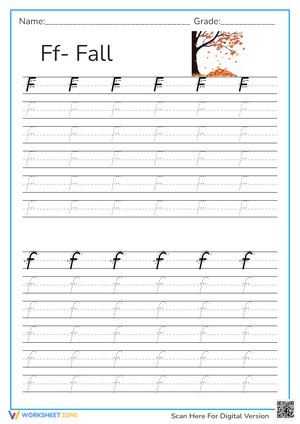
Kindergarten teachers often introduce F during a unit on tall letters or during an F-week phonics cycle. Letter F handwriting worksheets give students repeated, low-stakes chances to build the motor memory needed before they are asked to write F inside words and simple sentences later in the year.
Correct Stroke Order for Uppercase and Lowercase F
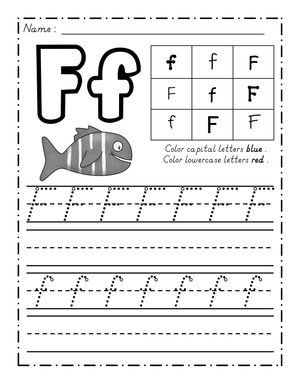
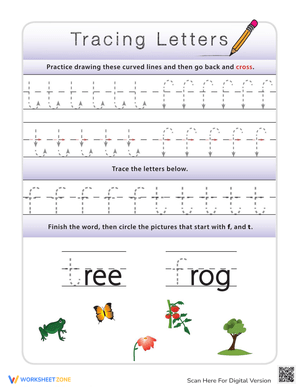
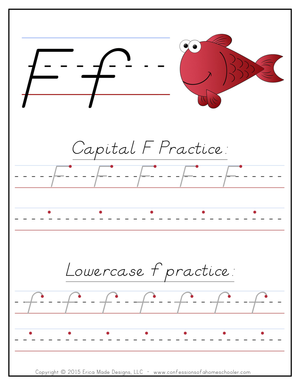
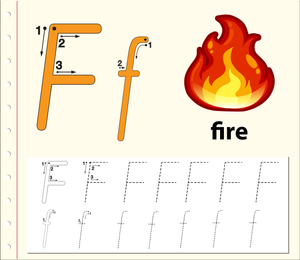
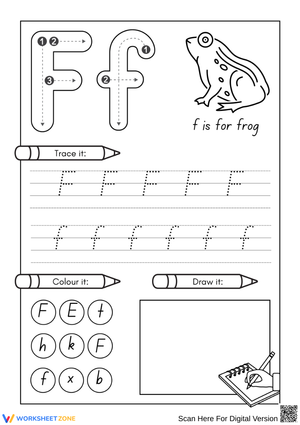
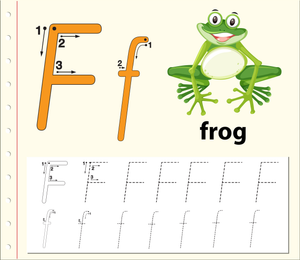
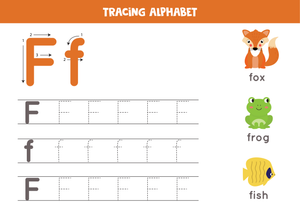
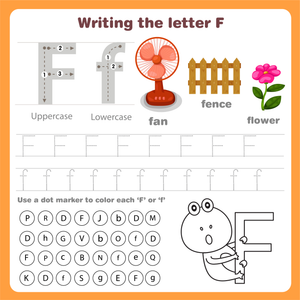
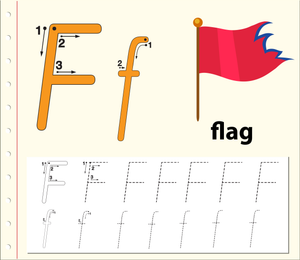
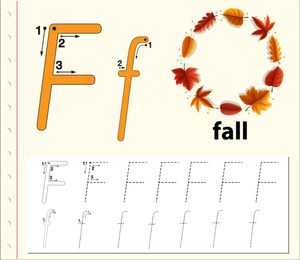
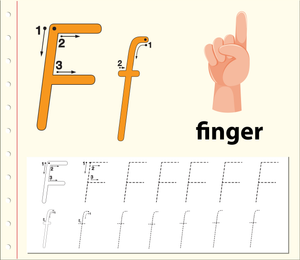
For uppercase F, the writer starts at the top line and pulls straight down to the baseline in one motion. Then the pencil lifts and returns to the top to draw a horizontal line to the right, and lifts again to add a shorter horizontal line at the midline. Lowercase f begins near the headline with a small curve, drops down through the midline to the baseline, and then crosses with a short horizontal stroke at the midline.
Worksheets that number each stroke and use directional arrows help students internalize this top-to-bottom, left-to-right pattern instead of guessing at letter shape. Consistent stroke order matters because it is the habit that later supports fluent, legible cursive and reduces reversals.
Scaffolding From Tracing to Independent Writing
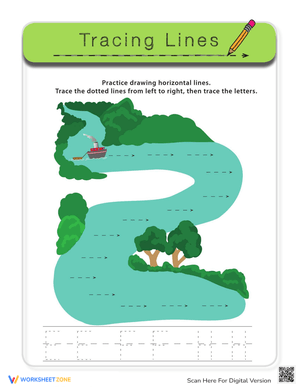
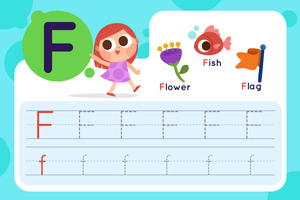
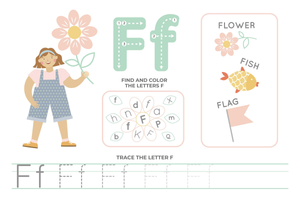
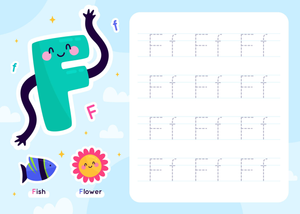
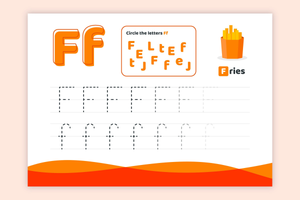
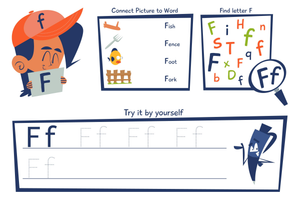
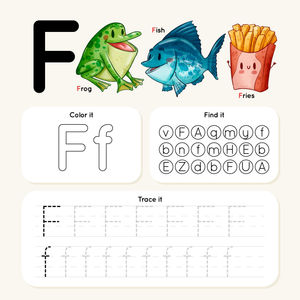
A strong letter F worksheet sequence moves through three stages. First, students trace dotted or shaded letters to build the correct path in their hand. Second, they trace a few letters and then finish the row on their own, using the traced examples as a visual anchor. Third, they write the letter with no model at all, relying only on lined guides for headline, midline, and baseline placement.
- Stage one: full dotted tracing, several repetitions per worksheet
- Stage two: partial tracing that fades into independent attempts
- Stage three: independent writing on three-line paper with a size check
Skipping straight to independent writing tends to produce inconsistent letter size and reversed strokes, so keeping all three stages available lets teachers match the worksheet to where each student actually is, not just where the calendar says the class should be.
Using These Worksheets In Kindergarten Tracing Lessons
Letter F worksheets work well as part of a short, predictable literacy block rather than a stand-alone assignment. Many kindergarten teachers slot a single F worksheet into a 15-20 minute morning work routine, following the same page format used all year so students spend their attention on the letter rather than on new directions.
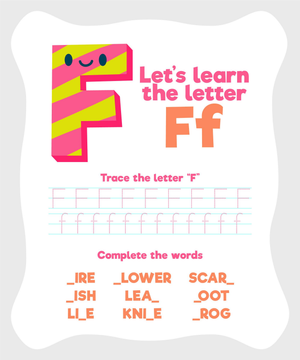
A simple weekly plan might look like this: introduce the letter with an air-writing or tabletop-tracing warm-up on day one, hand out the trace-and-write worksheet on day two, add the phonics matching worksheet on day three, and finish with an independent writing check on day four or five. Students who need extra repetition can revisit the same trace-then-write page during a short small-group turn, while students who are ready can move to writing F inside simple CVC words. Keeping the worksheet format consistent across the week reduces transition time and lets the teacher circulate and coach pencil grip and stroke direction instead of re-explaining the task.
Frequently Asked Questions
1. What is the correct stroke order for writing an uppercase and lowercase letter F?
Uppercase F starts with a top-to-bottom vertical line, then adds a horizontal line at the top and a shorter one at the midline. Lowercase f curves near the top, drops down to the baseline, and adds a short horizontal crossbar at the midline.
2. How many letter F practice worksheets should a kindergartner complete before mastery?
There is no fixed number, but most students need several short practice sessions across a few days rather than one long worksheet, moving from traced letters to independent writing as accuracy improves.
3. How do letter F worksheets fit into a daily kindergarten literacy schedule?
They work best as a short, consistent routine, such as a five- to ten-minute segment during morning work or a literacy station, paired with phonics activities focused on the /f/ sound.
4. What fine motor prerequisites help a child succeed with letter F handwriting practice?
Comfortable pencil grip, the ability to draw a straight vertical line, and basic control over starting and stopping a stroke on command all support success with letter F formation.
5. How can teachers tell if a student has mastered letter F formation versus just tracing it?
Ask the student to write the letter independently on blank guide lines without a model. Consistent stroke order, crossbar placement, and letter size on that unaided attempt indicate true mastery rather than copied tracing.