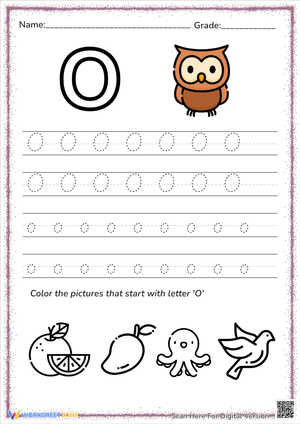
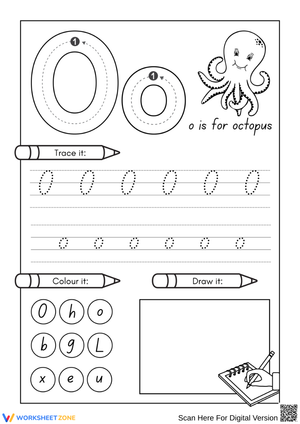
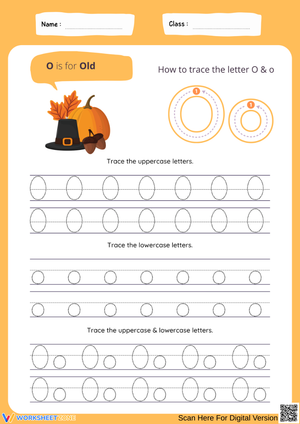
Letter T is one of the easiest capital letters for a preschooler to attempt because it uses only two strokes: one straight line down and one straight line across. Before children can manage curved letters like C or S, they need practice controlling a pencil in a predictable top-to-bottom, left-to-right pattern. Letter T handwriting worksheets for preschool give young writers that low-pressure entry point. A child who can trace and copy a T with a steady hand is building the exact motor sequencing that later supports harder letters, and teachers can use that early success to build writing confidence before frustration sets in.
In a pre-K or preschool classroom, this matters because handwriting is not simply about penmanship. It is one of the clearest windows teachers have into a child's motor planning, attention, and readiness for more formal literacy instruction. Starting with a simple letter like T lets teachers observe pencil grip, hand dominance, and line control without the added difficulty of curves or diagonals.
Classroom Implementation
Letter T worksheets work best in preschool when they are short, frequent, and tied to a clear teacher observation goal rather than treated as a worksheet packet to finish. Many pre-K teachers keep tracing sessions to five or six minutes, done in small groups or during a literacy center, so an adult can watch grip, posture, and paper position up close.
A few implementation habits make a real difference in how much a T-tracing session actually builds skill:
- Model the stroke order out loud, saying down, then across, before the child begins
- Position the paper at a slight angle rather than straight, which supports a more natural wrist movement
- Offer a slightly built-up crayon or short pencil for children still developing grip strength
- Rotate letter T practice with name-writing practice, since children are often more motivated to trace letters found in their own name
- Keep the group flexible; children who need more repetition or a different pencil grip can get quick individual support without turning the session into a separate pull-out program
A 10-week fine motor and handwriting intervention study with preschool-aged children found measurable improvement in letter writing, including letters within the children's own names, after consistent short practice sessions. That finding supports pairing letter T worksheets with name-writing warm-ups rather than treating the two as separate skills.
Using Letter T Worksheets as a Formative Assessment Tool
Because letter T has such a simple stroke pattern, it is a useful early checkpoint for teachers tracking pre-writing readiness across a class. While a child traces, a teacher can quickly note whether the pencil grip is a fist, a palmar grasp, or an emerging tripod grip, whether the child starts each stroke at the top, and whether the lines stay reasonably straight rather than wandering.
These informal notes do not need to be formal assessments. A simple checklist glanced at during center time is enough to flag which children may need a different grip tool, more air-writing practice, or simply more repetitions before moving to letter U or other new letters. Because the letter T stroke pattern is so predictable, inconsistent line direction or reversed strokes tend to stand out clearly, making it easier to catch early rather than after several more complex letters have already been introduced.
Frequently Asked Questions
1. How many letter T tracing repetitions should a preschooler do per session?
Most preschool teachers find five to eight repetitions per short session is enough. More repetitions do not always mean better formation once a child's hand starts to fatigue, so stopping while the strokes are still controlled matters more than finishing a full worksheet.
2. What pencil grip or writing tool is best for preschool letter T practice?
Short, thick crayons or triangular pencils tend to encourage an emerging tripod grip better than standard adult pencils. The goal at this stage is comfortable control, not a perfect adult grip.
3. How do letter T worksheets support fine motor development beyond handwriting?
The same wrist stability and finger control used in tracing transfer to cutting with scissors, buttoning, and other daily fine motor tasks, so handwriting practice reinforces skills used well beyond the writing center.
4. When should teachers move from tracing to independent letter T formation?
Once a child can trace the letter with consistent stroke direction and reasonably steady lines across several sessions, teachers can start fading the dotted guide lines and offering blank space for independent attempts.
5. How can teachers use letter T worksheets for struggling or reluctant writers without turning it into a full intervention program?
Keep sessions short, pair tracing with a preferred multisensory step like sand or playdough first, and offer choice in tools, such as a chunky crayon versus a pencil, so practice stays low-pressure while still building the same motor pattern as the rest of the class.