




























Views
Downloads

Letter L Tracing Worksheet | Printable Pre-K & K

Paste this activity's link or code into your existing LMS (Google Classroom, Canvas, Teams, Schoology, Moodle, etc.).
Students can open and work on the activity right away, with no student login required.
You'll still be able to track student progress and results from your teacher account.
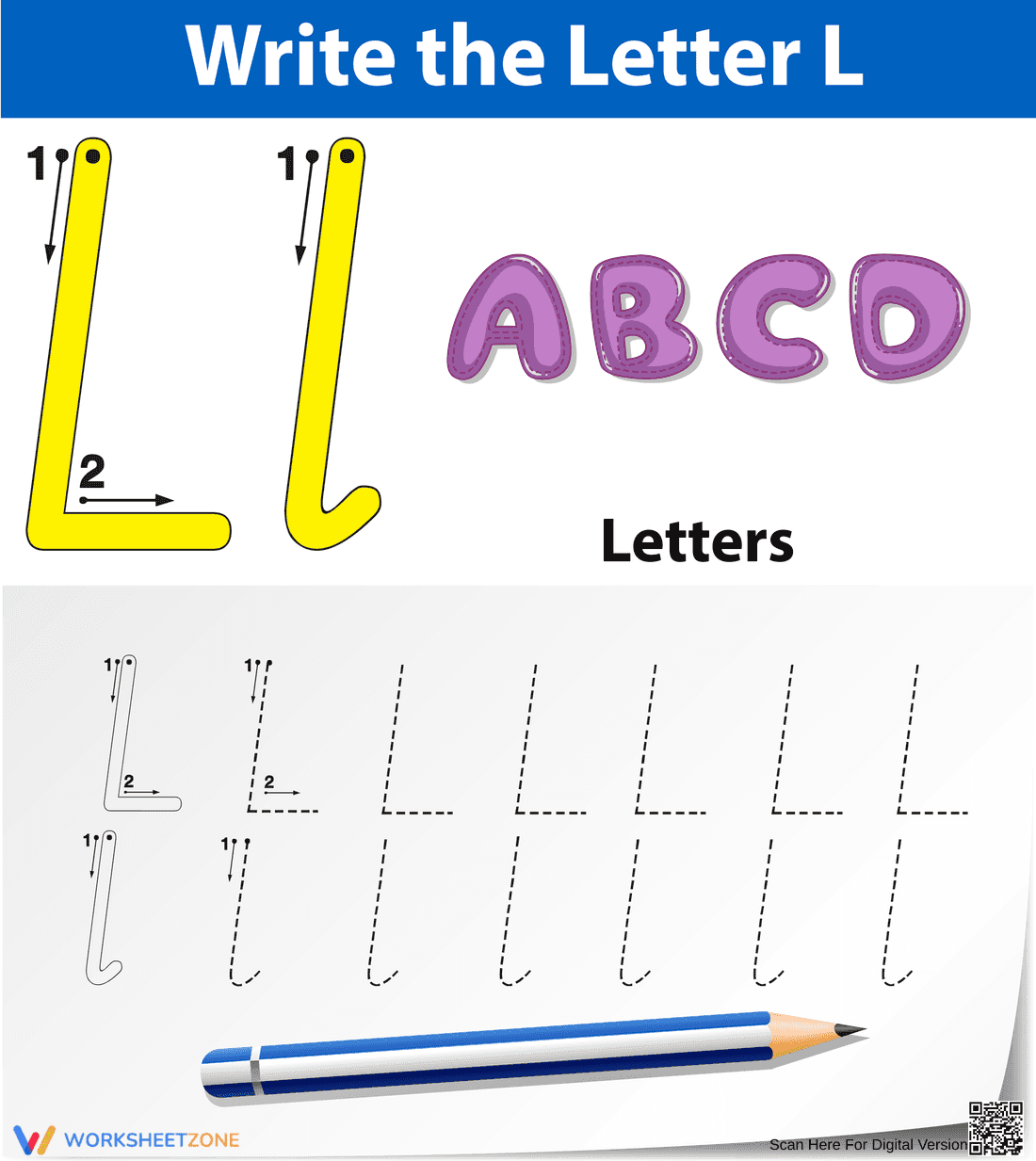
This printable letter L tracing worksheet helps early learners develop essential handwriting and fine motor skills. By practicing uppercase and lowercase letter formations, students build the muscle memory required for fluent writing. The clear, guided strokes ensure children confidently master the letter L in a single session.
At a Glance
- Grade: Kindergarten · Subject: Handwriting
- Standard:
CCSS.ELA-LITERACY.L.K.1.A— Print upper- and lowercase letters- Skill Focus: Letter L Tracing
- Format: 1 page · 14 problems · No answer key needed · PDF
- Best For: Independent practice
- Time: 10–15 minutes
Inside this single-page PDF, educators will find a focused handwriting exercise. The page features a large instructional model showing directional arrows for forming the letter L. Below the model, students complete 14 tracing tasks, evenly split between uppercase and lowercase letters. Dotted lines provide heavy scaffolding, allowing young writers to trace with precision without an answer key.
Zero-Prep Workflow
This resource is designed for immediate classroom implementation.
- Print (1 minute): Simply download the PDF and print a class set. The dotted lines reproduce perfectly.
- Distribute (1 minute): Hand out the sheets along with pencils or crayons. The visual directional arrows at the top make the task immediately obvious to early readers.
- Review (1 minute): Quickly scan student work to ensure they are starting their pencil strokes at the top line rather than the bottom.
With under two minutes of prep time, this worksheet is ideal for sub plans or morning work.
Standards Alignment
This handwriting practice aligns directly with CCSS.ELA-LITERACY.L.K.1.A, which requires students to print many upper- and lowercase letters. By isolating the letter L and providing directional cues, the worksheet ensures students meet foundational writing expectations. Both standard codes can be copied directly into lesson plans, IEP goals, or district curriculum mapping tools.
How to Use It
This tracing activity works beautifully as a morning bell-ringer. Place it on desks before arrival for immediate fine motor practice. Alternatively, use it during small-group literacy centers after a direct instruction lesson on the letter L sound. As a formative assessment tip, watch students as they trace the first few letters to ensure they are following the numbered arrows, correcting any bottom-to-top stroke habits early. Expected completion time is 10 to 15 minutes.
Who It's For
This resource is designed for Preschool and Kindergarten students beginning their handwriting journey. It also serves as remedial practice for first graders struggling with letter formation. For differentiation, provide textured surfaces underneath the paper or have them trace with a highlighter first. Pair this worksheet with a read-aloud book featuring heavy L alliteration to connect writing to phonemic awareness.
Mastering foundational handwriting skills like those aligned to CCSS.ELA-LITERACY.L.K.1.A (print upper- and lowercase letters) is a critical step in early childhood literacy development. According to Fisher & Frey (2014), explicit instruction in letter formation combined with guided, repetitive practice significantly reduces the cognitive load required for writing. When young students no longer have to consciously think about how to physically form the letter L, they can allocate their mental resources toward phonics, spelling, and eventual sentence composition. This targeted tracing worksheet provides the exact type of structured repetition necessary to build automaticity. By incorporating numbered directional arrows and dotted scaffolds, the resource ensures that students practice the correct motor pathways from the very first stroke, preventing the formation of poor handwriting habits that are notoriously difficult to unlearn later.


