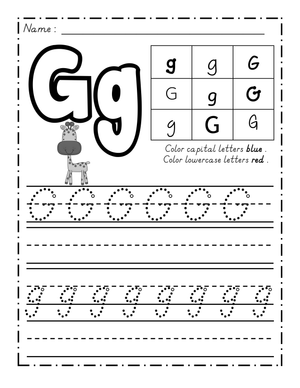
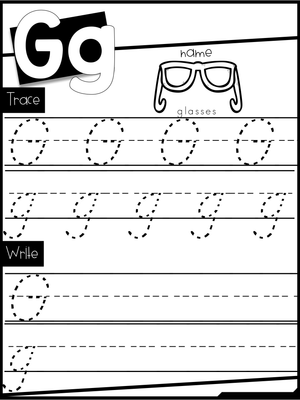
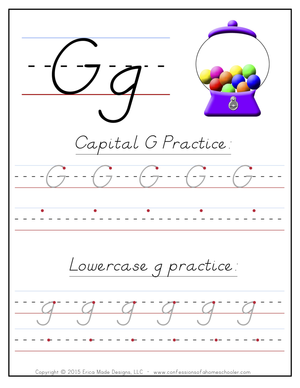
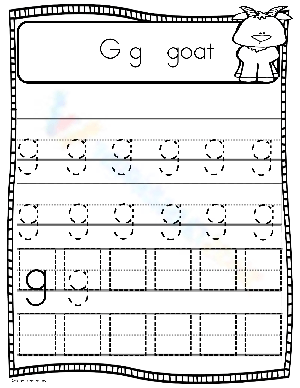
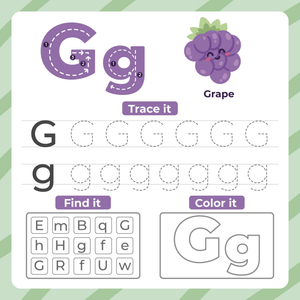
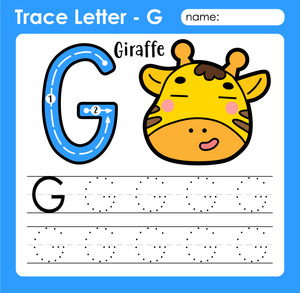
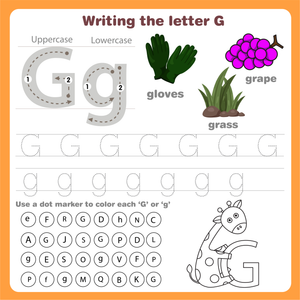
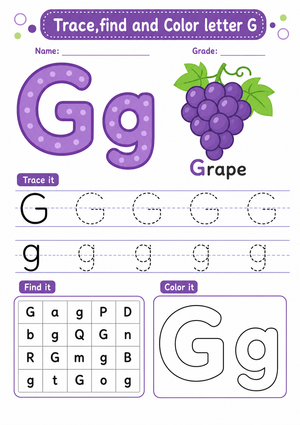
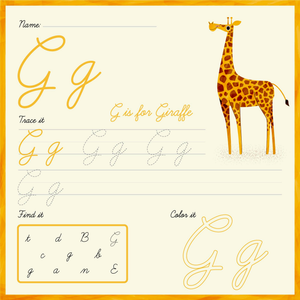
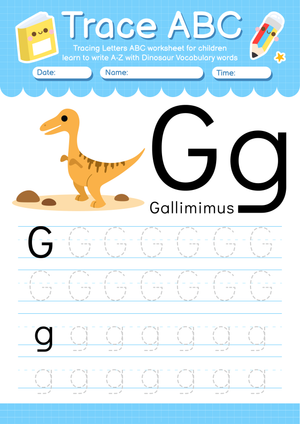
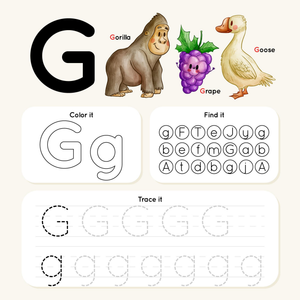
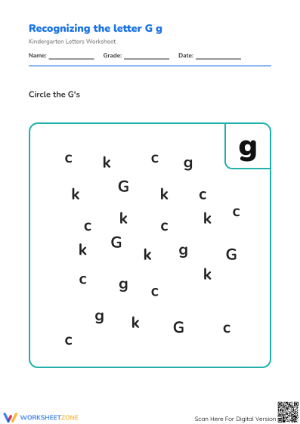
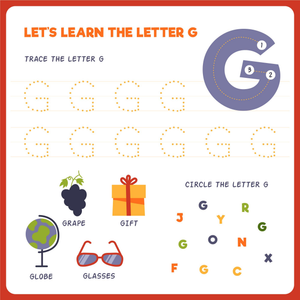
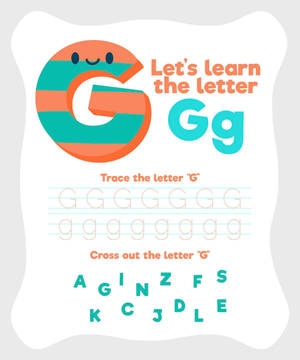
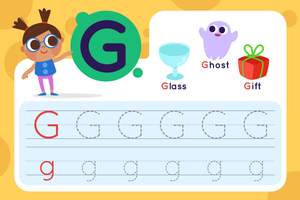
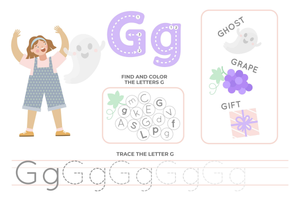
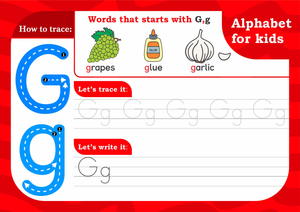
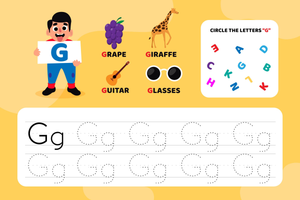
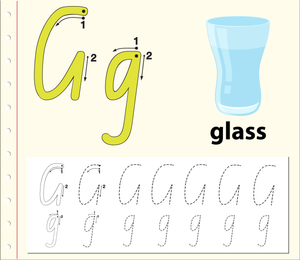
Letter G gives many kindergartners trouble because it combines a curved stroke with a hook or loop, depending on the font style used in your classroom. Unlike straight-line letters such as L or T, G asks young writers to control a continuous curve, stop at the right point, and add a small connecting stroke. Without focused practice, students often produce a shape that looks more like a C or an O with a stray mark attached. Letter G handwriting worksheets for kindergarten give teachers a repeatable way to isolate this single letter, slow down the motion, and let students build the muscle control needed before they move on to writing full words.
The Correct Stroke Sequence for Uppercase and Lowercase G
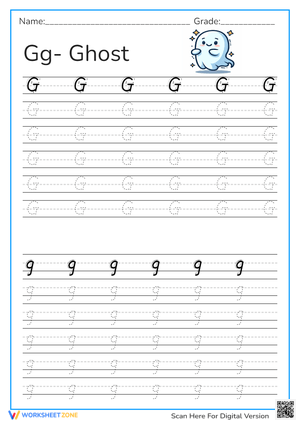
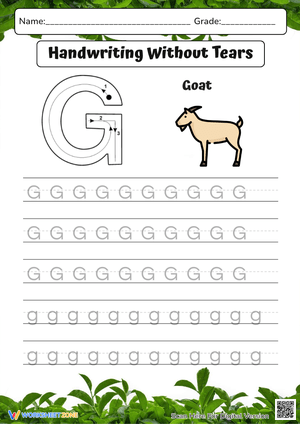
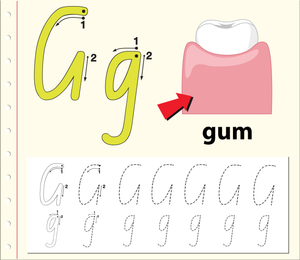
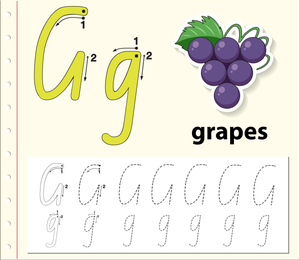
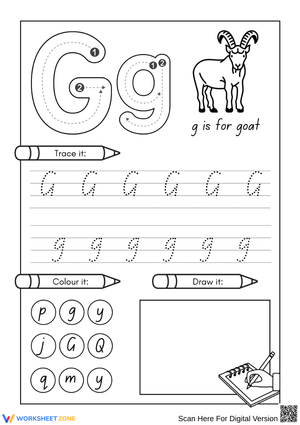
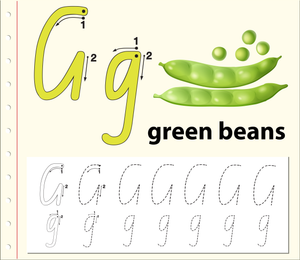
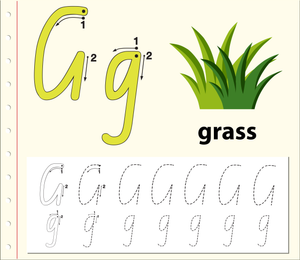
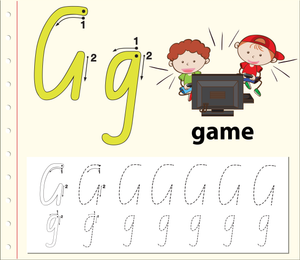
Uppercase G starts at the top, curves counterclockwise almost all the way around like a C, then adds a short horizontal line partway across the bottom right. Lowercase g starts similarly with a small curved stroke, but then drops a descender below the baseline, which is one of the first descending letters many kindergartners encounter. Teaching a consistent starting point matters because inconsistent starting positions are one of the biggest predictors of letter reversals and illegible shapes later in first grade. Worksheets that mark a clear starting dot help students internalize the same motor pattern every time they write the letter.
Building Fine Motor Skills Through Tracing Progressions
Good letter G worksheets move students through stages rather than dropping them straight into independent writing. A typical progression looks like this:
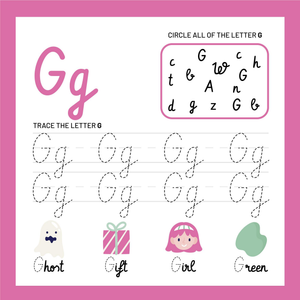
- Tracing over a dotted or shaded letter G with guided arrows
- Tracing a lighter, partially faded letter G
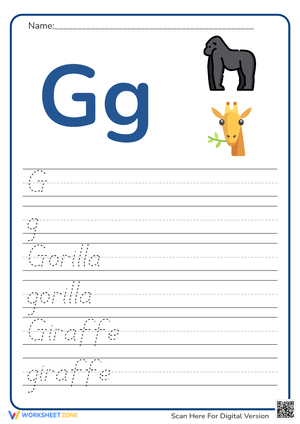
- Copying letter G next to a printed model
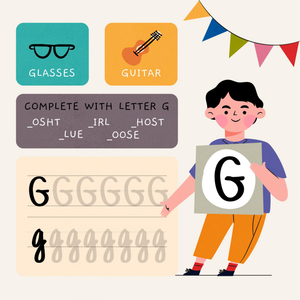
- Writing letter G independently on a lined row
This step-down in support mirrors how young children acquire any new motor skill, moving from heavy guidance to independent execution. Research on kindergarten fine motor time found that these students spend close to half of the school day on fine motor tasks, with roughly half of that time devoted specifically to paper-and-pencil activities like handwriting, which means a well-sequenced worksheet can capture a meaningful share of instructional minutes that are already happening.
Fitting Letter G Into Your Alphabet Unit
Most kindergarten classrooms follow a letter-of-the-week or a faster-paced alphabet rotation, and G typically appears in the first third of the sequence alongside other curved letters like C, O, and Q. Pairing G practice with these visually similar letters helps students notice differences in stroke direction and stopping points instead of treating each letter as an unrelated shape. Teachers who cluster curved letters together in their pacing guide often see fewer mix-ups between G, C, and O by the time students reach independent writing tasks.
Fixing Common Letter G Reversals and Formation Errors
The most frequent letter G errors include starting the curve from the wrong side, closing the shape completely so it looks like an O, or placing the connecting stroke too high or too low. Lowercase g causes additional trouble because students are not yet used to writing below the baseline, so the descender often comes out too short, too long, or curls the wrong direction. Worksheets with baseline and descender guidelines specifically marked for letter G give students a visual boundary that plain lined paper does not provide, which makes it easier to self-correct during independent practice.
Using These Worksheets In Kindergarten Handwriting Sessions
Letter G worksheets fit naturally into several parts of a kindergarten day. Consider these placement options:
- Morning work bin as students settle in, paired with a quick verbal review of the /g/ sound
- A literacy center rotation station focused on tracing and copying
- A short small-group table check-in where the teacher watches stroke direction in real time
- A take-home practice sheet that pairs classroom instruction with a few minutes of home reinforcement
When students are still developing visual-motor integration, brief one-on-one or small-group check-ins matter more than the worksheet itself, since a teacher can catch a backward starting stroke before it becomes a habit. A 10-week explicit handwriting intervention has been shown to produce measurable gains in visual-motor integration among kindergartners, which suggests that short, repeated, teacher-guided practice sessions across several weeks are more effective than a single isolated worksheet.
Frequently Asked Questions
1. How should teachers introduce letter G formation to kindergarten students?
Start with a clear starting-point dot, demonstrate the stroke slowly while narrating the direction out loud, and have students trace in the air before touching a pencil to paper.
2. How many practice sessions are typically needed before a kindergartner can write letter G independently?
Most students need repeated short sessions across several weeks rather than a single practice sheet, with visible gains often building steadily as tracing support is gradually reduced.
3. What are common mistakes kids make when writing the letter G and how can worksheets help fix them?
Closing the curve into an O shape, starting from the wrong side, and misplaced descenders on lowercase g are common errors that guided worksheets with marked starting points and baselines can help correct.
4. How can letter G worksheets be used alongside phonics instruction for the /g/ sound?
Adding a picture cue and having students say the /g/ sound while tracing links the motor practice to the same sound-symbol connection taught during phonics lessons.
5. Are tracing worksheets alone enough, or should teachers pair them with other fine motor activities?
Tracing worksheets work best when paired with multisensory practice like sand trays, playdough, or air writing, since varied input reinforces the same motor pattern more effectively than paper practice alone.