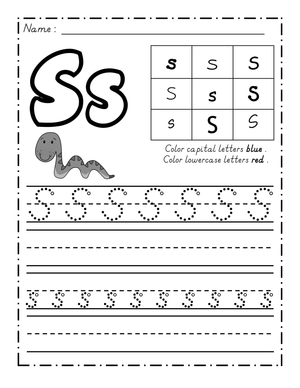
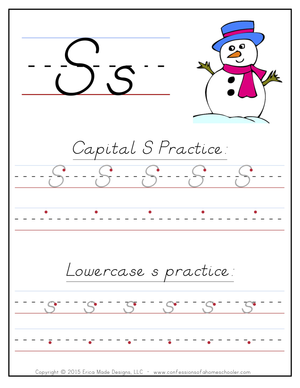
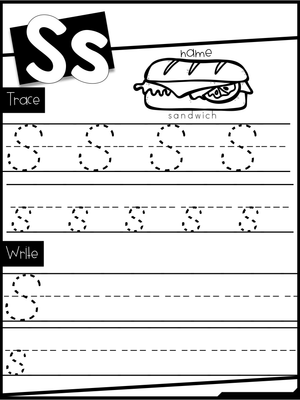
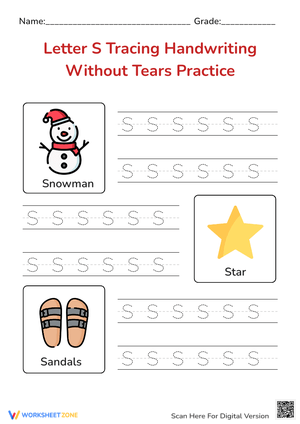
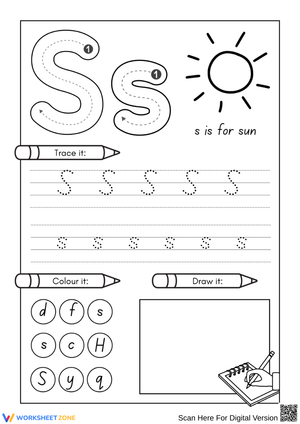
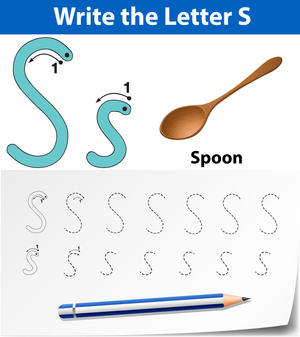
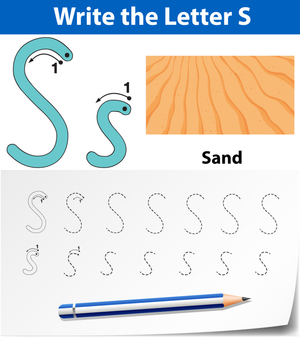
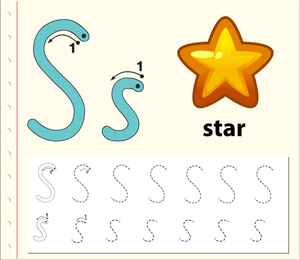
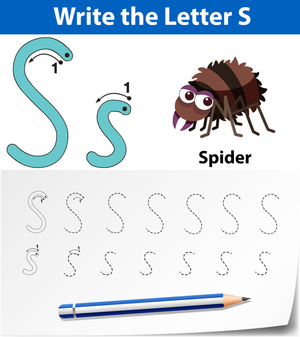
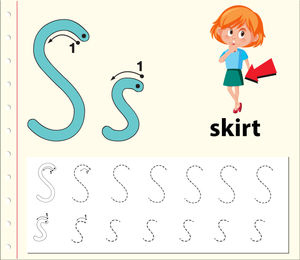
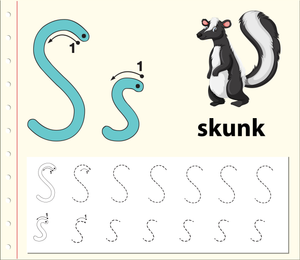
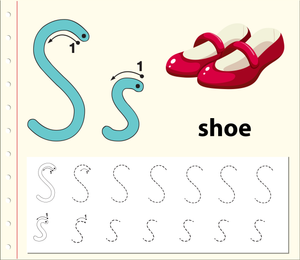
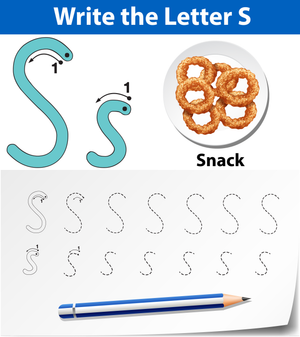
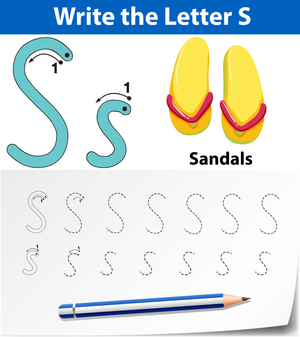
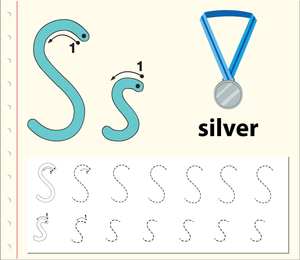
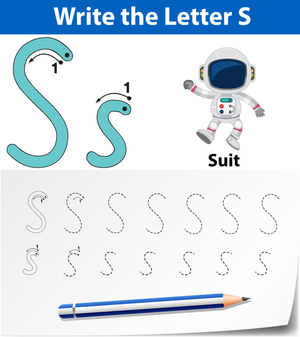
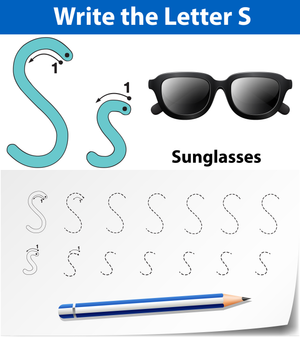
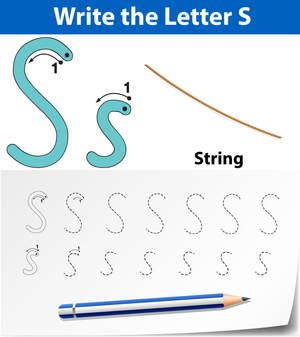
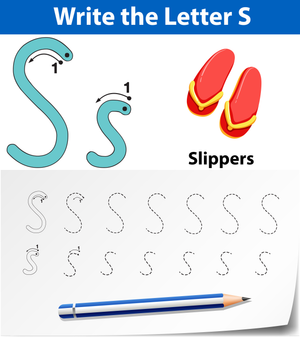
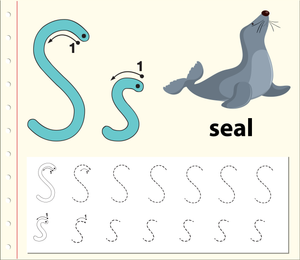
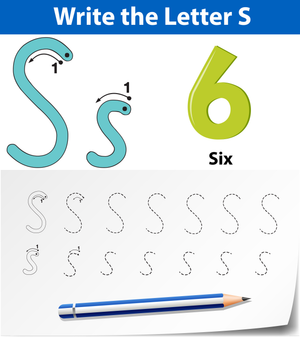
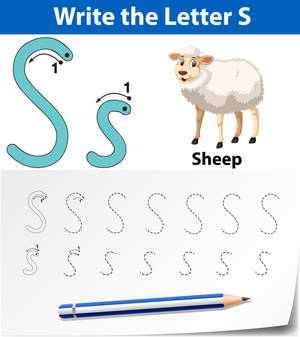
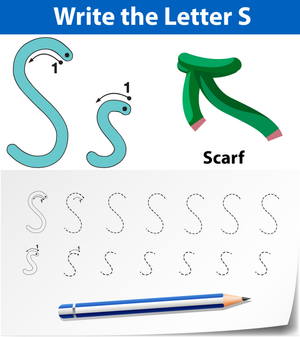
Letter S trips up a lot of kindergartners because both the uppercase and lowercase forms rely on a smooth curving motion instead of straight lines and simple circles. Students who have only practiced letters like L, T, or O suddenly need to manage a continuous curve that changes direction twice. Letter S handwriting worksheets give kindergarten teachers a low-pressure way to isolate that skill, repeat it daily, and watch for early signs of reversal or shaky line control before those habits set in.
Because kindergarten writers are still building the fine motor control needed for consistent letter formation, worksheets built around a single letter let teachers watch directionality closely without the added demand of spelling whole words. That focus matters most in the first months of school, when stroke habits are still forming and are far easier to correct than to undo later.
Correct Stroke Sequence for Uppercase S and Lowercase s
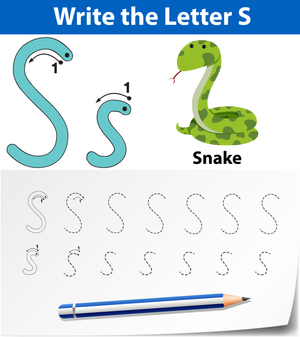
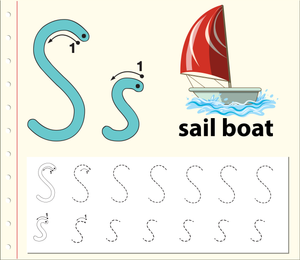
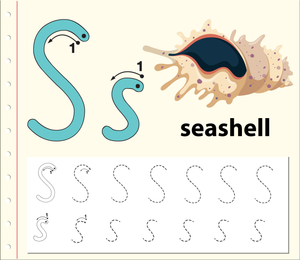
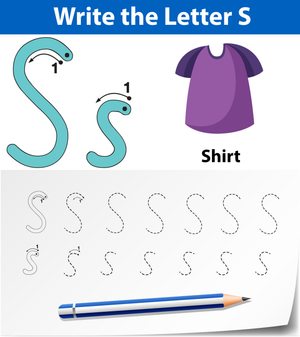
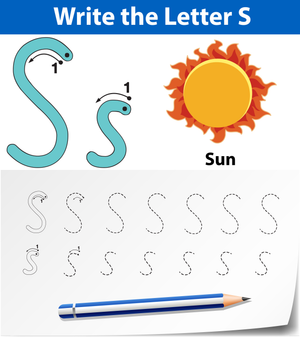
Consistency in verbal cues helps kindergartners internalize motor patterns faster than silent modeling alone. A common cue for the lowercase s is to curve up toward the middle line, then turn and curve back down and around, finishing with a small tail. For the uppercase S, teachers can use nearly the same cue starting from the top line: curve up and over, then curve down and around to the bottom, keeping the motion continuous rather than lifting the pencil partway through.
Teachers should say the same cue every single time a student practices the letter, whether during whole-group modeling, a literacy center, or independent worksheet time. Repeating identical language builds a verbal-motor link that students can recall even when the teacher is not standing next to them.
Multisensory Practice Before Pencil Work
Kindergartners benefit from rehearsing the letter S motion with their whole arm or hand before picking up a pencil. Air writing, finger tracing on a desk, drawing the letter in a shallow tray of sand or rice, and tracing raised-line letter cards all let students feel the curve and direction without the added fine motor demand of pencil control.
- Trace a large letter S drawn on the whiteboard using a full arm motion
- Practice the curve in sand or salt trays with an index finger
- Use a partner shoulder-tap game where one student traces the letter on another's back
- Move to pencil and paper only after two or three multisensory repetitions
This sequence — big movements first, then small ones — matches how young children build motor memory, and it keeps struggling writers from associating letter S with frustration before they even touch a worksheet.
Building Letter S Into Daily Handwriting Routines
Short, frequent handwriting sessions tend to produce steadier gains than occasional long practice blocks. Many kindergarten teachers set aside five to ten minutes several times a week for direct handwriting instruction, which adds up to roughly fifty to one hundred minutes weekly across all letters. Folding a letter S worksheet into that same rhythm, rather than saving it for one long session, keeps the motor pattern fresh in students' hands.
A twelve-week kindergarten handwriting intervention involving 101 Israeli kindergartners found significantly greater gains in letter directionality and overall handwriting quality compared to a group that did not receive the structured practice, which suggests that brief, repeated, well-sequenced sessions can meaningfully change how young children form letters like S.
A Quick Note on the Research Behind Handwriting Practice
Kindergarten handwriting instruction in short, frequent sessions is broadly supported by classroom-based research on early literacy. As one source puts it, structured practice with consistent stroke sequencing helps young children move from effortful, letter-by-letter formation toward more automatic and fluent handwriting, and it also supports later reading and writing development. This connection between motor practice and literacy growth is a core reason kindergarten teachers prioritize daily handwriting time.
Frequently Asked Questions
1. What is the correct stroke order for writing uppercase S and lowercase s?
For both letters, students start near the top and curve up, then turn and curve down and around in one continuous motion, without lifting the pencil partway through. Using the same verbal cue every time helps students remember the direction.
2. How much time should kindergarten teachers spend on letter S handwriting practice each week?
Most kindergarten handwriting routines fit five to ten minute sessions several times a week, totaling roughly fifty to one hundred minutes across all letters. Letter S practice can rotate into that same short, frequent schedule rather than one long session.
3. How can teachers tell if a student needs more support with letter S formation?
Watch for reversed curves, inconsistent size, or letters that drift off the line. These often connect to broader fine motor challenges, so pairing worksheet practice with hands-on motor activities can help.
4. How do letter S worksheets connect to phonics instruction in kindergarten?
Ask students to say /s/ words like sun, snake, or star while tracing the letter. This links the letter shape to its sound and turns a motor task into a phonics touchpoint.
5. What multisensory activities help before students practice letter S on paper?
Air writing, sand tray tracing, and large whiteboard practice let students feel the curve and direction with bigger, easier movements before moving to pencil and paper.