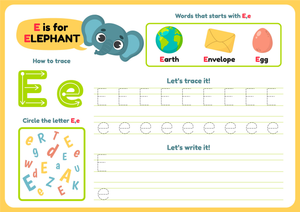
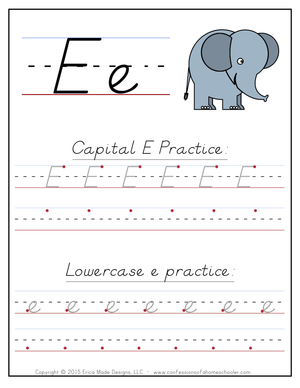
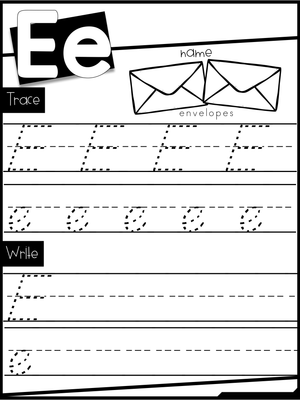
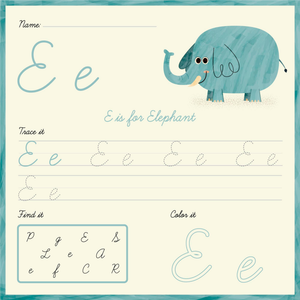
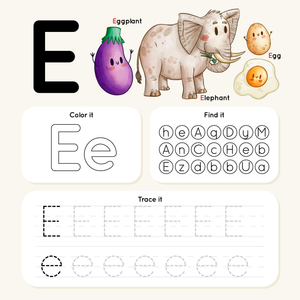
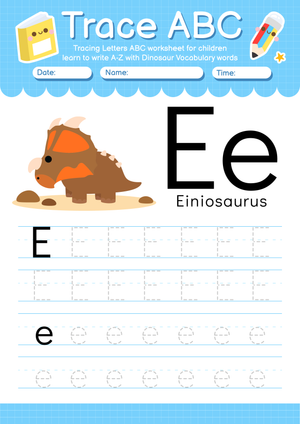
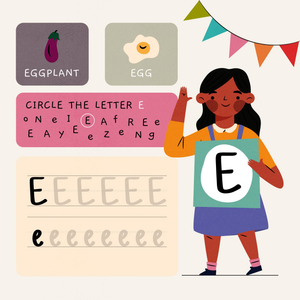
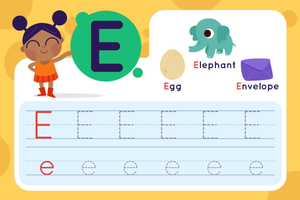
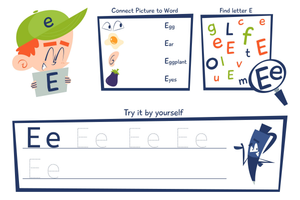
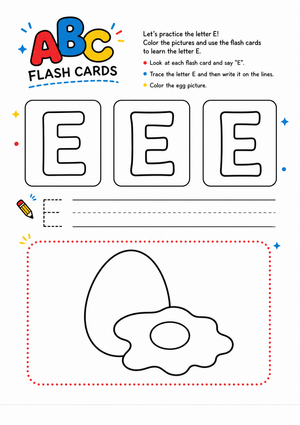
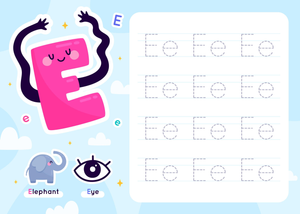
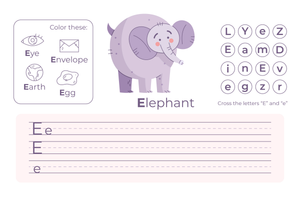
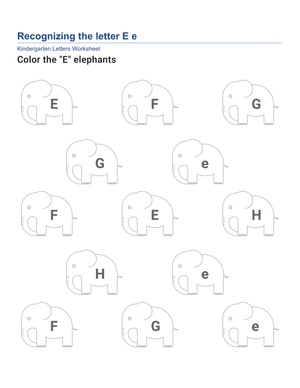
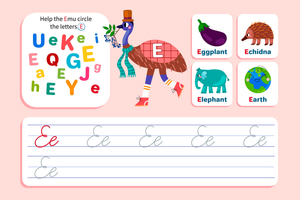
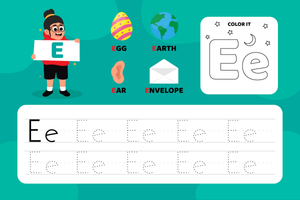
Letter E shows up constantly in early reading material, from sight words like elephant and egg to classroom names and word walls, which makes it a high-value target for handwriting instruction. Unlike simpler letters such as I or L, letter E requires three horizontal strokes anchored to one vertical line, so students need to coordinate direction, spacing, and stopping points in a single motion. For many kindergartners, this is their first real test of planning a multi-part letter rather than a single stroke or curve.
The Three-Stroke Sequence: Teaching Uppercase and Lowercase E
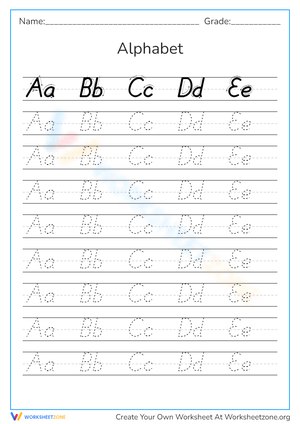
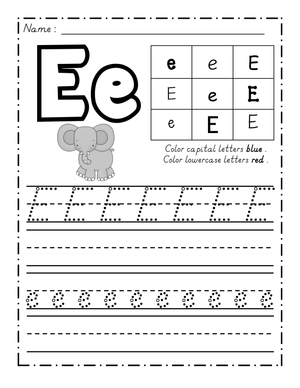
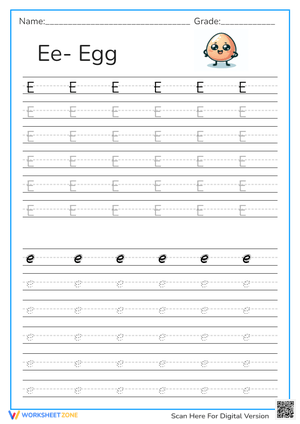
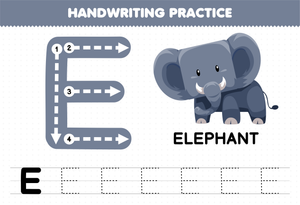
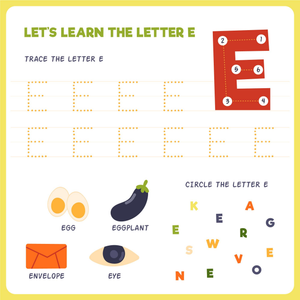
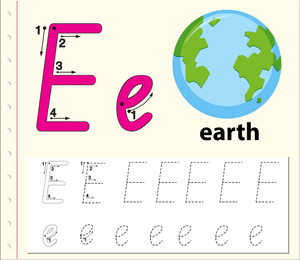
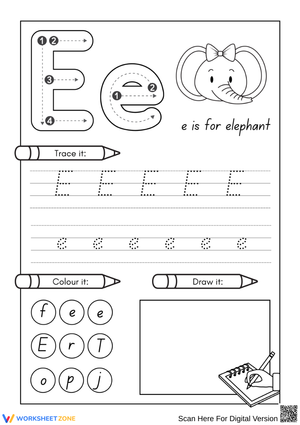
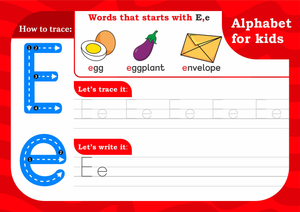
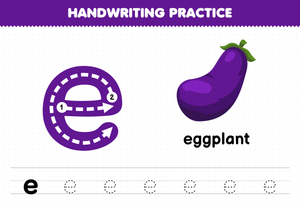
Uppercase E is built from a top-to-bottom vertical line, then three horizontal lines added top, middle, and bottom. Lowercase e starts differently, with a small horizontal line that curves up and around like a backward loop. Teaching these as two distinct motor patterns, rather than assuming the lowercase is just a smaller version of the uppercase, prevents a common confusion point in kindergarten writing samples.
A simple stroke-order script helps standardize instruction across a grade-level team: for uppercase E, say down, across top, across middle, across bottom. For lowercase e, say across, up and around. Repeating the exact same verbal cue every time a student practices the letter builds a consistent internal script they can rely on independently during worksheet time.
Fine Motor Warm-Ups Before the Worksheet
Handing a kindergartner a letter E worksheet cold, without any hand-strengthening lead-in, often produces shaky lines and inconsistent spacing. A two- to three-minute warm-up using tongs to sort pom-poms, squeezing clothespins, or rolling small balls of playdough activates the same intrinsic hand muscles used to control a pencil grip. Teachers who build this into morning routines report steadier strokes once students transition to paper.
Research on fine motor development and handwriting legibility found that skills like finger accuracy, object manipulation, and in-hand manipulation are directly associated with how clear and stable a child's letter formation becomes. In practice, that means a student who struggles to pick up small objects with a pincer grip will likely need extra fine motor support before letter E worksheets alone can close the gap.
Using These Worksheets In Handwriting Lessons
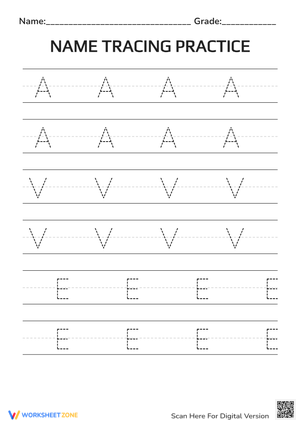
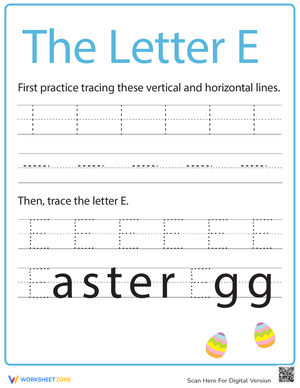
Letter E worksheets fit naturally into several parts of a kindergarten schedule. During whole-group instruction, use a shared verbal script and model both uppercase and lowercase formation on chart paper before handing out individual sheets. During literacy centers, rotate a letter E tracing station alongside a sensory bin and a word-matching activity so students get repeated exposure without repeating the exact same task.
For small-group time, keep worksheets on hand for students who need extra repetition, but supplement with tactile tools like textured letter cards for those still building stroke memory. Send a simplified version home as take-home practice, with a short note to families explaining the three-stroke cue so home practice stays consistent with classroom instruction. Consistency across these settings reduces the chance that students learn conflicting stroke habits in different environments.
Frequently Asked Questions
1. How much classroom time should kindergarten teachers dedicate to letter E handwriting practice each week
Most kindergarten classrooms benefit from three to four short sessions per week, each lasting ten to fifteen minutes, rather than one long block. Short, frequent practice sessions match young children's attention spans and reinforce motor memory better than infrequent longer ones.
2. What are signs a kindergartner is not yet ready for structured letter E handwriting instruction
Watch for difficulty holding a pencil with any consistent grip, trouble copying simple shapes like a cross or circle, or an inability to sit and attend to a fine motor task for even a few minutes. These students often benefit from additional fine motor warm-ups before formal letter practice begins.
3. How can teachers correct improper pencil grip while practicing letter E worksheets
Use short, targeted reminders rather than constant correction, and pair grip work with fine motor warm-ups like tong sorting or playdough rolling before the worksheet begins. Triangular pencil grips or golf-pencil-sized tools can also make a correct grip more comfortable to sustain.
4. How do letter E handwriting worksheets support broader literacy and decoding skills
Writing a letter while saying its name and sound builds a link between the visual symbol, the motor pattern, and the phoneme, which supports early word decoding. Since letter E appears in many common kindergarten sight words, this practice reinforces recognition students will use across reading tasks.