




























Views
Downloads
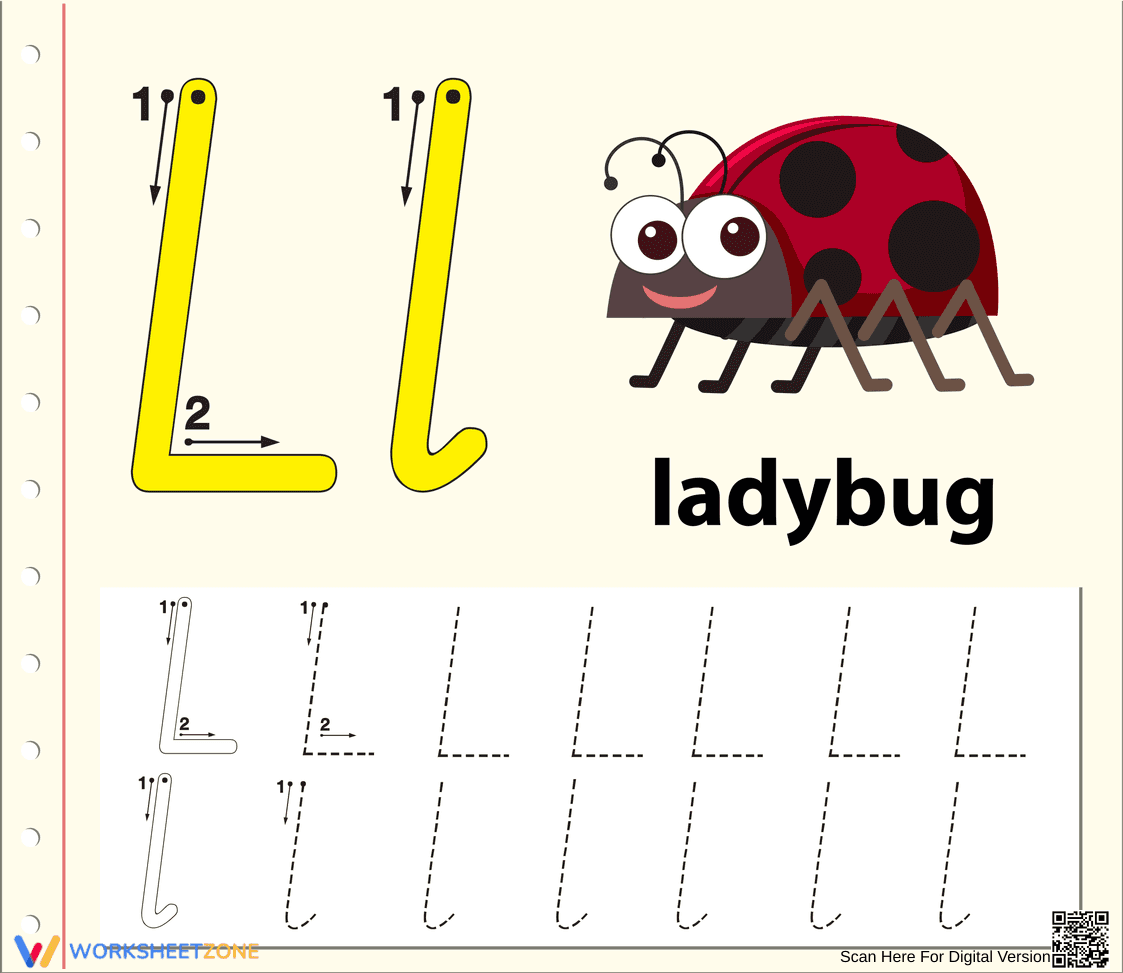

Essential Cursive Letter L Tracing Worksheet | Grade 1

Paste this activity's link or code into your existing LMS (Google Classroom, Canvas, Teams, Schoology, Moodle, etc.).
Students can open and work on the activity right away, with no student login required.
You'll still be able to track student progress and results from your teacher account.
This cursive handwriting worksheet provides young learners with a structured way to master the letter L. By combining visual cues with repetitive tracing, students develop the fine motor control necessary for fluid script. The inclusion of the ladybug keyword helps bridge the gap between letter formation and phonics-based vocabulary recognition.
At a Glance
- Grade: Grade 1 · Subject: Handwriting
- Standard:
CCSS.ELA-LITERACY.L.K.1.A— Print upper- and lowercase letters with proper form and directionality- Skill Focus: Cursive Letter L Formation
- Format: 1 page · 14 problems · Answer key included · PDF
- Best For: Morning work or handwriting centers
- Time: 10–15 minutes
The worksheet features large, numbered directional arrows for both uppercase and lowercase cursive L. Below the instructional models, students find two rows of tracing practice. The first row focuses on the uppercase L, while the second row targets the lowercase l. A cheerful ladybug illustration provides a thematic anchor for the lesson, reinforcing the letter-sound connection.
The zero-prep workflow for this resource is designed for maximum efficiency. First, print the single-page PDF in under 30 seconds. Next, distribute the sheets to students during your handwriting block or as a transition activity. Finally, review the letter formation by observing student stroke order in real-time. This makes it an ideal choice for substitute folders or quick morning work assignments.
This resource aligns with `CCSS.ELA-LITERACY.L.K.1.A`, which requires students to print many upper- and lowercase letters. While cursive is often introduced as an extension, the foundational mechanics of letter formation and directionality remain consistent with this standard. Both standard codes can be copied directly into lesson plans, IEP goals, or district curriculum mapping tools.
Use this worksheet as a formative assessment after a direct instruction lesson on the letter L. Observe students as they trace to ensure they are following the numbered arrows correctly, as improper stroke order can hinder future writing speed. It also serves as an excellent quiet-time activity for students who finish their primary ELA tasks early and need extra fine motor practice.
This worksheet is designed for Grade 1 students transitioning from print to cursive, though it is also suitable for advanced Kindergarteners or Preschoolers working on fine motor skills. It pairs naturally with alphabet anchor charts or phonics lessons focusing on the /l/ sound. The D'nealian style cues ensure compatibility with most standard handwriting curricula.
Research from Fisher & Frey (2014) emphasizes the importance of guided practice in developing foundational literacy skills, particularly in the domain of handwriting. Systematic tracing activities provide the necessary scaffolding for students to internalize the complex motor patterns required for cursive script. According to the RAND AIRS 2024 report, consistent handwriting practice is directly correlated with improved word recognition and overall writing fluency in early elementary grades. This worksheet addresses CCSS.ELA-LITERACY.L.K.1.A by offering 14 specific tracing tasks that reinforce the proper directionality of the letter L. By integrating visual models with repetitive motor tasks, the resource ensures that students move from guided tracing to independent letter production. This evidence-based approach supports the development of automaticity, allowing students to eventually focus more on content than the mechanics of writing.


