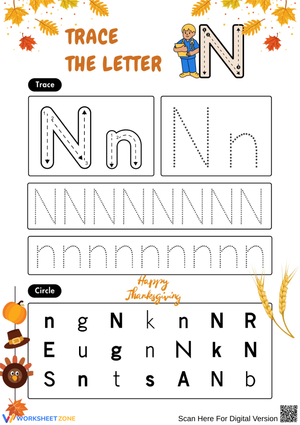
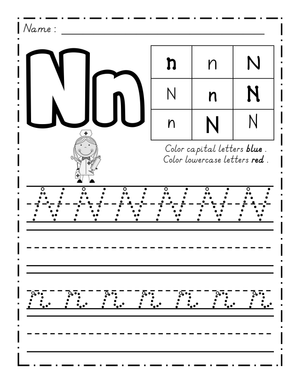
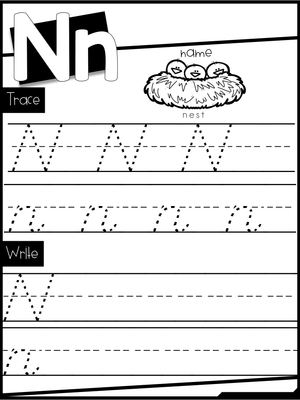
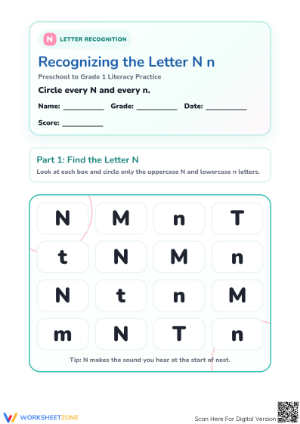
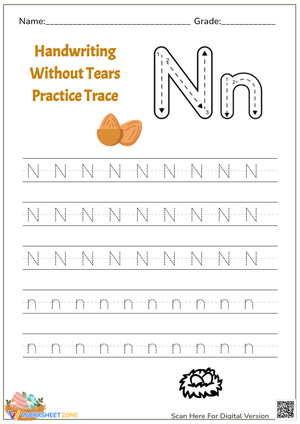
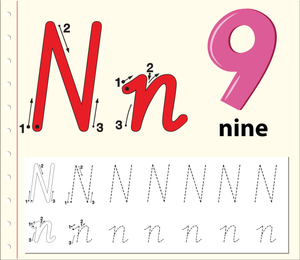
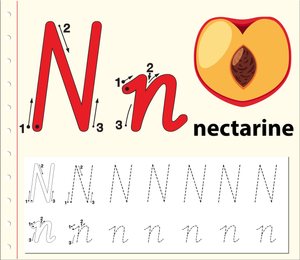
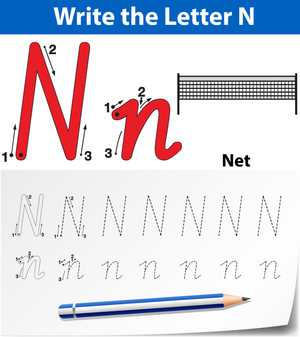
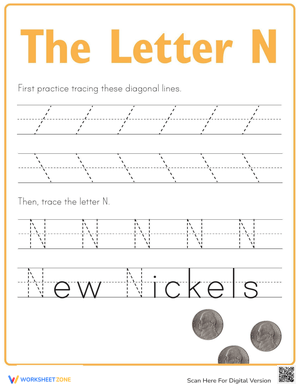
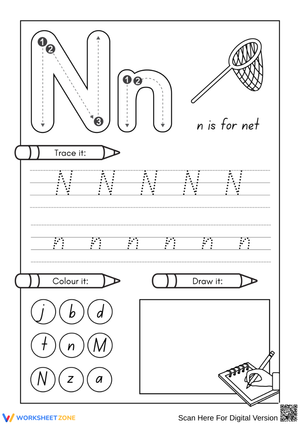
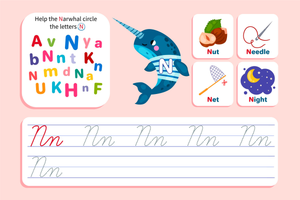
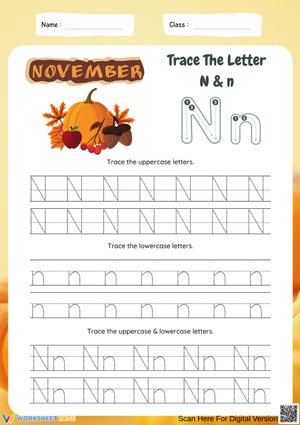
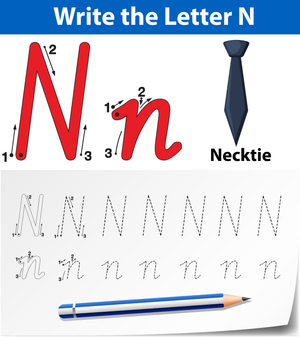
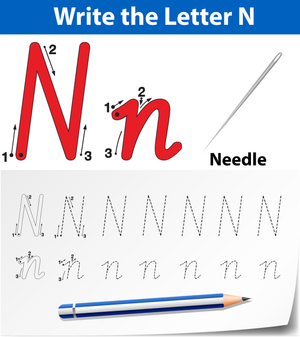
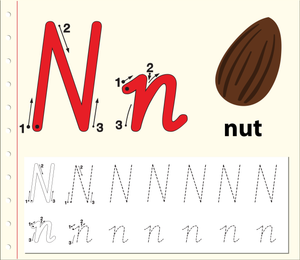
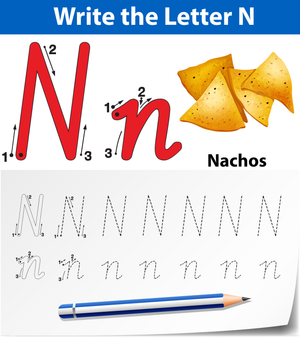
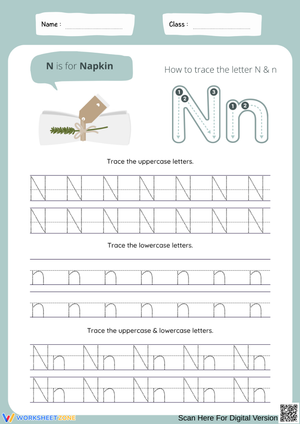
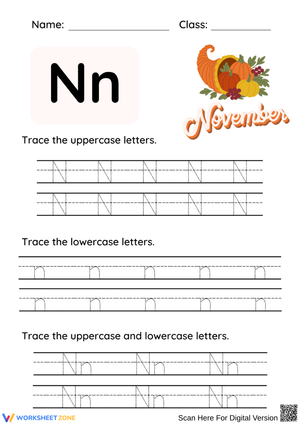
By the time letter N comes up in an alphabet sequence, most kindergarten classes have already built some pencil stamina from earlier letters. N is a useful checkpoint because it combines two vertical strokes with a diagonal, which tests whether students can control direction changes without lifting the pencil too many times. Letter N handwriting worksheets for kindergarten give teachers a low-prep way to check that skill across a whole class in a matter of minutes rather than one student at a time.
Handwriting instruction at this stage is not just about neatness. Kindergarten writing standards commonly expect students to print upper- and lowercase letters as part of foundational conventions of English, and letter N sits squarely in that expectation. A worksheet focused on N gives a concrete, gradable artifact tied to that goal, which makes it easier to track progress across a unit or report to families.
Stroke Order for Uppercase N and Lowercase n
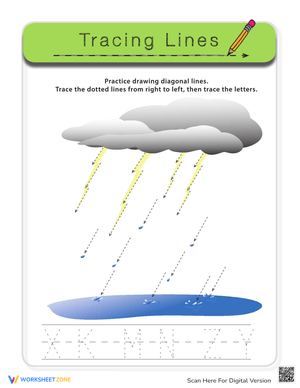
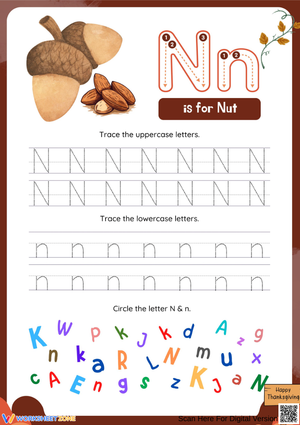
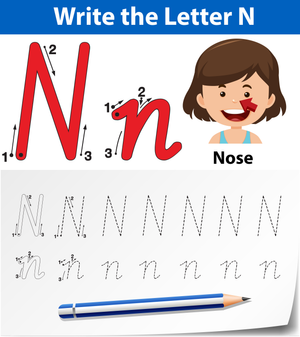
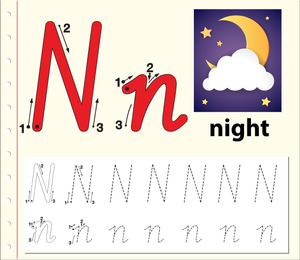
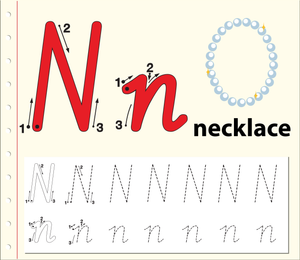
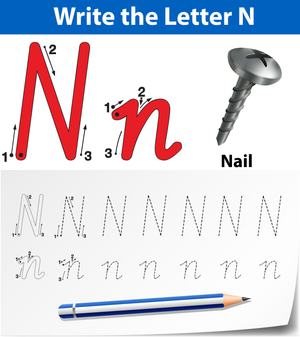
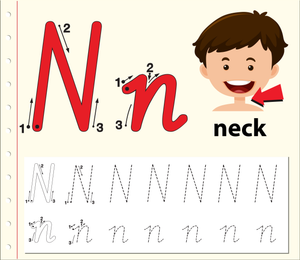
Uppercase N has three strokes: a top-to-bottom vertical line on the left, a diagonal line from top-left to bottom-right, and a second top-to-bottom vertical line on the right. Teaching this order consistently matters because inconsistent stroke sequencing is one of the most common sources of letter reversals and shaky formation in kindergarten writers.
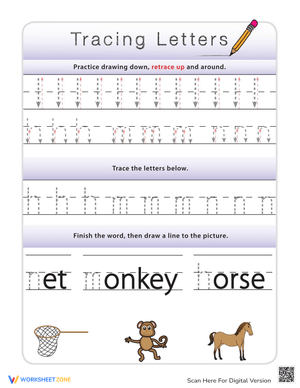
Lowercase n is simpler but still needs explicit modeling: a short straight line down, then a hump that curves up and over without lifting the pencil. Students who rush this hump often flatten it into something closer to an r or an m, so worksheets that isolate the hump motion in a guided practice row help build that motor pattern before students combine it into full words.
Classroom Implementation
- Model uppercase N and lowercase n on a whiteboard first, narrating each stroke out loud before students pick up a pencil.
- Have students trace N in the air, on a partner's back, or in a sand tray before touching paper, especially for students who reverse strokes.
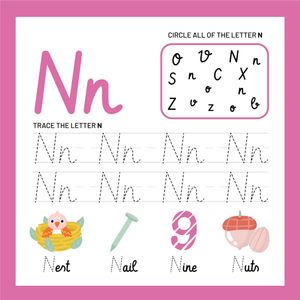
- Use a consistent starting-dot cue on worksheets so students always begin strokes in the same place.
- Send a completed worksheet home with a short note on what to watch for, such as pencil grip or letter size consistency.
- Rotate N practice with review of previously taught letters so retention does not drop off once the class moves to the next letter.
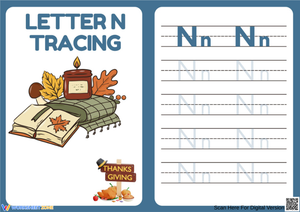
For students who need more repetition, a second N worksheet with wider guidelines or larger letters can bridge the gap without turning into an entirely separate lesson. This kind of light adjustment keeps the whole-group lesson intact while still meeting individual needs.
Frequently Asked Questions
1. What is the correct stroke order for writing uppercase N and lowercase n?
Uppercase N uses a top-to-bottom line, a diagonal from top-left to bottom-right, and a second top-to-bottom line. Lowercase n uses a short straight line down followed by a continuous hump.
2. How many letter N practice worksheets should a kindergartener complete before moving to the next letter?
Most classrooms use two to three worksheets across a few days, adjusting based on whether a student's strokes and orientation are becoming consistent.
3. What signs indicate a student needs more fine motor practice before handwriting instruction?
Watch for an unstable pencil grip, heavy pressure, difficulty staying on the line, or strokes that trail off in the wrong direction; these often point to motor readiness gaps rather than a letter-knowledge issue.
4. How can teachers use letter N worksheets to support students who reverse letters?
Pair the worksheet with a consistent starting-dot cue, verbal stroke narration, and multisensory tracing like sand or air writing before returning to paper practice.
5. What classroom materials pair well with letter N handwriting worksheets?
Playdough, sand trays, tongs, and clothespins build the small muscle strength and coordination that make pencil strokes on the worksheet easier to control.