Z is the 26th and final letter most kindergarten classrooms teach, which makes it a natural finish line rather than just another lesson. If your class has moved through the alphabet letter by letter since August, letter Z handwriting worksheets for kindergarten give you a built-in moment to celebrate that progress while still doing real instructional work: correct stroke order, the /z/ sound, and a quick check on how far students have come with fine motor control.
The Three-Stroke Formation of Z
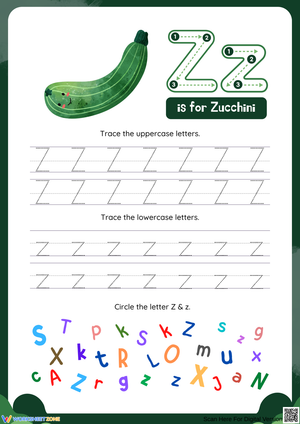
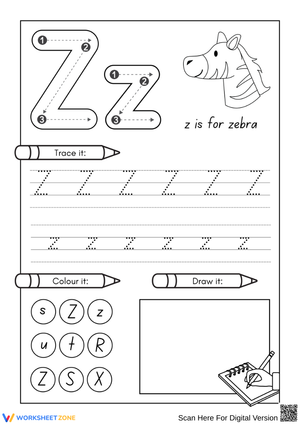
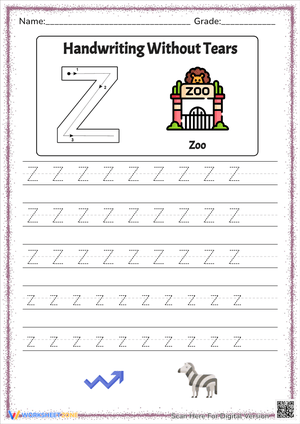
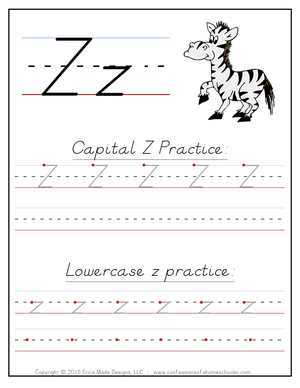
Uppercase Z is formed with three distinct strokes: a straight line across the top, a diagonal line slanting down to the bottom left, and a straight line across the bottom. Lowercase z follows the same zig-zag pattern at a smaller scale. Good letter Z handwriting worksheets for kindergarten isolate these three strokes visually, often with numbered arrows, so children see the motion as top-line, diagonal, bottom-line rather than one continuous scribble.
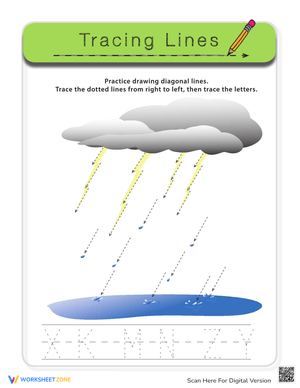
Diagonal strokes are consistently harder for five- and six-year-olds than curved or vertical ones because they require a change in hand angle mid-motion, something most kindergartners have not yet automated. Teachers often see students draw the top and bottom lines correctly but round off the diagonal into a curve, effectively turning Z into a shape closer to a stretched-out S. Naming this pattern out loud during modeling, and slowing down the diagonal stroke specifically, tends to fix it faster than repeated whole-letter tracing alone.
Common Formation Errors and How to Correct Them
Because Z shares visual features with other letters, mix-ups are common at this age. Watch for these patterns during independent practice:
- Reversing the diagonal direction, which can make Z resemble a stylized N
- Confusing Z with S because both involve a slanted middle section
- Drawing the top and bottom lines at uneven lengths, distorting the zig-zag shape
- Lifting the pencil awkwardly between strokes instead of maintaining a steady rhythm
A quick verbal cue such as top line, slide down, bottom line helps students narrate the motion as they write, which reinforces the correct stroke order far better than silent tracing alone.
Classroom Implementation
Letter Z worksheets fit naturally into several classroom formats:
- Warm-up tracing: a two-minute Z tracing page at the start of literacy block to activate prior alphabet knowledge
- Table rotations: one station focused on uppercase and lowercase Z formation while others cover phonics or fine motor tasks
- Quick formative checks: a short independent-writing page without dashed guide lines, used to see who has internalized the three-stroke pattern
- End-of-unit assessment: combining Z practice with a full alphabet review sheet to confirm letter recognition across the entire set
Because Z is often the final letter taught, consider sending the completed worksheet home as part of an alphabet portfolio. Parents and guardians tend to respond well to a tangible marker of a completed unit, and it gives you a natural point to communicate progress on both handwriting and letter-sound skills.
Teacher Tips for Wrapping Up the Alphabet Unit
A few practical notes for using Z worksheets effectively as your unit closer: give students extra time on the diagonal stroke rather than rushing to finish the page, keep the same three or four picture words consistent across activities to reduce vocabulary load, and use the letter as a chance to review the full alphabet sequence rather than treating it in isolation. Short, frequent practice sessions tend to produce more consistent formation than one long worksheet completed in a single sitting, particularly for a letter students have had less exposure to throughout the year.
Frequently Asked Questions
1. How should teachers introduce the letter Z at the end of an alphabet unit?
Start with a quick review of the full alphabet sequence, then isolate Z with modeling of its three strokes before moving to independent tracing. Framing it as the finishing letter helps students feel a sense of completion.
2. What are common mistakes kindergartners make when writing Z, and how can teachers correct them?
The most frequent errors are rounding the diagonal stroke into a curve or confusing Z with S or N. Verbal cues describing each stroke, paired with slow modeling, correct these patterns faster than repeated silent tracing.
3. How many practice sessions are typically needed for a student to master Z formation?
Most kindergartners need three to five short sessions of focused practice, especially if diagonal strokes have not been reinforced earlier in the alphabet sequence.
4. What words or pictures work best for reinforcing the /z/ sound in kindergarten?
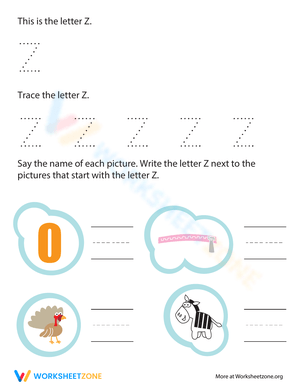
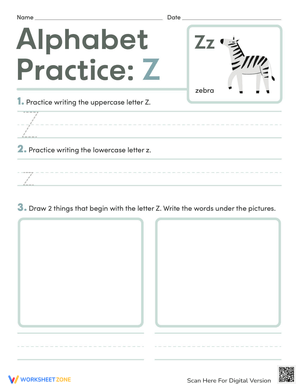
Zebra, zipper, and zero are the most common and reliable choices, since they appear consistently across kindergarten materials and give students a small, repeatable set to anchor the sound.
5. How can Z worksheets be used for both handwriting practice and end-of-alphabet assessment?
Pair a dashed-line tracing page with a blank independent-writing page. The first checks recognition and guided formation, while the second reveals whether a student can produce Z correctly without a model, which doubles as a useful end-of-unit checkpoint.