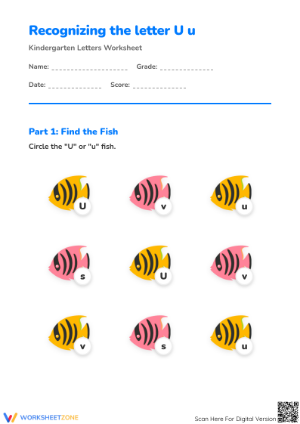
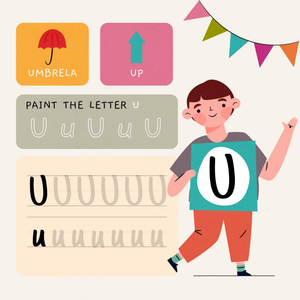
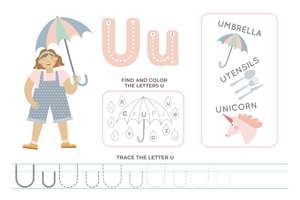
Letter U shows up early in most kindergarten alphabet sequences, but it is easy to rush past. The curved-then-straight stroke pattern in uppercase U and the tight rounded loop in lowercase u trip up young writers who have only practiced straight lines so far. Kindergarten letter u handwriting worksheets give students a structured way to slow down, watch stroke direction, and repeat the motion enough times that it becomes automatic. For teachers building a full-year handwriting scope and sequence, U is a useful checkpoint: it tells you whether students have transferred curved-stroke control from letters like C and O into a new shape.
Sequencing Instruction: Prewriting, Guided Tracing, Independent Writing
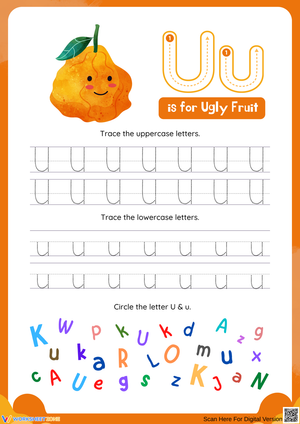
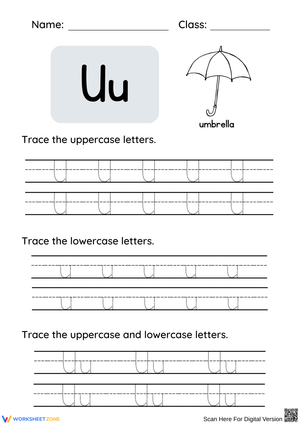
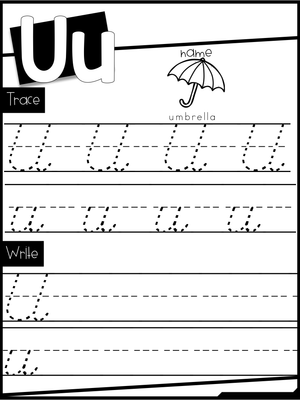
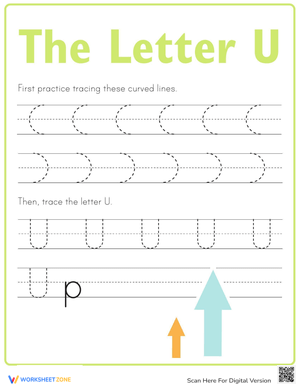
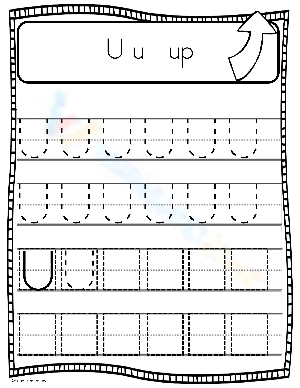
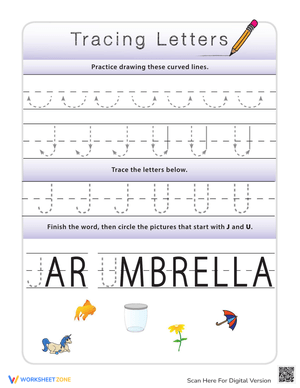
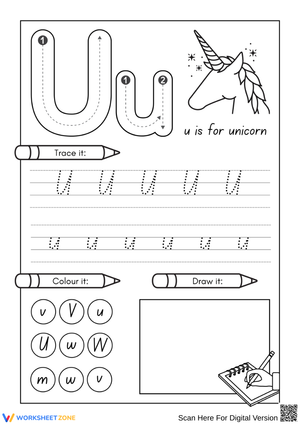
Most effective letter U lessons follow three stages. First, students practice the prewriting strokes that make up the letter: a top-down vertical line and a curved bottom stroke. Second, they trace uppercase and lowercase U on dashed guide lines, following directional arrows that show where to start and which way to curve. Third, they write the letter independently on blank or lightly lined space, without tracing support.
Skipping straight to independent writing is one of the most common pacing mistakes in kindergarten handwriting blocks. Students who have not built the curved-stroke motor pattern tend to write U as two disconnected lines rather than one continuous movement, which creates habits that are harder to correct later in first grade.
Building Fine Motor Foundations for Curved Letters
Letter U is particularly valuable for developing the curved-stroke precision that kindergarteners need for letters like B, P, R, and D. Many students master vertical and horizontal lines before they can control a sustained curve, so letter U serves as a bridge skill in your handwriting progression. The shape requires students to keep continuous pressure on their pencil as they move from the top down one side, across the bottom, and back up the other side, which demands more muscle control than letters composed entirely of straight strokes.
Before introducing U on worksheets, ensure students have completed prewriting work with curved strokes, circles, and C-shaped lines. Students who skip this foundation often press too hard on the pencil during the curve, resulting in a jagged or broken line. A quick five-minute warm-up with finger tracing of large curved paths, or practice with markers on poster paper, prepares their hands for the precision work of pencil-and-paper tracing. This foundational step is especially important for students who show signs of weak fine motor control or who struggle with pencil grip.
Classroom Implementation
A few practical adjustments make letter U worksheets more effective across a full class of kindergarten writers. Keep tracing sessions short, five to eight minutes is usually enough to maintain focus without fatiguing small hand muscles. Check pencil grip before students begin tracing rather than after, since correcting grip mid-worksheet is harder and more frustrating for young writers. Have students trace with a finger first on a large model of the letter before picking up a pencil, which reinforces the stroke path without the added demand of pencil control.
When you notice a student consistently starting U from the bottom instead of the top, address it immediately rather than letting the worksheet accumulate repeated errors. A quick verbal cue, such as start at the top and slide down, paired with a hand-over-hand demonstration, is more effective than simply assigning more tracing pages. Keep a small stack of blank practice strips on hand for students who finish early, so they can move into independent writing once guided tracing feels automatic.
Frequently Asked Questions
1. How should teachers introduce letter U in a kindergarten handwriting sequence?
Start with the prewriting strokes that make up U, a vertical line and a curved base, before introducing the full letter. Move to guided tracing with directional arrows, then independent writing once students can trace consistently without reversing the stroke direction.
2. What should I look for when observing letter U handwriting practice?
Watch for three key things: correct starting point at the top of the letter, correct stroke direction (down the left side, across the bottom, up the right side), and a legible final shape. Students who reverse the letter or consistently start from the bottom benefit from additional verbal cues and hand-over-hand practice.
3. How can teachers use letter U worksheets to check for correct letter formation?
Circulate during tracing time and use the three-point check mentioned above. This quick observation takes less than a minute per student and gives you real-time data on who is ready to advance to the next letter and who needs more practice time.
4. What prewriting skills should students have before tracing letter U independently?
Students should be comfortable with basic vertical lines and curved strokes, since U combines both. Prewriting practice with individual strokes builds the fine motor control needed before attempting the full letter on a tracing worksheet.
5. How can vocabulary picture cues improve letter U worksheets?
Pairing the letter with images like umbrella, up, or unicorn gives students a verbal anchor to say while tracing, which reinforces letter-sound association and tends to slow the hand enough to reduce rushed, disconnected strokes.