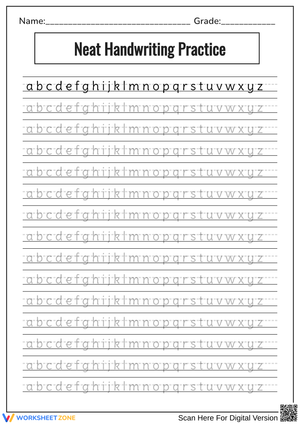
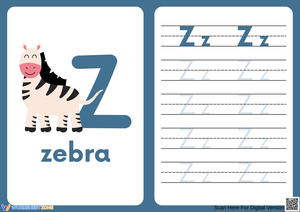
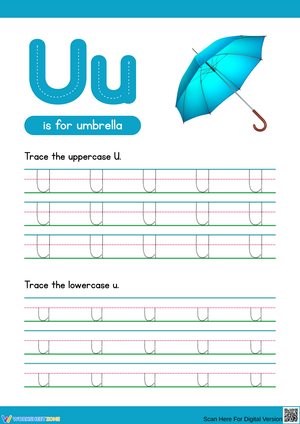
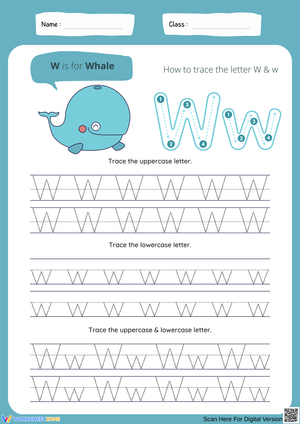
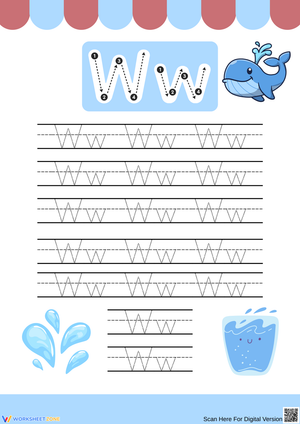
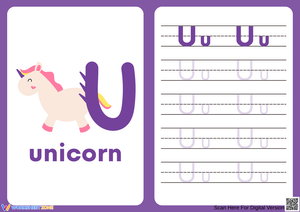
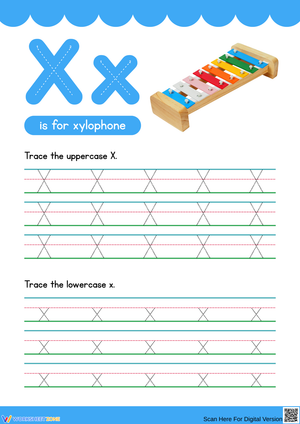
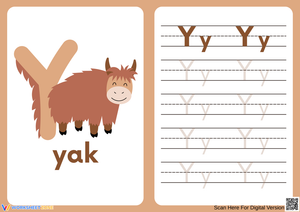
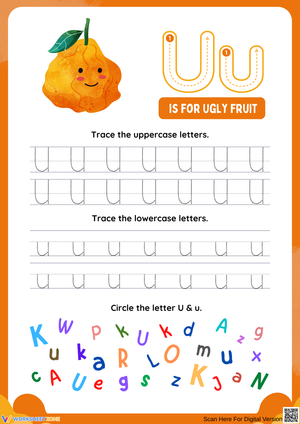
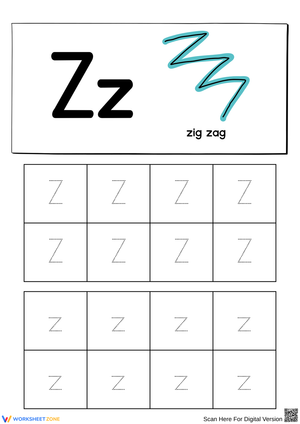
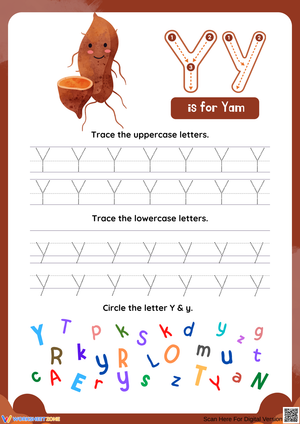
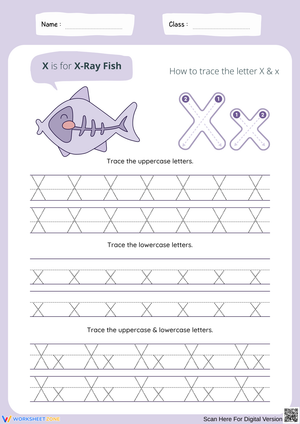
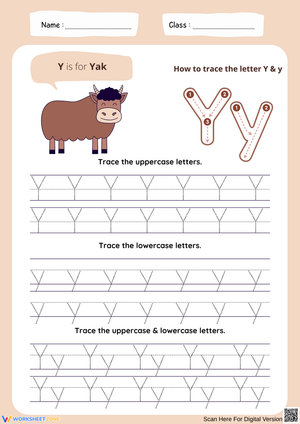
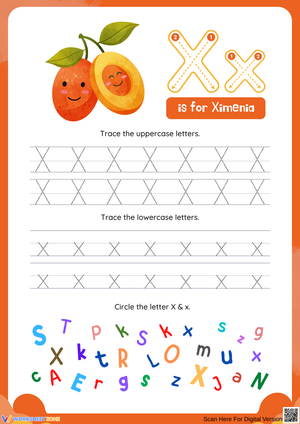
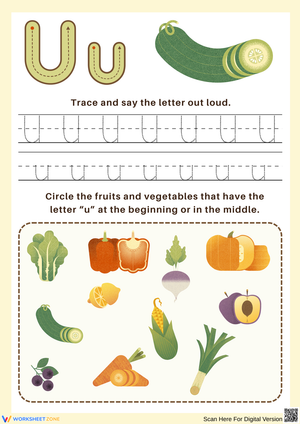
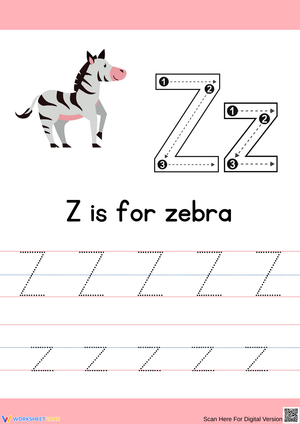
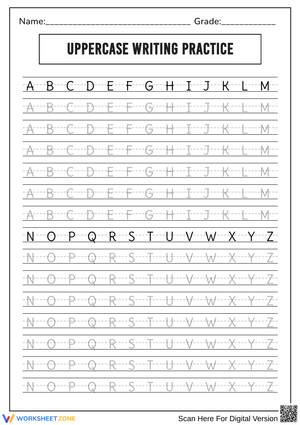
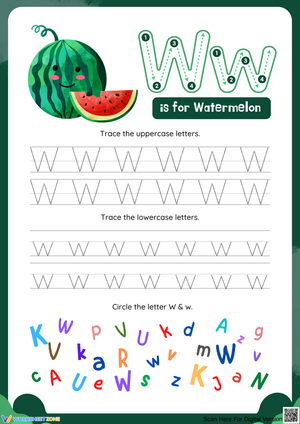
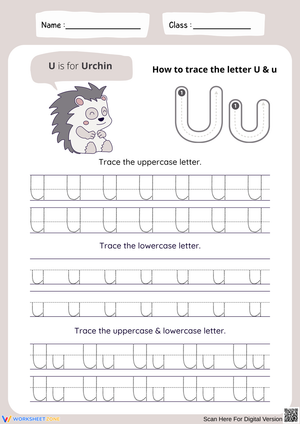
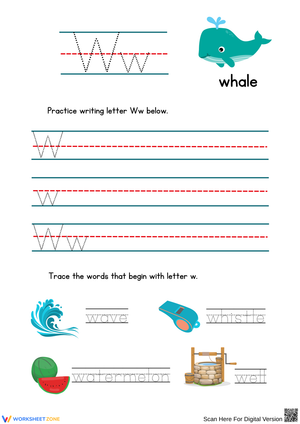
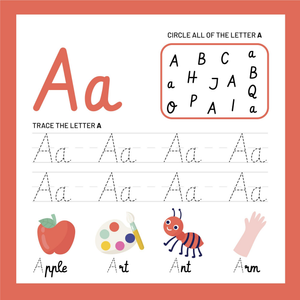
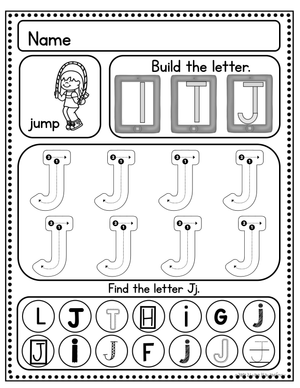
These kindergarten letter tracing handwriting worksheets give teachers a printable set they can pull out for morning work, center rotations, small-group instruction, or homework folders — without spending planning time reformatting anything for the printer. Each worksheet focuses on one letter at a time, pairing clear formation cues with enough practice space to distinguish guided attempts from independent tries. The PDF format means teachers can reprint a specific letter multiple times for targeted review, add worksheets to sub folders, or send particular letters home based on what each student actually needs.
Skills Each Worksheet Targets
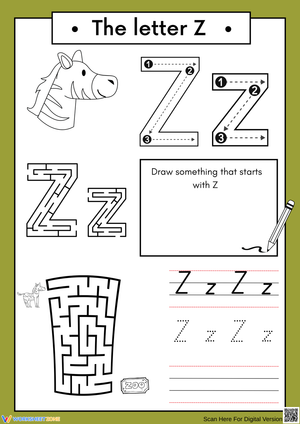
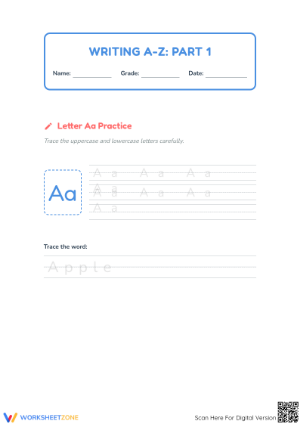
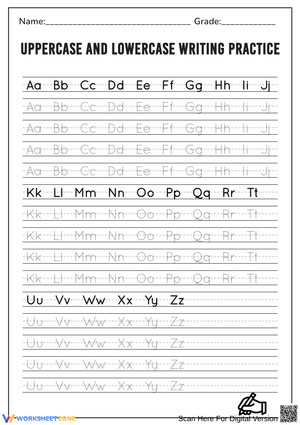
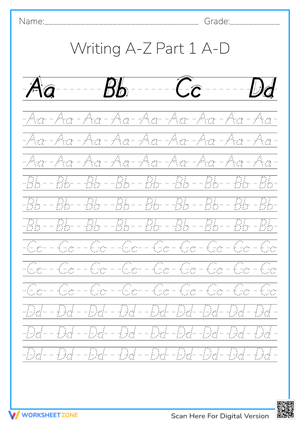
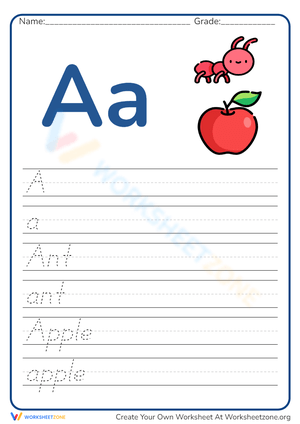
Every worksheet in this set builds handwriting at the component level — not just copying a shape, but learning where to start, which direction to travel, and when to lift the pencil. Students trace uppercase and lowercase letter forms, follow stroke-direction arrows, and attempt a few independent repetitions after the guided examples. Picture support anchors each letter to a concrete word, keeping the task connected to the broader alphabet work happening in the classroom.
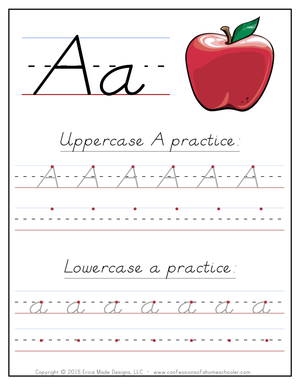
- Correct starting point: Students identify the entry dot before drawing so they don't drift into forming letters from the bottom up — a habit that becomes hard to unlearn once it's established.
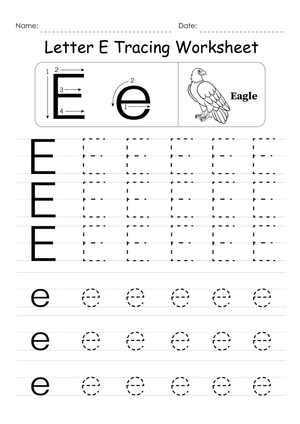
- Stroke sequence: Numbered cues break multi-stroke letters like E or k into ordered movements instead of one tangled line.
- Proportional letter size: A baseline and midline on each worksheet train consistent letter height from the first attempt, not as an afterthought.
- Uppercase and lowercase comparison: Both forms appear side by side, which matters especially for letters like G/g or A/a, where the two forms share almost no visual resemblance.
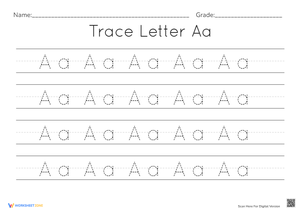
- Independent recall: Each worksheet includes space for student-led attempts after the guided traces, giving teachers a built-in check on whether a child needs more visual support or is ready to move on.
Mistakes Students Make That These Worksheets Help You Catch
The most persistent error in early letter formation is starting in the wrong place. A child who forms the letter a from the bottom works against the natural stroke path, and that habit becomes harder to correct the longer it goes unaddressed. The bold starting dot on each worksheet interrupts that pattern before it solidifies — but only if teachers establish a clear expectation to find and touch the dot before the pencil moves anywhere else.
Reversal errors — writing b and d as mirror images — show up regularly in Kindergarten and often persist into first grade when they're left unaddressed early. The most reliable correction is treating them as entirely separate motor sequences: on the b worksheet, students form the tall stick first, then add the bump; on the d worksheet, the circle comes first. When students internalize distinct movement patterns rather than thinking of the two letters as reflections of each other, reversals decrease measurably. If a child consistently reverses letters even during guided tracing, that's worth flagging — not as a reason for more copies of the same worksheet, but as a signal to slow down and add large-motor practice before returning to pencil work.
Size drift is a subtler error that shows up when students move from the guided traces to the independent practice rows. A student will trace the large model correctly, then write the independent attempts noticeably smaller and off the baseline. That pattern usually means the child is copying the visual shape rather than internalizing a motor sequence. Watching for that drift during independent practice tells you whether the worksheet is functioning as a formation tool or just as a fill-in activity.
Fitting These Worksheets Into a Real School Day
Morning work is the most natural entry point. Students arrive, unpack, and complete one familiar worksheet while the teacher manages attendance and check-ins. Because the format is consistent across every letter in the set, the routine becomes self-directing by October — children sit down and begin without needing anyone to walk through directions again. That predictability matters in Kindergarten, where format familiarity frees up cognitive attention for the actual task of forming the letter correctly.
In literacy centers, pair each worksheet with a hands-on follow-up: magnetic letters, letter stamps, or a small whiteboard where students reproduce the letter after tracing it on paper. The tracing worksheet is the structured phase; the manipulative is the generalization step. For center management, keeping only three or four target letters in the bin at a time — rather than the full alphabet — keeps students working on letters that are active in their current instructional window rather than ones they finished three weeks ago.
Small-group time is where these worksheets earn the most instructional payoff. With four or five students at the table, teachers can watch grip, posture, and stroke direction in real time, redirect before a wrong habit takes hold, and ask each child to narrate the strokes aloud. That verbal narration — "start at the dot, pull down, lift, and curve" — builds a motor-language link that speeds up letter recall during independent writing later in the year.
A routine worth building in early is what some teachers call the three-pass approach: trace with one finger, then trace with pencil, then cover the model and write one independent letter beside it. That third step turns each worksheet into a quick formative check. If the student produces a legible letter without looking at the model, they're ready to move on. If they consistently need to peek, they need more repetitions before pencil-to-paper independence is realistic.
Differentiating the Set Across a Mixed-Ability Classroom
Students with weaker fine motor control benefit from a reduced version of each worksheet: two guided traces instead of a full row, a shorter pencil with a thicker grip, and a slant board if one is available. Splitting each worksheet across two sittings — one in the morning, one after lunch — often produces better letter quality than asking for all repetitions at once, because fatigue is the main driver of deteriorating formation in young writers, not lack of effort or understanding.
For students who move through the tracing rows quickly and accurately, extend each worksheet with a task at the bottom: write the letter three times from memory, circle every instance of the letter in a printed sentence, or draw and label an object whose name begins with that sound. These extensions keep early finishers working at the same conceptual level without requiring a separate material stack.
Students who seem ready to skip tracing entirely still usually benefit from one guided trace per letter — the visual model supports accurate formation even when pencil control is strong. What changes is how much of the practice space they use: one guided trace, independent writing across the remaining rows, and a quick move to the extension task.
Standard Alignment
These worksheets align directly with CCSS.ELA-LITERACY.L.K.1.A, which requires Kindergarteners to print many upper- and lowercase letters. The emphasis in that standard is on volume and legibility across the full alphabet, not isolated perfection on a single letter — which is exactly the use pattern this set supports when teachers work through it letter by letter across the school year. Teachers in states following alternate ELA frameworks will find the alignment similarly clear, since letter formation at the Kindergarten level appears in nearly every state framework under foundational writing or early literacy strands.
Frequently Asked Questions
Are these worksheets appropriate for students who haven't had much pencil experience before Kindergarten?
Yes, but add a pre-tracing step first. Before any student picks up a pencil, have the group trace the letter in the air three times while you call out the stroke cues, then trace it on the desk with one finger. By the time pencil meets paper, the motion already has some muscle memory behind it. Students with very limited pencil experience may also benefit from starting on a whiteboard before moving to the kindergarten letter tracing handwriting worksheets, since the low-stakes surface removes the pressure of making permanent marks.
How many worksheets per week is reasonable?
Most teachers introduce one or two new letters per week and use one tracing worksheet per letter as the primary formation practice, supplemented by other writing activities throughout the day. There is no instructional benefit to moving through all 26 letters quickly if students are forming most of them incorrectly — accuracy and consistency matter more than pace at this stage. Let student performance, not the calendar, drive the pacing decisions.
Can these worksheets go home for family practice?
Printable PDFs travel well for exactly that reason. When a family has already seen the same format at school, home practice requires almost no explanation. A brief note suggesting the finger-trace-then-pencil sequence is usually enough guidance. Using kindergarten letter tracing handwriting worksheets as take-home materials works best when families know which specific letters the class is currently studying, rather than receiving random letters from the set.
What should a teacher do when a student keeps forming a letter incorrectly despite repeated practice?
Reduce the visual information on the worksheet first. Cover the lowercase model if uppercase is the current target, or fold back rows the student has already completed so the remaining worksheet feels less cluttered. If the wrong formation persists across multiple sessions, step back to large-motor practice — forming the letter on a whiteboard or shaping it with playdough — before returning to pencil work. Repeated incorrect tracing reinforces the wrong movement pattern just as reliably as correct tracing reinforces the right one, so more repetitions of the same task without a change in approach will not solve the problem. When the student can form the letter consistently at large scale, reintroduce the kindergarten letter tracing handwriting worksheets and watch for whether the correct movement carries over to the smaller writing surface.