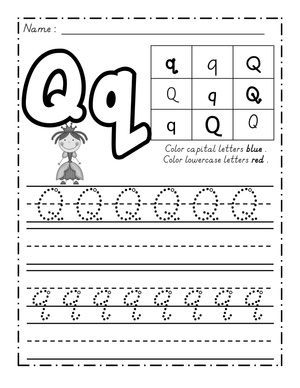
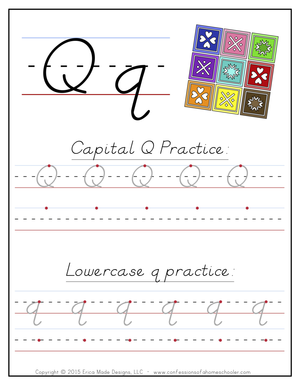
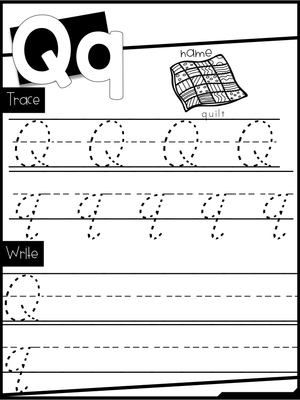
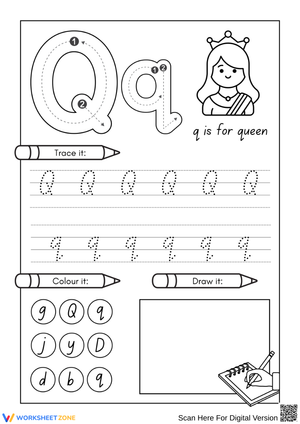
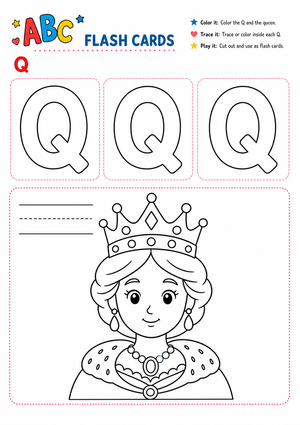
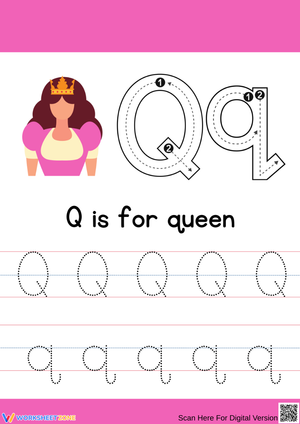
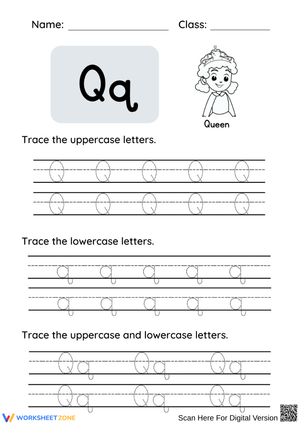
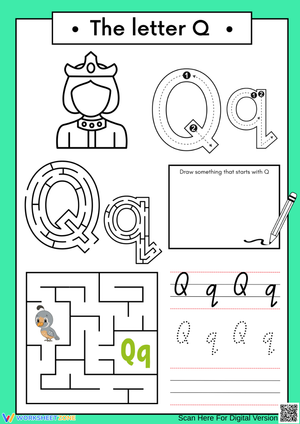
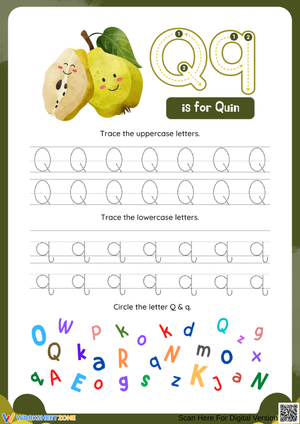
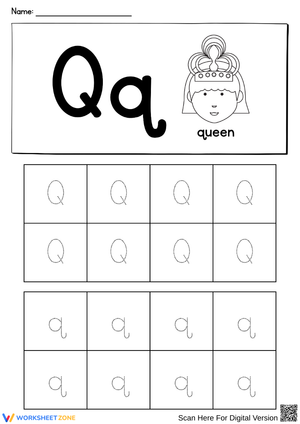
Letter Q rarely gets the daily repetition that letters like A, S, or T receive in kindergarten print. Because Q shows up less often in books, name tags, and word walls, many kindergartners simply see fewer natural examples of it during the school day. Letter Q handwriting worksheets fill that gap by giving students a focused, repeatable way to practice the tall stick shape and small curved tail before they encounter Q in reading and writing tasks.
For a teacher planning a phonics-and-print block, this matters because print skills and letter-sound skills reinforce each other. A student who has traced and copied Q several times is more likely to recognize it quickly during shared reading, which then supports blending and decoding practice later in the year.
Building Fine Motor Control for the Q Shape
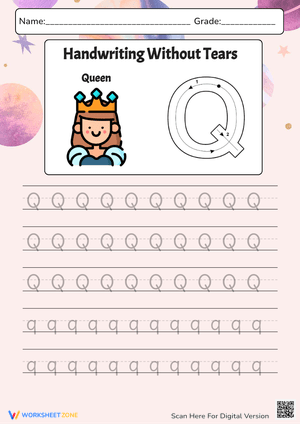
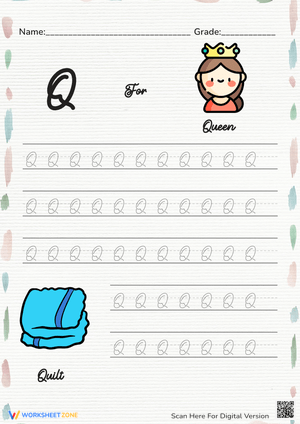
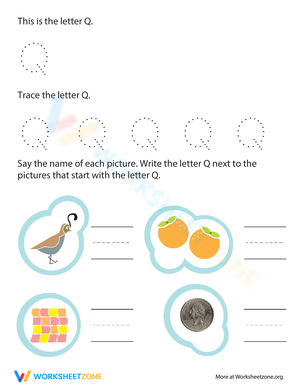
The letter Q combines a circular body with a short diagonal or curved tail, which asks young writers to manage two different motor movements in one letter. For students still developing pencil grip and hand strength, this combination can be trickier than single-stroke letters. Worksheets that break the letter into its two parts, the circle first and the tail second, give students a clearer path to independent formation than pages that only show the finished letter shape.
Watch for students who draw the circle correctly but add the tail in the wrong direction or place, since this is one of the most common Q-formation errors in kindergarten. A quick verbal cue, such as reminding students the tail points down and to the right, paired with one more guided trace on the worksheet, often resolves the mistake faster than repeated independent practice alone.
Classroom Implementation
Direct letter formation instruction is generally recommended for about ten to fifteen minutes a day in kindergarten and first grade, and short, consistent sessions of five to ten minutes tend to work better for young learners than longer, infrequent ones. A practical structure for a letter Q lesson might include a one-minute model of the letter on a whiteboard, three to five minutes of guided tracing on the worksheet, and a short independent attempt at the bottom of the page.
Students typically need five to ten repeated practice opportunities with a letter, across varied formats such as tracing, copying, and tactile writing, before the shape becomes automatic. Because Q gets fewer natural exposures than common letters, plan for closer to the upper end of that range: revisit the letter Q worksheet across two or three short sessions that week rather than a single one-time activity, and mix in copying without tracing lines once students show consistent control.
Frequently Asked Questions
1. How many times should kindergartners practice writing letter Q before moving on?
Most students need five to ten repeated practice opportunities across different formats, such as tracing, copying, and tactile writing. Because Q is a lower-frequency letter, plan for the higher end of that range and revisit the worksheet across more than one session that week.
2. What is the best way to teach the letter Q sound alongside handwriting practice?
Pair every trace of the letter with the qu blend and the /kw/ sound, since Q almost always appears with u in English print. Saying the sound aloud during each stroke keeps the handwriting activity tied to phonics work rather than isolating letter formation from letter sound.
3. How long should daily kindergarten handwriting practice last?
Direct letter formation instruction is generally recommended for about ten to fifteen minutes a day, with short, consistent five-to-ten minute sessions working better for young learners than longer, infrequent blocks.
4. Which standard do letter Q tracing worksheets align with?
Most letter-tracing worksheets, including letter Q pages, align with Common Core State Standards RF.K.1, which covers print concepts and letter recognition and production in kindergarten.
5. How can teachers make letter Q practice engaging since it is a less common letter?
Combine the worksheet with a center-based matching or sorting activity using qu words, and add a multisensory step, such as sand tray tracing or air writing, before the paper practice to give students more varied exposure to the shape.