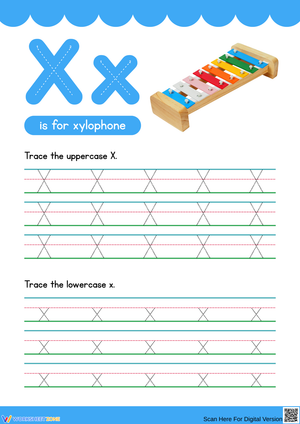
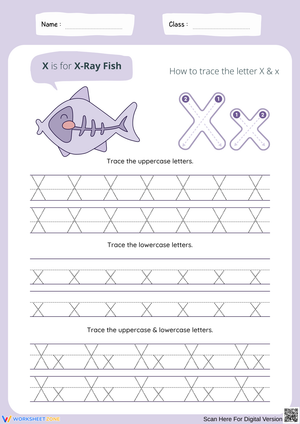
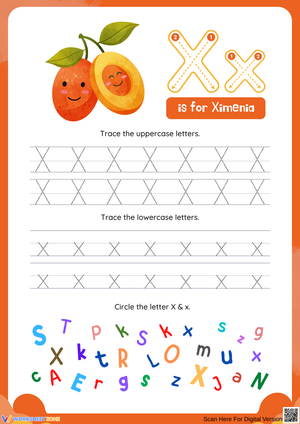
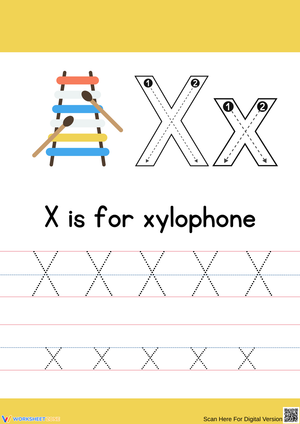
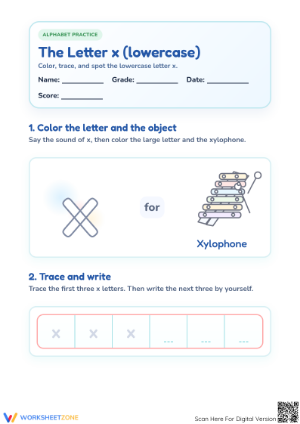
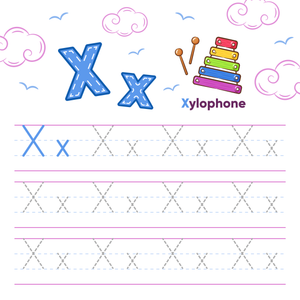
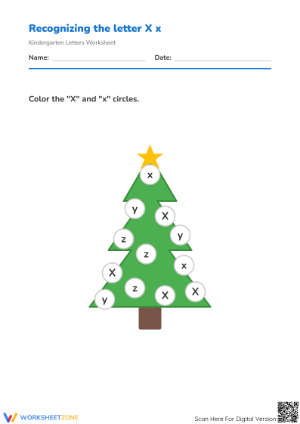
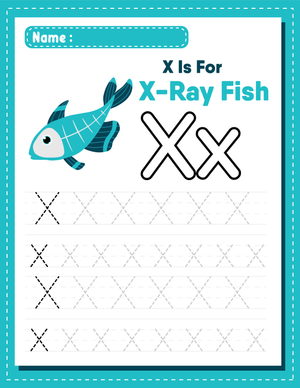
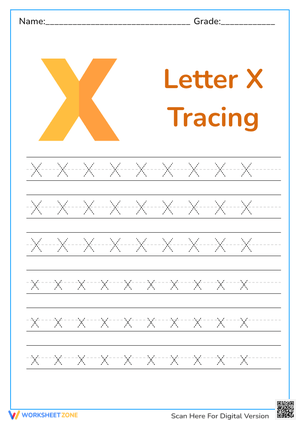
Letter X rarely shows up at the start of a word, which is exactly why it needs deliberate practice time rather than incidental exposure. Kindergarten teachers often notice that X gets less repetition through everyday reading than letters like S or T, so a dedicated handwriting worksheet becomes the main place students actually rehearse the shape. Building that repetition early keeps letter X from becoming the one symbol students forget by spring.
Because X is a low-frequency letter, kindergarten teams tend to schedule it later in an alphabet sequence, once students already have practice forming diagonal lines from letters like K, V, or Y. That prior exposure to diagonals makes X a natural extension rather than a brand-new motor skill, which is worth pointing out to students so the letter feels less intimidating.
Correct Stroke Order for Uppercase X and Lowercase x
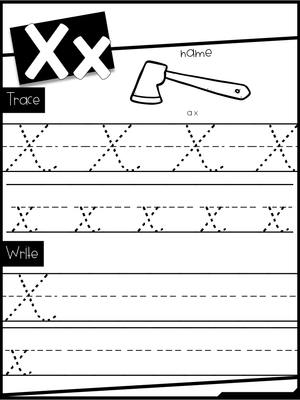
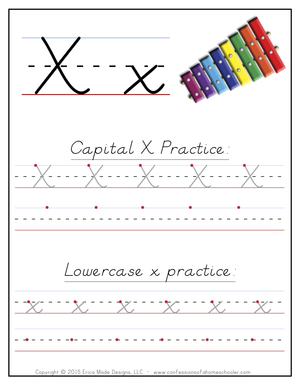
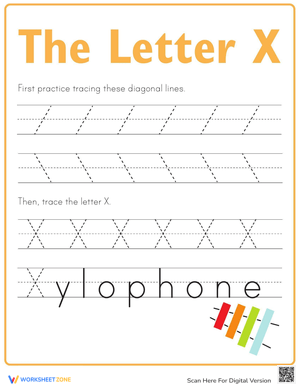
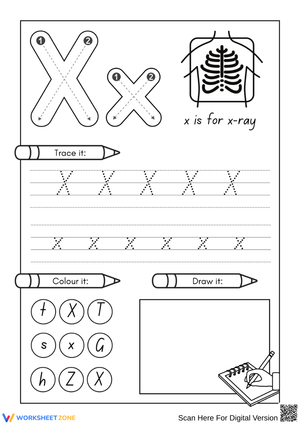
Uppercase X is formed with two diagonal strokes: one starting at the top left and sliding down to the bottom right, then a second stroke starting at the top right and sliding down to the bottom left, crossing at the midpoint. Lowercase x follows the same two-stroke, crossing-diagonal pattern but sits smaller, between the midline and baseline rather than spanning a full line of writing.
The crossing point is where most kindergartners struggle. Young writers often stop short of the baseline, cross too high or too low, or reverse the direction of the second stroke. Naming the crossing point out loud as students write, such as saying meet in the middle, gives them a verbal anchor to check their own accuracy before moving to independent writing.
Classroom Implementation
Letter X worksheets work best when they are one piece of a short, multisensory routine rather than a stand-alone worksheet page. A simple sequence many kindergarten teachers use looks like this:
- Air-write the letter with a big arm movement while saying the stroke order out loud.
- Trace the letter in sand, salt, or shaving cream to feel the crossing diagonals before touching a pencil.
- Complete the tracing rows on the worksheet, checking pencil grip along the way.
- Finish with the independent writing row and one quick word match, such as circling fox or box.
Quick pencil grip checks matter here because letter X requires two distinct diagonal motions in a short space, and an awkward grip makes the crossing point sloppy. A brief check-in, even 10 seconds per student during small-group rotations, catches grip issues before they turn into a habit.
Standards Connection
CCSS RF.K.1.d asks kindergartners to recognize and name all upper- and lowercase letters, including X, as a foundational literacy skill, which gives letter X worksheets a clear standards anchor even though the letter shows up less often in connected text. Handwriting practice for letters like X also supports fine motor and perceptual-motor development, which is linked to writing fluency later on.
According to the Zaner-Bloser Written-Language Production Standards for Handwriting and Keyboarding, consistent, sequenced letter formation practice in the early grades builds the fine motor control and stroke automaticity that later support fluent, legible writing. This connects directly to why a single letter X worksheet is rarely enough; automaticity comes from repeated, correctly sequenced practice rather than one-time exposure.
Frequently Asked Questions
1. How should teachers introduce letter X to kindergartners who rarely see it at the start of words?
Introduce X through familiar ending-position words like fox, box, six, and mix rather than searching for X-initial words, since true X-initial vocabulary is rare in early reading materials.
2. What is the correct stroke order for writing uppercase and lowercase X?
Both forms use two diagonal strokes: top left to bottom right, then top right to bottom left, crossing in the middle. Uppercase spans the full line height while lowercase sits smaller between the midline and baseline.
3. How many practice sessions are typically needed for kindergartners to master letter X formation?
Most students need about two to three short, focused sessions across a week, though some benefit from an extra week of tracing and multisensory support before writing independently.
4. How can letter X worksheets be used for small-group or center-based instruction?
They fit well as a short station activity: trace, check grip, write independently, then match the letter to a word like box or six, all in five to seven minutes.
5. What common mistakes do kindergartners make when writing letter X?
The most common errors are stopping short of the baseline, misjudging the crossing point, or drawing two separate lines instead of one continuous crossing motion.