


























Views
Downloads
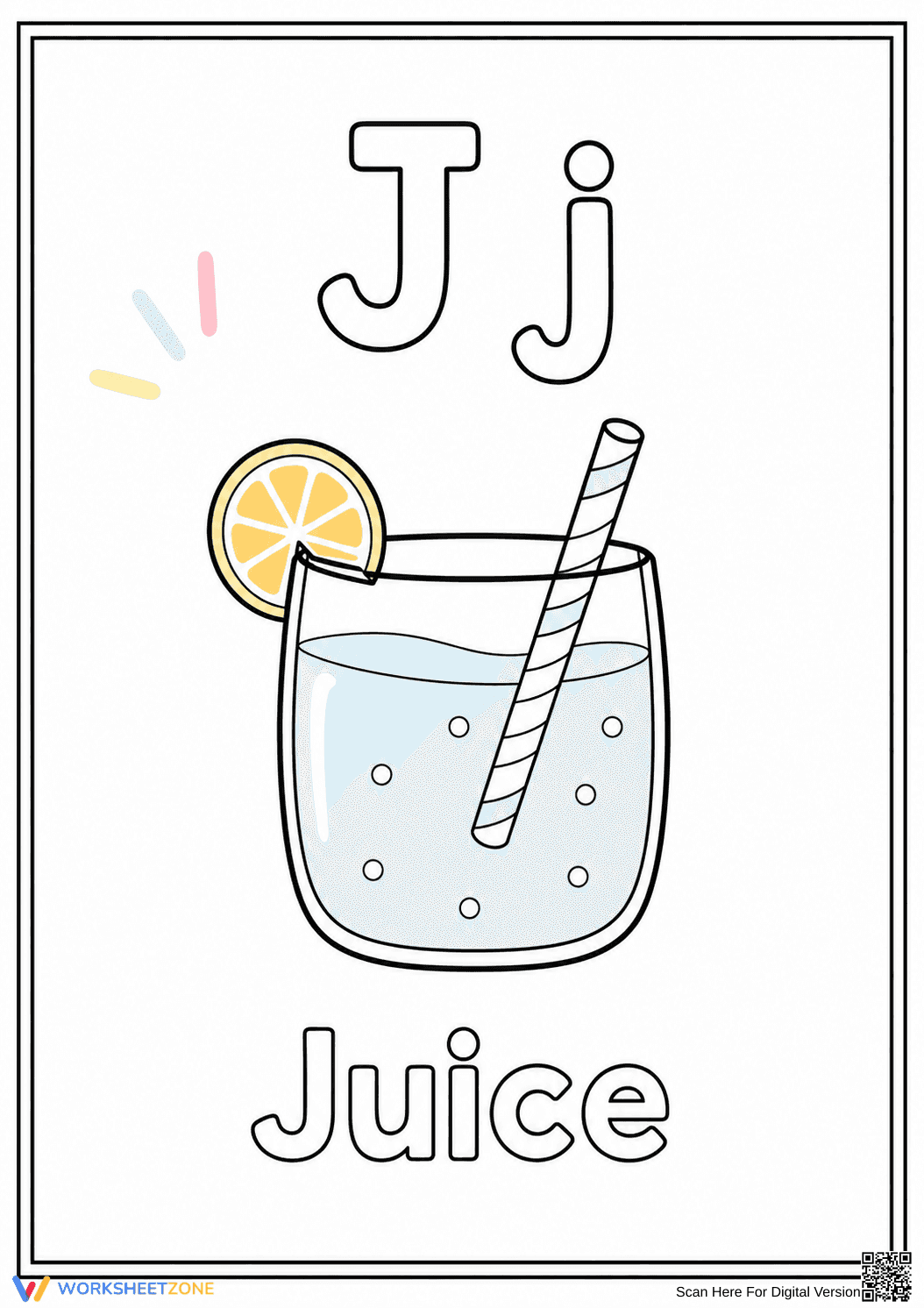

Printable Letter J Beginning Sound Worksheet | Grade K
Paste this activity's link or code into your existing LMS (Google Classroom, Canvas, Teams, Schoology, Moodle, etc.).
Students can open and work on the activity right away, with no student login required.
You'll still be able to track student progress and results from your teacher account.
This foundational phonics worksheet helps early learners master the beginning sound of the letter J through engaging visual association. Students connect the uppercase and lowercase letter forms with a familiar vocabulary word, building essential letter-sound correspondence skills required for early reading fluency and phonemic awareness.
At a Glance
- Grade: Kindergarten · Subject: ELA
- Standard:
CCSS.ELA-LITERACY.RF.K.3.A— Produce primary sounds for consonants- Skill Focus: Letter J Beginning Sound
- Format: 1 page · 1 task · No answer key needed · PDF
- Best For: Independent practice or morning work
- Time: 5–10 minutes
Inside this single-page resource, educators will find a clear, uncluttered layout featuring the uppercase and lowercase letter J. The page includes a large, colorable illustration of a glass of juice alongside the outlined vocabulary word. This straightforward design removes visual distractions, allowing young students to focus entirely on the target letter and its corresponding initial sound.
Zero-Prep Workflow
- Print (30 seconds): Generate the PDF and send it directly to your classroom printer. The black-and-white outline design saves ink.
- Distribute (1 minute): Hand out the single page along with crayons or markers. No complex instructions or teacher modeling required.
- Review (1 minute): Quickly check student work as they color, reinforcing the "juh" sound verbally. Total teacher prep time is under two minutes, making this an ideal addition to any emergency sub plan.
Standards Alignment
This resource directly supports CCSS.ELA-LITERACY.RF.K.3.A: Demonstrate basic knowledge of one-to-one letter-sound correspondences by producing the primary sound or many of the most frequent sounds for each consonant. It also reinforces early print concepts by pairing the visual letter with a concrete image. Both standard codes can be copied directly into lesson plans, IEP goals, or district curriculum mapping tools.
How to Use It
Deploy this worksheet during morning arrival as a calm, focused entry task that activates prior phonics knowledge. Alternatively, use it as an independent station activity while the teacher conducts small group reading instruction. As a formative assessment tip, walk around the room and ask individual students to point to the letter and verbally produce the "juh" sound before they finish coloring. Expected completion time is five to ten minutes.
Who It's For
This material is designed for Kindergarten students and early first graders developing their foundational phonics skills. It serves as an excellent modification for English Language Learners who benefit from strong visual vocabulary supports. Pair this coloring page with a tactile letter-tracing activity or a whole-group alphabet anchor chart to solidify the learning objective.
Effective phonics instruction relies heavily on explicit letter-sound correspondence training, particularly for early childhood learners. According to a comprehensive review by EdReports 2024, foundational reading materials must provide clear, isolated practice opportunities for students to connect visual symbols with their auditory counterparts. This resource aligns with CCSS.ELA-LITERACY.RF.K.3.A, requiring students to produce primary sounds for consonants. By integrating a familiar visual anchor—in this case, juice—with the target letter J, the worksheet reduces cognitive load and supports memory retention. Research indicates that pairing phonemic practice with fine motor activities, such as coloring, can increase student engagement and time-on-task during independent learning blocks. Utilizing targeted, single-skill resources ensures that early readers build the automaticity necessary for decoding, ultimately laying the groundwork for future reading comprehension and overall academic success.


