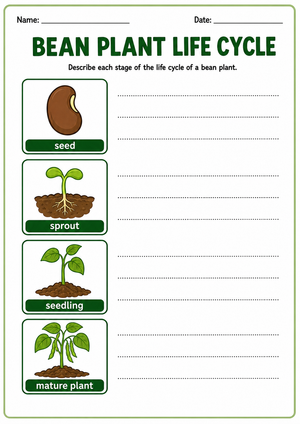
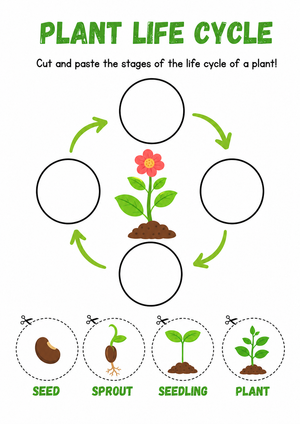
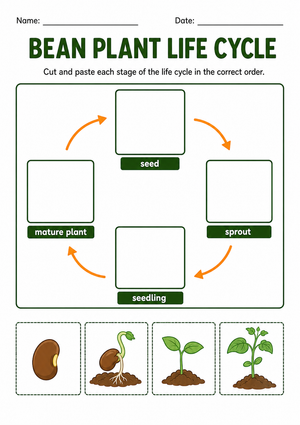
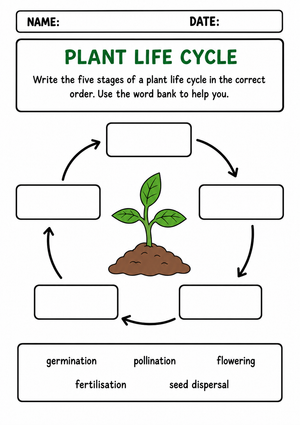
These plant worksheets for 3rd grade give teachers targeted science practice for the three ideas that anchor most elementary plant units: plant structure and function, survival needs, and the sequence of a life cycle. The shift from Grade 2 to Grade 3 plant instruction is meaningful — second graders identify and name, while third graders are expected to explain and connect — and the worksheets support that cognitive step with tasks that ask students to do more than fill in a label.
The Specific Skills Each Worksheet Targets
The set covers five distinct content areas rather than cycling through the same format repeatedly. Each worksheet stays focused on one concept, which keeps cognitive load manageable and makes it easier for teachers to assign specific worksheets to specific lesson moments.
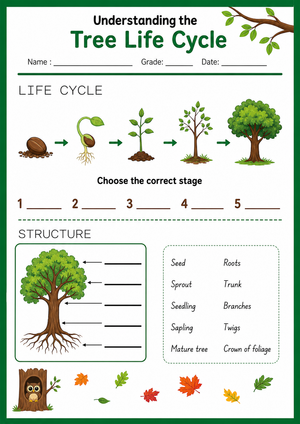
- Plant parts and function: Students label roots, stem, leaves, flower, fruit, and seeds, then match each structure to its job. The function matching is what separates these from basic labeling tasks — students have to explain why each part exists, not just where it sits on a diagram.
- Plant survival needs: Each worksheet asks students to identify sunlight, water, air, nutrients, and space, then explain how removing any one need affects the plant. Short cause-and-effect sentence stems keep the writing manageable without removing the reasoning demand.
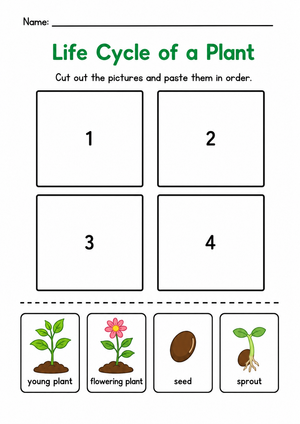
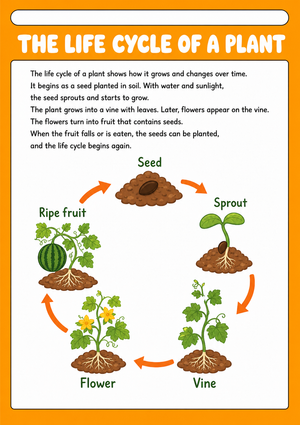
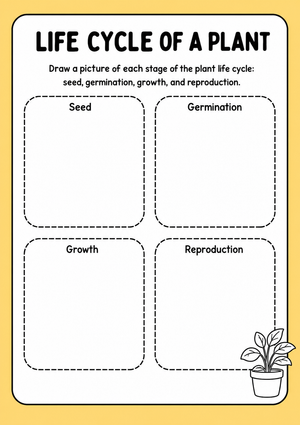
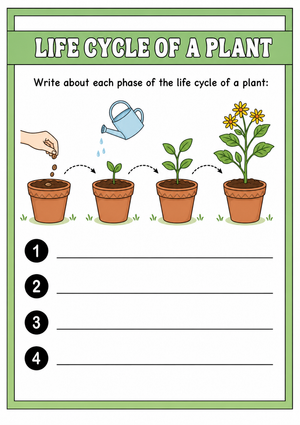
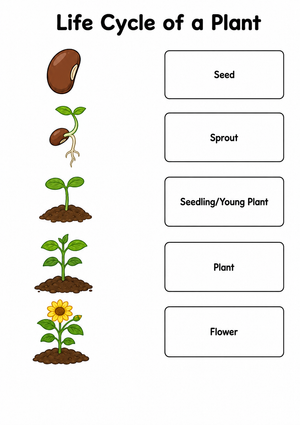
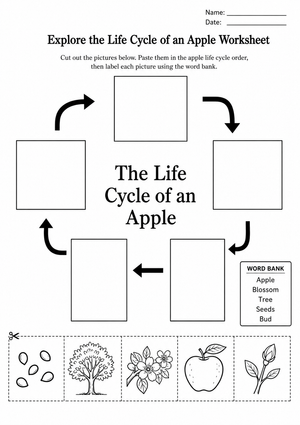
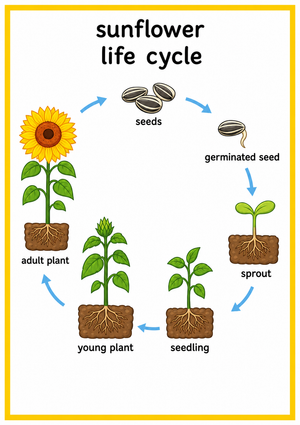
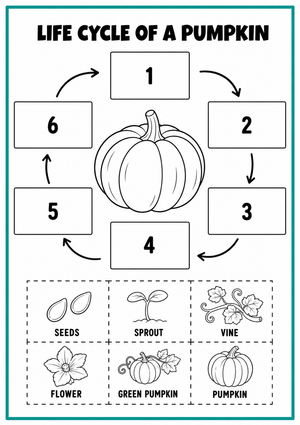
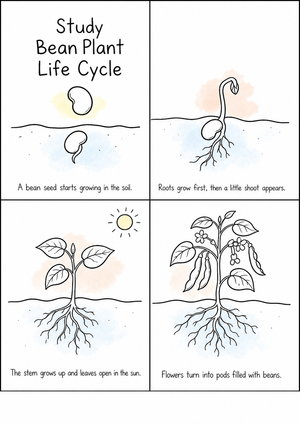
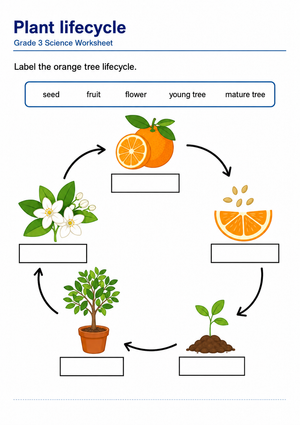
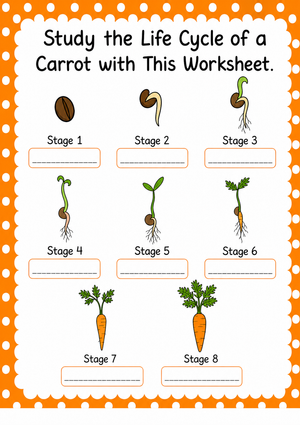
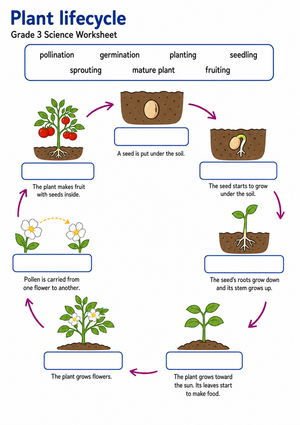
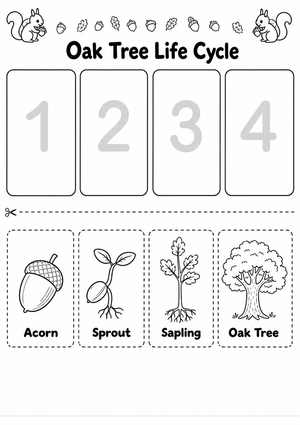
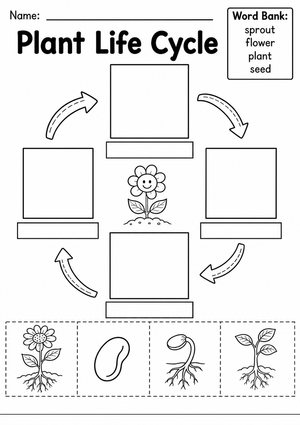
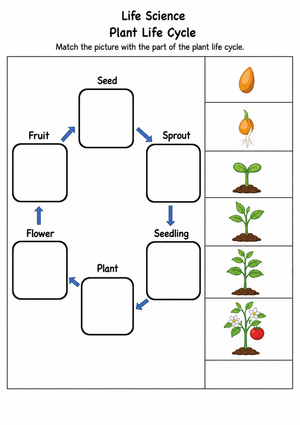
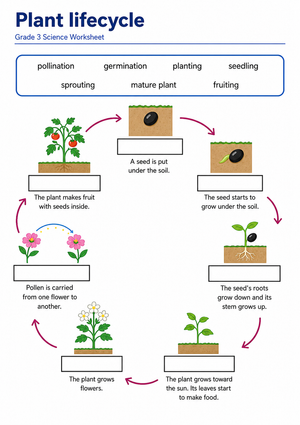
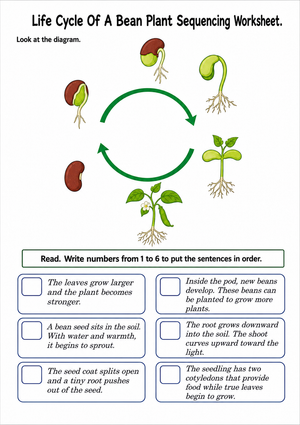
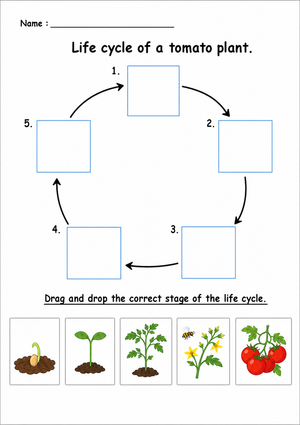
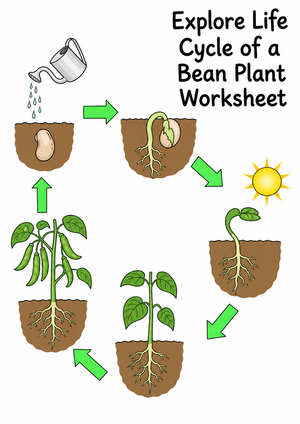
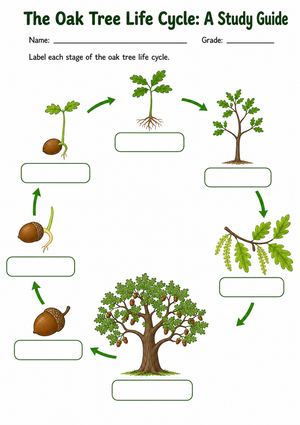
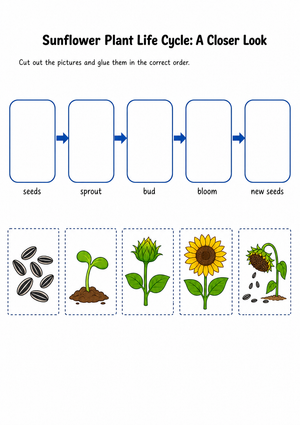
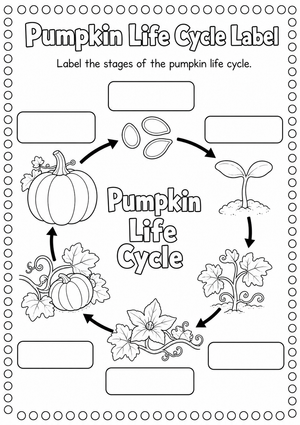
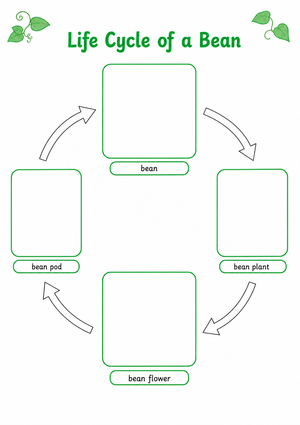
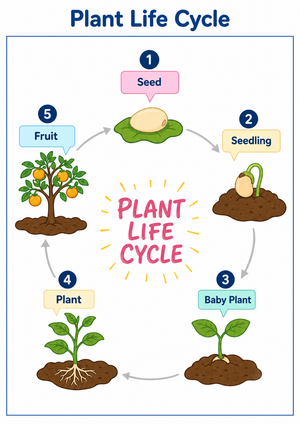
- Life cycle sequencing: Students order seed, germination, seedling, mature plant, flowering, and seed production — and are explicitly asked to add arrows showing the cycle continues rather than stops.
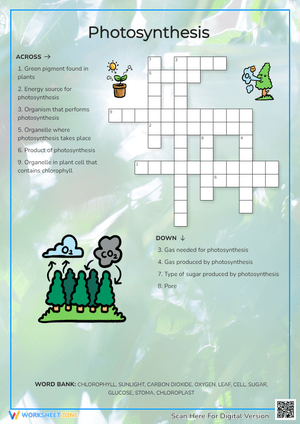
- Vocabulary practice: Fill-in-the-blank items and picture-definition matching reinforce science terms without turning the task into a reading assessment.
- Observation recording: A structured response worksheet ties classroom seed-sprouting activities to written explanation, asking students to describe what changed and connect that change to a specific plant need.
Student Misconceptions Worth Catching Early
The most persistent error in plant units at this grade is treating the life cycle as a straight line rather than a loop. Students who can correctly sequence seed → germination → seedling → mature plant → flower will still draw an arrow ending at "new seeds" with nothing looping back. When you ask them what happens to those seeds, many say "it's done." The life cycle worksheet surfaces this misunderstanding quickly because it explicitly asks students to add the returning arrow — and students who have internalized the cycle as linear will leave that step blank or draw something that doesn't connect.
A second stubborn confusion involves nutrients and soil. Third graders consistently write that plants "eat dirt" or "get food from the ground," collapsing the growing medium and the nutrient source into the same thing. The plant needs worksheet addresses this directly by listing nutrients as a distinct survival requirement and asking students to write what nutrients are in their own words, which forces the two ideas apart. Separately, many students confidently claim that only roots absorb water, which is partially accurate but misses the broader picture — a minor gap at Grade 3, but worth flagging when students make sweeping claims in their written responses.
The term germination is also worth watching carefully. Students often understand what it looks like — a seed cracking open, a root emerging — but produce definitions like "when a plant starts" or "when the seed wakes up." The vocabulary worksheet asks for a labeled drawing alongside the written definition, which gives teachers a clearer picture of whether a student genuinely understands the term or has memorized a vague phrase that sounds right.
Standard Alignment
The worksheets align to NGSS standard 3-LS1-1, which asks students to develop models describing that organisms have life cycles involving birth, growth, reproduction, and death. In practical classroom terms, that means students need to move beyond sequencing a life cycle on paper and begin explaining what drives each transition — what triggers germination, what conditions support growth, what role flowers play in reproduction. The sequencing and function worksheets in this set address exactly those explanatory moves. Teachers in states using adapted science frameworks rather than NGSS will find the content maps cleanly to most Grade 3 life science standards, which address the same core ideas under different coding.
Building These Worksheets Into Your Science Lessons
The most effective classroom structure for plant worksheets for 3rd grade places them as anchors before and after hands-on work rather than as isolated seatwork. A labeling worksheet used at the start of a lesson gives students the vocabulary they need before they observe an actual plant. A sequencing worksheet used after a read-aloud or class discussion asks students to apply what they just heard. An observation recording worksheet used at the end of a sprouting activity turns a hands-on moment into documented evidence of understanding.
A weekly routine that holds up in practice: Monday, students label plant parts and discuss each function as a class. Wednesday, they observe the classroom bean cups and record changes on the observation worksheet. Friday, they complete the life cycle sequence and answer two or three questions using science vocabulary. By the time students reach the unit assessment, they have worked with the same ideas across multiple formats without the feeling of repeating the same assignment. The worksheets also fit naturally in centers — one station with a picture-sort and matching task, another with a short reading passage and two comprehension questions, and a third asking students to sketch and label what they notice about a real seedling placed in front of them.
Adjusting the Set for a Range of Learners
Using plant worksheets for 3rd grade across a mixed-ability class means adjusting task demand without changing the science target. Adding a word bank to the labeling worksheet removes the retrieval barrier without lowering the content expectation — students still have to know where each term belongs. Reading the plant needs passage aloud before students answer the response questions is another low-prep move that gives below-level readers access to the content without pulling them into a separate assignment or a different lesson entirely.
For students ready for a greater challenge, the observation recording worksheet can shift from structured sentence stems to an open-ended explanation: two or three sentences describing what changed and why they think it happened, written without prompting. That version requires accurate observation and the ability to apply science vocabulary independently. Pairing students for a five-minute conversation before they write individually benefits both groups — the student who needs support hears correct vocabulary modeled in context, and the student ready for extension has to organize their thinking before committing it to paper.
Frequently Asked Questions
Do these worksheets require any prep beyond printing?
No significant prep. The labeling and sequencing worksheets are print-and-use. The observation recording worksheet works best alongside a live plant or seed cup already in the classroom, but it can also be used with a photograph or teacher-provided diagram when a live specimen is not available.
How long does each worksheet take to complete?
Most students finish a labeling or sequencing worksheet in 10 to 15 minutes. The short reading-response worksheet may take closer to 20 minutes for students who are still developing written fluency. The observation worksheet varies depending on how much discussion precedes it — factoring in a five-minute partner discussion, expect 20 to 25 minutes from start to finish.
What should teachers do when students have significant science vocabulary gaps from earlier grades?
Each worksheet includes enough visual context — labeled diagrams, picture prompts, or word banks — that students who missed earlier plant instruction can still access the content. For teachers using plant worksheets for 3rd grade as a vocabulary catch-up tool, starting with the plant parts and needs worksheets before moving into life cycle content gives those students a working vocabulary before the sequencing demands increase.
Can these worksheets serve as formative assessment?
The function-matching and life cycle sequencing worksheets give teachers a clear read on two common misconceptions: whether students understand that plant parts have specific jobs, and whether they grasp that a life cycle is a loop rather than a sequence with a stopping point. Checking those two tasks takes less than two minutes per student and tells you who needs a reteach before you close the unit.












 Interactive Worksheet Maker
 Quiz Maker
 Word Search Maker
 Crossword Puzzle Maker
 Word Scramble Generator
 Sentence Scramble Generator
 Handwriting Worksheet Generator
 Name Tracing Generator
 Fill In The Blank Generator