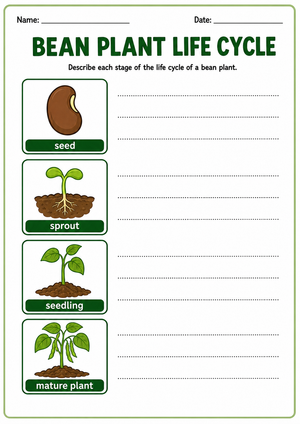
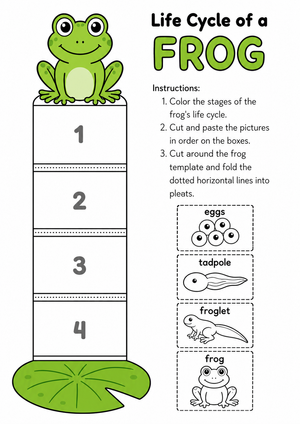
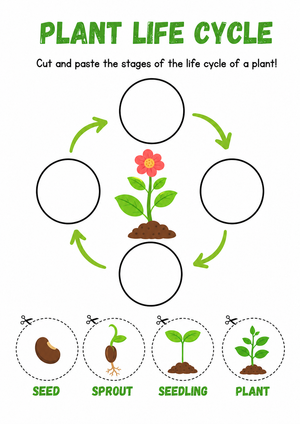
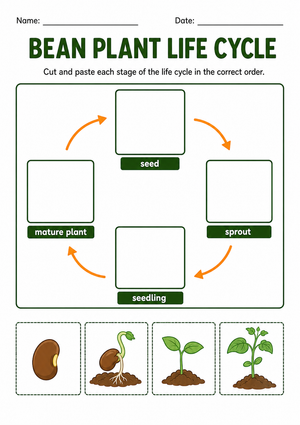
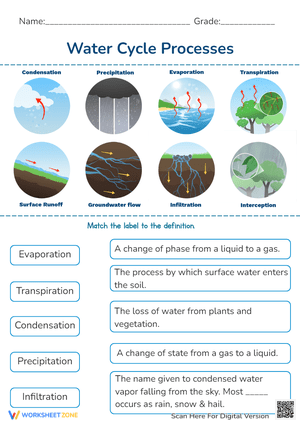
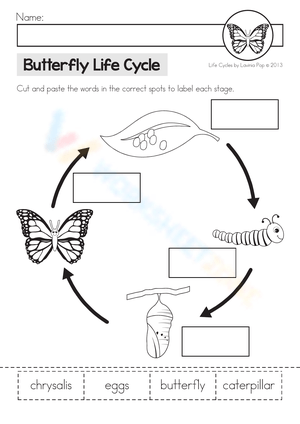
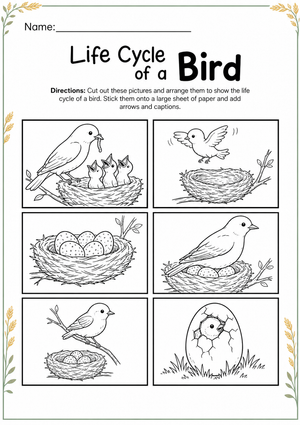
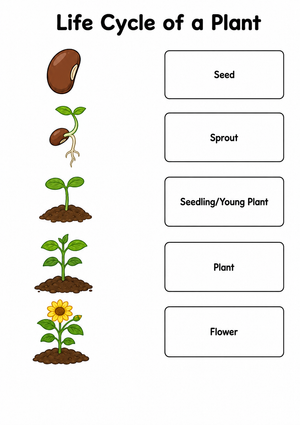
These 3rd grade life cycle worksheets sets give teachers ready-to-print resources for butterfly, frog, chicken, and flowering plant cycles, with tasks that move from picture sequencing and diagram labeling through short written comparisons. The four organisms were chosen because their stages are visually distinct — Grade 3 students can sequence them from images alone, which matters when vocabulary like metamorphosis and germination is still new.
Mistakes Students Make That These Worksheets Surface Early
The most consistent error in Grade 3 life cycle work isn't mislabeling a stage — it's treating the cycle as a straight line that ends at the adult. Students draw egg to caterpillar to chrysalis to butterfly and stop, never looping the arrow back toward reproduction. This shows up on worksheets as a missing final connection, and it tells you something specific: the student understands sequence but hasn't grasped what makes a life cycle rather than a life series.
Vocabulary is a second consistent trouble spot, particularly the larva/pupa pair and the cocoon/chrysalis confusion. Students routinely write "cocoon" when the correct term is chrysalis — a butterfly-specific structure, not a generic wrapping — and many substitute "baby" for "larva" or "tadpole" because everyday language is easier to retrieve under pressure. Picture-supported labeling worksheets catch this quickly, since there is no room to substitute informal words when the task requires specific stage names.
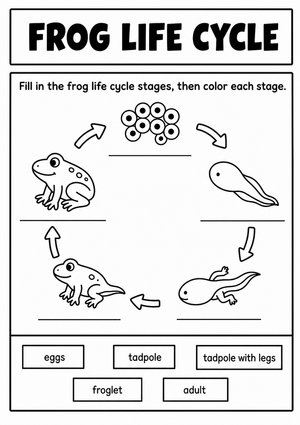
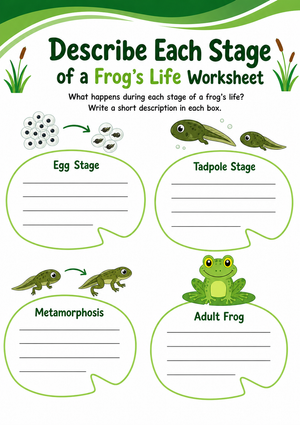
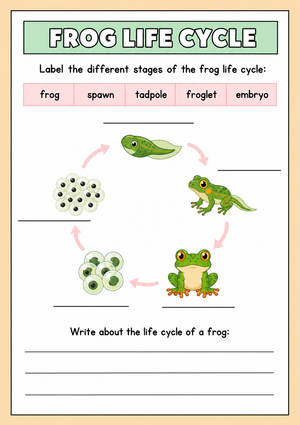
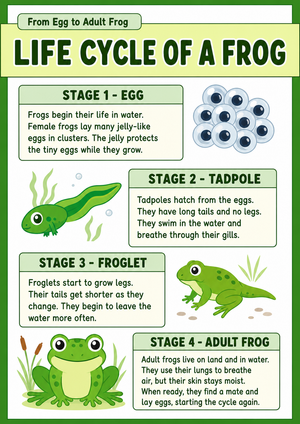
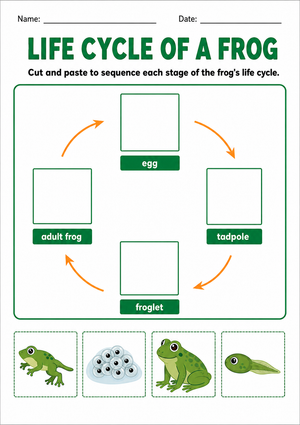
A third pattern worth watching: students who complete a butterfly cycle accurately will often stumble on a frog cycle worksheet — not because they don't understand how cycles work, but because stage names like spawn, tadpole, and froglet don't match anything they've seen before. Teaching both organisms within the same unit, rather than treating them as separate topics, builds a more transferable understanding rather than two unrelated memorized sequences.
The Specific Skills Targeted Across the Set
Each worksheet focuses on one or two tasks rather than asking students to do everything at once. That keeps cognitive load manageable and makes it easier to pinpoint exactly where understanding breaks down — whether a student is struggling with stage order, vocabulary retrieval, or making connections across organisms.
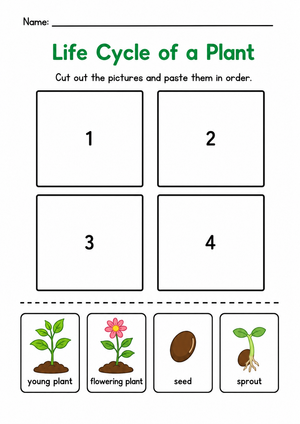
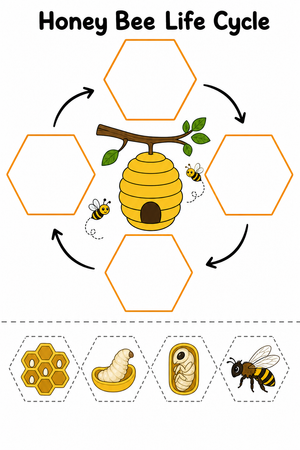
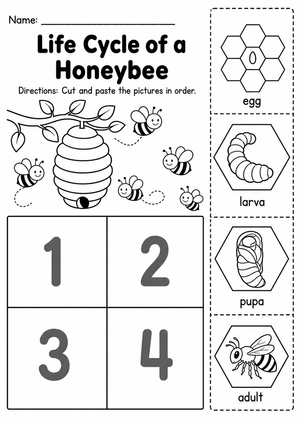
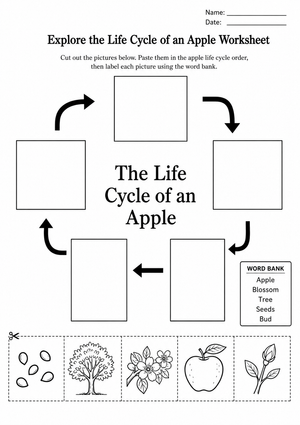
- Sequencing stages: Students arrange images or stage names in the correct order and mark the direction of the cycle with arrows.
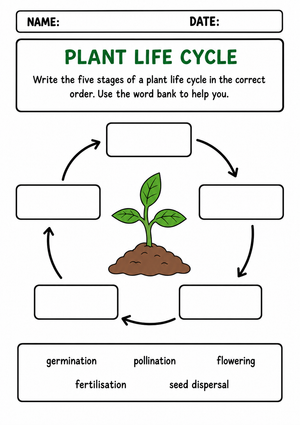
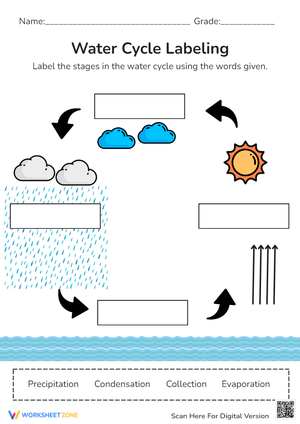
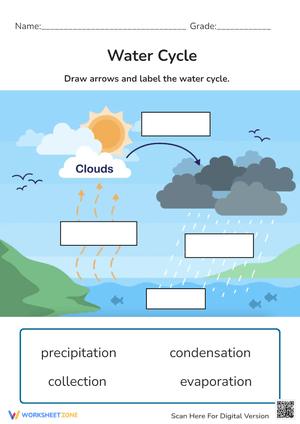
- Labeling diagrams: Students write or match stage names to positions on a cycle diagram, with or without a word bank depending on readiness level.
- Comparing two organisms: Students identify where a butterfly and frog cycle overlap and where they diverge — a task that moves well past simple recall.
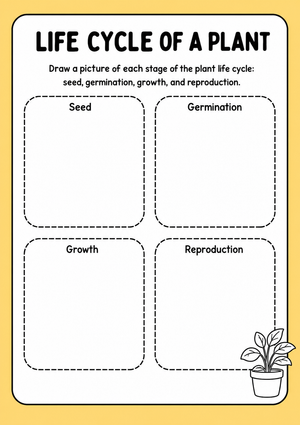
- Domain vocabulary in context: Students use words like metamorphosis, germination, larva, pupa, and pollination in sentences or labels, not just in isolated matching.
- Short written response: Students explain in one or two sentences how one stage leads to the next, combining sequence knowledge with science language.
Where These Worksheets Fit in Your Week
These worksheets do their best work as consolidation tools — after students have seen a visual, sorted picture cards, or discussed stages as a class. A labeling worksheet handed out before any direct instruction puts students in guessing mode. The task is most useful when the concept is already in working memory and the worksheet asks students to organize and record it.
In practice, this plays out in specific spots: a short sequencing worksheet in the last 10 minutes of a science block right after students sorted stage cards as a group; a labeling worksheet as Monday morning work following a Friday video on metamorphosis; a compare/contrast worksheet as the closing task before a unit quiz. Teachers who want to use these as 3rd grade life cycle worksheets sub plans find that sequencing and matching formats work best — clear directions, picture support built in, no oral discussion required.
Science centers are a strong fit as well. A station with image strips, glue sticks, and a cut-and-paste worksheet runs itself for 15 to 20 minutes with minimal teacher oversight, which frees attention for a small pull group that needs vocabulary support. For exit tickets, pull one labeling question from a worksheet, print it at half-size, and you have a formative check that takes under two minutes to sort after class.
Standard Alignment
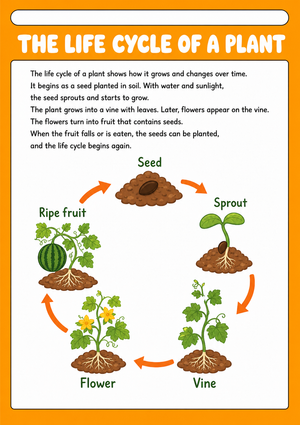
These worksheets align to NGSS 3-LS1-1, which asks students to develop models to describe that organisms have unique and diverse life cycles but all share birth, growth, reproduction, and death. This standard is placed at Grade 3 because students at this point are ready to move from observing a single organism to comparing patterns across multiple organisms — exactly what the compare/contrast worksheets require. The phrase "develop models" in the standard is worth taking seriously: a labeled cycle diagram is a simplified model of a biological process, so these tasks are doing standards-aligned scientific thinking, not vocabulary drill. State science standards that predate NGSS address this same content under growth and reproduction in living organisms, so the worksheets hold up across both frameworks.
Tailoring These Worksheets to Fit Different Readiness Levels
The most efficient adjustment separates the vocabulary demand from the science demand. A student who correctly sequences frog stages but writes "baby frog" instead of "froglet" is not showing a science gap — that is a vocabulary retrieval gap. Adding a word bank or a brief glossary strip to the worksheet lets those students demonstrate their sequence knowledge without a missing term blocking the whole response. Remove the word bank for students who are ready to work without that support structure.
- Offer cut-and-paste versions before assigning write-in sequencing tasks to students who struggle with writing stamina.
- Reduce the written response requirement to a sentence frame — "First ___, then ___, finally ___" — for students who need structural support getting language onto paper.
- For students who finish early, add one extension prompt at the bottom: "How does this life cycle compare to the plant life cycle? Name one difference."
- Partner ELL students with a labeled reference diagram while they complete a blank labeling worksheet, so they can check stage positions without copying vocabulary directly from a finished answer.
The consistent layout across all four organisms — same diagram style, same task structure — also reduces the time students need to orient to directions on each new worksheet. Students learn the routine on the butterfly worksheet and carry it forward. For students who process unfamiliar formats slowly, that predictability is a real gain.
Frequently Asked Questions
Which life cycle topics are included in the set?
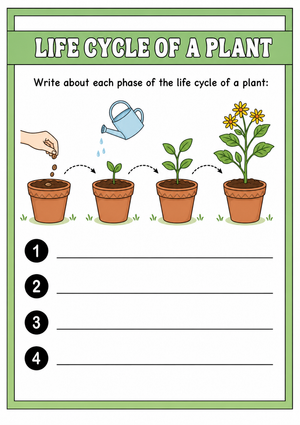
The set covers butterfly, frog, chicken, and flowering plant cycles. These four organisms appear together because their stage names are concrete, their visuals are easy to distinguish, and they support direct comparison work — a key expectation in Grade 3 life science.
How long does each worksheet take to complete?
Most sequencing and labeling worksheets take 8 to 12 minutes for Grade 3 students working independently. Compare/contrast and short-response worksheets typically run closer to 15 minutes. Plan for a few extra minutes the first time students encounter a new organism, since unfamiliar stage names slow down vocabulary matching tasks before they become automatic.
Do these worksheets align to current science standards?
Yes. The tasks directly address NGSS 3-LS1-1 and remain consistent with older state frameworks covering growth and reproduction in living organisms. Life cycle content has been stable across standards revisions for over a decade, so 3rd grade life cycle worksheets resources built around this content work across curricula and district contexts without significant adaptation.
Can these worksheets work for both practice and assessment?
These worksheets serve both purposes depending on where in the unit you use them. Sequencing and labeling worksheets function well as formative checks — fast to scan, easy to see who has the stage order and who doesn't. Compare/contrast and short-response worksheets hold up as summative evidence and fit naturally into a science notebook alongside student observations. When you're deciding how to use them as a 3rd grade life cycle worksheets review the week before an end-of-unit assessment, the compare/contrast format gives the most information about whether students understand cycles as a concept — not just as a memorized sequence.












 Interactive Worksheet Maker
 Quiz Maker
 Word Search Maker
 Crossword Puzzle Maker
 Word Scramble Generator
 Sentence Scramble Generator
 Handwriting Worksheet Generator
 Name Tracing Generator
 Fill In The Blank Generator