


























Views
Downloads

Life Cycle of a Bean Worksheet (3 Levels) | Grade 3 Ready
Paste this activity's link or code into your existing LMS (Google Classroom, Canvas, Teams, Schoology, Moodle, etc.).
Students can open and work on the activity right away, with no student login required.
You'll still be able to track student progress and results from your teacher account.
This Grade 3 science worksheet helps students visualize and model the sequential stages of a plant's growth. By identifying and illustrating the four key phases of a bean plant, learners develop a foundational understanding of biological cycles and reproduction. It provides a structured framework for students to demonstrate their knowledge of natural processes.
At a Glance
- Grade: 3 · Subject: Science
- Standard:
3-LS1-1— Develop models to describe that organisms have unique and diverse life cycles- Skill Focus: Plant life cycle sequencing
- Format: 3 pages · 4 problems · Answer key included · PDF
- Best For: Elementary science centers and formative assessment
- Time: 15–25 minutes
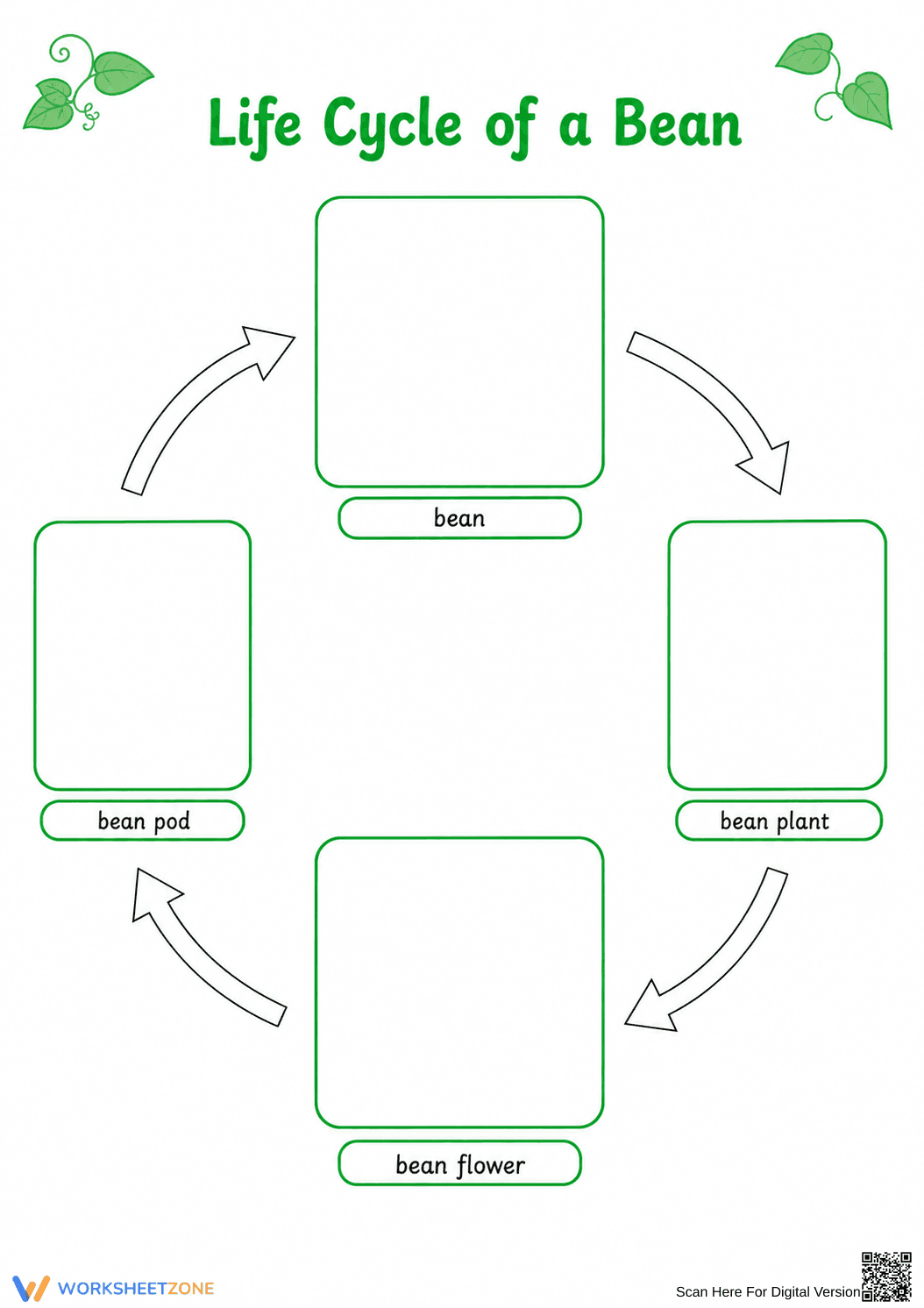
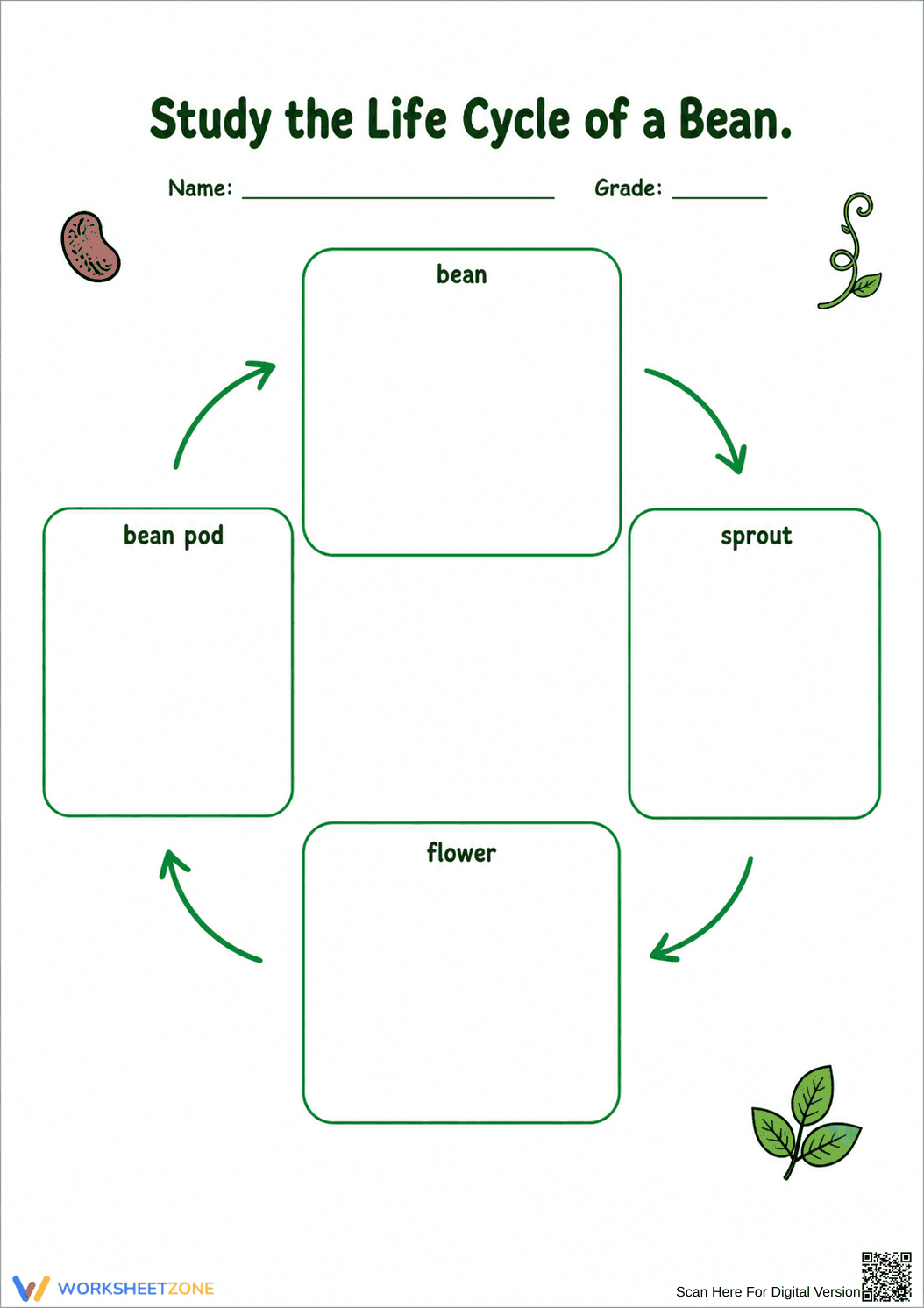
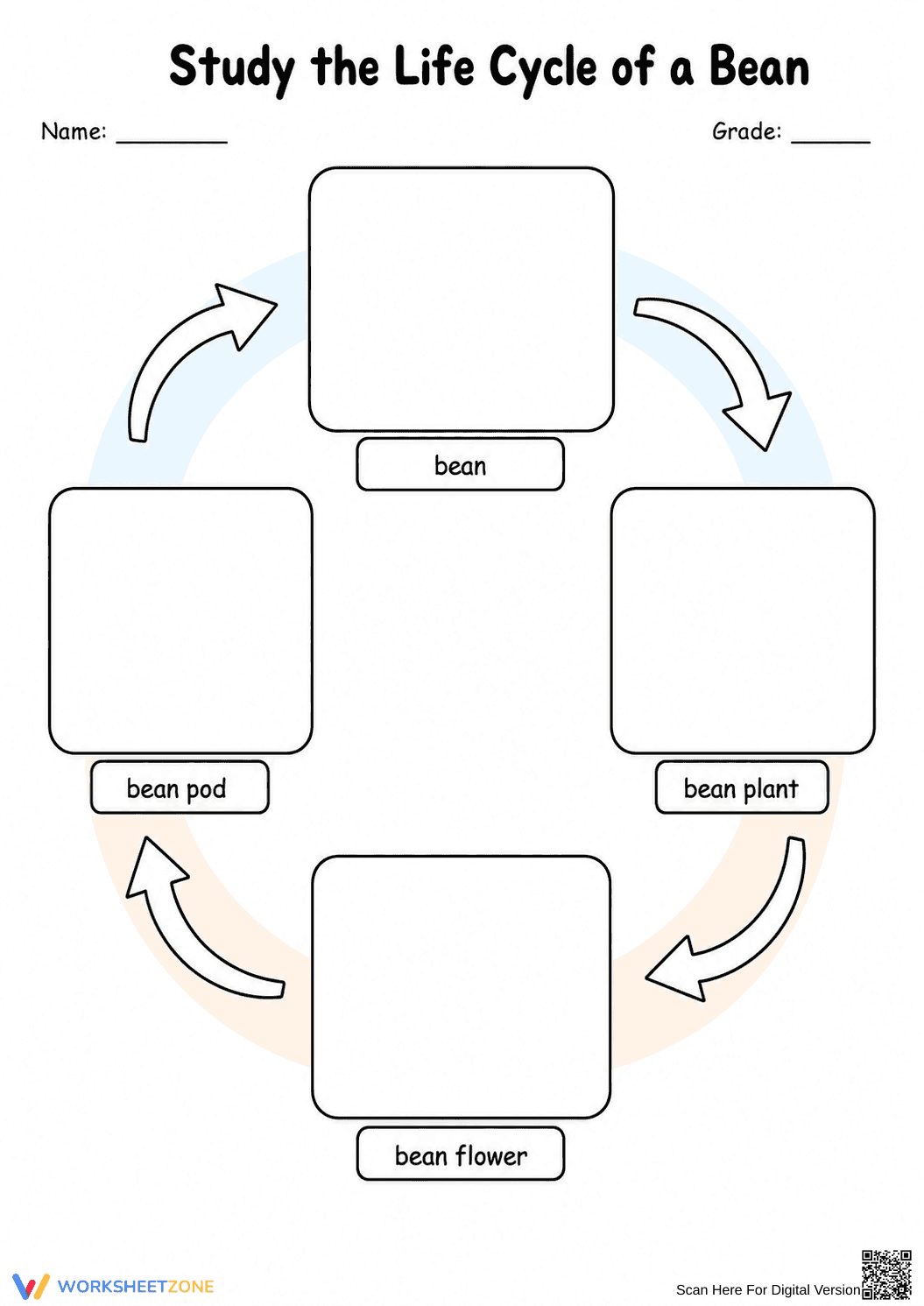
What's Inside: This resource contains 3 distinct pages, each featuring a circular flow diagram representing the life cycle of a bean. The layout includes four primary stages: the bean, sprout, flower, and bean pod. Each stage is accompanied by a large workspace for students to either draw the physical characteristics of that phase or write a descriptive summary of the biological changes occurring. A full answer key is provided for quick grading.
- Below Grade Level: Includes visual icons and pre-printed labels to support students who are just beginning to learn the vocabulary of botany and need visual cues to sequence correctly.
- On Grade Level: Features the circular diagram with labels but leaves the boxes empty for students to provide their own detailed illustrations or observations of the growth process.
- Above Grade Level: A clean diagram requiring students to both label the stages and describe the transition between them, promoting higher-order thinking about growth requirements and reproduction.
Standards Alignment: The primary focus is `3-LS1-1`, which requires students to develop models to describe that organisms have unique and diverse life cycles but all have in common birth, growth, reproduction, and death. This worksheet serves as a physical model of these commonalities. Both standard codes can be copied directly into lesson plans, IEP goals, or district curriculum mapping tools.
How to Use It: Use this worksheet during the "Explain" phase of a 5E lesson model to allow students to synthesize what they have observed during a seed-planting experiment. It also serves as an effective formative assessment tool; teachers should observe whether students correctly sequence the flower before the bean pod to check for understanding of plant reproduction. Expected completion time is 20 minutes.
Who It's For: This resource is designed for elementary students in grades 2 through 5, particularly those in general education science classrooms. The visual nature of the circular diagram makes it an excellent choice for English Language Learners (ELL) who need to practice domain-specific vocabulary like "germination" and "pod" within a clear context.
According to the 3-LS1-1 standard, students must be able to model the life cycles of various organisms to understand the continuity of life. This bean life cycle worksheet provides a concrete tool for this modeling, allowing students to map the transition from seed to mature plant. Research by Fisher & Frey (2014) emphasizes the importance of visual organizers and scaffolds in helping young learners internalize complex biological sequences. By providing three levels of differentiation, this resource ensures that all students, regardless of their current reading or drawing level, can engage with the core scientific concepts. The use of a circular diagram reinforces the concept that life cycles are continuous and repeating, a key conceptual shift for third-grade students. This worksheet aligns with the 2024 EdReports criteria for high-quality instructional materials by providing clear evidence of student mastery through modeling and sequential reasoning.


