


























Views
Downloads

Grade 3 Bean Plant Life Cycle — Printable No-Prep Worksheet
Paste this activity's link or code into your existing LMS (Google Classroom, Canvas, Teams, Schoology, Moodle, etc.).
Students can open and work on the activity right away, with no student login required.
You'll still be able to track student progress and results from your teacher account.
This comprehensive plant biology resource helps students master the stages of a bean plant's development. By sequencing growth phases and identifying essential plant needs, young learners build a concrete understanding of how living things grow, reproduce, and survive in their environments.
At a Glance
- Grade: 3 · Subject: Science
- Standard:
3-LS1-1— Develop models describing diverse life cycles of organisms- Skill Focus: Sequencing plant life cycles
- Format: 4 pages · 3 activities · Answer key included · PDF
- Best For: Independent practice and science centers
- Time: 20–30 minutes
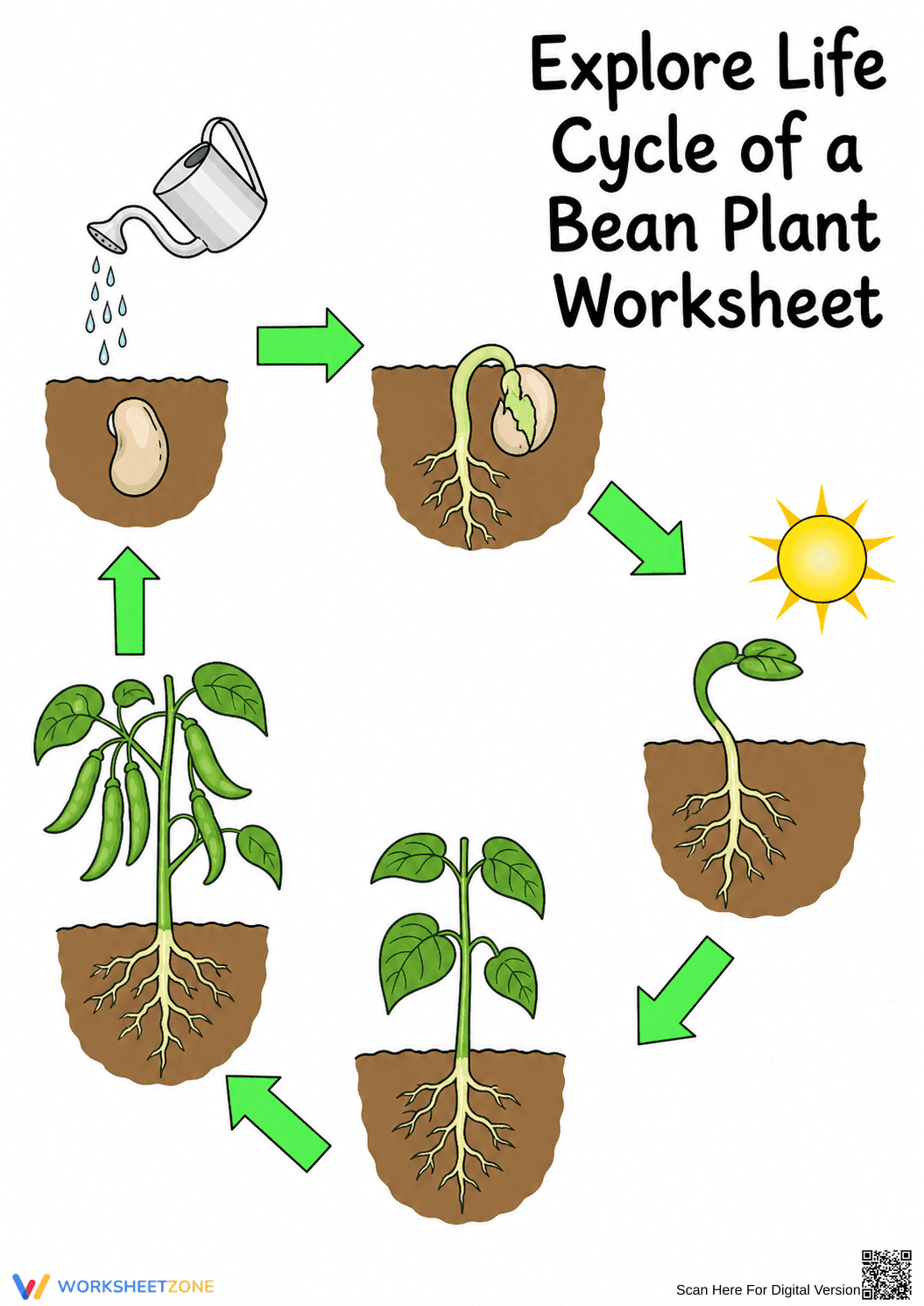
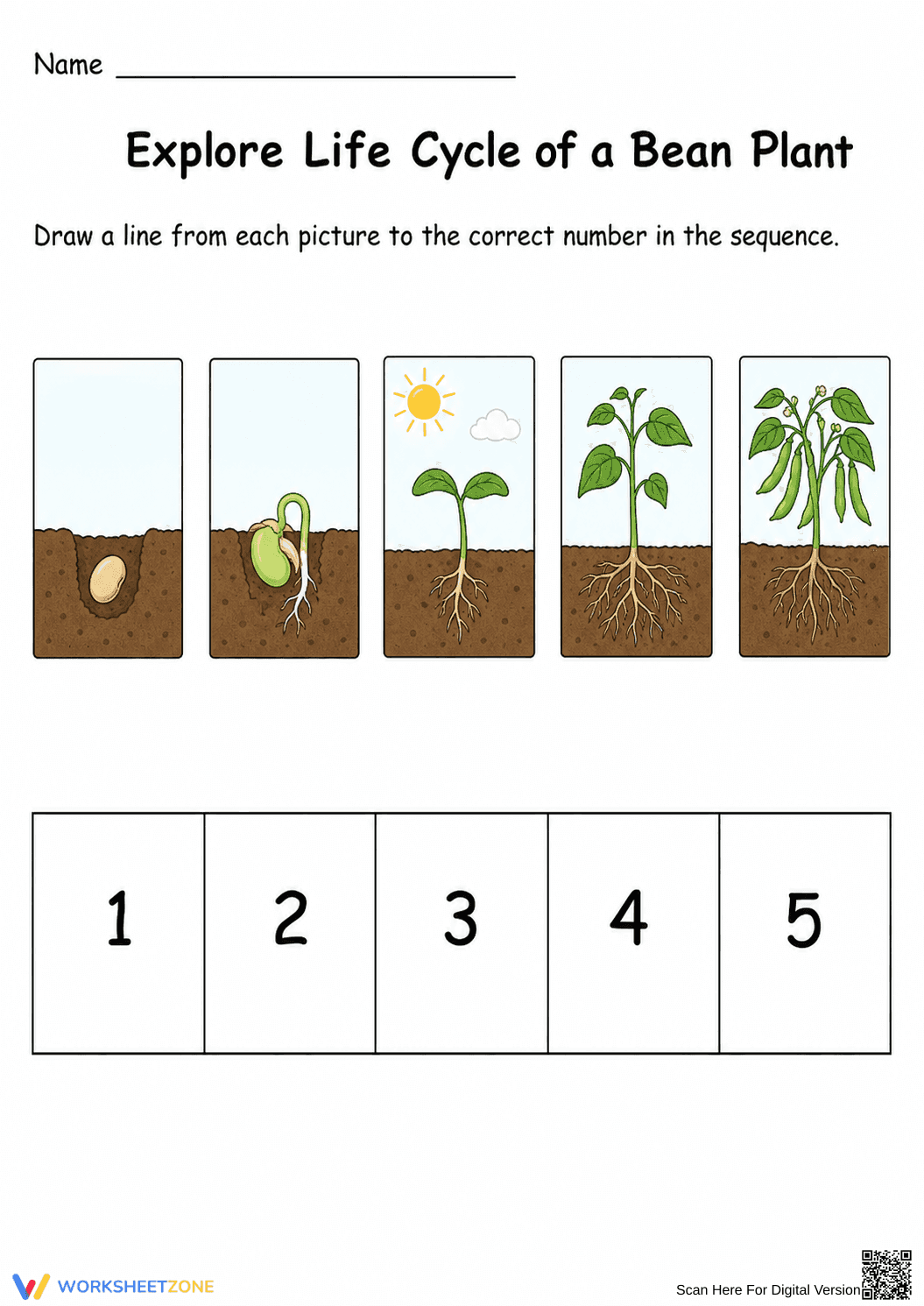
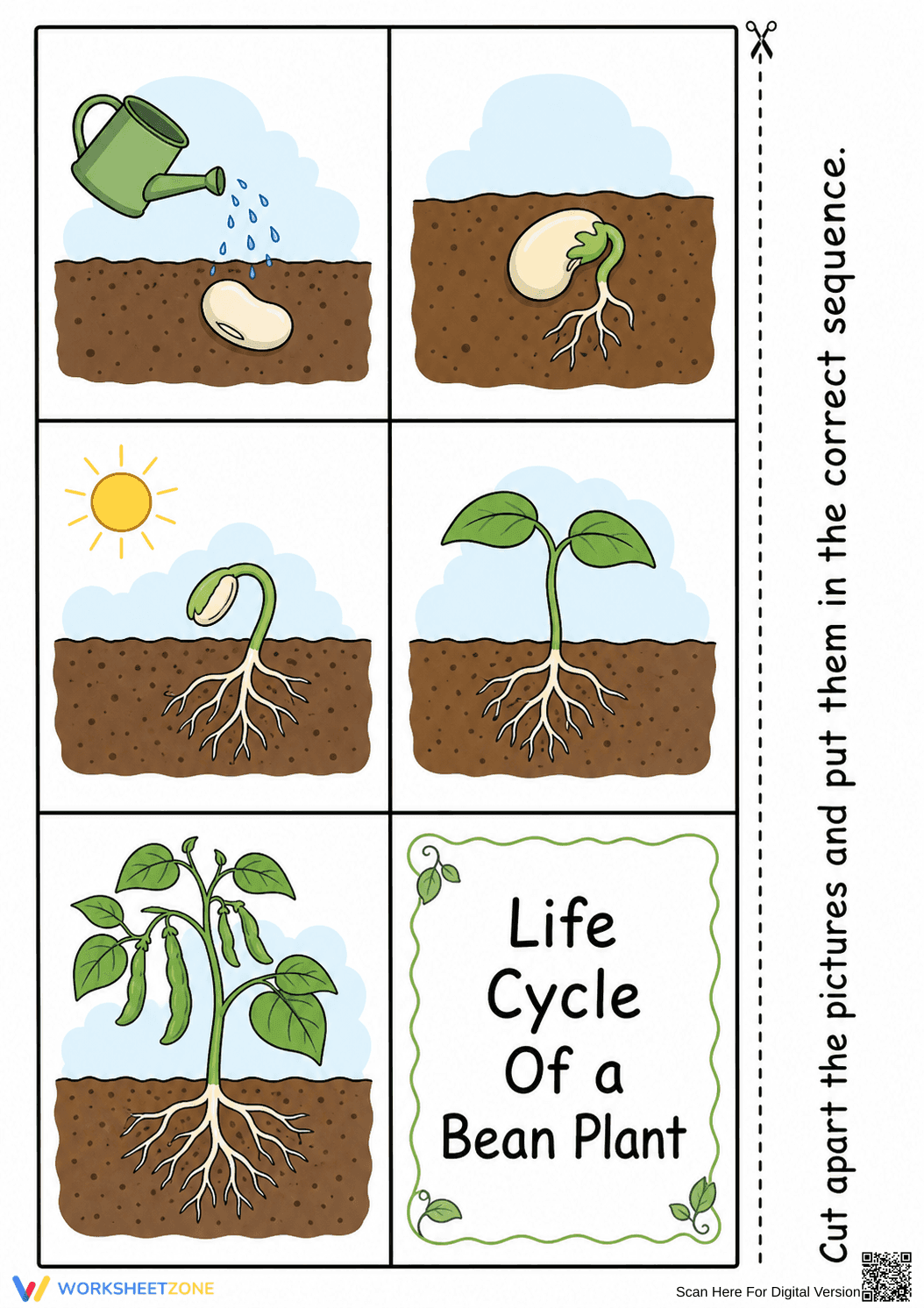
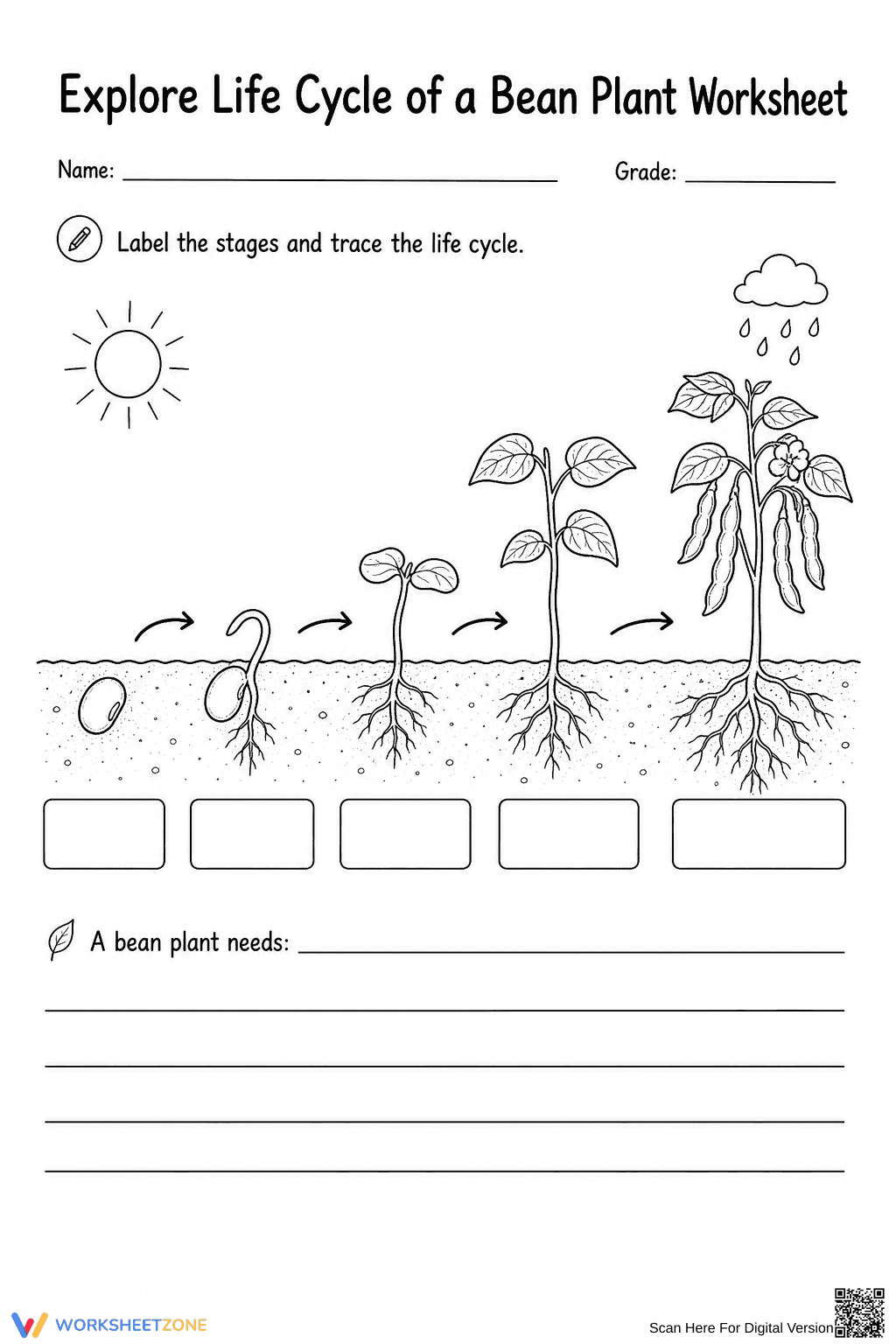
This four-page packet includes a full-color reference diagram, a number-matching sequence activity, a cut-and-paste sorting task, and a black-and-white labeling page with a short writing prompt. The varied task types ensure students interact with the vocabulary multiple times, while the clear visual models provide built-in scaffolding for early readers. A complete answer key is provided for quick grading.
Designed for immediate classroom implementation, this resource requires minimal teacher setup:
- Print (1 minute): Generate the PDF packet for the whole class or select specific pages for differentiated centers.
- Distribute (1 minute): Hand out the worksheets along with scissors and glue for the cut-and-paste activity.
- Review (3 minutes): Use the included answer key to quickly check student sequences or project the color diagram for a whole-class self-correction session.
With under two minutes of total prep time, this packet is an excellent addition to emergency sub plans or busy science blocks.
This material is directly aligned to 3-LS1-1, requiring students to develop models to describe that organisms have unique and diverse life cycles but all have in common birth, growth, reproduction, and death. The final writing prompt also supports foundational understanding of plant needs. Both standard codes can be copied directly into lesson plans, IEP goals, or district curriculum mapping tools.
Deploy the color diagram as an anchor chart during your initial direct instruction on plant biology. Following the lesson, assign the cut-and-paste sequencing page as an independent formative assessment to verify comprehension. While students work, observe whether they correctly place the germination stage before the seedling stage—a common point of confusion. The entire packet typically takes 20 to 30 minutes to complete, making it a perfect fit for a standard science period.
This resource is optimized for third-grade general education students, though the heavy visual supports make it highly accessible for English Language Learners and students receiving special education services. The black-and-white labeling page serves as a great extension for early finishers. Pair this worksheet with a hands-on seed sprouting activity or a read-aloud about garden ecosystems to solidify the concepts.
Effective science instruction relies heavily on accurate visual modeling to bridge the gap between abstract biological concepts and concrete student understanding. According to a 2024 report by EdReports, high-quality instructional materials must provide multiple opportunities for students to interact with scientific phenomena through varied modalities. This resource supports that pedagogical framework by requiring learners to sequence, label, and describe the stages of growth. By aligning directly with 3-LS1-1, the activities ensure students can develop models describing diverse life cycles of organisms. The progression from a provided visual reference to independent sequencing and writing tasks follows evidence-based gradual release models. Utilizing structured visual aids reduces cognitive load, allowing students to focus entirely on mastering the sequence of germination, growth, and reproduction rather than decoding complex text descriptions.


