


























Views
Downloads
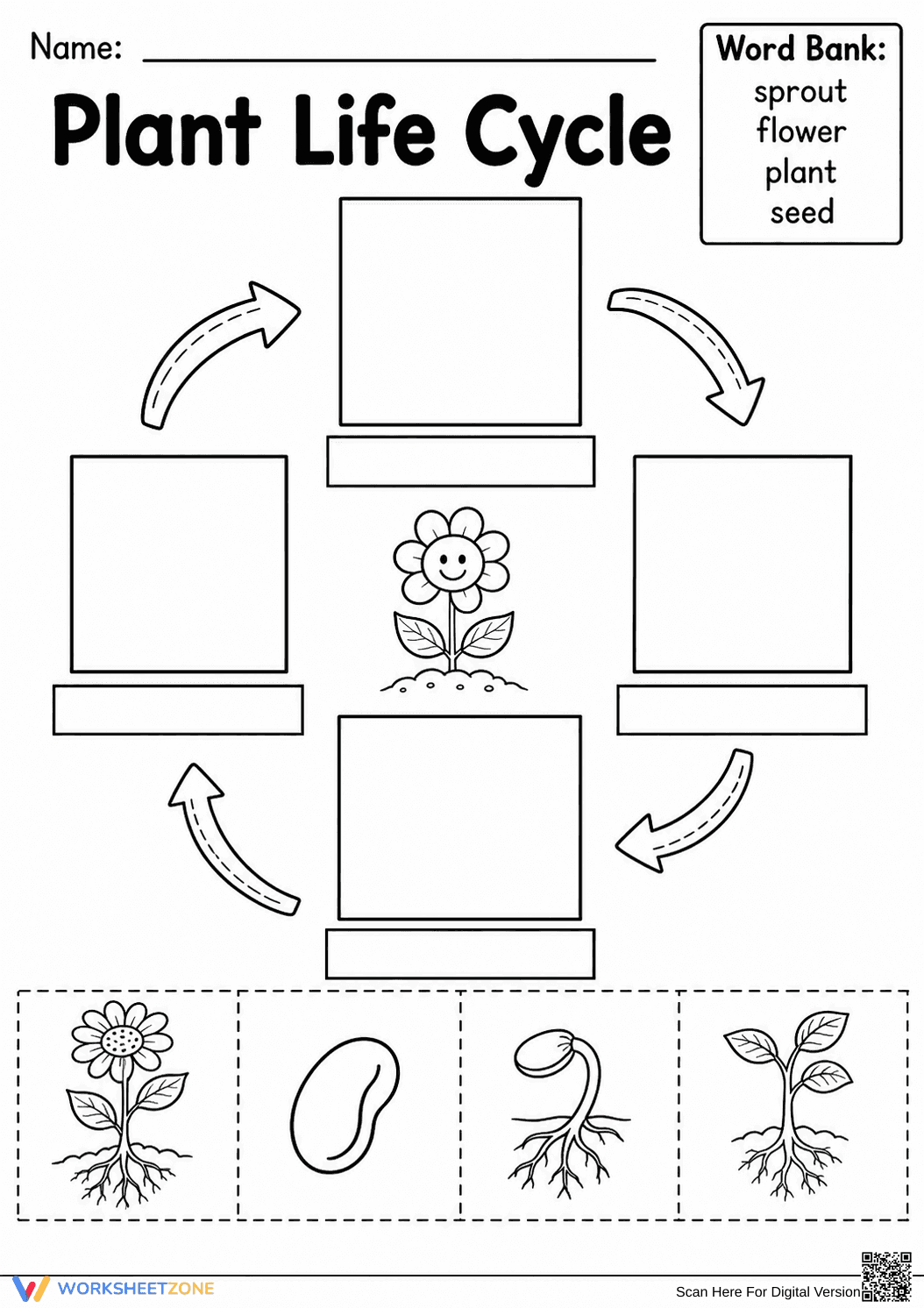

Plant Life Cycle Worksheet | Essential Grade 1-3 Science
Paste this activity's link or code into your existing LMS (Google Classroom, Canvas, Teams, Schoology, Moodle, etc.).
Students can open and work on the activity right away, with no student login required.
You'll still be able to track student progress and results from your teacher account.
This Grade 1-3 science worksheet provides a hands-on approach to understanding biological growth. Students identify and sequence the four primary stages of a plant's development—seed, sprout, plant, and flower—to build a foundational understanding of life science. By completing this activity, learners demonstrate mastery of cyclical biological processes.
At a Glance
- Grade: 1-3 · Subject: Science
- Standard:
3-LS1-1— Develop models to describe that organisms have unique and diverse life cycles- Skill Focus: Life cycle sequencing
- Format: 1 page · 8 tasks · Answer key included · PDF
- Best For: Independent practice or science centers
- Time: 15–20 minutes
The resource features a clear, circular diagram with four designated zones for visual and text-based input. It includes a word bank containing "sprout," "flower," "plant," and "seed," alongside four corresponding illustrations for cutting and pasting. This single-page PDF is designed for high-contrast printing and includes a complete answer key for quick grading.
Zero-Prep Workflow
- Print: Select the required number of copies for your class (30 seconds).
- Distribute: Hand out the sheets along with scissors and glue sticks (1 minute).
- Review: Check the completed cycles as a whole group or through peer-checking (5 minutes).
This activity is designed for immediate classroom implementation with a total teacher prep time of under 2 minutes, making it an ideal sub plan or morning work activity.
Standards Alignment
Primary alignment is to `3-LS1-1`: "Develop models to describe that organisms have unique and diverse life cycles but all have in common birth, growth, reproduction, and death." This worksheet specifically targets the growth and development phases. Both standard codes can be copied directly into lesson plans, IEP goals, or district curriculum mapping tools.
How to Use It
Use this worksheet during the "elaborate" phase of a 5E science lesson after observing real seeds germinating. It also functions as a formative assessment to check for understanding of sequencing before moving to more complex life cycles. Expect students to spend approximately 15 to 20 minutes completing the cutting, pasting, and labeling.
Who It's For
This resource is tailored for elementary students in grades 1 through 3, particularly those who benefit from tactile learning. It is an excellent fit for English Language Learners (ELLs) due to the visual support and word bank. Pair this with a time-lapse video of a sunflower growing or a hands-on planting lab.
According to research by Fisher & Frey (2014), visual scaffolds and hands-on manipulation like cut-and-paste activities significantly improve the retention of scientific vocabulary in early elementary learners. This worksheet aligns with the 3-LS1-1 standard by requiring students to construct a physical model of a plant's life cycle, moving from seed to reproductive flower. By integrating motor skills with conceptual sequencing, the resource addresses the multi-modal learning needs identified in the NAEP science framework. The inclusion of a word bank supports literacy development alongside core science content, ensuring that students can accurately label the stages they have visually identified. This structured approach provides the necessary support for students to transition from guided observation to independent mastery of biological patterns, a key requirement for meeting state and national science proficiency benchmarks.


