


























Views
Downloads

Organ Systems Sorting Worksheet | Grade 4 Essential
Paste this activity's link or code into your existing LMS (Google Classroom, Canvas, Teams, Schoology, Moodle, etc.).
Students can open and work on the activity right away, with no student login required.
You'll still be able to track student progress and results from your teacher account.
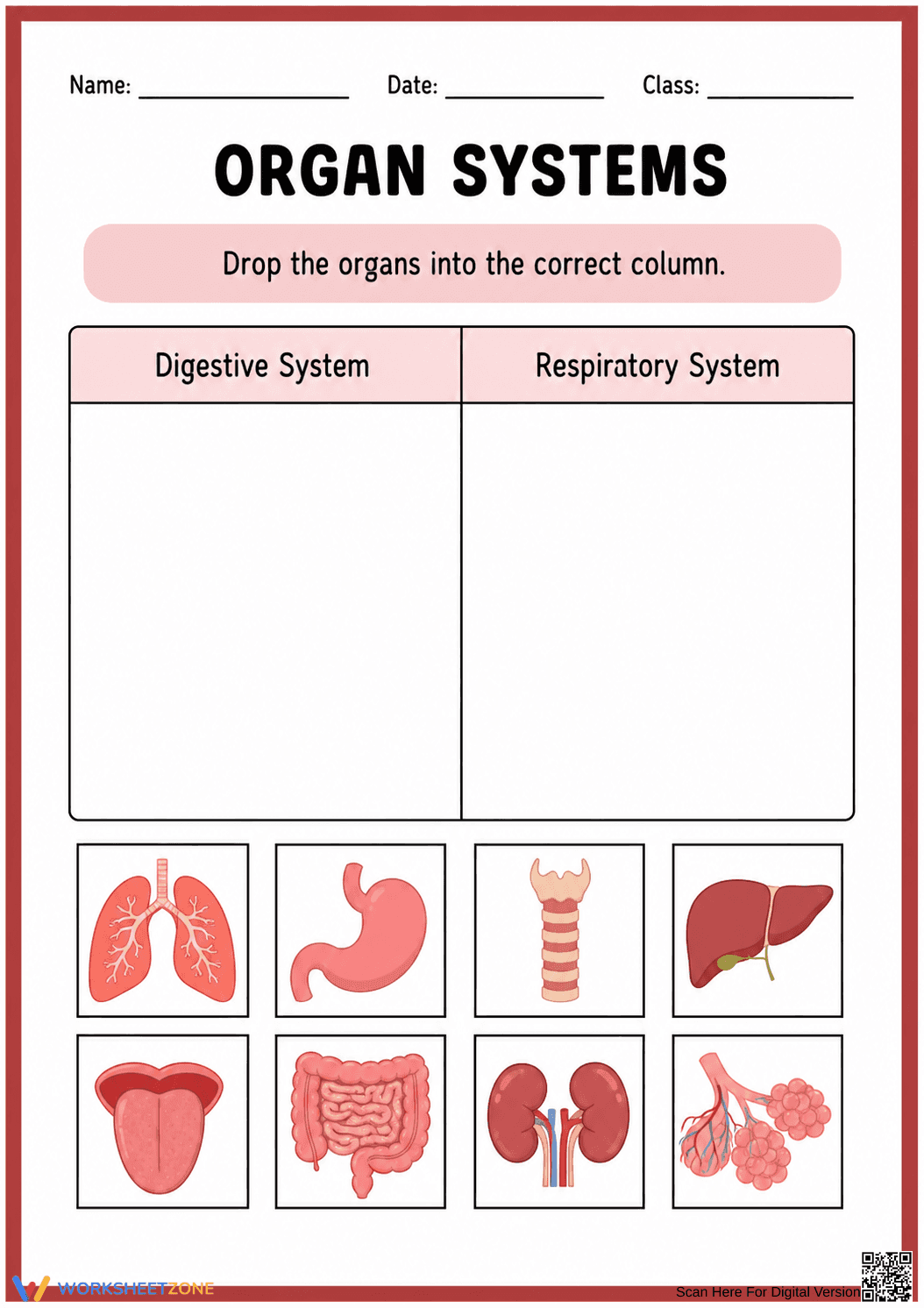
This Grade 4 organ systems sorting worksheet helps students master the distinction between the digestive and respiratory systems. By classifying 8 specific organs, learners develop a concrete understanding of how internal structures support vital body functions. It provides an immediate visual assessment of anatomical knowledge and functional relationships.
At a Glance
- Grade: 4 · Subject: Science
- Standard:
4-LS1-1— Construct an argument that animals have internal structures that support survival- Skill Focus: Organ system classification
- Format: 2 pages · 8 problems · Answer key included · PDF
- Best For: Independent practice or science centers
- Time: 15–20 minutes
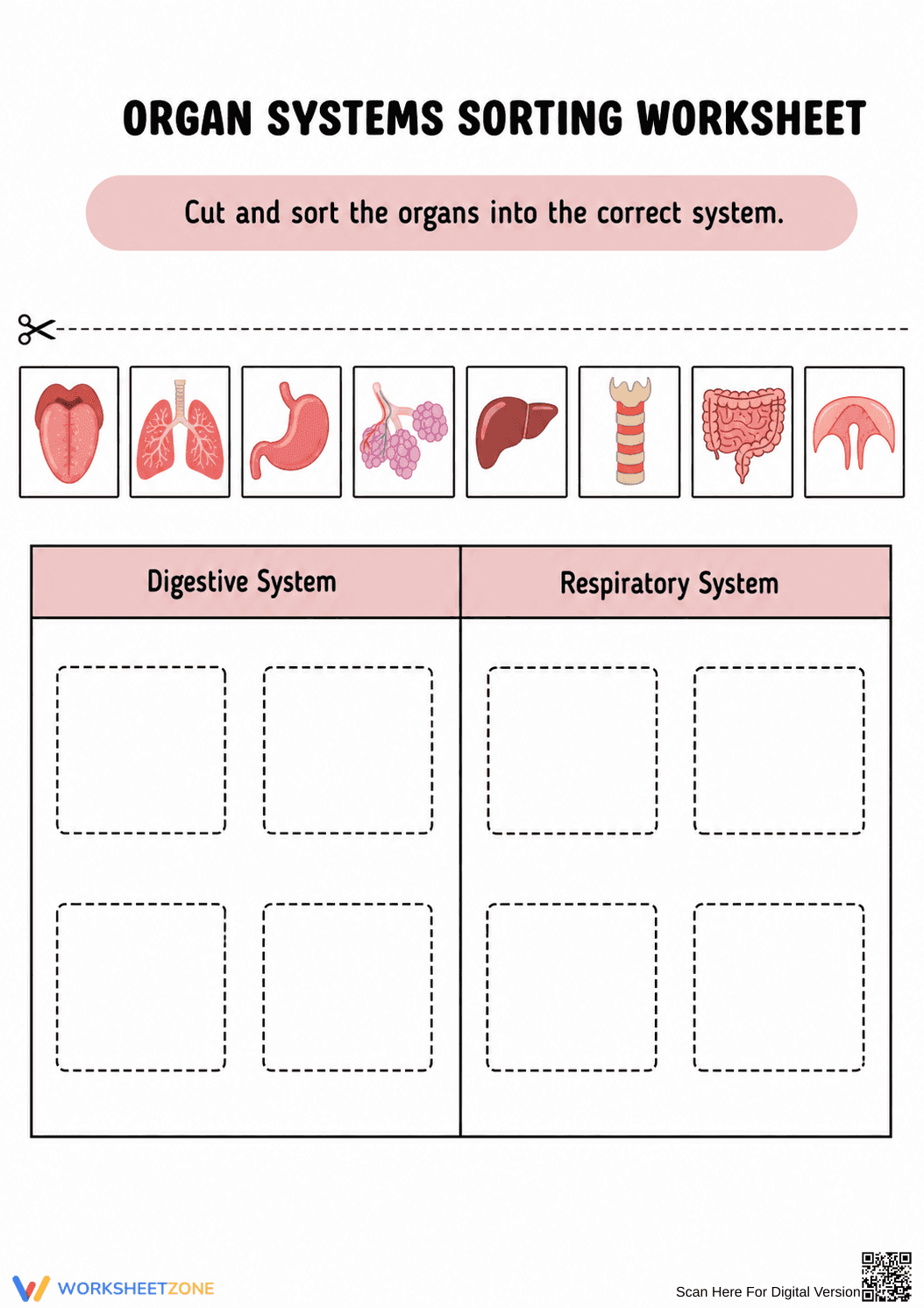
This resource contains two versions of a classification activity to suit different classroom needs. The first page serves as a visual sorting mat, while the second page is a dedicated cut-and-paste activity. Students interact with 8 high-quality illustrations of organs, including the lungs, stomach, and intestines. A full answer key is provided to facilitate quick grading or student self-correction.
The zero-prep workflow is designed for maximum efficiency. First, print the desired version (1 minute). Second, distribute scissors and glue for the cut-and-paste option (30 seconds). Third, review the completed sorting mats using the provided key (30 seconds). Total teacher preparation time is under 2 minutes, making this an ideal choice for emergency sub plans or last-minute science blocks.
This worksheet aligns with `4-LS1-1`, focusing on the internal structures of animals that function to support survival and growth. It specifically addresses the macroscopic organization of the digestive and respiratory systems. Both standard codes can be copied directly into lesson plans, IEP goals, or district curriculum mapping tools to ensure compliance with state frameworks.
Use this as a formative assessment after a direct instruction lesson on human anatomy. It works well as a check for understanding exit ticket to gauge student mastery of organ functions. Alternatively, place it in a science center for collaborative group work. Expect students to complete the sorting and gluing process within a 15 to 20 minute window.
This activity is tailored for 3rd through 5th-grade students beginning their study of human biology. It is particularly effective for visual learners and students who benefit from tactile, kinesthetic tasks. Pair this with a labeled anchor chart of the human torso or a short reading passage on metabolism for additional instructional support.
According to the RAND AIRS 2024 report, high-quality supplemental materials that utilize visual sorting tasks significantly improve retention of complex biological hierarchies in elementary learners. This worksheet targets the 4-LS1-1 standard by requiring students to identify the specific internal structures—such as the trachea, stomach, and liver—that comprise the respiratory and digestive systems. By engaging in the physical act of categorization, students move beyond rote memorization toward a functional understanding of how these systems operate independently yet concurrently to maintain homeostasis. Research from Fisher & Frey (2014) suggests that such scaffolded classification activities serve as a bridge between initial exposure and mastery of scientific concepts. This resource provides the necessary repetition and visual cues to ensure students can accurately describe the roles of various organs within the broader context of human anatomy and health education.


