


























1 / 5
0
Views
0
Downloads



0.0
0
Save
0 Likes
Share
Ecosystem, Biodiversity, and Energy Pyramid Worksheets
0 Views
0 Downloads
Paste this activity's link or code into your existing LMS (Google Classroom, Canvas, Teams, Schoology, Moodle, etc.).
Students can open and work on the activity right away, with no student login required.
You'll still be able to track student progress and results from your teacher account.
Information
Description
What It Is:
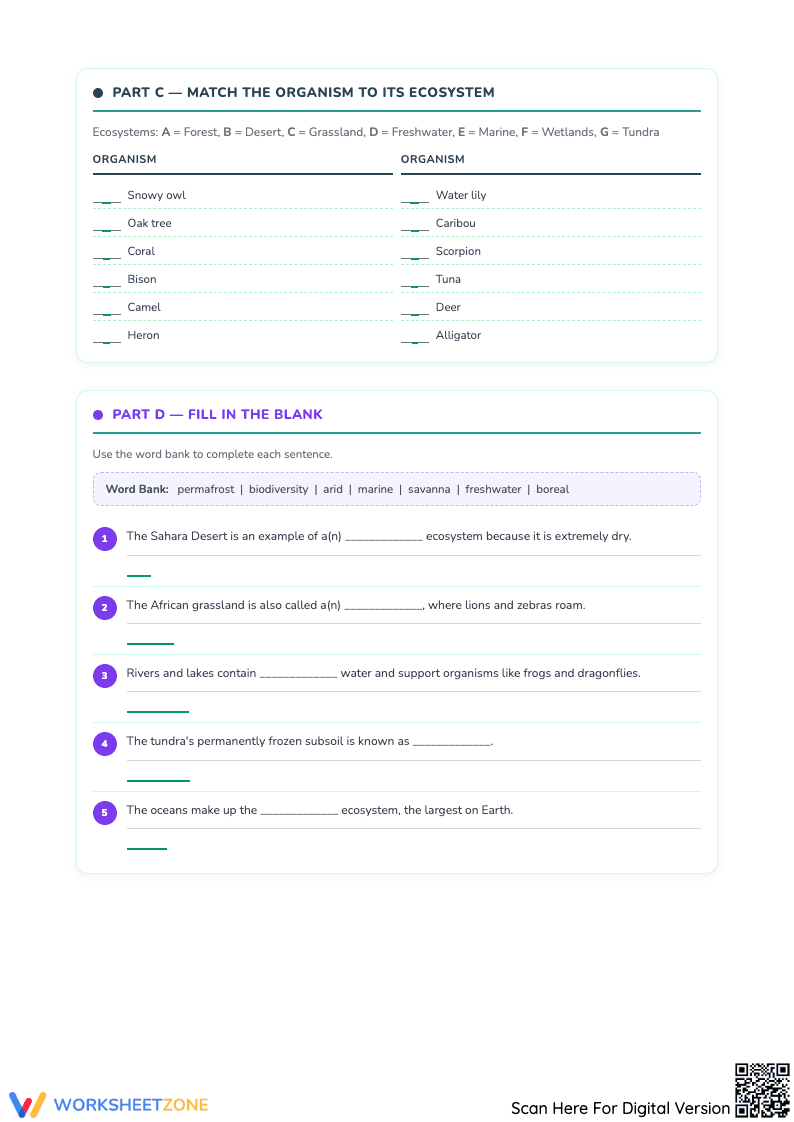
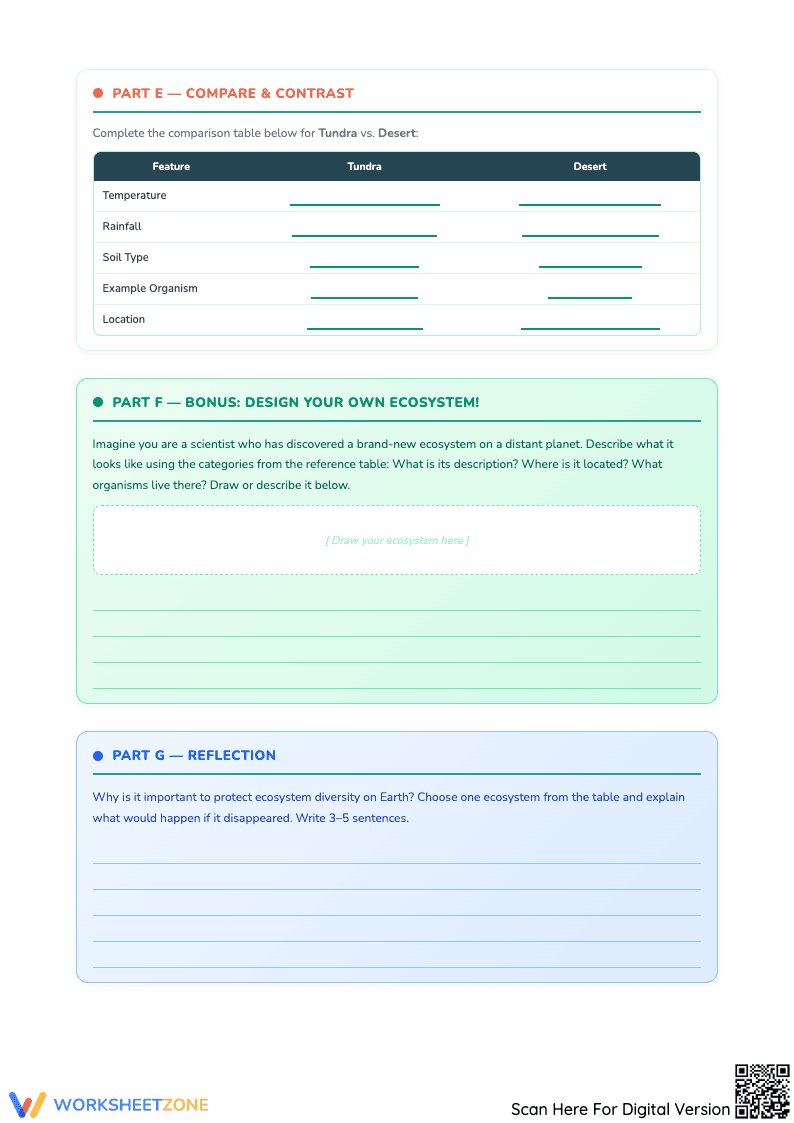
A series of engaging worksheets focused on ecosystem diversity, biodiversity, and energy pyramids. Students explore different types of ecosystems, identify biotic and abiotic factors, and create food chains. The worksheets include activities like labeling energy pyramids, matching ecosystems to descriptions, and analyzing the effects of environmental changes on populations.
Why Use It:
These worksheets provide hands-on learning experiences that allow students to visualize and understand the role of producers, consumers, and decomposers in ecosystems. They reinforce key concepts about biodiversity and the interrelationships between living and nonliving components of ecosystems.
How to Use It:
• Assign as classwork, homework, or group activities.
• Use as a supplement to lessons on ecology, biodiversity, and ecosystems.
• Encourage students to research and discuss the importance of biodiversity in real-world scenarios.
Grade Suitability:
Best suited for grades 6–10.
• Ideal for students learning about ecosystems, biodiversity, food webs, and ecological relationships.
• Great for reinforcing concepts in environmental science and biology.
Target Users:
Teachers, homeschool educators, environmental science tutors, and students learning about ecosystems, biodiversity, and energy flows in nature.
A series of engaging worksheets focused on ecosystem diversity, biodiversity, and energy pyramids. Students explore different types of ecosystems, identify biotic and abiotic factors, and create food chains. The worksheets include activities like labeling energy pyramids, matching ecosystems to descriptions, and analyzing the effects of environmental changes on populations.
Why Use It:
These worksheets provide hands-on learning experiences that allow students to visualize and understand the role of producers, consumers, and decomposers in ecosystems. They reinforce key concepts about biodiversity and the interrelationships between living and nonliving components of ecosystems.
How to Use It:
• Assign as classwork, homework, or group activities.
• Use as a supplement to lessons on ecology, biodiversity, and ecosystems.
• Encourage students to research and discuss the importance of biodiversity in real-world scenarios.
Grade Suitability:
Best suited for grades 6–10.
• Ideal for students learning about ecosystems, biodiversity, food webs, and ecological relationships.
• Great for reinforcing concepts in environmental science and biology.
Target Users:
Teachers, homeschool educators, environmental science tutors, and students learning about ecosystems, biodiversity, and energy flows in nature.


