




























Views
Downloads

Essential Nervous System Worksheet | Grade 4-5 Science

Paste this activity's link or code into your existing LMS (Google Classroom, Canvas, Teams, Schoology, Moodle, etc.).
Students can open and work on the activity right away, with no student login required.
You'll still be able to track student progress and results from your teacher account.
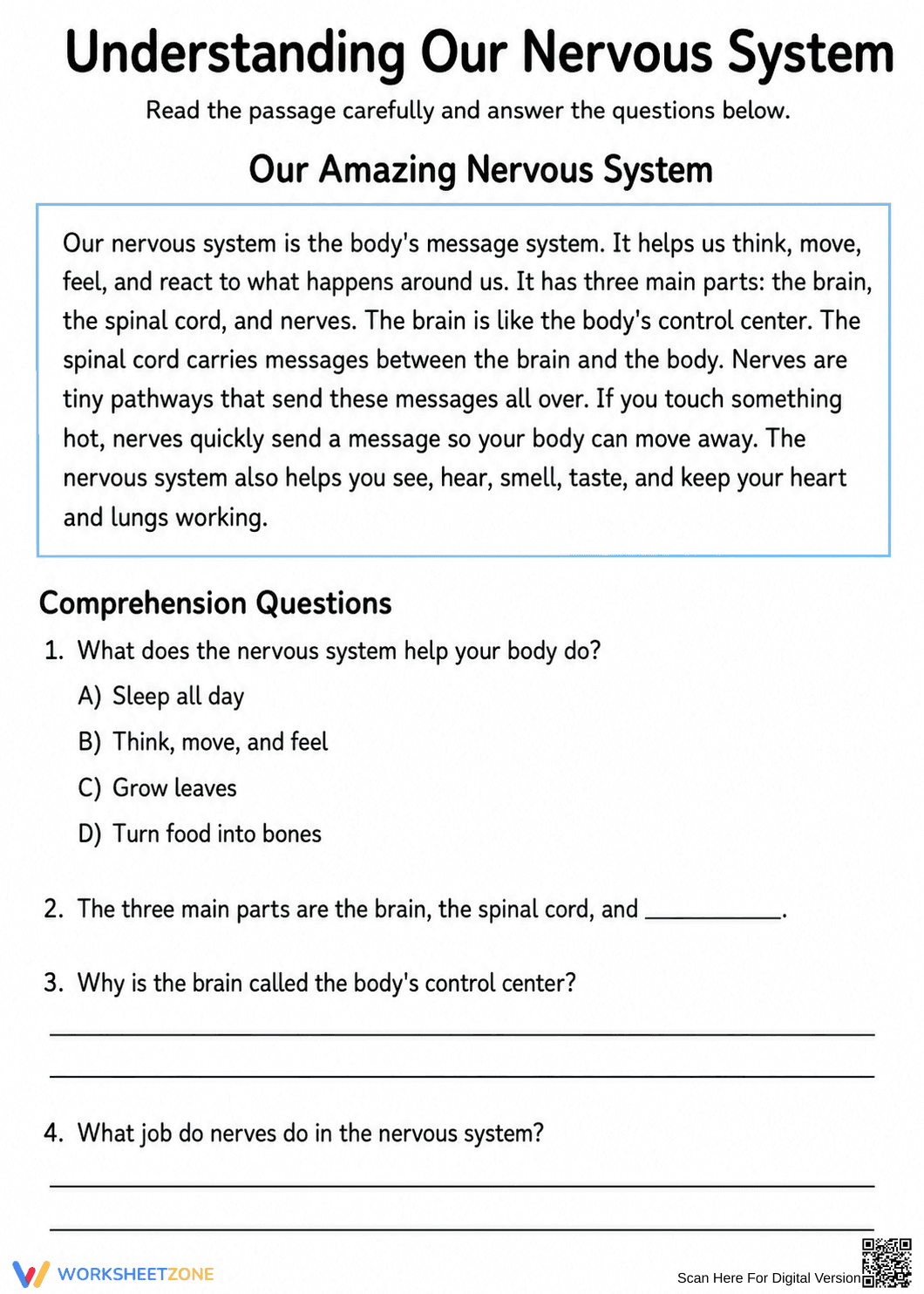
This comprehensive science resource helps students identify the primary components of the human nervous system and explain how they coordinate bodily functions. By engaging with a kid-friendly reading passage and interactive labeling tasks, learners develop a concrete understanding of how the brain, spinal cord, and nerves work together to process information and trigger reactions.
At a Glance
- Grade: 4 · Subject: Science
- Standard:
4-LS1-2— Describe how animals receive, process, and respond to information through the brain- Skill Focus: Nervous system anatomy and function
- Format: 3 pages · 16 tasks · Answer key included · PDF
- Best For: Human body unit introductory lesson
- Time: 30–45 minutes
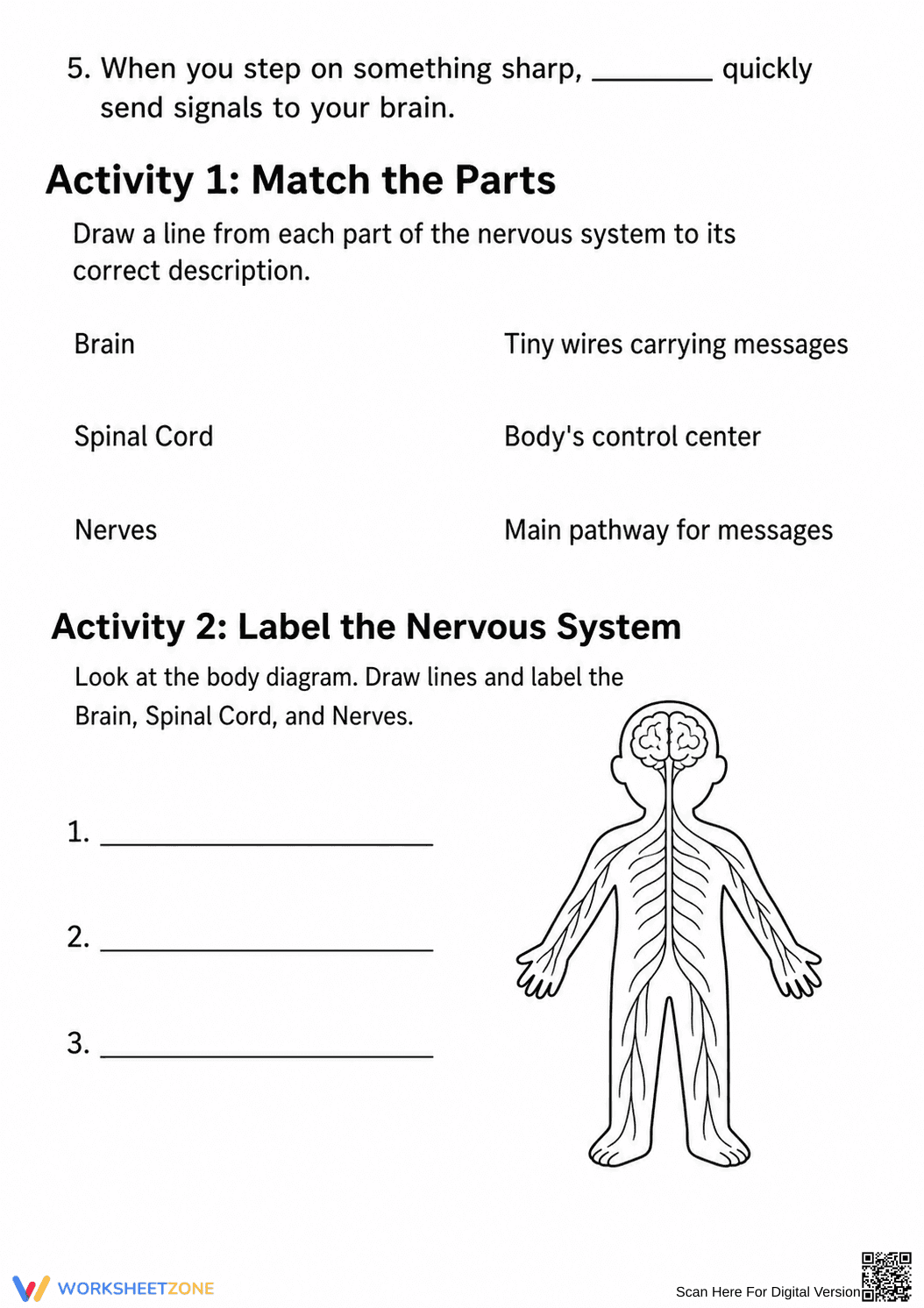
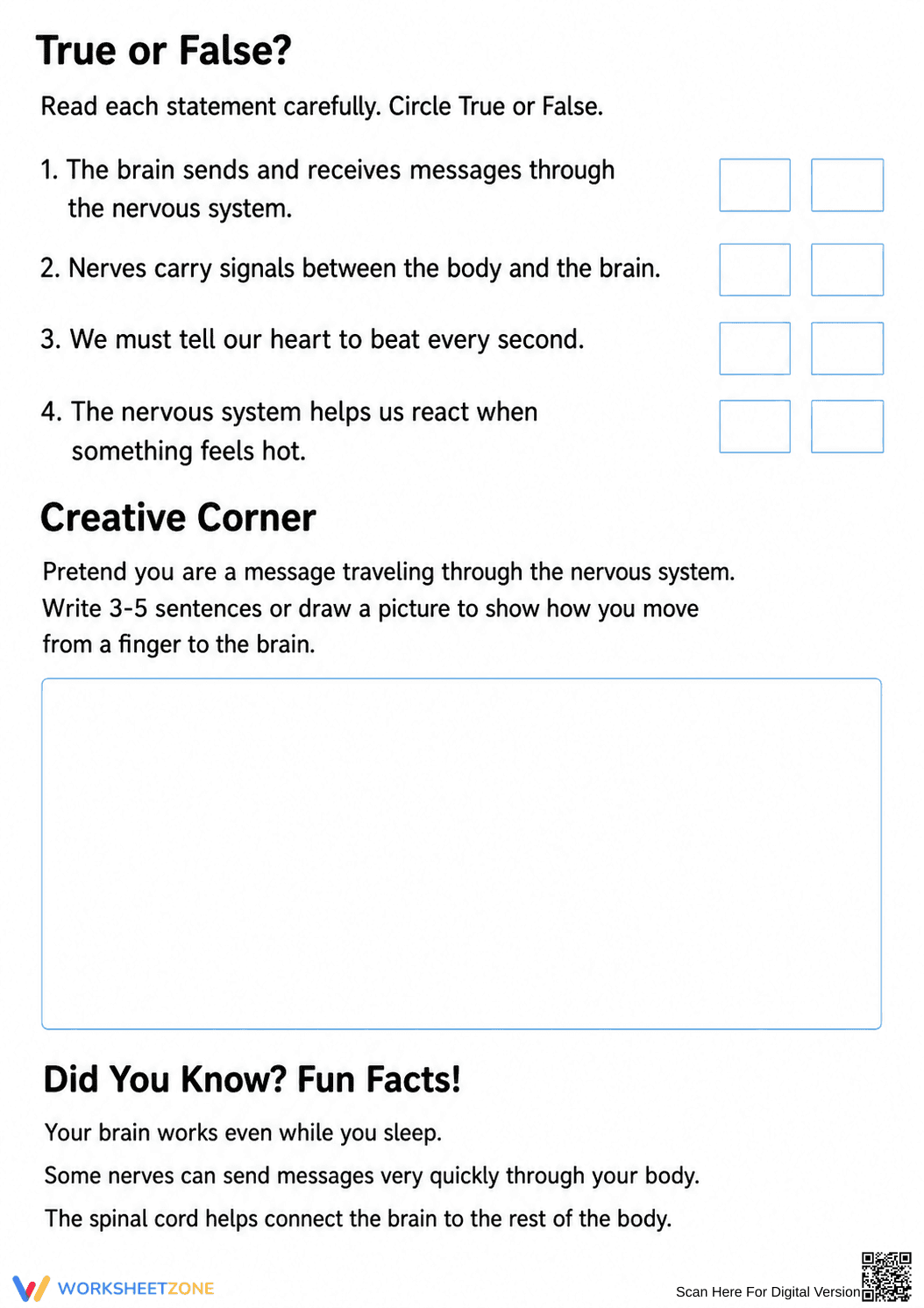
This 3-page packet features a structured reading passage followed by diverse assessment modalities. It includes 5 comprehension questions (multiple choice and short answer), a matching activity for key terminology, a diagram for labeling the central and peripheral nervous system, and a true/false section. The final page offers a creative prompt for narrative writing or drawing, allowing students to visualize the path of a nerve impulse.
Zero-Prep Workflow
- Print (1 minute): Select the 3-page PDF and print enough copies for your class or small group.
- Distribute (1 minute): Hand out the packets as a standalone activity or part of a science folder.
- Review (10 minutes): Use the included answer key to facilitate a quick peer-review or whole-class discussion on the "Fun Facts" section.
This zero-prep resource is ideal for emergency sub plans or independent station work.
Standards Alignment
This worksheet is aligned to `4-LS1-2`: "Use a model to describe that animals receive different types of information through their senses, process the information in their brain, and respond to the information in different ways." It specifically addresses the processing and responding phases of the standard. Both standard codes can be copied directly into lesson plans, IEP goals, or district curriculum mapping tools.
How to Use It
Use this as a mid-unit formative assessment after introducing the five senses. It serves as the bridge between sensory input and physical reaction. During instruction, observe students as they complete the labeling diagram to identify those who may confuse the spinal cord with the skeletal system. Expected completion time is 35 minutes for most fourth-grade learners.
Who It's For
This resource is designed for general education classrooms in grades 3 through 5, as well as homeschool environments. It provides excellent support for English Language Learners through the use of clear diagrams and matching tasks. Pair this with a 3D brain model or a sensory reflex lab for a multi-sensory learning experience.
Effective science instruction in the middle-elementary years requires a balance of informational text and visual modeling to build conceptual frameworks. According to Fisher & Frey (2014), the gradual release of responsibility is most effective when students move from guided reading to independent application, such as the labeling and creative writing tasks found in this resource. By focusing on 4-LS1-2, this worksheet ensures that students are not just memorizing parts of the body, but are understanding the functional relationships between the brain and nerves. Research from the RAND AIRS 2024 report suggests that integrating literacy skills into science curriculum significantly improves long-term retention of complex biological systems. This 3-page packet provides the necessary scaffolding to help students transition from basic identification to explaining the logic behind human reactions and reflexes.


