


























0
Views
0
Downloads

0.0
0
Save
0 Likes
Share
North America Biome Map Labeling Worksheet
0 Views
0 Downloads
Paste this activity's link or code into your existing LMS (Google Classroom, Canvas, Teams, Schoology, Moodle, etc.).
Students can open and work on the activity right away, with no student login required.
You'll still be able to track student progress and results from your teacher account.
Information
Description
What It Is:
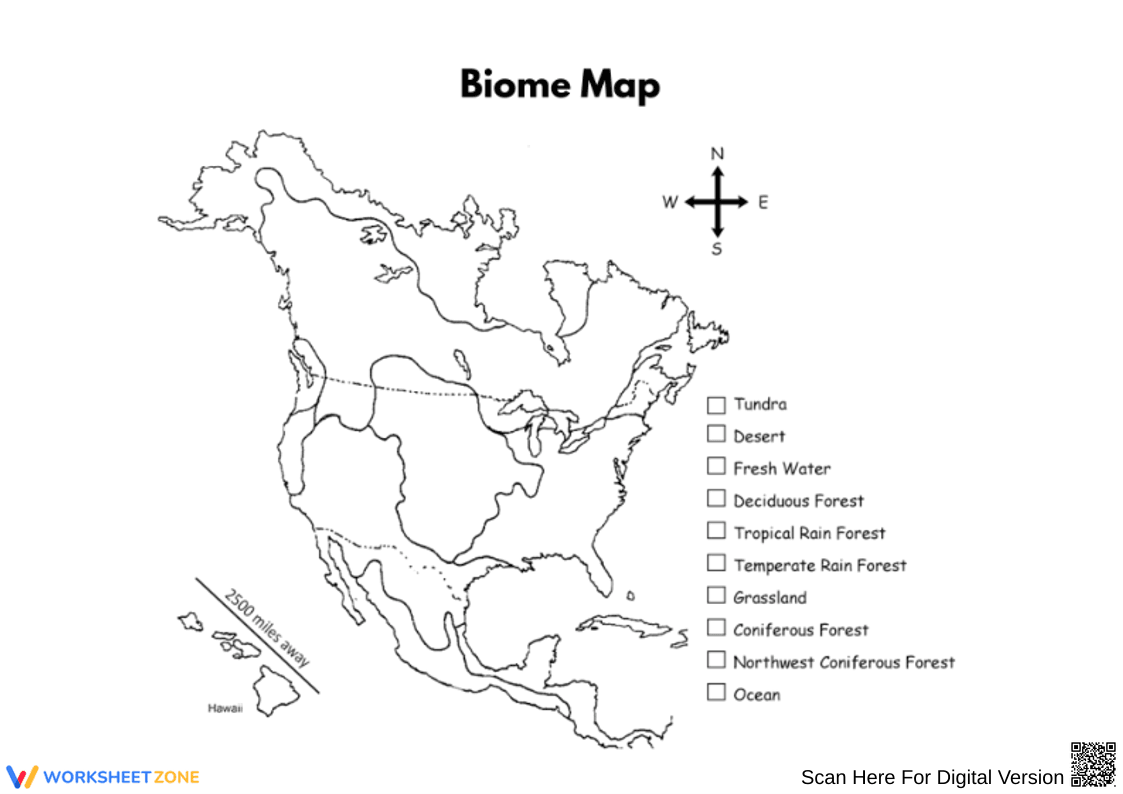
A blank biome map of North America that students use to label major biomes, including tundra, desert, freshwater, deciduous forest, tropical rain forest, temperate rain forest, grassland, coniferous forest, northwest coniferous forest, and ocean. The worksheet includes a biome checklist and a simple outline map for coloring or labeling.
Why Use It:
This worksheet helps students learn the locations and distribution of biomes across North America while reinforcing geography and ecology concepts. It supports lessons on climate zones, ecosystems, plant and animal adaptations, and physical geography. The blank format encourages active learning and map-reading skills.
How to Use It:
• Use during units on biomes, ecosystems, or North American geography.
• Assign as a coloring, labeling, or research activity.
• Pair with biome fact sheets, climate graphs, or ecosystem comparison charts.
• Great for independent practice, group work, or assessment tasks.
Grade Suitability:
Best suited for Grades 4–8.
• Clear enough for upper elementary students studying world biomes.
• Useful for middle school Earth science and geography lessons.
Target Users:
Teachers, homeschoolers, and tutors teaching biomes, climate regions, ecosystems, or physical geography.
A blank biome map of North America that students use to label major biomes, including tundra, desert, freshwater, deciduous forest, tropical rain forest, temperate rain forest, grassland, coniferous forest, northwest coniferous forest, and ocean. The worksheet includes a biome checklist and a simple outline map for coloring or labeling.
Why Use It:
This worksheet helps students learn the locations and distribution of biomes across North America while reinforcing geography and ecology concepts. It supports lessons on climate zones, ecosystems, plant and animal adaptations, and physical geography. The blank format encourages active learning and map-reading skills.
How to Use It:
• Use during units on biomes, ecosystems, or North American geography.
• Assign as a coloring, labeling, or research activity.
• Pair with biome fact sheets, climate graphs, or ecosystem comparison charts.
• Great for independent practice, group work, or assessment tasks.
Grade Suitability:
Best suited for Grades 4–8.
• Clear enough for upper elementary students studying world biomes.
• Useful for middle school Earth science and geography lessons.
Target Users:
Teachers, homeschoolers, and tutors teaching biomes, climate regions, ecosystems, or physical geography.


