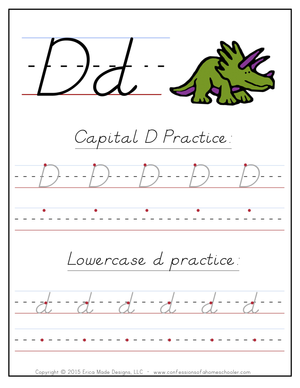
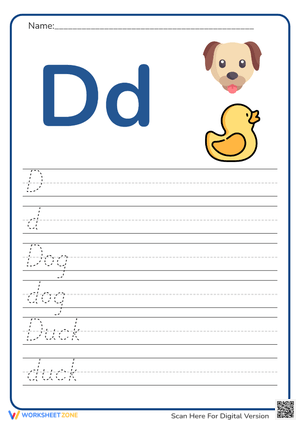
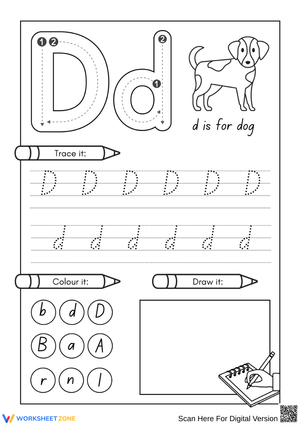
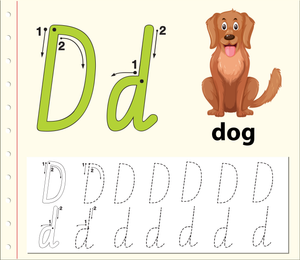
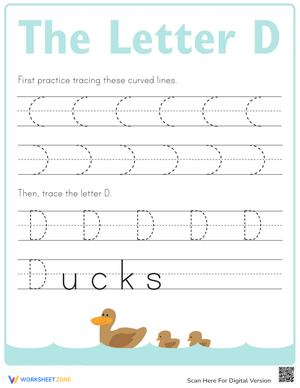
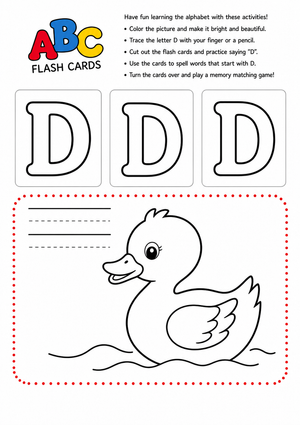
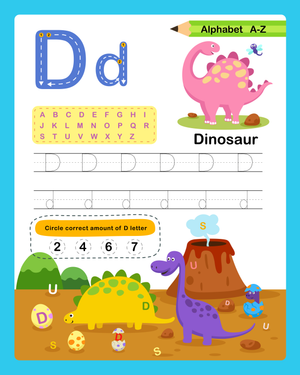
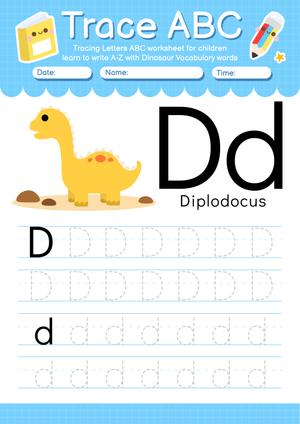
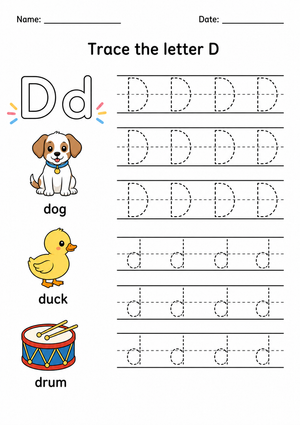
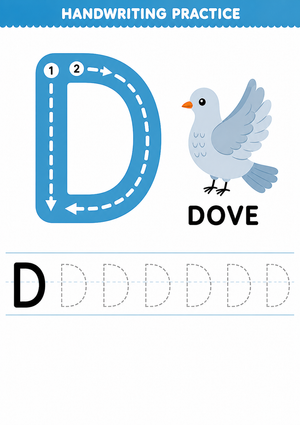
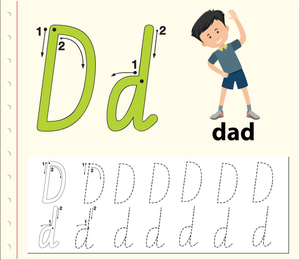
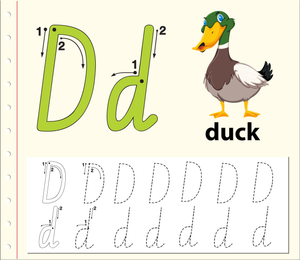
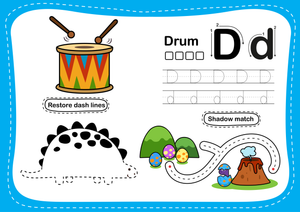
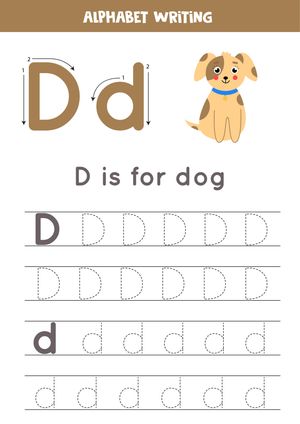
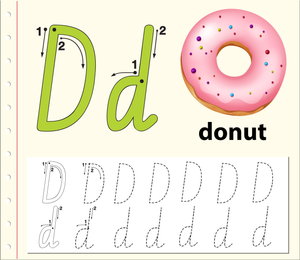
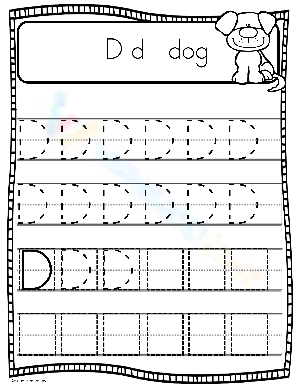
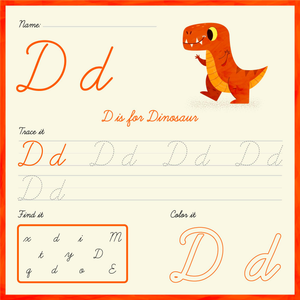
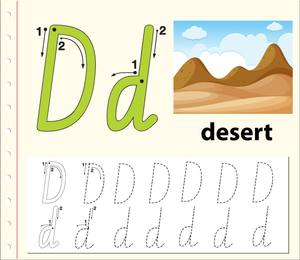
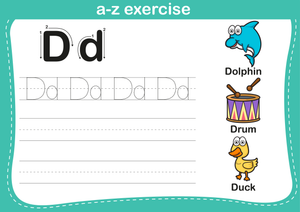
These letter d tracing handwriting pdf worksheets for kindergarten give teachers a direct, no-prep tool for one of the more instructionally demanding letters in the alphabet. The lowercase form sits at the center of the b/d reversal problem that surfaces every fall, and getting the stroke routine right early prevents months of correction later. Each worksheet pairs explicit stroke-order guidance with phonics reinforcement, so the handwriting practice and sound-symbol connection develop together.
The Reversal That Shows Up Every Year Without Fail
The b/d confusion is not a reading disability — it is a predictable developmental pattern, and it almost always traces back to how the letters were first formed. Students who learn to write lowercase d by drawing a circle and then adding a stick are building essentially the same motor path as lowercase b. There is no internal distinction to hold onto. What breaks the pattern is the c-first stroke: students curve left, push straight up to the top line, and pull down to the baseline. That starting direction — curving left rather than going straight down — is what separates d from b at the motor level, before students even think about which way the bump faces.
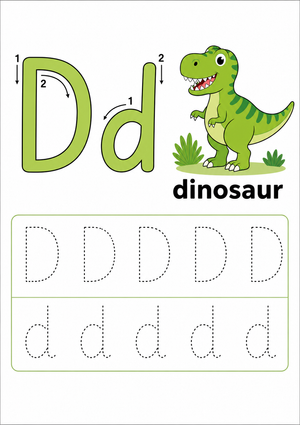
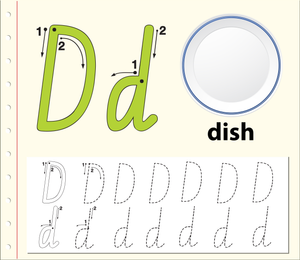
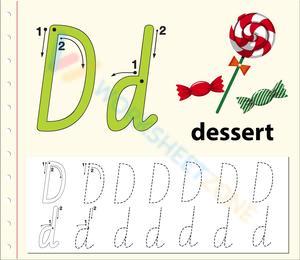
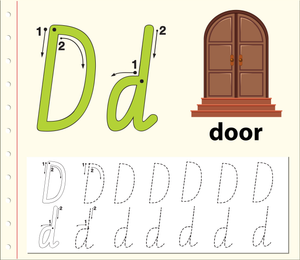
These worksheets reinforce the c-first sequence with numbered arrows on every traced letter. The arrows don't just confirm stroke order after the fact; they redirect students mid-formation when they glance up at the model. In small group sessions, teachers can pair the arrows with a short verbal prompt — "curve like a c, climb, come down" — and students begin to internalize the sequence as language rather than just a physical habit.
What Students Practice Across the Set
The exercises cover both cases of the letter and connect handwriting to phonics throughout:
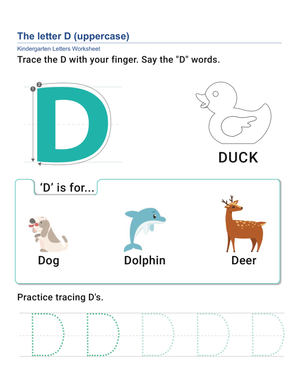
- Uppercase D formation — a downstroke followed by a large right-facing curve, with directional arrows guiding students through dotted paths before moving to freehand rows
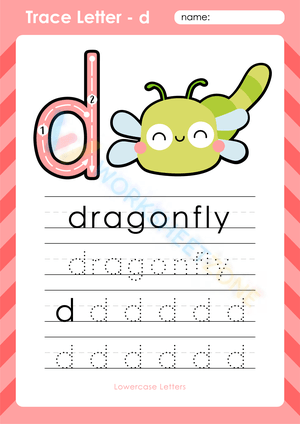
- Lowercase d formation — the c-first method, with ascender-line guidance built into every primary-ruled practice row so students see exactly where the tall stroke belongs
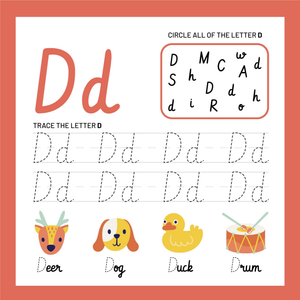
- Letter recognition hunts — students scan a mixed field of letters, mark every uppercase D and lowercase d they find, and build visual discrimination before picking up a pencil for tracing
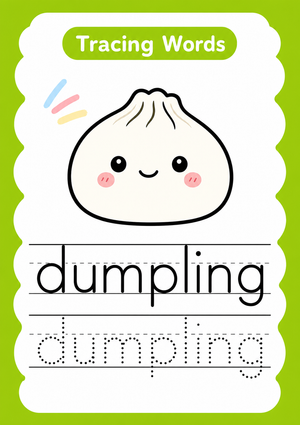
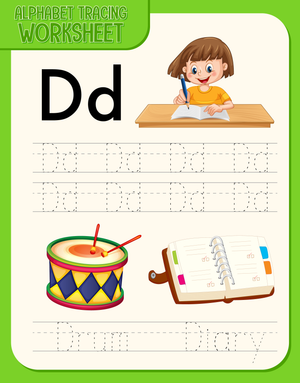
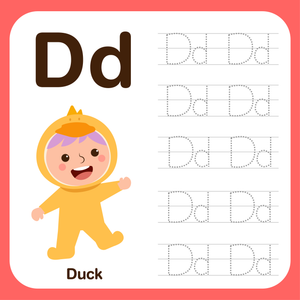
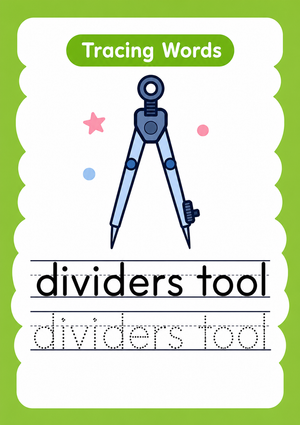
- Phonics-connected vocabulary — words like dog, duck, drum, and door appear in trace-and-say rows so students hear the /d/ sound while forming the letter
- Freehand practice rows — positioned after traced models on each worksheet, these rows reveal whether students have internalized the stroke or are still dependent on the dotted guide
Lesson-Planning Strategies That Get the Most From These Worksheets
These letter d tracing handwriting pdf worksheets for kindergarten fit several different spots across the teaching week. The most effective first use is whole-group introduction: project the worksheet on a screen, model the c-first stroke aloud while students air-trace, then let them follow along on their own copies. That shared modeling moment is where grip problems and directional errors surface before students practice them independently.
After the initial lesson, the worksheets move naturally into morning work or literacy centers. Slipping each worksheet into a dry-erase pocket lets students run through the same letter formation three or four times before you pull a fresh copy for written assessment. The repetition is what builds the motor routine — one pass through a traced row rarely accomplishes much on its own. For students who have already cleared the tracing stage, the freehand rows serve as a brief fluency check during the last five minutes of a writing block.
Stroke Order and the Motor Routine Behind It
Kindergarteners are still building hand strength and pencil control simultaneously, which means they benefit from formation instruction that gives them a physical sequence to follow, not just a visual shape to copy. The numbered-arrow format slows letter formation into two or three discrete moves rather than presenting the whole letter as a single outcome. Research on early handwriting acquisition — including work from Virginia Berninger on letter-name writing fluency and its relationship to reading development — consistently finds that students taught explicit stroke sequences show fewer reversals and reach automaticity faster than students taught to copy shapes freehand.
The primary-ruled lines with a dashed midline on each worksheet directly support this by showing students where the ascender of the lowercase d belongs. That top-line awareness prevents the shrunken d — a very common production error where students form a clean c-shape but never push the pencil high enough, leaving something that reads as a rounded bump rather than a tall letter with a clean downstroke.
Standard Alignment
These worksheets align to CCSS.ELA-LITERACY.L.K.1.A, which requires kindergarteners to print many upper- and lowercase letters. In practical classroom terms, this standard lands in the first marking period for most kindergarten pacing guides, right alongside initial phonics instruction for consonant sounds. Teaching the letter D here — before reversals calcify and before students begin writing CVC words independently — keeps handwriting instruction integrated with phonics rather than running as a disconnected strand.
Adjusting the Set for Writers at Different Stages
For students who are still developing hand strength and fine motor control, the letter d tracing handwriting pdf worksheets for kindergarten work best when introduced alongside additional tactile steps: tracing the letter in a sand tray, drawing the stroke in shaving cream, or practicing with a larger pencil grip before moving to a standard pencil. These students benefit from completing only the traced rows in a session rather than pushing into freehand practice before their control is ready.
Students who move through tracing quickly and accurately need a different kind of work. Skip the dotted rows entirely and move them directly to the freehand rows, then extend by having them generate their own list of /d/ words and write each one on primary-lined paper. That combination — fluent letter production plus active vocabulary retrieval — keeps advanced writers engaged without simply adding more tracing time to their day.
Frequently Asked Questions
What is the correct stroke order for lowercase d?
Start at the midline and curve left and down — the same motion as a lowercase c. From the bottom of that curve, push the pencil straight up to the top ruled line, then pull straight down to the baseline. This three-part sequence is marked with numbered arrows on each worksheet. Teaching it consistently prevents the b/d reversal because the starting direction is physically distinct from lowercase b, which begins at the top with a straight downstroke.
How do these worksheets specifically address b/d reversals?
Each worksheet for lowercase d leads with the c-first stroke, clearly marked on the traced model. Over repeated practice sessions, students internalize "d starts like a c" as a retrieval cue they can access during independent writing. Pairing that motor routine with a classroom anchor — a "bed" poster where the b forms the headboard and the d forms the footboard — gives students two independent pathways to the same distinction.
How many times should students trace before moving to the freehand rows?
There is no universal number. The practical signal is smoothness: when a student traces the dotted model at a steady pace without pausing or backtracking, the motor routine has become reliable enough for freehand practice. For most kindergarteners, that happens after several days of revisiting the same letter d tracing handwriting pdf worksheets for kindergarten during morning work or centers — not after a single session.
Can these worksheets be reused to extend practice?
Yes. Slipping each worksheet into a dry-erase pocket and providing a fine-tip whiteboard marker lets students complete the tracing rows multiple times before you print a fresh copy for written assessment. This works especially well for students who need extended practice beyond what a single pass provides, and it cuts down on paper use considerably.