


























0
Views
0
Downloads

0.0
0
Save
0 Likes
Share
D is for Dad: Learning the Alphabet with D
0 Views
0 Downloads
Paste this activity's link or code into your existing LMS (Google Classroom, Canvas, Teams, Schoology, Moodle, etc.).
Students can open and work on the activity right away, with no student login required.
You'll still be able to track student progress and results from your teacher account.
Information
Description
What It Is:
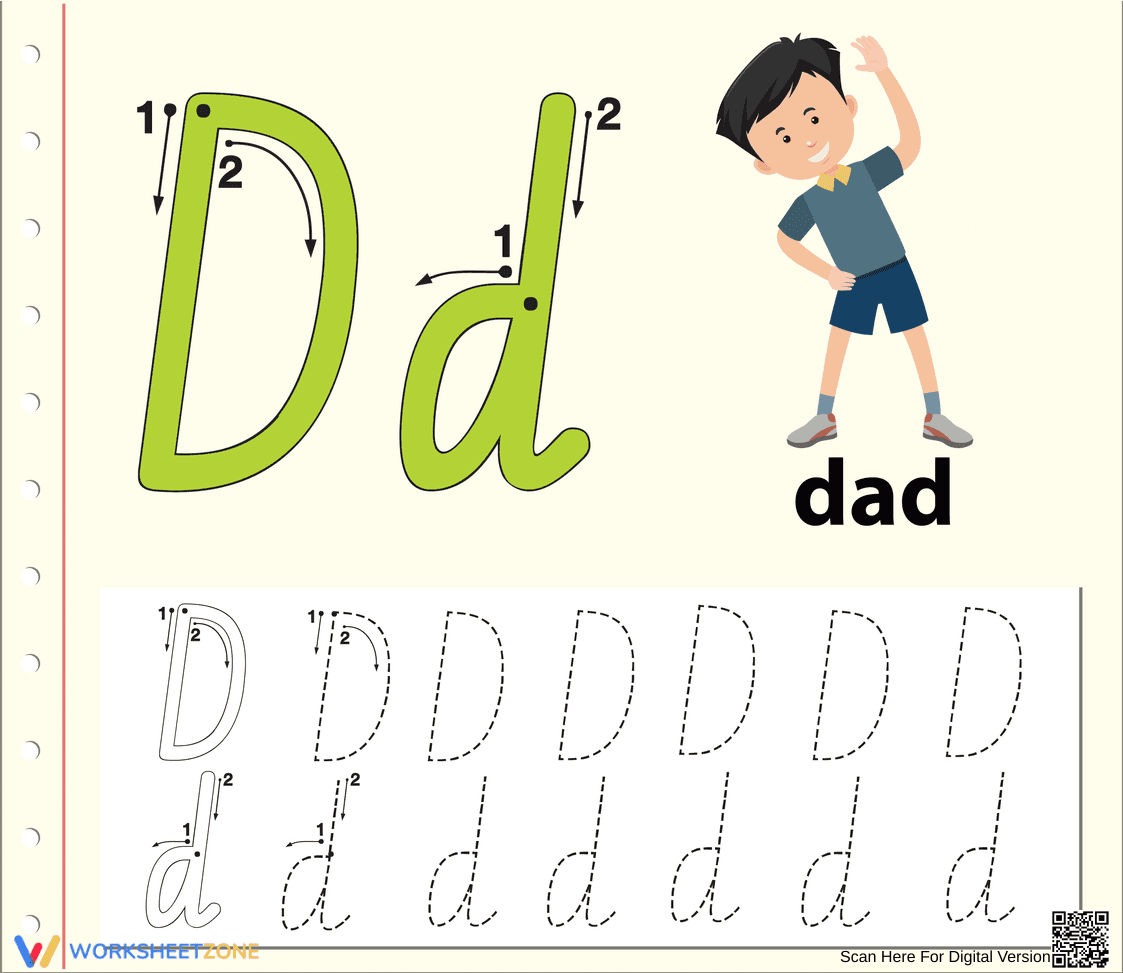
This is a handwriting practice worksheet focusing on the letter 'D'. It features both uppercase 'D' and lowercase 'd', with numbered arrows indicating the correct stroke order. The worksheet includes a picture of a boy and the word 'dad' to associate the letter with a familiar word. Below the example letters, there are dotted outlines of both 'D' and 'd' for tracing practice.
Grade Level Suitability:
This worksheet is suitable for Preschool and Kindergarten (ages 3-6). The simple letter tracing and association with a basic word like 'dad' make it ideal for early literacy development.
Why Use It:
This worksheet helps children develop fine motor skills through tracing, learn the correct formation of the letter 'D', and associate the letter with a common word. It reinforces letter recognition and early writing skills.
How to Use It:
Start by showing the child the example letters and explaining the stroke order. Then, have them trace the dotted letters, focusing on following the lines carefully. Finally, encourage them to practice writing the letter independently on a separate sheet of paper.
Target Users:
This worksheet is ideal for preschool children, kindergarten students, ESL learners, and anyone learning to write the English alphabet. It is also beneficial for children who need extra practice with handwriting and letter formation.
This is a handwriting practice worksheet focusing on the letter 'D'. It features both uppercase 'D' and lowercase 'd', with numbered arrows indicating the correct stroke order. The worksheet includes a picture of a boy and the word 'dad' to associate the letter with a familiar word. Below the example letters, there are dotted outlines of both 'D' and 'd' for tracing practice.
Grade Level Suitability:
This worksheet is suitable for Preschool and Kindergarten (ages 3-6). The simple letter tracing and association with a basic word like 'dad' make it ideal for early literacy development.
Why Use It:
This worksheet helps children develop fine motor skills through tracing, learn the correct formation of the letter 'D', and associate the letter with a common word. It reinforces letter recognition and early writing skills.
How to Use It:
Start by showing the child the example letters and explaining the stroke order. Then, have them trace the dotted letters, focusing on following the lines carefully. Finally, encourage them to practice writing the letter independently on a separate sheet of paper.
Target Users:
This worksheet is ideal for preschool children, kindergarten students, ESL learners, and anyone learning to write the English alphabet. It is also beneficial for children who need extra practice with handwriting and letter formation.


