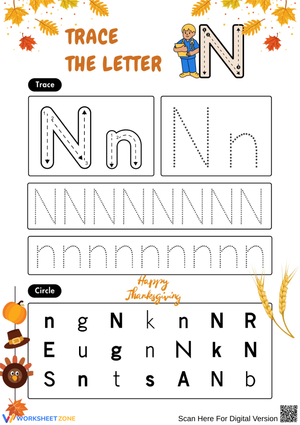
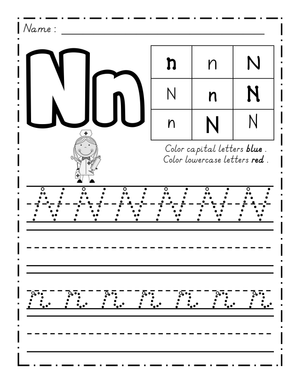
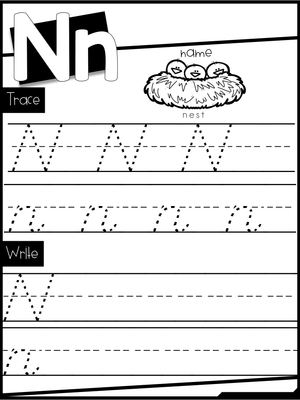
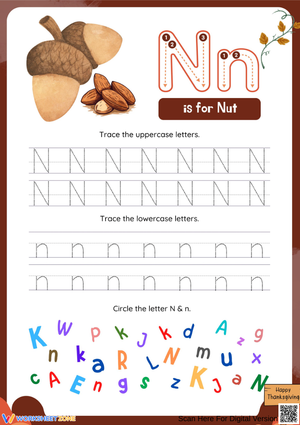
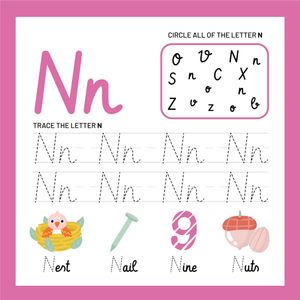
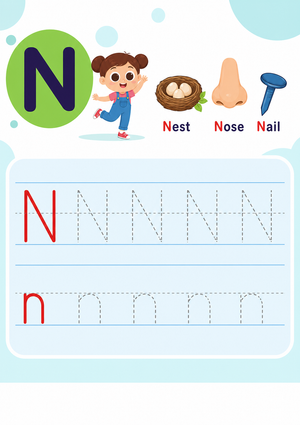
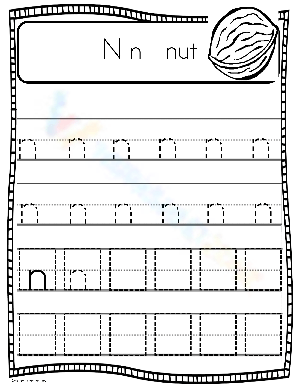
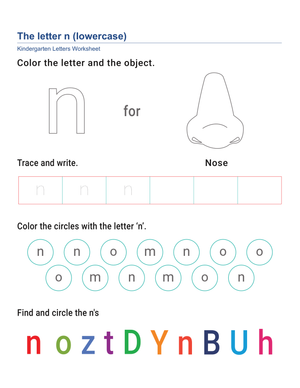
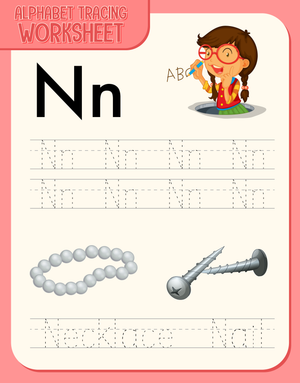
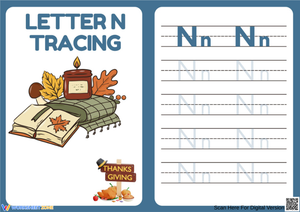
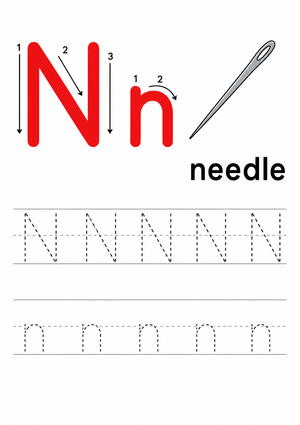
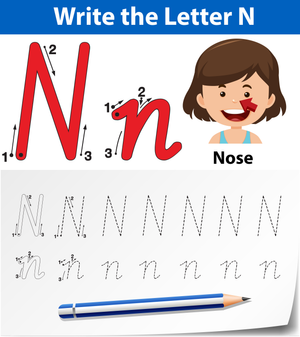
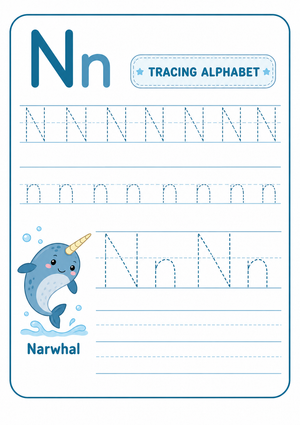
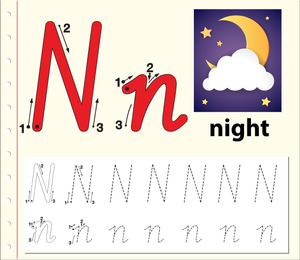
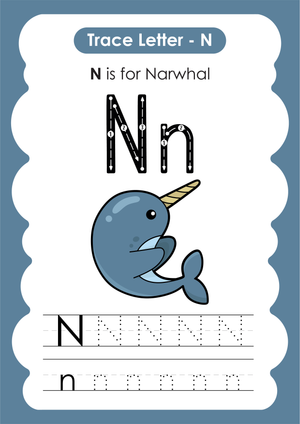
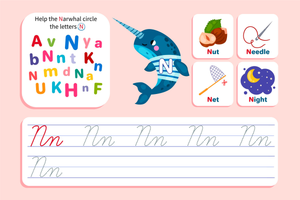
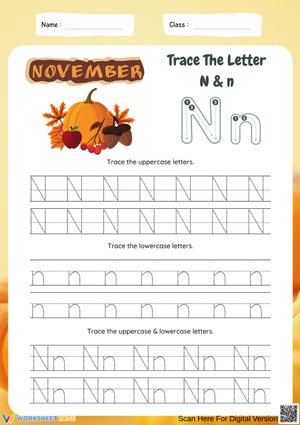
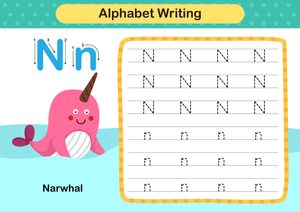
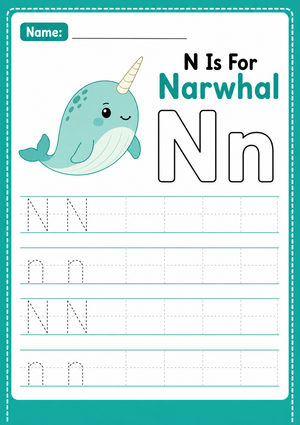
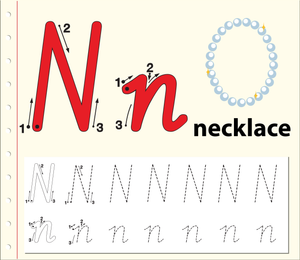
These letter n tracing handwriting printable worksheets for kindergarten give early writers structured repetition with both uppercase and lowercase forms before wrong habits take root — because a stroke sequence learned incorrectly at five is surprisingly hard to undo at seven. Each worksheet pairs clear starting dots and directional arrows with enough tracing rows to build genuine muscle memory, not just a single brush with the letter. Phonics-connected images sit alongside the tracing lines so the sound-symbol link develops at the same time as the motor pattern.
The Specific Skills Each Worksheet Targets
The set covers three distinct areas: uppercase N formation, lowercase n formation, and letter-sound practice with the /n/ consonant. Those might sound simple, but each carries its own instructional weight at the kindergarten level.
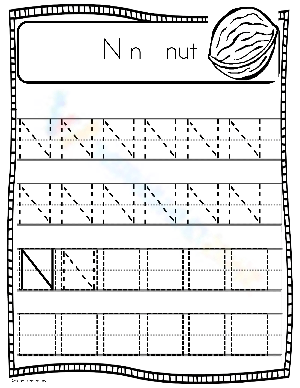
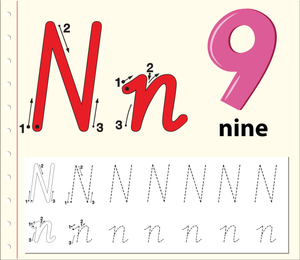
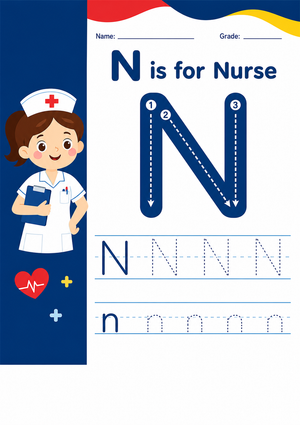
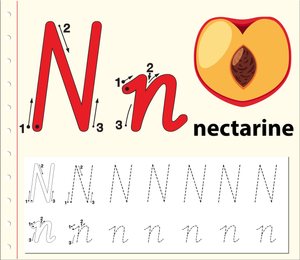
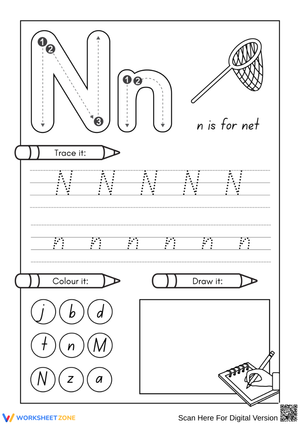
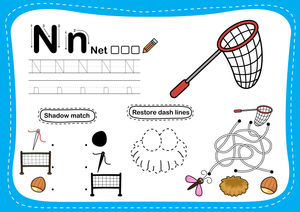
Uppercase N is built from three strokes — a vertical pull down from the top line, a diagonal slant to the lower right, and a final vertical push back up. The diagonal is the hard part. Students who have spent weeks practicing vertical and horizontal lines find the slanted stroke unfamiliar, and the stroke order matters: the diagonal always connects the two verticals, not the other way around. Worksheets in the set use numbered arrows to make that sequence visible before students practice independently.
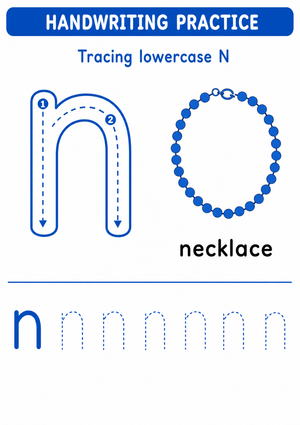
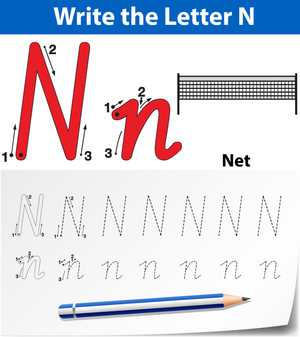
Lowercase n is a continuous stroke: down from the midline, trace back up, arc into a hump, and pull straight down again — all without lifting the pencil. The challenge is that students want to draw the vertical line and then attach the hump as a separate move. That habit produces a letter that looks passable at this stage but breaks down under speed, leading to illegible writing in later grades. Each worksheet makes the continuous path explicit through a dotted trace route before the independent practice rows.
Mistakes Students Make That Teachers Need to Catch Early
The most common reversal we see is the uppercase N written backward — the diagonal slants the wrong direction, producing something closer to a reflected Z. This happens because students sometimes begin the middle stroke at the bottom right rather than the top left. Starting dots alone do not always prevent it. What helps is pairing the visual cue with a verbal sequence: "tall line down, slant from top-left to bottom-right, tall line up." When that directional language becomes automatic, the motor pattern tends to follow.
Lowercase n and lowercase m are genuinely hard to distinguish for many kindergartners, and a significant portion of students treat them as interchangeable longer than teachers expect. The reliable diagnostic is asking a student to write the word "man" — if both letters have two humps, you know exactly where to spend reteaching time. Several worksheets in the set place n and m side by side to build visual discrimination rather than drilling n in isolation, where the specific confusion never surfaces.
One more thing worth watching: students who grip the pencil too tightly tend to produce a shaky diagonal on the uppercase N and a cramped, uneven hump on the lowercase. If the tracing looks jagged in those specific spots, check the grip before assuming the student needs more letter repetitions.
How to Build These Worksheets Into Your Lesson Plans
These worksheets fit naturally into several specific spots in the kindergarten day. During the morning literacy block, one worksheet serves well as a warm-up before whole-group phonics instruction — the task is predictable enough that students start independently, which gives the teacher a few minutes for attendance or early-morning check-ins. Later in the week, the same worksheet works during center rotations as a quiet, self-managed activity while small group instruction runs at the back table.
Before students pick up a pencil, having them trace both the uppercase N and the lowercase n in the air with their whole arm — large, deliberate strokes — gives them a physical sense of the letter's shape without the fine motor demand of pencil control. Two minutes of this before distributing the letter n tracing handwriting printable worksheets for kindergarten noticeably reduces the number of students who start in the wrong place or lose the diagonal direction mid-stroke.
For students who finish early, a sand tray or small whiteboard at the table extends practice without extra printed materials. Ask them to form the letter three times in sand, smooth it out, and repeat. The tactile feedback reinforces the same stroke sequence the worksheet established, and it keeps faster finishers on task without requiring another full worksheet.
Standard Alignment
These worksheets address CCSS.ELA-LITERACY.L.K.1a, which requires kindergartners to print many uppercase and lowercase letters. In practical classroom terms, that standard shows up in the kindergarten writing block when teachers need documented evidence that students can produce legible letterforms — not just recognize them. The letter N fits in the middle of most kindergarten handwriting sequences, typically introduced after students have practiced letters with only vertical and horizontal strokes, because the diagonal adds a directional demand that earlier letters don't require. The worksheets slot into that instructional progression directly.
Differentiating These Worksheets Across Skill Levels
For students who are still developing pencil control, worksheets with heavier trace lines and larger letter models reduce frustration — the wider path gives more room without immediately going out of bounds. These students also benefit from tracing with a finger first, following the arrows slowly, before switching to a pencil. That step costs about thirty seconds and prevents a full row of incorrectly formed letters from becoming the practice material.
Students who have moved past basic tracing can use the worksheets differently. Cover the model letter and ask them to write it from a verbal description alone, then uncover to self-check. Or set a consistency goal — not just producing a recognizable N, but producing the same-sized, same-spaced N across an entire row. That kind of deliberate repetition builds the automaticity that second and third grade writing depends on.
For letter n tracing handwriting printable worksheets for kindergarten used in a pull-out or intervention context, reducing the number of active rows per session and alternating tracing rows with independent rows within the same worksheet keeps the task manageable without requiring a separate set of materials at a different level.
Frequently Asked Questions
What is the correct stroke sequence for lowercase n?
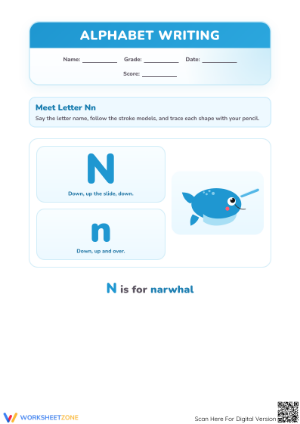
Start at the midline, pull straight down to the baseline, retrace back up along the same line, arc to the right into a hump, and pull straight down to the baseline again — all in one continuous motion without lifting the pencil. The return path is the step students most often skip, which is what produces the two-part letter rather than the single connected stroke.
How do I help a student who consistently reverses the uppercase N?
Give the student a verbal cue to say aloud while writing: "down, slant right, up." The slant-right cue is the critical one because it names the diagonal's direction explicitly — which is where the reversal originates. Pair that language with a worksheet that uses numbered directional arrows so the student has both a verbal and visual anchor for the stroke order at the same time.
How do the worksheets address the confusion between n and m?
Several worksheets in the set present both letters in adjacent rows for direct comparison. Students trace n on one line and m on the next, then identify the letter n in a mixed row at the bottom. That contrast practice is more effective than drilling n alone, because isolated practice doesn't expose the specific visual confusion the student is actually experiencing.
Can these worksheets be sent home for independent practice?
The letter n tracing handwriting printable worksheets for kindergarten work well as homework because the task is self-explanatory — a child can complete the tracing at home without a parent needing to understand handwriting instruction methods. The directional arrows and starting dots carry enough guidance on their own. If you send a worksheet home, specify whether the student should trace only or also attempt the independent practice rows, since most families won't know to look for that distinction.