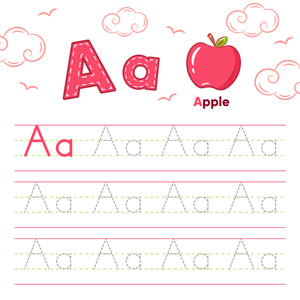
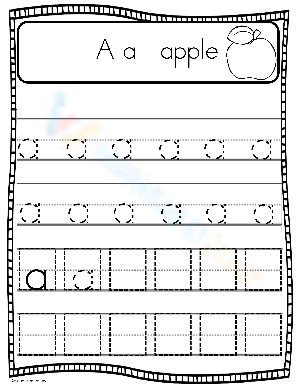
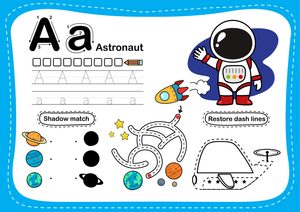
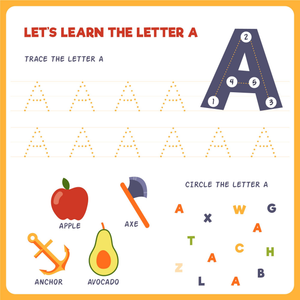
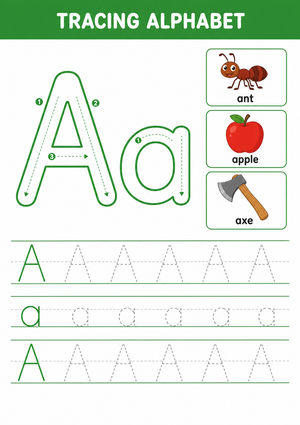
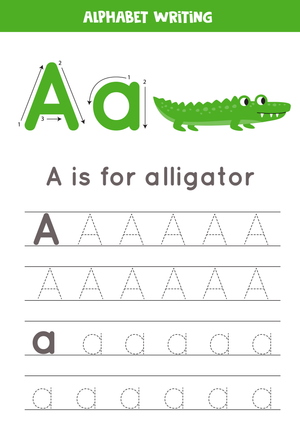
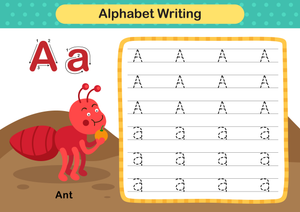
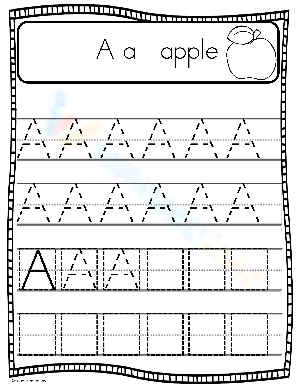
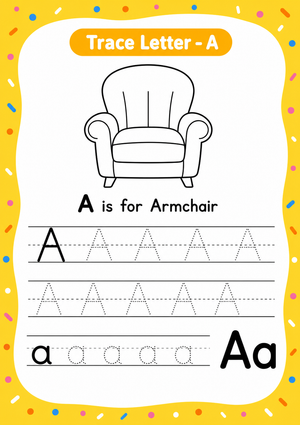
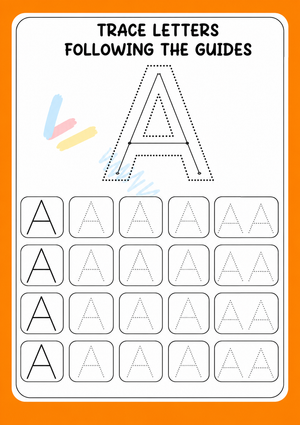
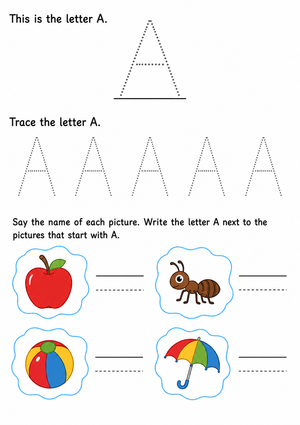
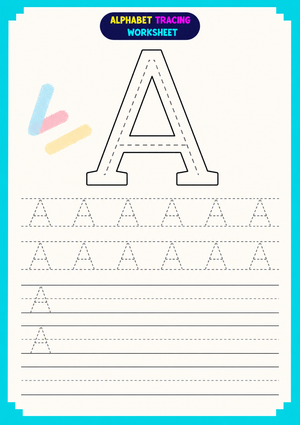
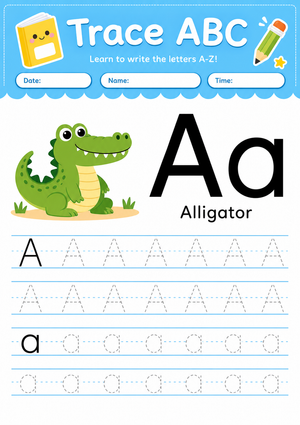
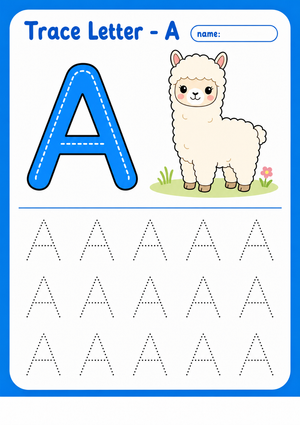
Letter a tracing handwriting printable worksheets for kindergarten give teachers a focused, low-prep tool for early alphabet instruction that fits into morning routines, literacy centers, and small-group work without extra setup. Each worksheet targets both uppercase and lowercase letter A, moving students from guided tracing to independent writing within the same sitting.
What Students Practice With Each Worksheet
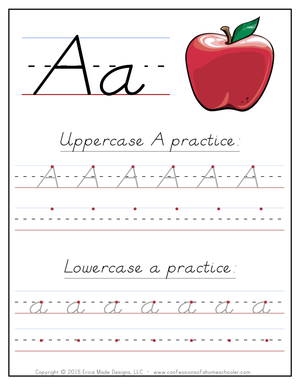
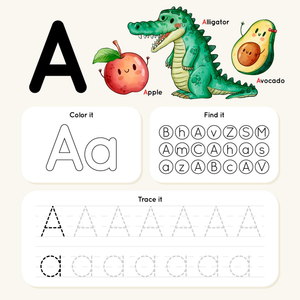
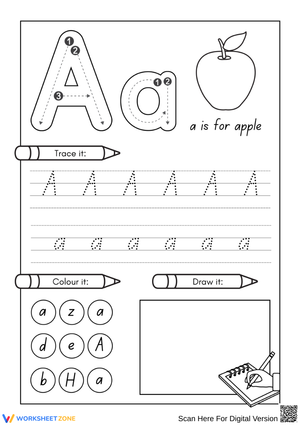
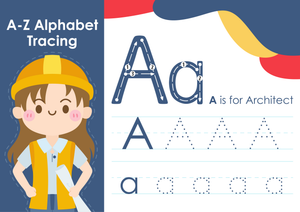
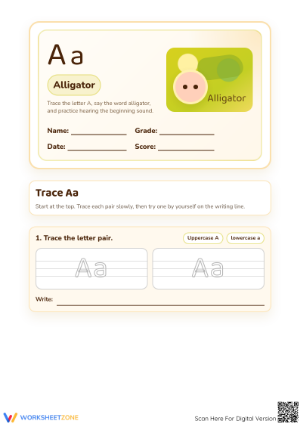
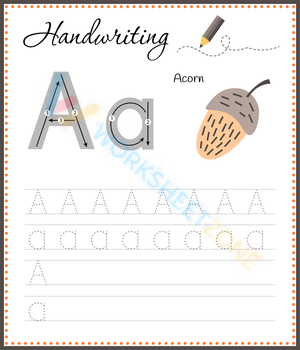
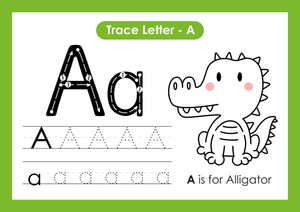
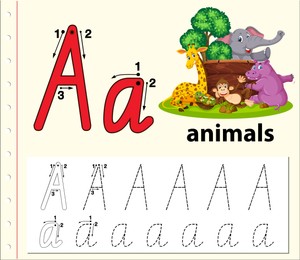
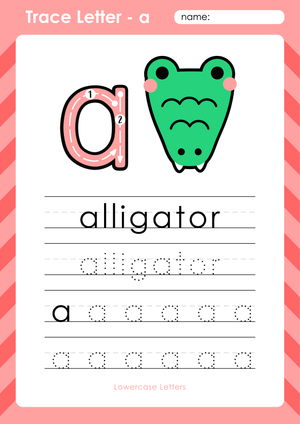
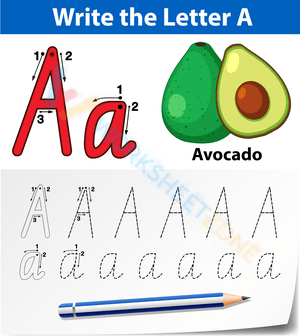
The sequence built into each worksheet is straightforward: trace uppercase A, trace lowercase a, then write each form without a guide. That final step — the independent copy lines — is where teachers learn the most. A student who traces neatly but writes from memory with a reversed stroke has told you something important that a completed tracing row alone would not reveal.
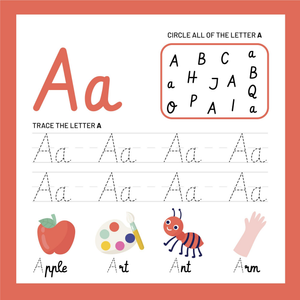
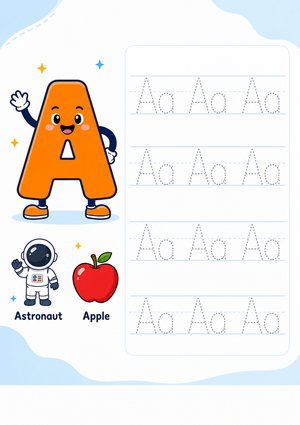
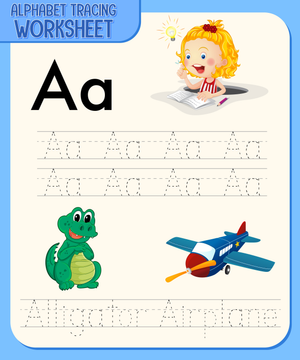
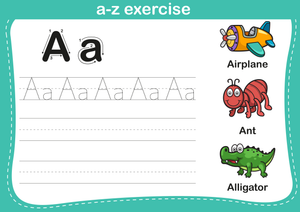
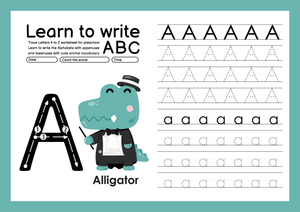
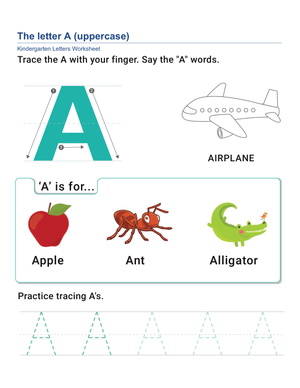
Many worksheets pair the letter with a picture cue such as apple, ant, or alligator. Before tracing begins, students say the pictured word aloud, isolate the first sound, and connect it to the letter in front of them. That sixty-second moment ties handwriting practice to phonological awareness and keeps the worksheet from functioning as pure penmanship drill.
- Dotted tracing forms for both uppercase A and lowercase a, sized for developing hand muscles
- Open copy lines where students write the letter without a dotted path to follow
- Beginning-sound picture cues that link the letter form to its spoken sound
- Uncluttered layouts with low visual noise — important for students who are still learning to filter irrelevant information on a page
Common Mistakes Teachers Should Anticipate and Address
Uppercase A has one reliable trouble spot: the crossbar. Students who trace the two diagonal strokes cleanly will often skip the horizontal line or place it too high, near the apex, because they feel finished after completing the V-shape. Naming it directly before students begin — "find the line across the middle; that is the last stroke" — and having them touch it on a model letter takes ten seconds and reduces this error noticeably.
Lowercase a creates a different problem. In manuscript print, it requires a counterclockwise circle followed by a downward stroke on the right side. Many students begin the circle at the bottom and travel clockwise, producing a shape that will later collide with 'd' when that letter is introduced. Because these two letters are near-mirrors of each other, catching the clockwise habit during letter A practice — by watching pencil movement, not just finished marks — prevents a persistent confusion later in the alphabet sequence.
Smart Ways to Work These Worksheets Into Your Week
Morning placement is the most dependable routine. Letter a tracing handwriting printable worksheets for kindergarten set out on tables before students arrive let children begin without any directions from you, which frees the first ten minutes for attendance, check-ins, and morning logistics. The familiarity of the format does the work — students know the task the moment they sit down.
In literacy centers, a handwriting station with the worksheet, a short alphabet strip taped to the table, and a cup of sharpened pencils runs itself for five to seven minutes per rotation. You do not need to staff it directly. Collect completed worksheets at the end of the block and check for formation errors during a planning period instead of interrupting center flow.
Small-group use changes the dynamic completely. When you sit alongside three or four students who are struggling with grip or stroke direction, you can narrate each movement aloud while they trace: "Start at the top, slide down left, back to the top, slide down right — now cross in the middle." That verbal layer gives students a self-talk strategy they can use independently during later practice. Shorter is still better: four clean, deliberate traces of each form give you more useful information than a full worksheet of rushed marks.
Standard Alignment
These worksheets align with CCSS RF.K.1d, which requires kindergarteners to recognize and name all uppercase and lowercase letters of the alphabet. The handwriting component also supports CCSS L.K.1a, covering the printing of uppercase and lowercase letters. In classroom terms, these two standards work in tandem during alphabet unit instruction: students cannot reliably name a letter they cannot visually distinguish, and tracing builds exactly that visual-motor familiarity. Addressing both standards during the letter A unit rather than treating them as separate tasks keeps instruction efficient and connected.
Adjusting the Worksheets for a Range of Learners
Letter a tracing handwriting printable worksheets for kindergarten accommodate a wide range of fine motor readiness, but how you use them should shift based on individual need. For students still building grip strength, finger tracing the dotted forms before picking up a pencil reduces frustration and establishes the stroke pattern through a different motor channel. Placing a small sticker dot at the starting point of each letter removes another common point of confusion — where to begin — without requiring a verbal reminder every time.
Students who are ready for more independence can move directly to the copy lines, skipping most of the tracing rows, then write A and a from memory on the back of the worksheet with no visual guide. That version pushes toward automaticity, which is the real goal by the close of the alphabet unit.
For multilingual learners, the picture cue carries extra instructional weight. A brief oral exchange before writing — say the word together, clap the syllables, name the first sound — grounds the written letter in spoken language and gives students a retrieval anchor when they encounter the letter A in reading contexts later.
Frequently Asked Questions
Should uppercase A and lowercase a appear on the same worksheet or on separate ones?
Teaching both forms side by side lets students notice the differences between them directly, which is more efficient than introducing each in isolation. Keep instruction explicit: trace and name uppercase A first, then trace and name lowercase a, and confirm that students can point to and identify each separately before combining them in written tasks.
How many repetitions of letter A are right for one sitting?
Four to six careful traces per form — uppercase and lowercase — is usually enough for one session. Volume matters less than accuracy. A student who traces uppercase A correctly four times has built more of the motor pattern than one who rushes through twelve uneven marks. If the class period is short, stop before students lose focus rather than pushing through to the bottom of the worksheet.
Can completed worksheets serve as documentation of student progress?
Collected over the first weeks of alphabet instruction, a folder of a student's letter a tracing handwriting printable worksheets for kindergarten gives you concrete evidence of formation changes to share at family conferences — far clearer than verbal descriptions. You can point to a specific row and show a family exactly where the stroke direction shifted from reversed to correct.
What should students do when they finish the worksheet before time is up?
Have them turn the worksheet over and write A and a from memory, draw something whose name begins with the letter A sound, or locate the letter on a classroom alphabet chart and count how many times it appears. These extensions take two to three minutes and require no additional materials on your part.