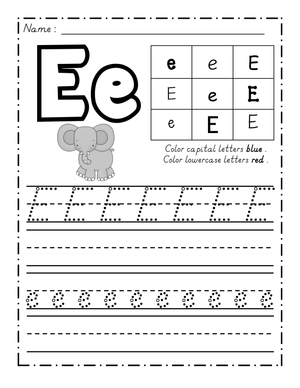
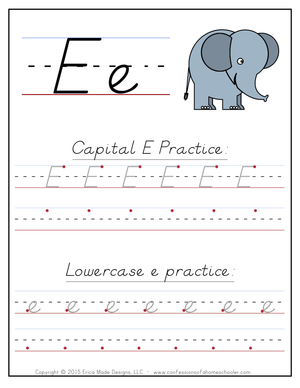
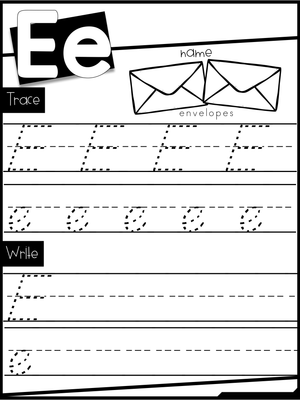
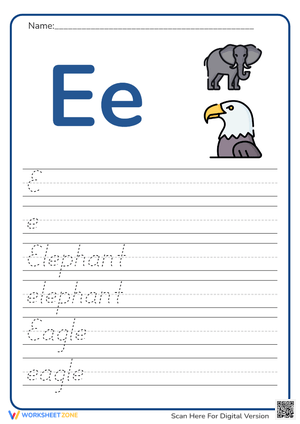
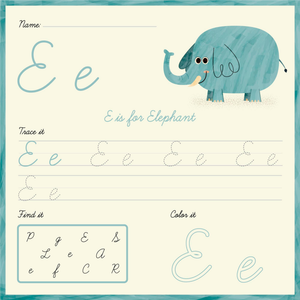
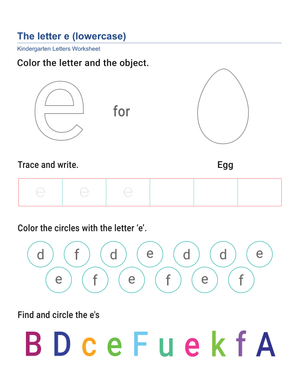
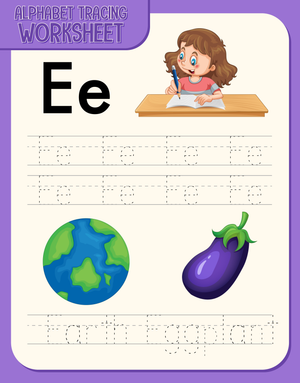
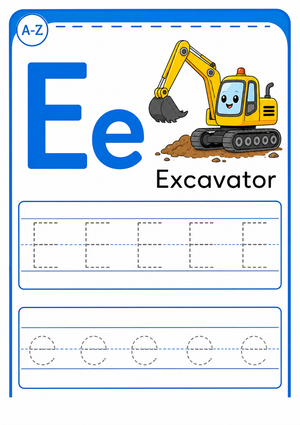
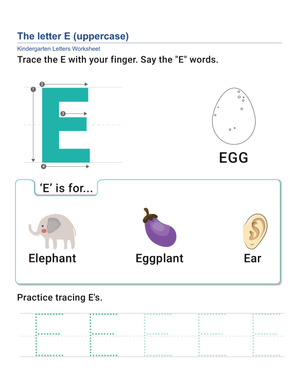
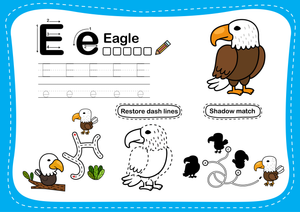
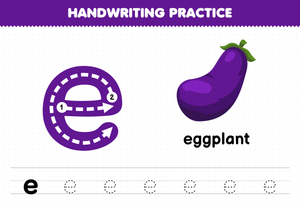
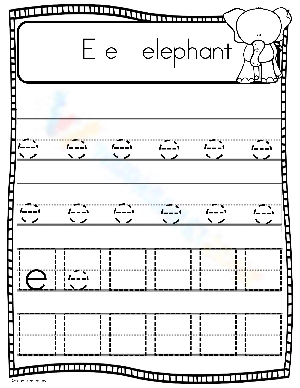
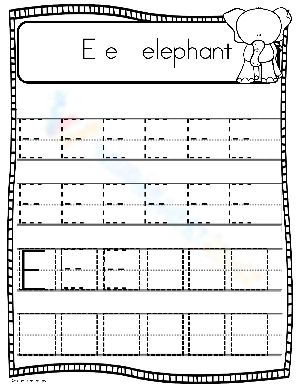
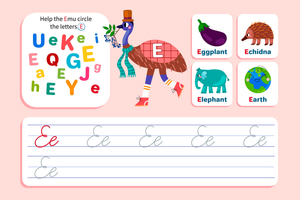
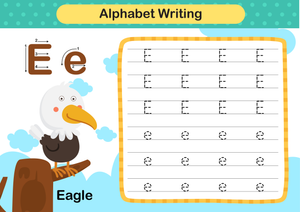
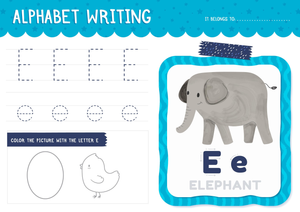
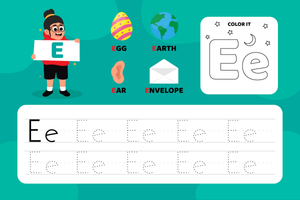
Letter e tracing pdf worksheets for kindergarten handle a letter that looks deceptively simple on the page but trips up a surprising number of five-year-olds the moment they try to reproduce it independently. The uppercase form demands four clean strokes in sequence. The lowercase form requires a continuous curving motion that most children's hands have never attempted in daily play, and getting that motion right is what separates a recognizable e from a smudge that could be almost anything.
The Specific Skills Each Worksheet Targets
These resources treat the letter as two distinct motor challenges rather than one. Letter e tracing pdf worksheets for kindergarten typically sequence uppercase and lowercase practice across separate worksheets in the set, which makes developmental sense: uppercase E is built entirely from straight strokes, while lowercase e demands a continuous arc that most five-year-olds need several sessions to internalize before they can reproduce it reliably without visual support.
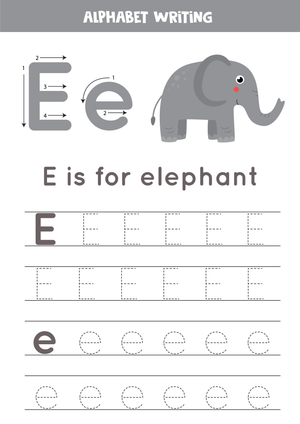
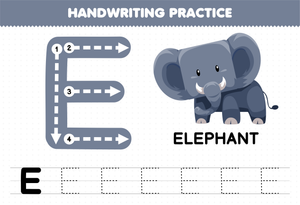
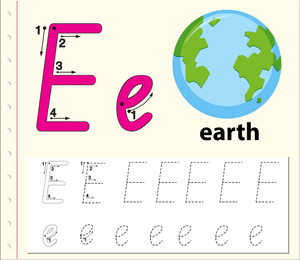
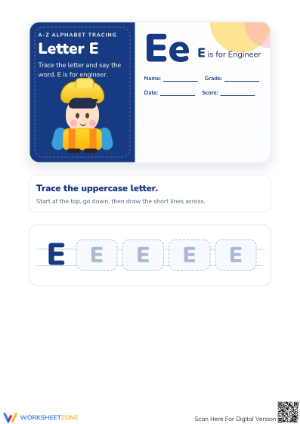
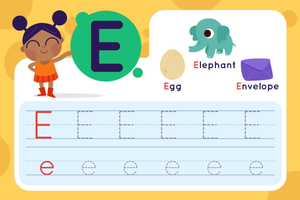
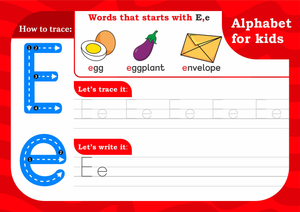
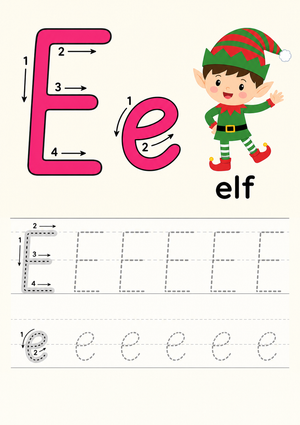
- Stroke sequencing for uppercase E: Students begin with a vertical downstroke from the top line, then add three horizontal strokes in order—top, middle, bottom. Students who skip the top horizontal or start from the bottom produce a structurally weak letter that becomes increasingly difficult to correct once the habit is set.
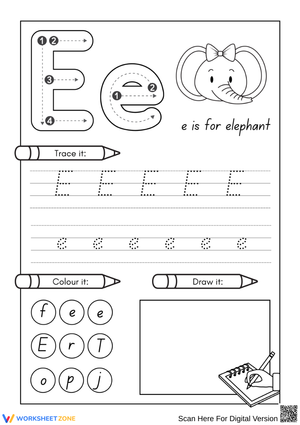
- Continuous motion for lowercase e: The entry stroke moves right at midline height, then curves immediately upward and arcs around without a pencil lift. Most worksheets in the set mark the starting dot and directional arrow at that entry point—the single most useful visual cue you can give a beginning writer for this particular letter.
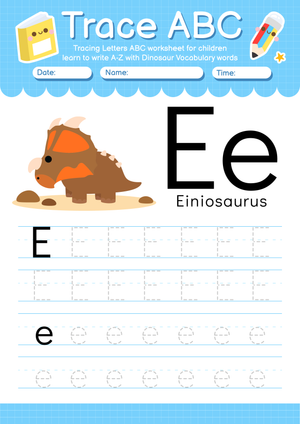
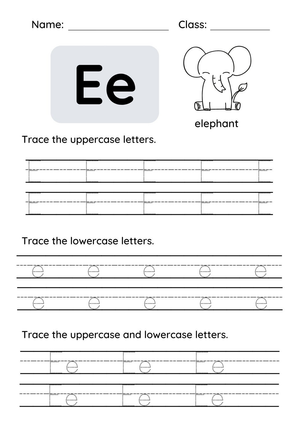
- Relative sizing: Uppercase E fills the full height from baseline to cap line. Lowercase e lives only between the baseline and midline. Students who draw both at identical heights need direct comparison practice—the size difference is not obvious to them without explicit attention to it.
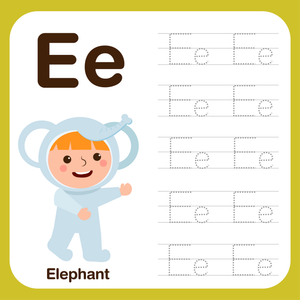
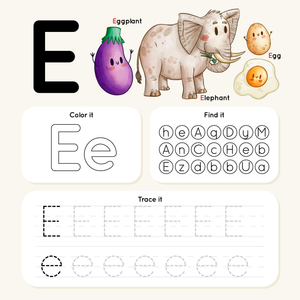
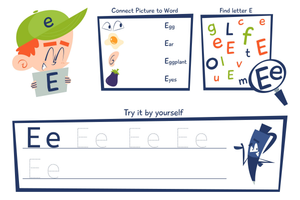
- Letter-sound connection: Several worksheets pair the tracing task with short-e images—an egg, an elbow—so students anchor the motor pattern to a phonics identity at the same time.
Fitting These Worksheets Into Your Weekly Literacy Routines
The most productive slot for tracing practice is the first five to eight minutes of the literacy block, before read-aloud or phonics instruction begins. Students arrive to find the worksheet already on the desk. That transitional window—when some students are still getting settled and you haven't formally opened instruction—becomes focused work rather than loose waiting time. Introduce uppercase E on the first day of the letter; rotate lowercase practice into the next two sessions.
One move worth adopting: slide the worksheets into dry-erase pockets and let students trace with low-odor markers. The repetition is identical, and you preserve paper until the day you actually want a written record—for your own formative notes or a portfolio sample from a parent conference. Letter e tracing pdf worksheets for kindergarten also drop naturally into literacy centers; label the pocket "writing center" and set a letter-sound sorting card beside it so students are doing connected work without needing adult direction during center time.
The Errors That Surface Most Often With This Letter
The most persistent error with lowercase e is a pencil lift after the horizontal entry stroke. Students draw the short horizontal line, pause, then produce a backward C below it—two separate marks instead of one continuous arc. The resulting letter looks approximately correct from a distance but breaks down under close inspection. Worksheets with uninterrupted directional arrows expose this immediately: the arrow curves without pause from the entry stroke into the circle, and a student who has lifted the pencil cannot follow the arrow as drawn. That mismatch is a quick formative diagnostic during independent work without requiring you to circulate constantly.
For uppercase E, the common error is a fourth horizontal line, typically placed just below the midline. This comes from students whose mental image of E is "lots of lines" rather than a precise count of three. A quick fix: have the student hold up three fingers before each letter and count the strokes aloud while writing. Worksheets that label each stroke in sequence—1 for the vertical, then 2, 3, and 4 for the three horizontals—reduce this error during independent practice without requiring teacher proximity.
Adjusting the Work for a Range of Readiness Levels
Students with limited fine motor strength need a larger working surface. Print letter e tracing pdf worksheets for kindergarten at 150 percent on standard letter-sized paper, or allow work on unlined paper for the first two sessions and permit oversized letter production. Once a student reproduces the stroke sequence accurately at large scale, move to standard primary ruled lines. The motor pattern is the same at both sizes—the smaller format simply adds a precision demand that early writers are not always ready for in the first weeks of letter introduction.
For students who complete tracing quickly and accurately, the extension requires no additional materials: write three short-e CVC words—egg, end, elk—in the remaining line space. Same skill set, slightly higher demand, no separate prep. Students who consistently reverse lowercase e into a mirror image are showing something beyond a tracing-practice problem; that pattern warrants a conversation with your intervention specialist rather than a worksheet modification alone.
Standard Alignment
These worksheets connect directly to CCSS.ELA-LITERACY.L.K.1.A, which requires kindergartners to print many uppercase and lowercase letters. In classroom terms, that standard runs across the full fall semester as letters are introduced in sequence. The letter E typically lands in October or November in most kindergarten pacing guides—after students have worked through several consonants and are beginning to encounter vowels constantly in their decodable texts. Tying the tracing task to words students are currently reading in their reader—short-e CVC words from that week's phonics set—keeps handwriting practice from feeling like a disconnected subject rather than part of the same literacy work.
Frequently Asked Questions
Should uppercase or lowercase E be introduced first?
Most structured handwriting programs introduce uppercase first because straight-line strokes are more accessible for developing fine motor systems. The four strokes of uppercase E are each short and discrete. Lowercase e's continuous curve demands more precise motor control. Teaching uppercase first gives students a stable mental image of the letter's identity before asking them to manage the more demanding form.
How do I know when a student is ready to write independently rather than continue tracing?
When a student can produce the letter with correct stroke order and reasonable proportions three times consecutively without watching you model it, tracing is no longer the right tool. At that point, continued tracing can reduce the attentional demand in a way that actually slows independent mastery—the student is following a path rather than constructing the letter from memory. Move them to blank lines before that becomes a habit.
Can these worksheets be sent home for family practice?
Yes, with one important caveat: include the stroke order guide with anything sent home. Parents who model lowercase e as a backward C with a separate dash—because that's how they've always thought of it—will undo in one evening what took several classroom sessions to establish. A simple printed reference card keeps home practice consistent with what students are learning at school.