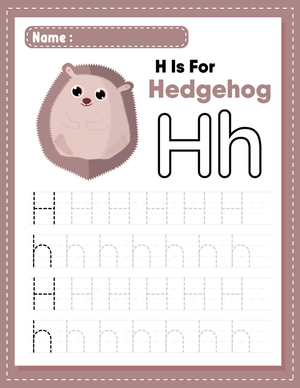
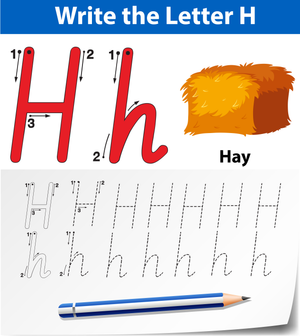
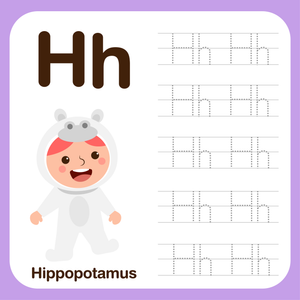
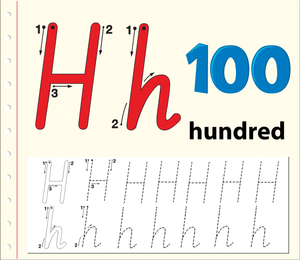
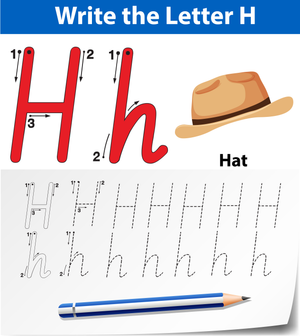
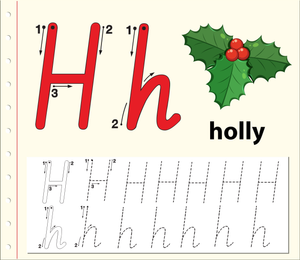
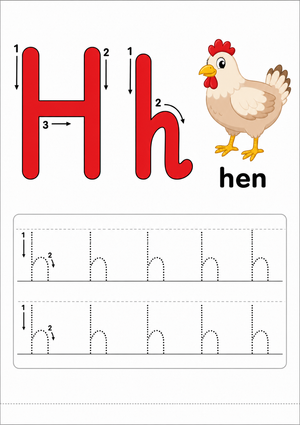
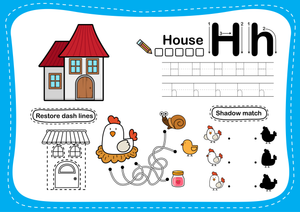
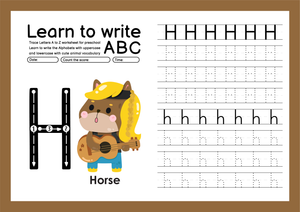
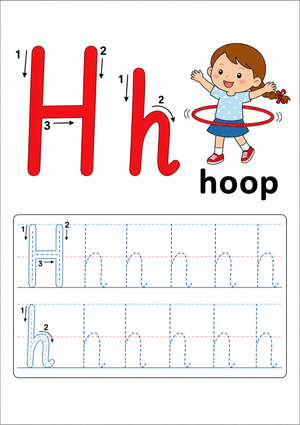
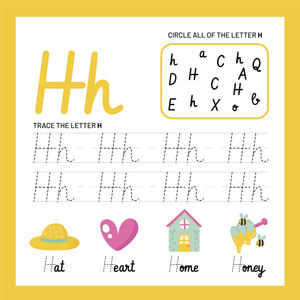
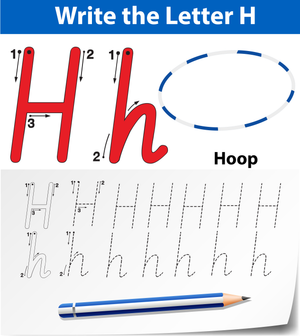
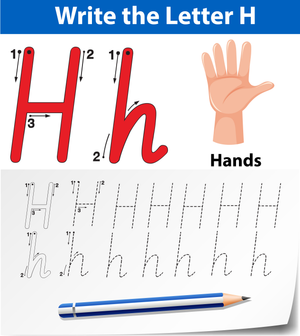
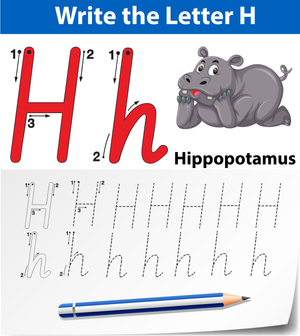
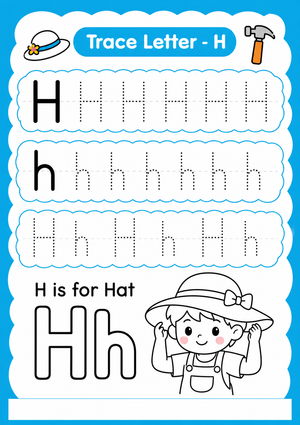
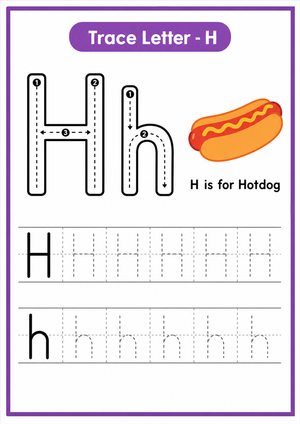
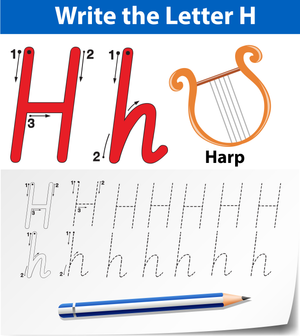
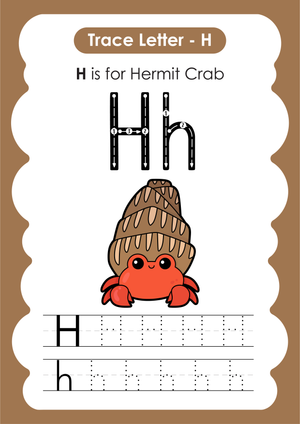
These letter h tracing handwriting worksheets for kindergarten cover both uppercase H and lowercase h in a format that prints cleanly and fits inside short daily routines — morning work, a handwriting center, or the 10 minutes before a read-aloud begins. Each worksheet keeps the target letter in focus without loading young writers with distracting extras.
Mistakes Students Make That These Worksheets Help You Catch
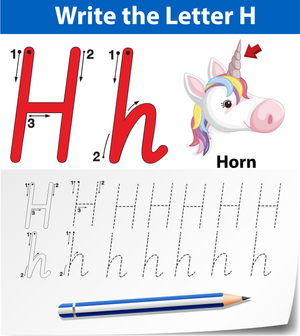
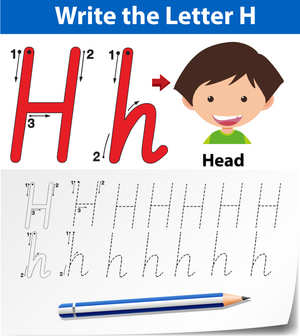
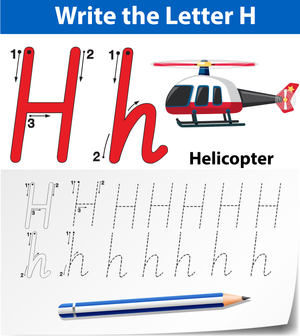
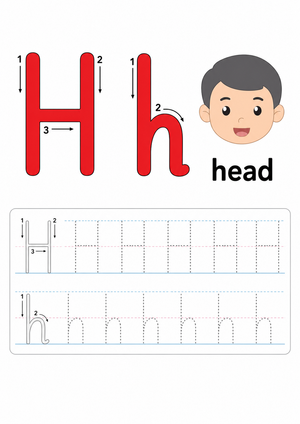
Letter H looks simple on paper, but the formation errors kindergartners make are consistent enough that teachers can prepare for them. The most common one: students treat uppercase H like two separate lowercase l letters, drawing both vertical strokes first, then trying to connect them with a freehand bar. The result is a crossbar that lands too high, too low, or at an angle. The correct sequence is left vertical stroke, lift, right vertical stroke, lift, then the connector — and tracing with numbered stroke arrows is one of the few formats that actually makes that sequence stick.
Lowercase h creates a different problem. Many kindergartners enter the letter from the bottom of the tall stroke rather than the top, which seems logical to a child without a strong model for where the pencil starts. The hump portion also trips up students who have been practicing lowercase n — they sometimes produce a mirror-image shape that dips below the baseline. Watching students trace in real time, rather than reviewing finished work, shows you immediately where the pencil begins and whether the hump closes in the right direction.
There is also a fine motor piece that appears regardless of letter knowledge. Students who grip too tightly produce uneven pressure across a tracing line — the left vertical stroke comes out dark and gouged while the right one trails off. A brief grip check before each session, not after work is already done, reduces this before it compounds across an entire worksheet.
What Each Worksheet Covers
Teachers who have used letter h tracing handwriting worksheets for kindergarten across a center rotation know that format variety keeps the practice purposeful. Students who breeze through a trace-only worksheet reveal something different when they face a write-without-dots version — so the set addresses both letterforms through several worksheet types rather than repeating one approach.
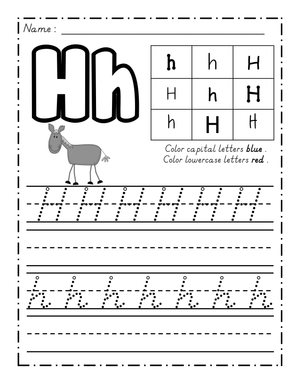
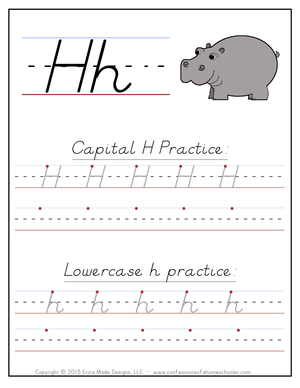
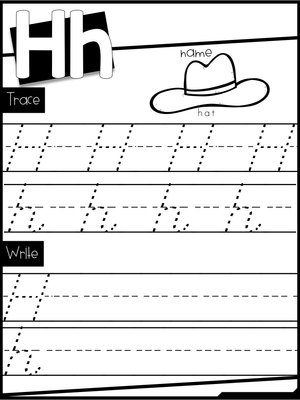
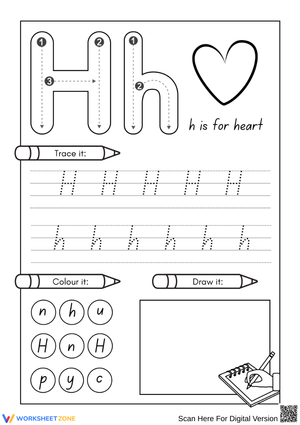
- Uppercase H formation: Dotted letter models with numbered stroke arrows, moving from wide tracing lines toward more independent writing space
- Lowercase h formation: Tracing lines that isolate the tall stroke and hump so students practice each part before combining them
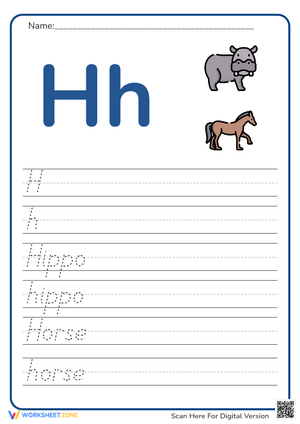
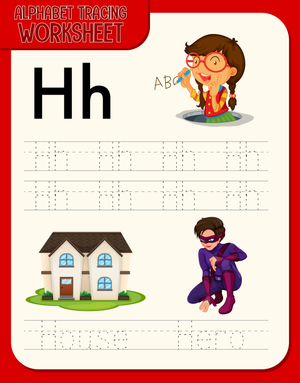
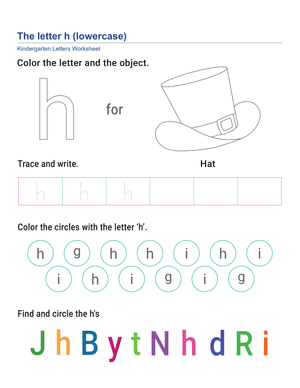
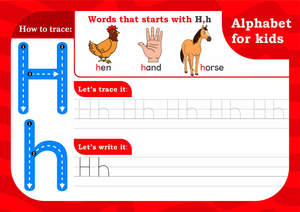
- Picture cues: Simple illustrations tied to the /h/ sound — hat, hen, horse, hill — used as visual anchors rather than coloring activities
- Comparison practice: Worksheets that show uppercase H and lowercase h side by side, helping students distinguish the two forms while producing both
- Independent writing rows: Blank lines below the tracing models where students write the letter from memory — this is where you see whether tracing work has actually transferred
The picture cues do double duty. Students say the beginning sound, confirm it matches H, then write the letter. That brief loop keeps handwriting connected to the phonics instruction happening elsewhere in the room rather than treating it as a separate, unrelated block.
Building These Worksheets Into Your Lesson Plans
The most reliable use of these worksheets is a short, repeated routine rather than a featured lesson. Five minutes of letter H tracing three times a week produces more reliable muscle memory than one extended sitting. Teachers who run a morning work routine know that placing a tracing worksheet on desks before students arrive turns arrival time into quiet, productive practice — no instructions needed, familiar format, pencils already out.
At a handwriting center, pair each worksheet with a sand tray or a small whiteboard so students practice the formation movements before sitting down to trace. Students who skywrite uppercase H and lowercase h in the air — large arm movements — before picking up a pencil tend to start their strokes in the correct place. That motor warm-up costs about 30 seconds and pays off in cleaner tracing.
For small group instruction, use the trace-and-write worksheets as a conversation tool rather than a silent task. Ask students to narrate each stroke aloud as they trace: down, down, across. That verbal-motor pairing moves formation learning along in ways that silent tracing alone does not. It also surfaces students who are guessing at the stroke sequence even when their finished letters look passable.
Standard Alignment
These worksheets align with Common Core State Standards for English Language Arts — Language Standard L.K.1a, which requires kindergartners to print many upper- and lowercase letters. Letter H practice sits most naturally in the first quarter of the kindergarten year, when teachers are establishing formation habits before students produce letters within words and sentences. Getting formation right at this stage matters because incorrect habits are harder to undo once students are generating full words under time pressure. The worksheets also reinforce the print-concept and fine motor work embedded in foundational reading standards — specifically the understanding that print is directional and that letters have distinct visual features worth paying attention to.
Adjusting the Worksheets for a Range of Learners
For students still developing hand strength, reduce the number of rows expected per session. A student who traces four letters carefully is building more useful motor memory than one who fills an entire worksheet with shaky, over-pressured marks. You can also pre-trace the first letter or two in each row with a highlighter — students trace directly over the bright path, which reduces the perceptual demand and gives their hands a clearer physical guide before they attempt the dotted version independently.
Students who are ready to move ahead benefit from a different challenge within the same worksheet. After completing the tracing rows, ask them to write H words from dictation in the independent writing space — hat, hop, hill — rather than repeating the letter in isolation. This keeps letter H formation in play while adding a spelling dimension that extends the task without requiring a different set of materials.
For students with emerging fine motor skills who find dotted lines difficult to track, a three-step sequence helps: trace with a finger first, then a crayon, then a pencil. This builds familiarity with the stroke path before requiring precise pencil control. Thinner copy paper tears under heavy grip, so printing on standard 20 lb stock rather than lightweight paper is worth the small added cost for this group.
Frequently Asked Questions
Do these worksheets include both uppercase H and lowercase h, or is the focus on one form?
Each worksheet addresses a specific focus, but the collection as a whole covers both uppercase H and lowercase h across different worksheet types. Teachers can use a comparison worksheet that places both forms side by side or assign them separately depending on where students are in their letter learning sequence.
Can these be sent home without requiring family support?
The trace-and-write format is clear enough for most families to follow, but sending a brief note — trace the letters, then write the letter three more times on the blank lines — removes any guesswork. Students who complete letter h tracing handwriting worksheets for kindergarten at home benefit most when they have a flat surface, good lighting, and a standard pencil rather than a marker or crayon, which produce different grip and pressure habits than what's practiced at school.
How often should kindergartners practice letter H tracing?
Short sessions distributed across the week outperform longer, less frequent sittings for building letter formation habits. Three focused practice windows of five to ten minutes produce more reliable results than one 20-minute block. Once a student can write uppercase H and lowercase h accurately from memory without the dotted guide, frequency can taper and attention shifts toward applying that letter in word-level writing.
When in the school year should letter H tracing be introduced?
Most kindergarten handwriting sequences introduce H in the first quarter, often alongside other letters built primarily from straight strokes — I, L, T, E, F. Because uppercase H uses only straight lines and a single horizontal connector, it gives early writers a manageable formation target before they encounter letters with curves and diagonals. Letter h tracing handwriting worksheets for kindergarten work best at that early stage, when teachers are establishing left-to-right stroke habits and consistent starting points before students move on to more visually complex letters later in the year.