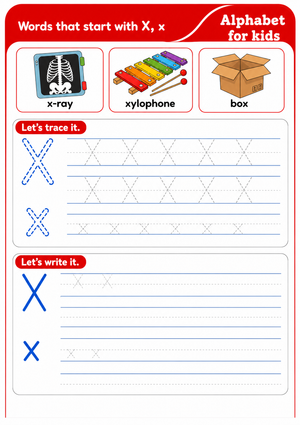
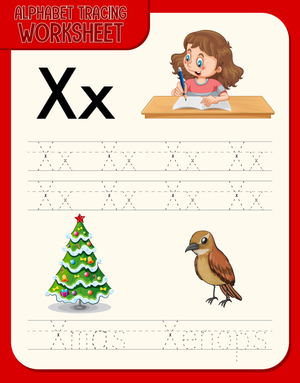
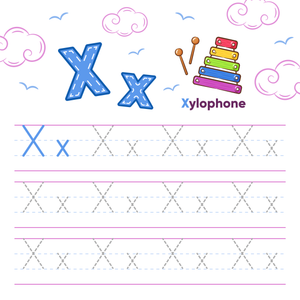
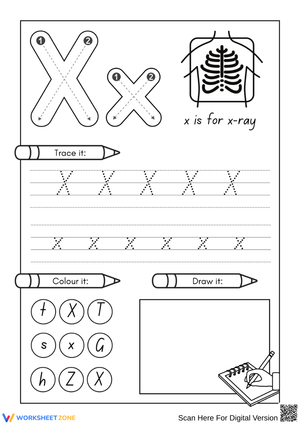
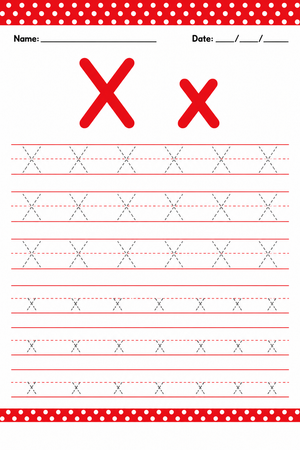
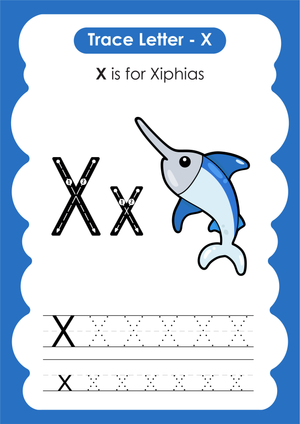
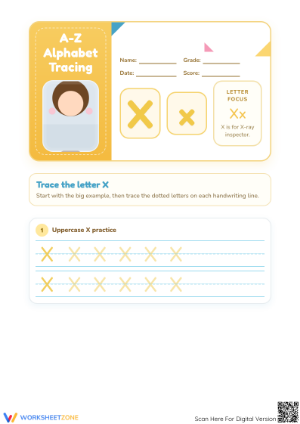
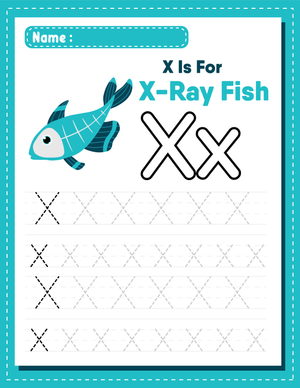
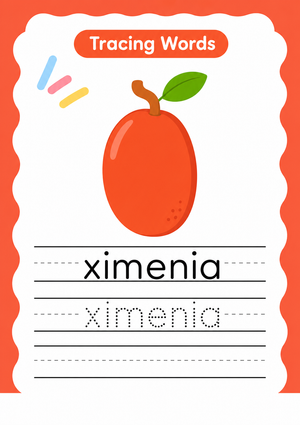
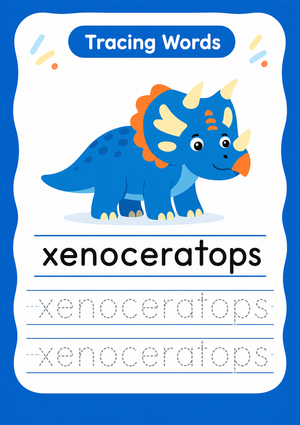
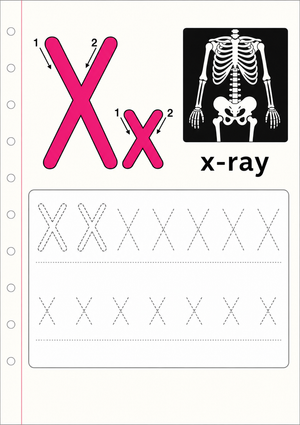
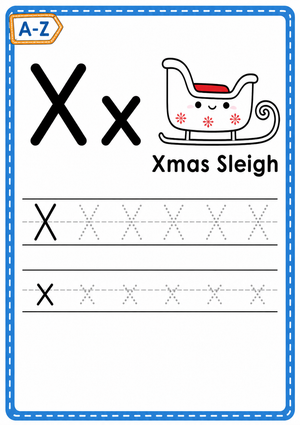
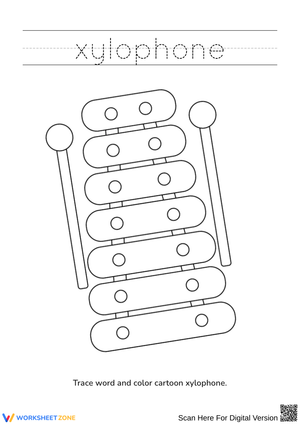
These letter x tracing handwriting printable worksheets for kindergarten give teachers a reliable way to address one of the alphabet's mechanically trickier letter shapes — without needing a lengthy setup or extra materials. The letter X requires two diagonal strokes that cross near the center, placing it in a different category from simpler vertical-and-horizontal letters like T or L. Both uppercase X and lowercase x demand that students hold the intersection point steady, and that precision rarely develops from one or two exposures.
The Specific Strokes Each Worksheet Targets
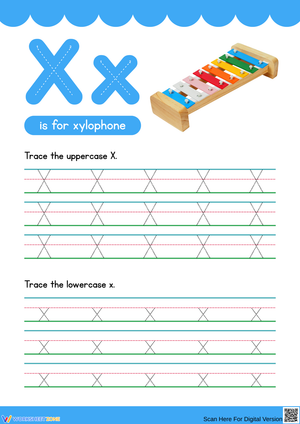
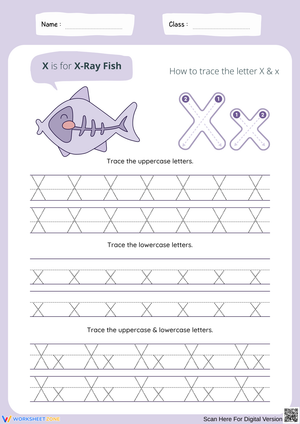
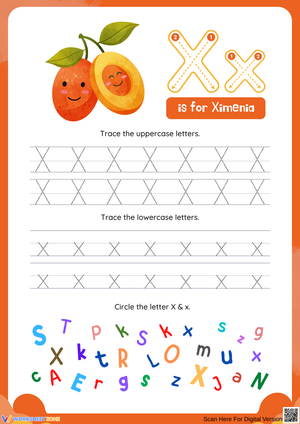
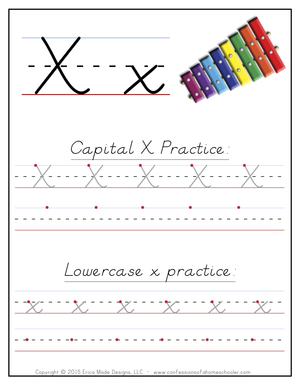
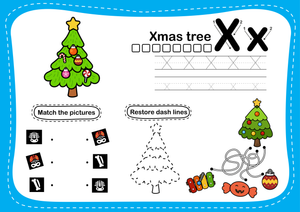
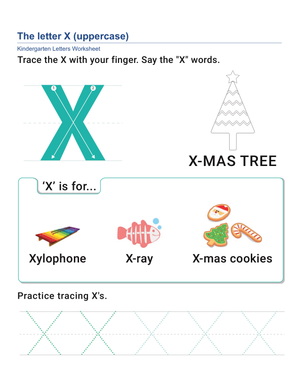
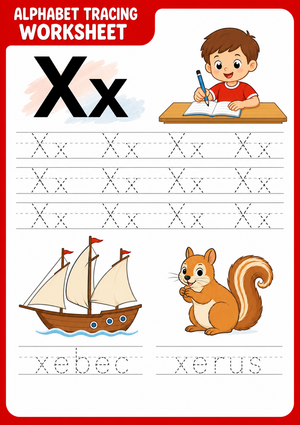
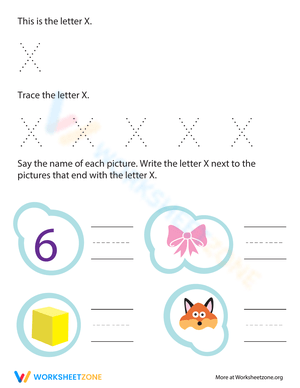
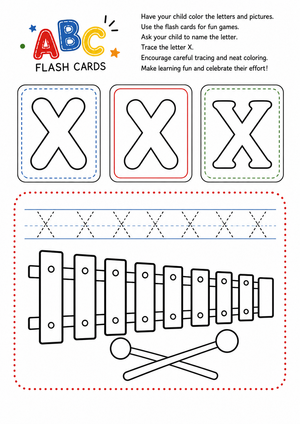
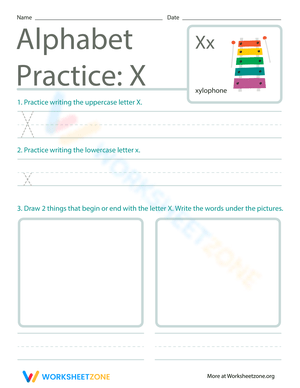
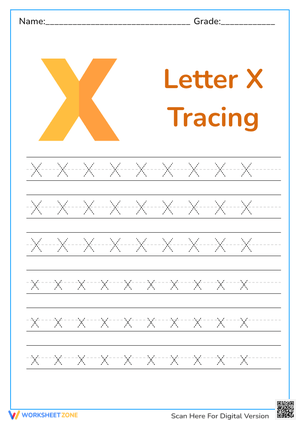
Each worksheet covers uppercase X and lowercase x in the same session, which matters because the two forms share a similar shape but differ in scale and starting position. Students trace large dotted models first, then move to independent spaces where they form the letter from memory. Picture cues — typically x-ray, fox, or box — appear alongside the tracing rows to anchor the letter to sounds students may already recognize. That connection matters because X appears almost exclusively in the final position of common kindergarten words (fox, box, six, wax) rather than at the start, which means sound-letter linking here works differently than it does for a letter like B or S.
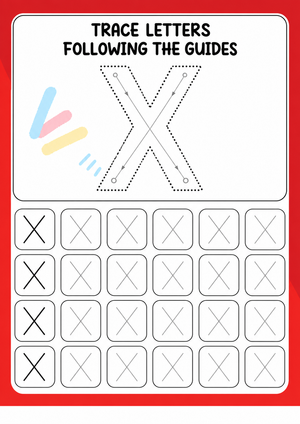
The stroke sequence reinforced by each worksheet is consistent: slant down from the top-left corner, then slant down from the top-right corner, with the two lines crossing at the midpoint. For lowercase x, the same diagonal pattern occurs within a smaller x-height space. Consistent stroke language across sessions — teachers often use a cue like slant, slant, cross — helps students internalize the movement rather than just copying the shape by proximity to dots.
Mistakes Students Make When Forming the Letter X
The most common error is producing a plus sign (+) instead of a true X. Students who have recently practiced T and the cross shape default to right-angle strokes rather than diagonals. When this shows up in student work, it usually means the child is drawing from memory of a crossing shape rather than attending to diagonal direction. A second error is crossing the strokes too high — near the top rather than the center — which produces something closer to a Y than an X. Catching both of these early is worth the effort because they compound: a student who ingrains the wrong crossing point will need explicit correction later when the letter appears in actual words.
With lowercase x specifically, some students add a small tail at the bottom of the second stroke, giving it a lowercase y quality. This tends to happen when children move too quickly through the tracing rows. Asking students to stop and check each letter before moving on — rather than completing a full row in one pass — reduces this pattern noticeably in practice.
Building These Worksheets Into Your Instructional Week
A tracing session works well at 5 to 8 minutes. Beyond that, young writers tire and formation quality drops — the opposite of what the practice is meant to accomplish. Morning work is a natural fit for letter x tracing handwriting printable worksheets for kindergarten: each worksheet is self-explanatory, so students can begin the moment they sit down without waiting for adult direction.
One technique worth trying: ask students to trace the first row with pencil, the second row with crayon, and the final row independently with pencil again. Switching tools between rows forces a slight slowdown, which is often enough for students to attend to stroke direction rather than just following the dots by feel. The crayon row also gives teachers a quick visual read — it tends to reveal whether a student genuinely understands the diagonal or is tracking the dots by feel alone.
- Literacy centers: Pair each worksheet with a small alphabet strip and two or three picture cards showing words that contain X. Students trace, then search for the letter on each card.
- Small group pull: Use the set with students who struggle to form diagonal strokes on any letter — X practice transfers directly to K, V, W, and Z formation as well.
- Sub plans: Because the directions are self-evident, these worksheets run without teacher explanation, which makes them reliable when a substitute is leading the class.
- Take-home review: One worksheet sent home with a brief note to families covers about 5 minutes of evening practice with no additional supplies required.
Standard Alignment
These worksheets align to CCSS.ELA-LITERACY.L.K.1.A, which requires kindergarteners to print many upper- and lowercase letters. In most kindergarten scope-and-sequence plans, X arrives late in the alphabet rotation — often in the final quarter of the year — by which point students have worked through enough simpler letter forms to have some baseline pencil control in place. That timing helps, but the diagonal-crossing requirement still trips up many children regardless of when it falls in the sequence. The worksheets also support CCSS.ELA-LITERACY.RF.K.1.D, which addresses recognizing and naming all upper- and lowercase letters. Tracing reinforces visual identification as much as it does formation, so both standards get addressed in the same short session.
Adjusting These Worksheets for a Range of Learners
For students who are still developing grip strength or fine-motor control, the most effective adjustment is reducing the number of rows rather than lowering the difficulty of the task. Two or three careful tracings of X produce better results than a full worksheet completed with poor form. Air-writing the letter before picking up a pencil — tracing a large X in the air while saying slant, slant, cross — gives the body a chance to feel the movement before the smaller pencil demands kick in.
Students ready to move beyond tracing benefit from a different kind of repetition: after completing the guided rows, they write X and x from memory on a blank line, then compare their work to the model at the top of the worksheet. That self-check step builds the habit of looking critically at letter formation, which carries forward across all of handwriting instruction. For any student well ahead of the group, the natural extension is to write one word containing X — fox or box — from memory beneath the tracing rows.
Frequently Asked Questions
Do these worksheets cover both uppercase and lowercase X in the same session?
Yes. Each worksheet includes uppercase X and lowercase x together. Placing both forms on the same worksheet lets students compare them directly and notice how the diagonal stroke pattern stays consistent even as the size and letter height change between the two forms.
How long should a tracing session run for kindergarteners?
Five to eight minutes is the practical ceiling before formation quality drops. For most students, one or two traced rows followed by a short independent row is enough for a daily handwriting block. Accuracy matters more than volume here — a child who traces four letters carefully makes more progress than one who rushes through twenty.
How do I know when a student is ready for independent writing instead of tracing?
Watch for consistent correct stroke direction and a crossing point near the center of the letter. When a student can produce a legible X without the dotted path, move them to writing from a model rather than tracing. The independent rows included in letter x tracing handwriting printable worksheets for kindergarten give teachers a built-in place to observe this shift without setting up a separate assessment task.
Can these worksheets be used for reteaching later in the year?
Yes. Because X appears late in the kindergarten alphabet sequence, some students reach end-of-year review with shaky formation even after initial instruction. A 5-minute small-group session using a fresh worksheet — rather than reopening the full letter lesson — corrects most persistent crossing errors. The focused format of letter x tracing handwriting printable worksheets for kindergarten makes them practical for exactly this kind of targeted follow-up, with no additional prep required.