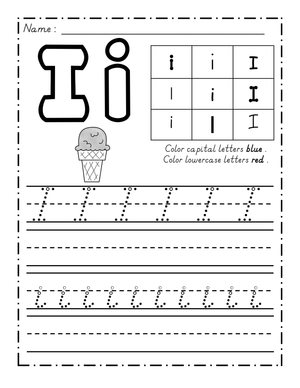
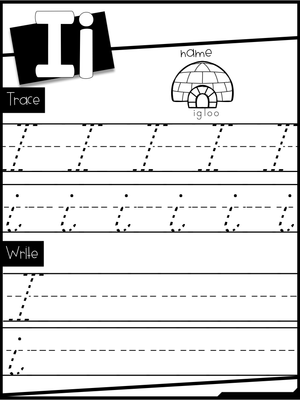
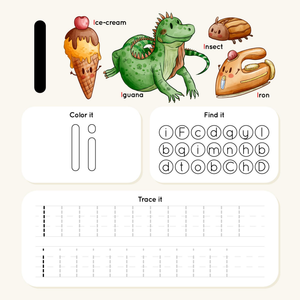
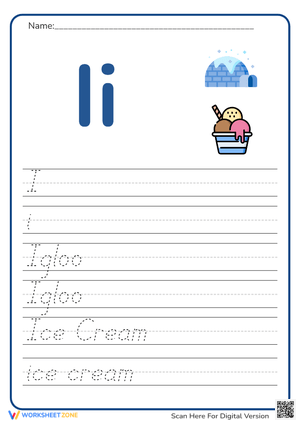
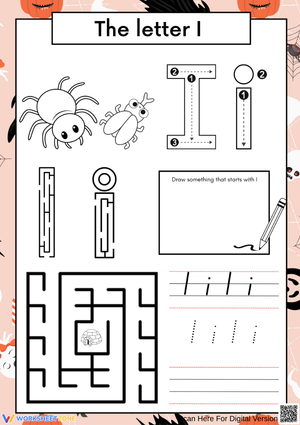
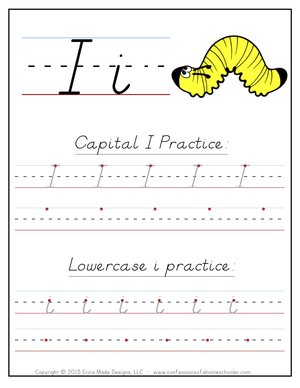
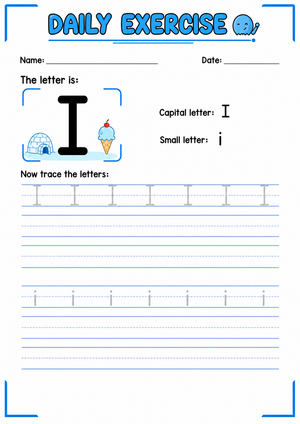
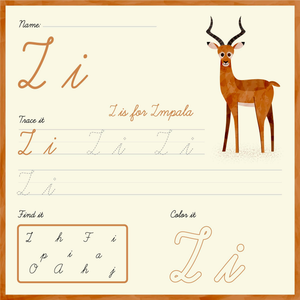
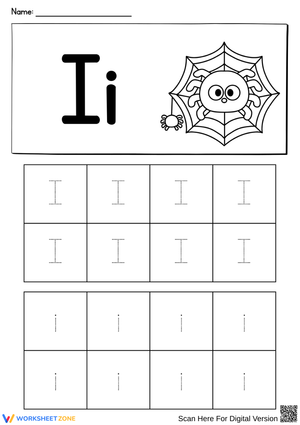
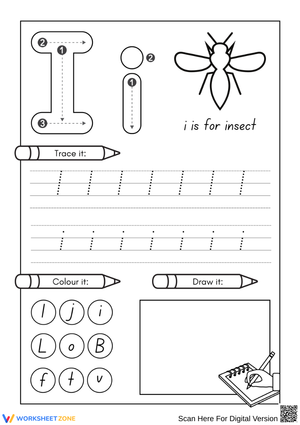
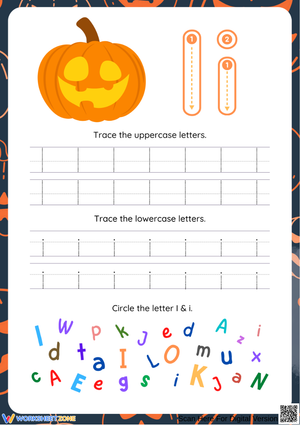
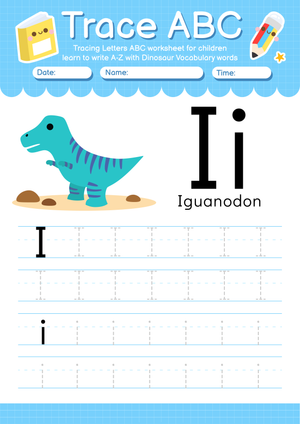
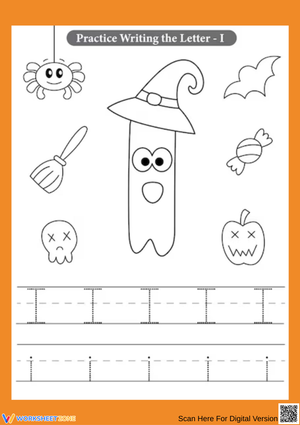
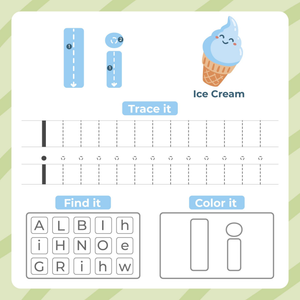
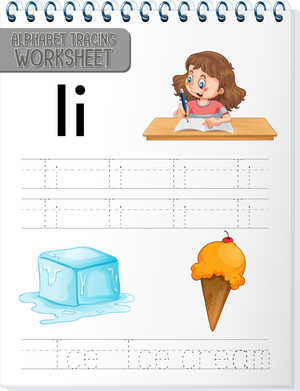
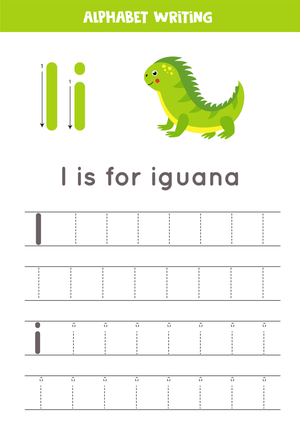
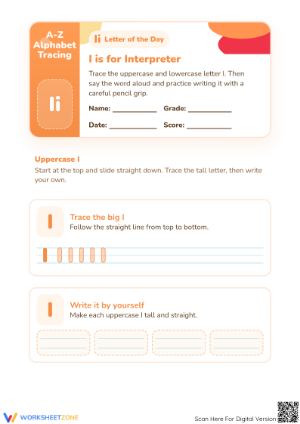
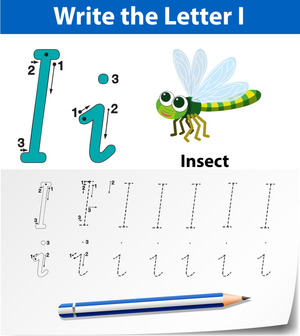
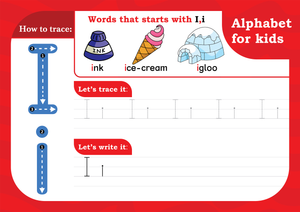
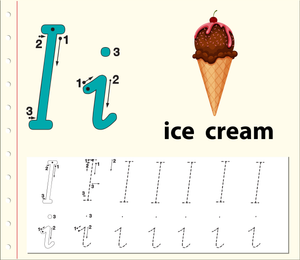
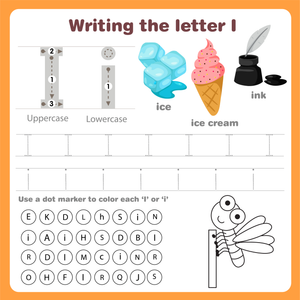
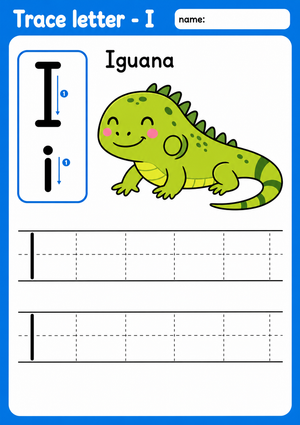
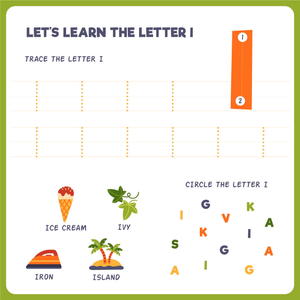
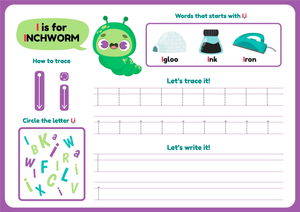
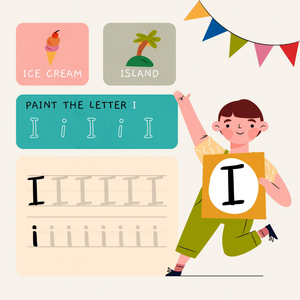
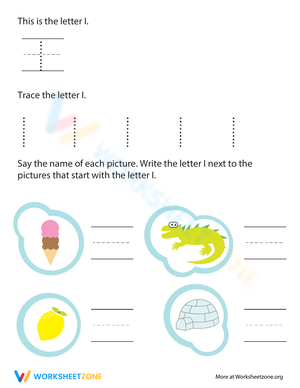
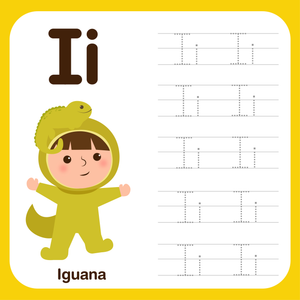
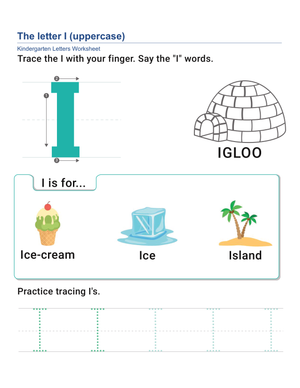
These letter i tracing handwriting printable worksheets for kindergarten work directly on a letter that deceives a lot of teachers into thinking it will be easy — two quick lines and a dot — until you watch a room full of five-year-olds produce wobbly stems with enormous scribbled circles at the top. Each worksheet targets the stroke sequence for both the uppercase and lowercase forms, giving students the structured repetition their hands need before moving on to letters with curves and diagonals.
The Stroke Work Each Worksheet Targets
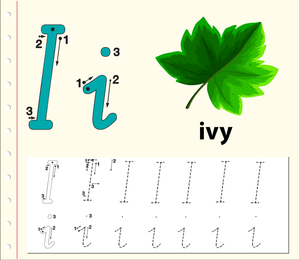
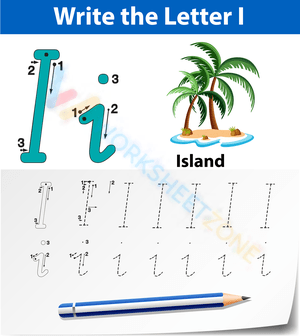
Uppercase I requires three distinct movements: a top-to-bottom vertical pull, a left-to-right horizontal cross at the top, and a matching horizontal stroke at the bottom. The order matters. Students who start with a horizontal stroke often end up with a misaligned letter because they have no anchor for where to begin. The worksheets reinforce the pull-first sequence through dotted pathways with directional arrows, and that sequencing transfers directly to how other capital letters — T, F, E, H — are taught in subsequent lessons.
Lowercase i is a different problem entirely. The stem is shorter than students expect, running from the midline down to the baseline rather than from a top line — which means students accustomed to letters like l and t have to consciously stop short. Then comes the tittle: a small, lifted dot placed above the stem without any connecting stroke. Kindergartners almost universally try to draw it as one continuous motion at first, looping or dragging down to join the stem. Each worksheet isolates these two movements — stem, then separate dot — so the correct two-step action gets reinforced through repetition rather than overridden by habit.
Error Patterns Worth Anticipating Before the Lesson
The most persistent problem is the connected tittle. A student will complete a perfectly serviceable stem, then arc the pencil back upward and drag it into a lollipop shape. They are not being careless; they are following the same motor logic that lets them write o or a — continuous motion without lifting. Saying "pull down, stop, lift, dot" aloud as a class during the first few practices retrains that automaticity. Do not skip the word "lift" — that is the specific cue that interrupts the loop.
For uppercase I, the error to watch is a missing horizontal serif. Students who have encountered serifless capital I in early readers sometimes ask why the letter needs "hats and shoes," which is worth addressing directly because it comes up again when students compare printed text to handwriting models. The worksheets give both horizontal strokes equal visual weight in the tracing lines, which prevents students from treating one as optional decoration.
Building These Worksheets Into Your Weekly Writing Block
These resources work best when introduced during the whole-group portion of the writing block, before students move to independent practice. Spend three to five minutes modeling both letter forms on a dry-erase board, naming each stroke aloud as you demonstrate. Then hand out the worksheet and have students trace the large letters at the top before working down toward the smaller guided lines. That size progression does deliberate work — larger letters reduce fine motor demand while students are still internalizing the stroke sequence, and the smaller lines come once the sequence has stabilized enough to hold.
These letter i tracing handwriting printable worksheets for kindergarten also fit cleanly into morning warm-up time. After attendance and morning meeting, a five-minute tracing session before the main literacy block gives students a low-stakes way to settle and focus their hands. Teachers who use them as Monday warm-ups at the start of a letter-of-the-week unit report that the familiarity helps students connect the written form to the phonics work happening alongside it. Pairing the tracing with a quick verbal recall — "What sound does this letter make?" — before anyone picks up a pencil costs thirty seconds and meaningfully deepens the letter-sound link.
Standard Alignment
These worksheets address CCSS.ELA-LITERACY.L.K.1.A, which requires kindergartners to print many upper- and lowercase letters. In classroom terms, that standard is best met through deliberate, teacher-monitored practice — not incidental copying from the board. Tracing with a correct stroke sequence, which the worksheet format enforces through numbered starting points and directional cues, gives teachers documentation that students are forming letters correctly, not just producing recognizable shapes. The distinction matters later: a child who has internalized correct formation writes faster and with less hand fatigue in first grade, when written output volume increases significantly.
Adjusting the Worksheets for Different Levels of Fine Motor Development
Students with limited pencil control do better when tracing lines are thick, high-contrast, and widely spaced. If a student's hand tires before finishing the worksheet, split the tracing into two short sessions rather than pushing through — a fatigued hand reinforces sloppy formation more reliably than it builds good habits. Triangular grip pencils and foam pencil grips reduce strain for students who squeeze too tightly, which is common at the start of kindergarten and often goes unnoticed until a teacher watches closely during independent work.
For students who have already internalized the strokes and find guided tracing redundant, flip the dynamic: have them trace one row for confirmation, then copy two rows freehand without any guide. Some teachers give these students a blank half-sheet and ask them to write the letter alongside a short-i word — igloo, insect, iguana — turning the tracing task into a simple phonics-writing connection. That keeps the practice purposeful rather than mechanical. The letter i tracing handwriting printable worksheets for kindergarten serve as a common starting point for the whole class; where you branch from there depends on what you observe during independent work time.
Frequently Asked Questions
Why is the lowercase i harder than it looks for most kindergartners?
The dot. Specifically, placing it without connecting it to the stem. Five-year-olds are still building the motor inhibition needed to lift the pencil mid-letter. The lowercase i is often the first letter that demands a true pencil lift, which makes it a surprisingly significant motor milestone despite how visually simple the letter appears on the page.
How many repetitions per session are enough?
Quality matters more than count. Five focused, correctly formed repetitions build better habits than twenty rushed ones. Watch for the moment grip pressure increases or lines start drifting from the model — that is usually when fatigue has set in. Continuing past that point is counterproductive. A brief session the next day does more than a long one completed while tired.
Do these worksheets address the short and long vowel sounds for the letter i?
These letter i tracing handwriting printable worksheets for kindergarten focus on letter formation rather than phonics instruction, but the two work together naturally. Most teachers introduce the short-i sound alongside handwriting practice because that is the sound students encounter first in words like igloo, inchworm, and insect. Long-i words like ice and iron come later, once the phonics sequence reaches silent-e patterns. Connecting the tracing practice to whichever sound your phonics block is currently targeting is the most efficient use of the time.
What should I do if a student keeps connecting the dot to the stem despite repeated practice?
Take it out of the pencil-and-paper context entirely. Have the student form the letter in a sand tray, making a deliberate separate tap for the dot. Or use a two-color approach: stem in one color, dot in another — the material change forces the brain to register it as a genuine two-part action. Usually two or three sessions of that tactile interruption breaks the continuous-motion habit well enough to return to standard tracing practice with the correct movement in place.