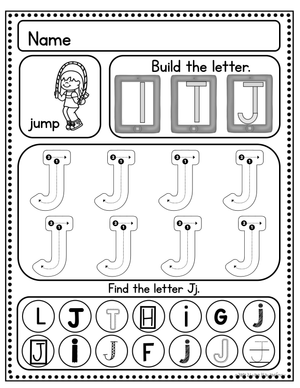
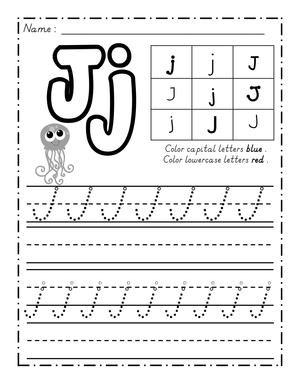
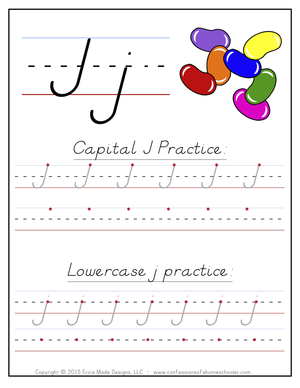
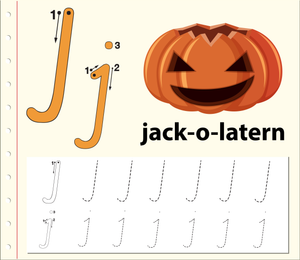
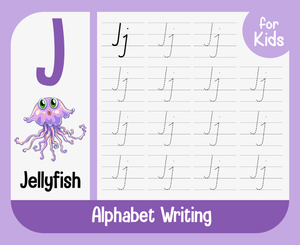
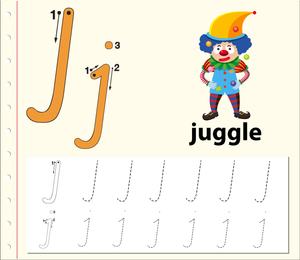
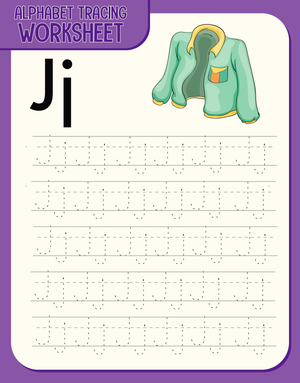
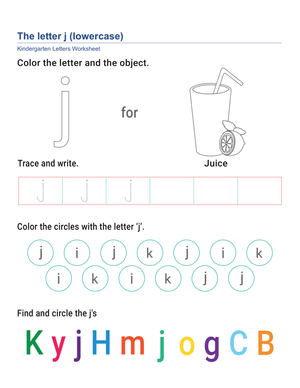
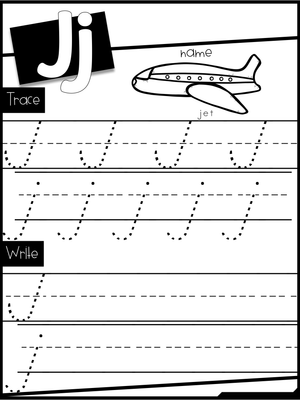
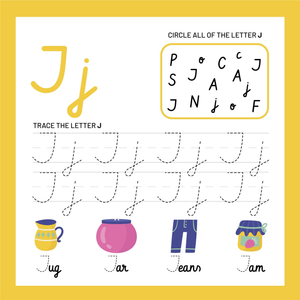
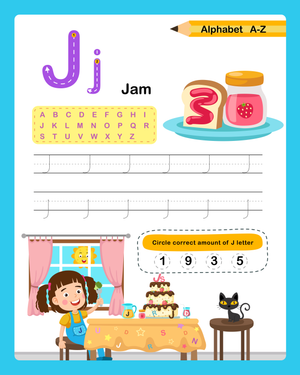
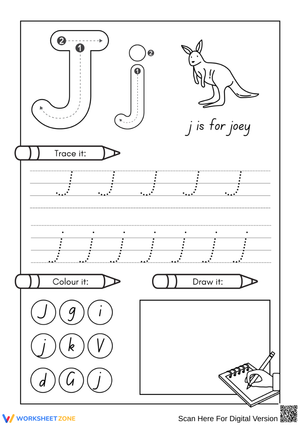
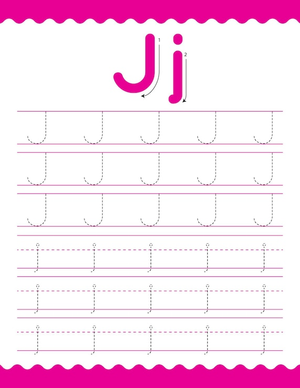
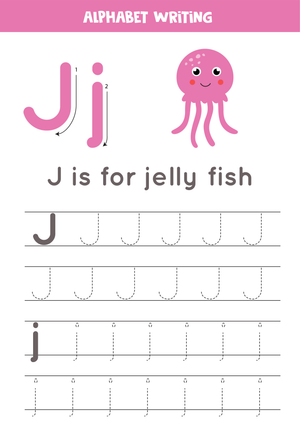
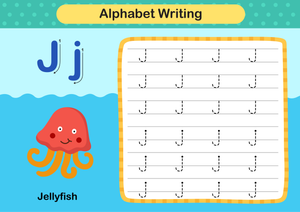
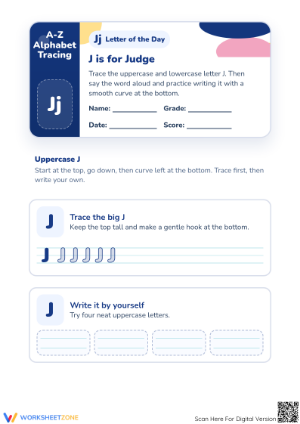
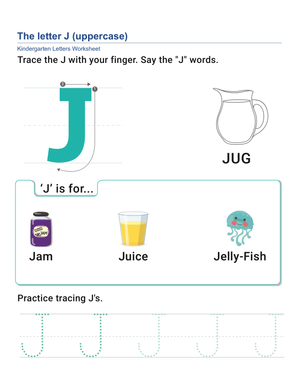
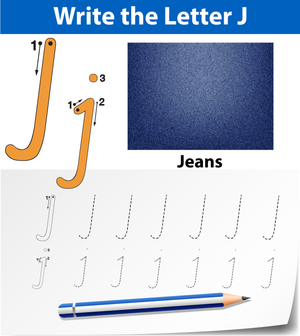
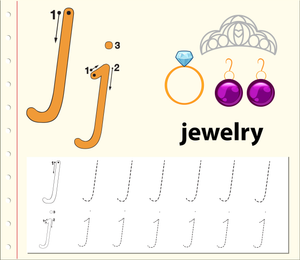
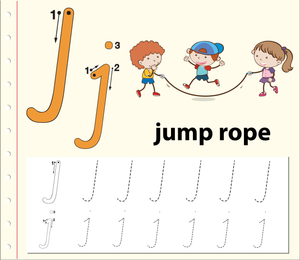
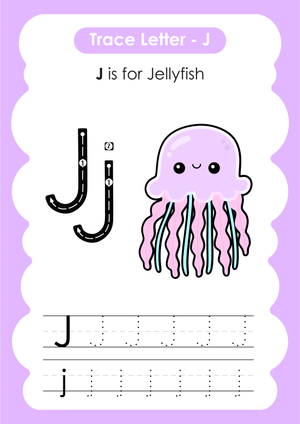
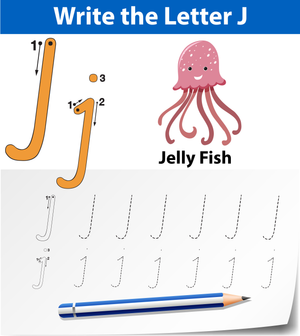
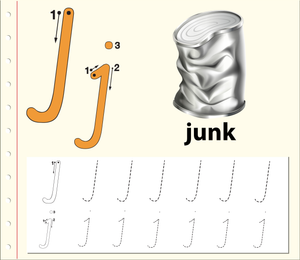
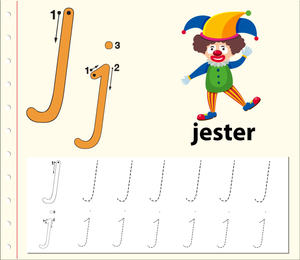
Letter j tracing handwriting worksheets for kindergarten address a formation problem that shows up early and tends to stick without direct instruction: students pull the hook of lowercase j to the right instead of to the left, ending up with something closer to a bent numeral 1 than a recognizable letter. These worksheets give teachers a consistent, low-prep format for correcting that pattern before it becomes automatic.
What Students Practice Across the Set
Each worksheet targets a specific dimension of J formation rather than covering everything at once. Across the set, students work on:
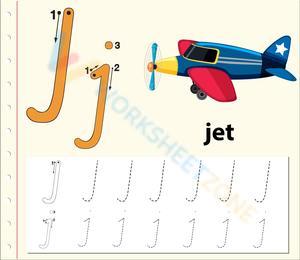
- Tracing uppercase J — the straight downstroke and the flat foot at the bottom
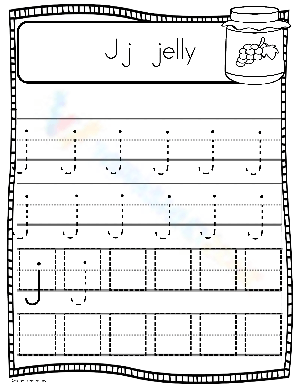
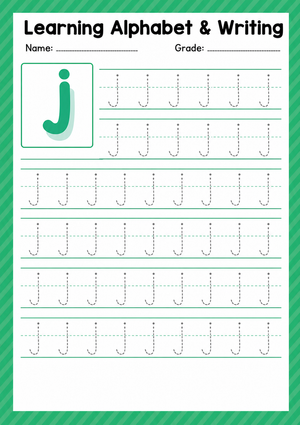
- Tracing lowercase j with careful attention to hook direction and dot placement
- Writing J and j independently in the open lines that follow the traced models
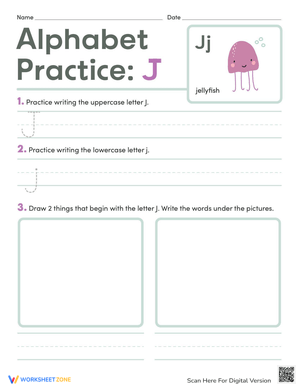
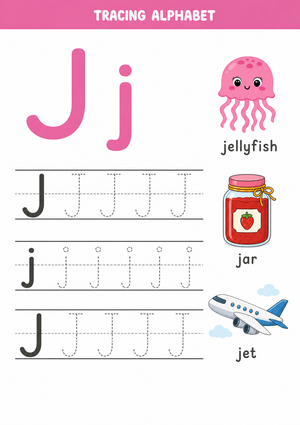
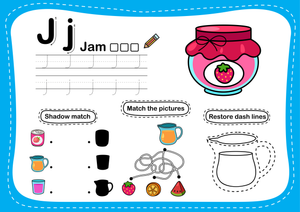
- Identifying and marking words or pictures that begin with the /j/ sound
The transition from traced lines to open writing is where these worksheets earn their keep as a classroom tool. A child who traces accurately but reverses direction in the open space is giving the teacher specific information: the stroke is not yet in motor memory. That observation takes a ten-second walk-around check and can prevent several rounds of re-teaching later.
Fitting These Worksheets Into Daily Kindergarten Routines
Kindergarten schedules have natural windows for short, focused tasks. Letter j tracing handwriting worksheets for kindergarten slot into morning arrival work, literacy center rotations, and the brief window before specials without requiring any setup. The format is familiar enough that students can start independently, which frees the teacher to observe grip, posture, and stroke direction from across the table rather than spending the whole session managing transitions.
The most effective way to use each worksheet is three passes rather than one. Students first trace the letter in the air while the teacher narrates the stroke, then trace with pencil on the worksheet, then attempt two or three letters in the open lines below without the dotted model. That sequence — observe, trace, produce — keeps each student actively processing rather than moving a pencil on autopilot. It also clarifies where things break down: a child who air-traces correctly but struggles on paper needs motor support; one who forms J in the traced section but reverses it independently needs more explicit verbal cuing during open writing.
Errors That Show Up in J Formation — and What They Tell You
The hook on lowercase j is the consistent trouble spot. Most kindergartners begin the downstroke correctly, then curve right at the bottom instead of left — producing a shape that reads as a numeral 7 or an inverted candy cane. This is not random. Young writers tend to favor outward strokes that move away from the body, so a leftward hook takes deliberate practice to feel natural. A verbal anchor helps: "curve back toward where we started, like we're making a tiny seat" gives students language to hold onto during independent writing when the teacher is no longer narrating.
Uppercase J produces a separate error. Students who draw the horizontal bar first and then add the downstroke often overshoot the hook and land somewhere between uppercase J and uppercase G. The cue that resets this: start at the top right corner, come straight down, then hook left. The bar across the top comes last.
Dot omission is a third pattern worth watching. Students concentrating on the stroke itself will often lift the pencil and move to the next letter without adding the dot above lowercase j. A fast whole-class check — "hold up your worksheet if your lowercase j has its dot" — catches this before the omission gets practiced into a habit.
Connecting J to Sound and Word Work
A two-minute extension after tracing keeps the lesson from functioning as isolated handwriting practice. After students finish the tracing portion, ask them to say the letter name, produce the /j/ sound, and name one word that starts with it. The words that surface fastest in kindergarten classrooms — jar, jam, jellyfish, jump — are concrete and easy to picture. If the worksheet includes a picture prompt, students can trace the letter, say the pictured word aloud, and clap its syllables before moving on, tying phonemic awareness directly to the letter shape without adding any extra materials to the lesson.
Standard Alignment
These worksheets address CCSS.ELA-LITERACY.L.K.1.A, which requires kindergartners to print many upper- and lowercase letters. In classroom terms, that standard lives in the fall and winter blocks, when teachers are moving students from recognizing letters to forming them with consistent directionality and appropriate sizing. Handwriting work on J fits naturally alongside phonics units that introduce the /j/ phoneme, creating a session where written production and sound-symbol knowledge reinforce each other rather than running as separate tracks.
Tailoring the Worksheets for Students at Different Points in Development
Letter j tracing handwriting worksheets for kindergarten span a range of readiness levels, and the set works best when used selectively rather than identically across all students. Children who are still building pencil control benefit from worksheets with larger letter models and fewer traced repetitions per row — more white space lets them work deliberately without crowding their strokes. Students who have a stable grip and can form most letters accurately can move past the traced models quickly and spend most of their time in the open writing section.
For students who need additional support beyond standard tracing, each worksheet can be modified without reprinting: run a yellow highlighter along the tracing path before distributing it, or place a small dot sticker at the starting point if the printed cue is not registering. At the other end, students who finish early can write three J words from memory on the back, or list classmates whose names begin with J — a small retrieval extension that adds vocabulary work without requiring additional materials.
Frequently Asked Questions
How many traced repetitions are enough before students write J independently?
Three to five traced repetitions usually gives students enough exposure to hold the stroke in working memory once the model is no longer visible. Beyond five, most kindergartners stop attending — the pencil moves but the processing stops. Watch the student's pace and grip rather than counting mechanically; some children are ready after two passes, others need six. The clearest signal is whether the student can describe the stroke direction before lifting the pencil.
Should uppercase J and lowercase j be practiced on the same day?
Teaching them together works well in kindergarten because the forms share a stroke family — the downstroke appears in both — and seeing them side by side helps students identify what differs rather than treating them as interchangeable. If a student is struggling significantly with one form, addressing them on separate days is reasonable. More often, the comparison itself is the teaching point: "big J has a bar on top; little j has a dot."
What helps left-handed students with this letter?
The tracing models on each worksheet are direction-neutral, so left-handed students follow them without major adjustment. The most common issue is paper angle: left-handed kindergartners typically need the worksheet tilted to the right — the reverse of standard positioning — so the writing hand does not smear what was just completed. Mentioning this during the first whole-group modeling session prevents the most frequent source of frustration before it starts.
A student traces J correctly but reverses it in independent writing. What next?
That gap between tracing and independent production is common and signals that letter j tracing handwriting worksheets for kindergarten are serving well as a starting point — but additional support is needed to close the gap. The next move is verbal cuing during open writing: the teacher narrates the stroke direction while the student writes, then reduces that narration over two or three sessions as the correct formation stabilizes. An anchor card at the desk showing a correctly formed J — no tracing lines — gives a visual reference without turning every future writing task back into guided tracing.