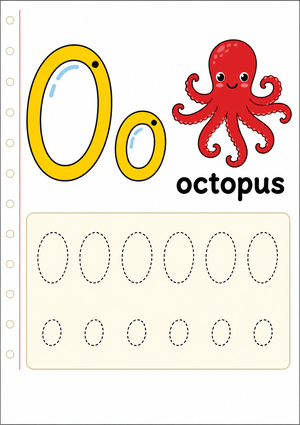
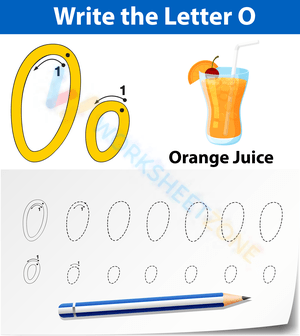
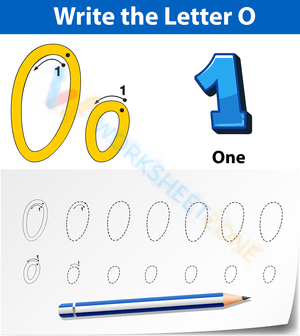
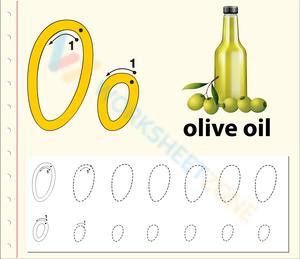
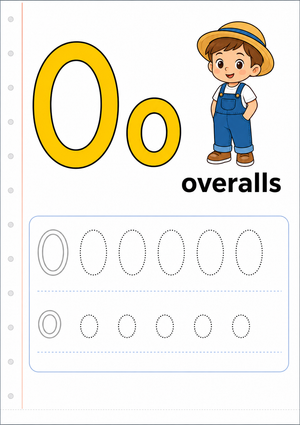
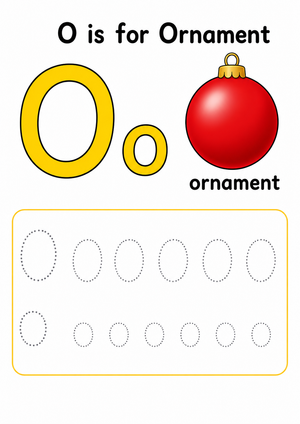
These kindergarten letter o tracing handwriting printable worksheets give teachers a focused set of resources where stroke direction, sizing rules, and phonics connections are all embedded in the practice rather than left to verbal reminders alone. The letter O looks deceptively easy to adults, but for five-year-olds, a clean counterclockwise circle drawn without lifting the pencil requires real motor planning. This set addresses that gap directly.
What's Inside the Set
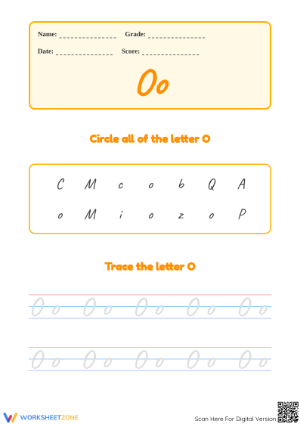
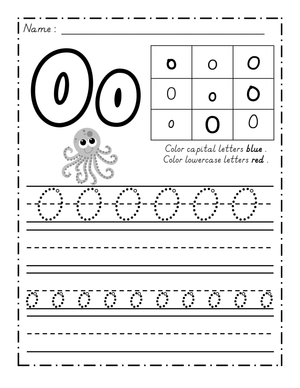
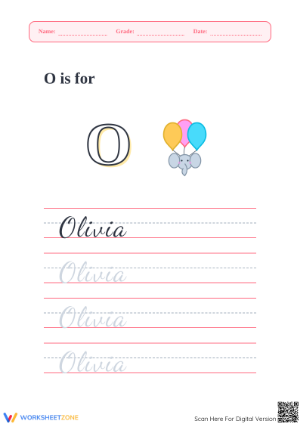
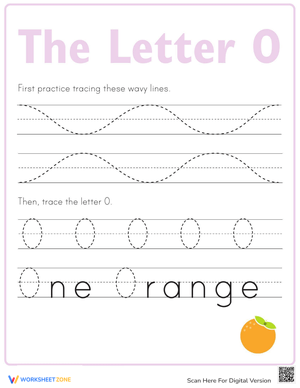
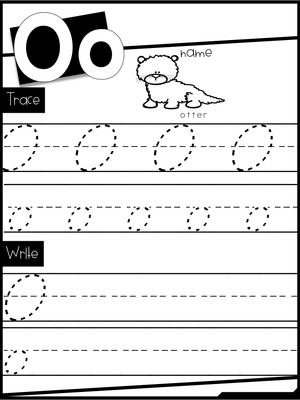
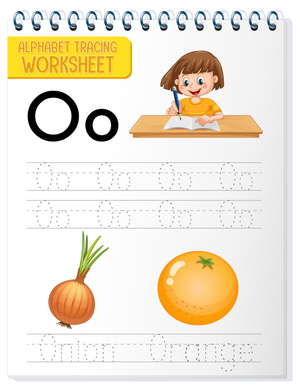
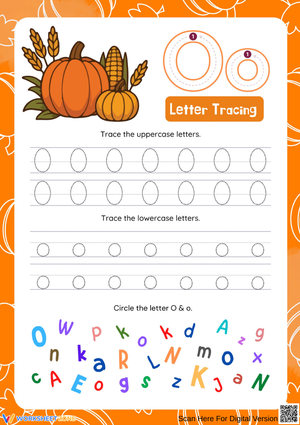
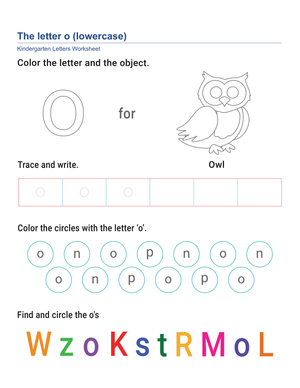
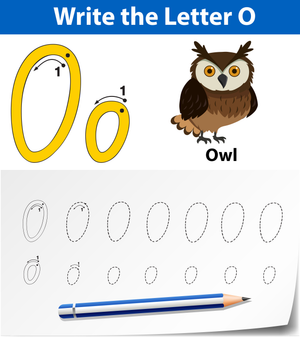
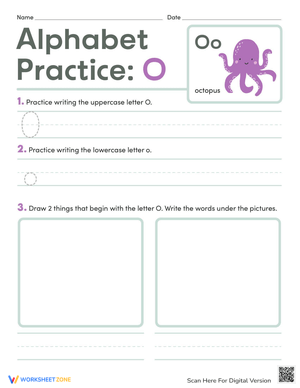
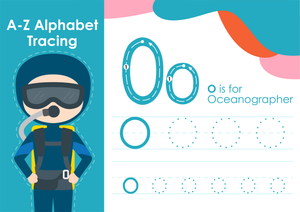
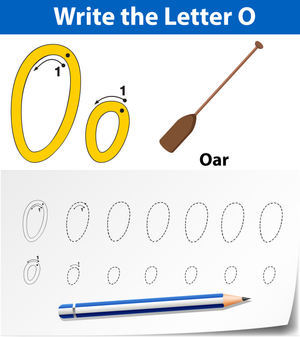
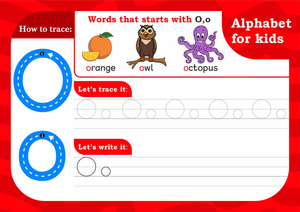
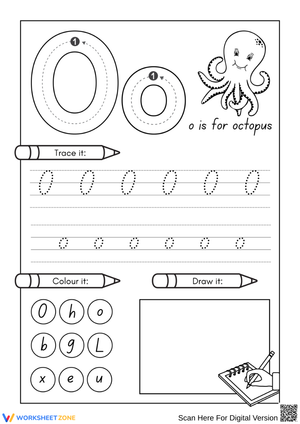
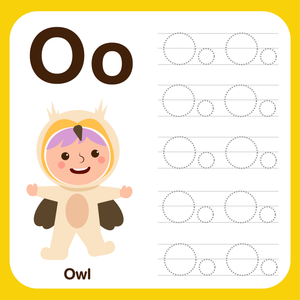
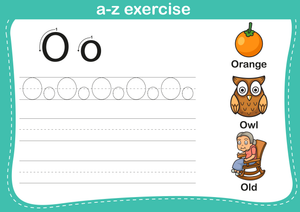
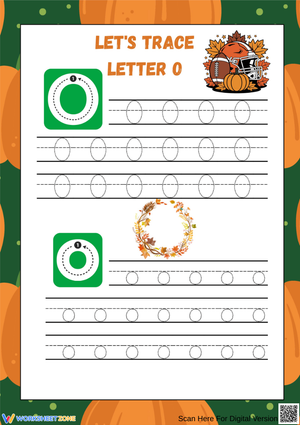
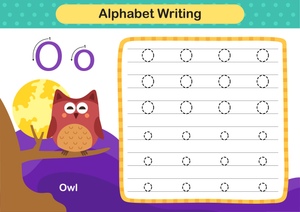
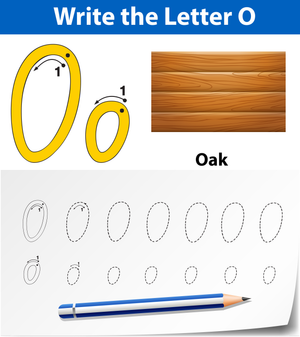
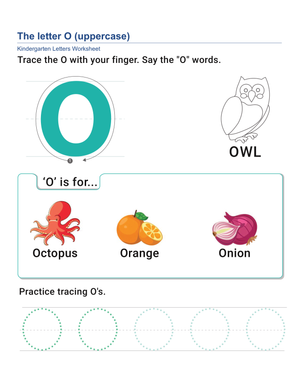
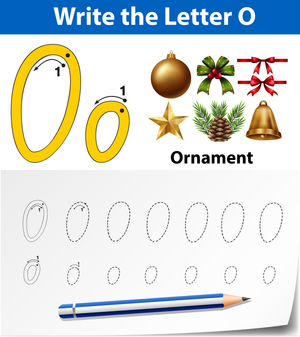
Each worksheet targets uppercase O and lowercase o together, which makes sense for this letter specifically — the stroke is the same, only the size changes. Students trace both forms on standard ruled lines: the uppercase O touching the top line and baseline, the lowercase o sitting between the midline and baseline. Directional arrows on the first several examples mark the two o'clock starting point and the counterclockwise pull. Each worksheet also integrates a short-vowel phonics component, pairing the letter with words like octopus, ox, and otter so the hand and the phoneme are connected from the beginning. The set moves from fully traced letters through partially dotted outlines to blank practice rows, giving students a clear path toward independent production without a sudden jump in difficulty.
Frequent Student Errors Worth Anticipating
The most common error is not messy circles — it's stroke direction. Many kindergartners begin the O at the bottom and push upward in a clockwise direction. On paper, the result can look almost identical to a correct O, which means this error can go undetected for weeks unless the teacher watches pencil movement rather than the finished letter. A clockwise habit causes real problems later: the O starts to drag and look uneven as writing speed increases, and it conflicts directly with the stroke pattern for C, G, and Q.
The second error worth watching for is the pencil lift. Students trace to roughly the three o'clock position, lift, then complete the bottom half as a separate stroke. The finished letter looks passable, but the motor pathway is fragmented. Worksheets with single-stroke directional arrows make this error easier to catch and correct during the practice moment rather than after the fact, when the habit has already had time to form.
Building These Worksheets Into Your Lesson Plans
Short and daily outperforms long and occasional. Five to eight minutes of focused tracing at the start of morning literacy work — before students have spent their attention elsewhere — produces faster progress than a twenty-minute handwriting block once a week. These kindergarten letter o tracing handwriting printable worksheets fit naturally into morning meeting transitions, literacy center rotations, or the first station block when small-group reading instruction begins.
One classroom technique worth building into the routine: have students trace the large model O five times using five different crayon colors, layering each pass on top of the last. Students want to see the color buildup, so they complete the repetitions willingly rather than rushing to finish a row. Pair each pass with the verbal cue "start at the top, pull around, close it up" so the auditory and motor channels reinforce each other. Check pencil grip before tracing starts — a flat, fisted grasp gives a student no rotational control in the wrist, and the O will show it immediately with flat spots and inconsistent pressure. Golf-length pencils (the short ones from the supply closet) naturally encourage a tripod grasp without requiring a separate grip aid.
Standard Alignment
These worksheets address CCSS.ELA-Literacy.L.K.1a, which requires kindergartners to print many upper and lowercase letters. In practical classroom terms, this standard belongs in the first trimester when teachers are establishing letter formation habits before students begin writing words and simple sentences. Getting the O right early matters because the counterclockwise stroke recurs in C, G, D, and Q — correct formation of O is prerequisite motor work for an entire cluster of related letters. These kindergarten letter o tracing handwriting printable worksheets give teachers a targeted, repeatable activity that fits directly inside the literacy block where this standard is most commonly addressed.
Adjusting the Worksheets for a Range of Learners
For students still developing hand strength — common in early fall kindergarten — start with only the large tracing models and skip the full lined rows for now. Have them trace the large letter first with a thick marker or crayon, which requires less fine-motor precision and lets them build the correct counterclockwise motion before size control is added as a demand.
Students who have already internalized the stroke direction can move directly to the starting-dot rows and bypass the fully traced examples. Set a legibility criterion rather than a volume target — three consistent O's with a correct starting point matter more than ten rushed ones. For students well ahead of grade-level expectations, these kindergarten letter o tracing handwriting printable worksheets serve as a quick review activity during independent work time while you pull a small group, or you can challenge them to write a short sentence using one of the O vocabulary words at the bottom of the practice rows, which moves the task into functional writing without abandoning the handwriting focus.
Frequently Asked Questions
What is the correct stroke direction for the letter O, and why does it matter?
The O starts at the two o'clock position and moves counterclockwise — back, down, around, and closed in a single continuous stroke. This direction matches the stroke entry for C, G, Q, and D, so learning it correctly for O builds the motor pattern students will reuse across a whole family of letters. Starting at the bottom or pulling clockwise fragments that transfer and slows writing fluency as students move into word-level work.
Should uppercase O and lowercase o be taught at the same time?
Yes, and this letter is one of the most natural pairs to teach together because the stroke is identical — only the placement on the ruled line changes. Students spend their attention on sizing rather than learning a new motion, which keeps cognitive load manageable and saves instructional time.
How many repetitions does a kindergartner need before the stroke sticks?
There is no fixed number, but spaced repetition outperforms massed practice. Ten focused repetitions across four separate days produces more durable recall than forty in a single sitting. The goal is automaticity — the stroke happens without conscious planning — and that develops through repeated brief sessions rather than one exhausting block.
What should I do with a student who can already form the letter O independently?
Move them directly to the blank practice rows and shift the focus to consistency: same starting point, same stroke direction, same clean closure every time. You can also have them use the worksheet's vocabulary pictures to write their own O words or a short sentence at the bottom of the rows, which moves the task into functional writing without abandoning the handwriting goal.