


























Views
Downloads
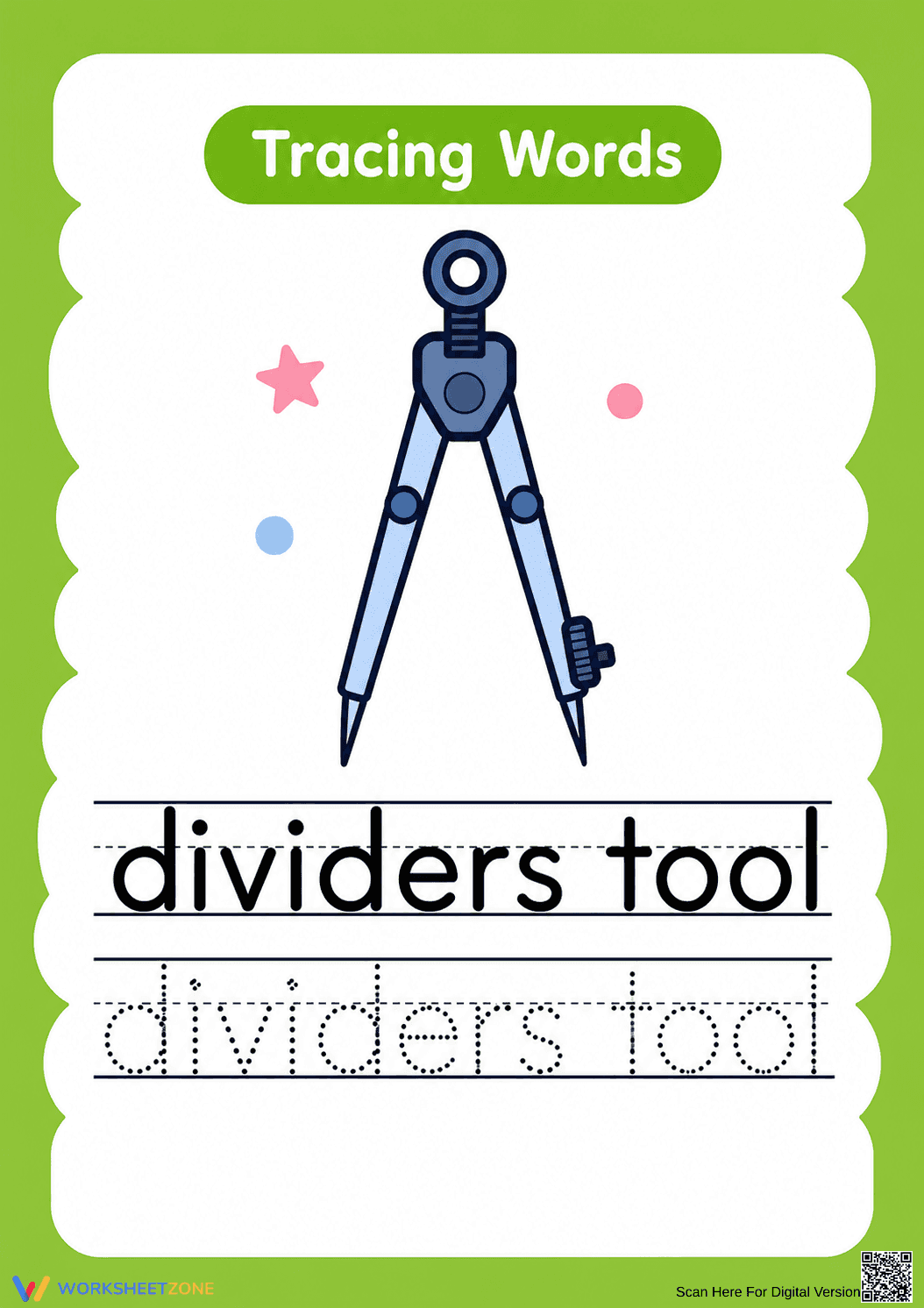

Printable Letter D Tracing Worksheet | Grade K ELA
Paste this activity's link or code into your existing LMS (Google Classroom, Canvas, Teams, Schoology, Moodle, etc.).
Students can open and work on the activity right away, with no student login required.
You'll still be able to track student progress and results from your teacher account.
This printable Kindergarten handwriting worksheet helps early learners practice fine motor control and letter formation. By tracing the words "dividers tool," students reinforce their understanding of the beginning letter D sound while developing the muscle memory required for clear, legible printing in their daily writing tasks.
At a Glance
- Grade: Kindergarten · Subject: ELA
- Standard:
CCSS.ELA-LITERACY.L.K.1.A— Print many upper- and lowercase letters accurately- Skill Focus: Letter Tracing and Fine Motor Skills
- Format: 1 page · 1 tracing task · No answer key needed · PDF
- Best For: Morning work or literacy centers
- Time: 5–10 minutes
Inside this single-page resource, educators will find a straightforward tracing activity centered on the letter D. The page features a colorful illustration of a dividers tool for visual context. Below the image, students use standard primary handwriting lines. The first line displays the target phrase in solid text as a model, while the second line offers dotted text for guided practice.
Zero-Prep Workflow
This resource is designed for immediate classroom implementation.
- Print (1 minute): Download the PDF and print copies. The design ensures clean printing.
- Distribute (1 minute): Hand out sheets with pencils. The intuitive layout means students understand the task immediately.
- Review (1 minute): Check student work for proper pencil grip and stroke direction.
Total teacher prep time is under two minutes, making this an excellent option for sub plans.
Standards Alignment
This activity is directly aligned with CCSS.ELA-LITERACY.L.K.1.A, which requires students to print many upper- and lowercase letters. By providing guided, dotted lines, the worksheet supports the foundational mechanics of writing. Additionally, it touches upon early phonics skills by associating the printed letter D with a specific vocabulary word. Both standard codes can be copied directly into lesson plans, IEP goals, or district curriculum mapping tools.
How to Use It
This tracing sheet serves as an ideal morning work activity. Students can immediately begin tracing, establishing a calm routine before direct instruction. Alternatively, it functions perfectly within a literacy center rotation focused on the letter D. Teachers should observe students to ensure they start letter strokes from the top down, providing feedback on pencil grip. Expected completion time is five to ten minutes.
Who It's For
This resource is designed for Kindergarten students developing fine motor skills and letter formation. It is also beneficial for pre-K students showing writing readiness, or first-grade students requiring handwriting intervention. Pair this tracing sheet with a read-aloud book featuring the letter D or an anchor chart brainstorming words with the same beginning sound.
Developing automaticity in letter formation through targeted practice is a critical component of early literacy instruction. When students engage with materials aligned to CCSS.ELA-LITERACY.L.K.1.A, they practice how to print many upper- and lowercase letters accurately. This foundational skill reduces the cognitive load required for the physical act of writing, allowing young learners to eventually focus their mental energy on composing ideas and spelling words phonetically. According to an EdReports 2024 analysis of foundational skills programs, explicit handwriting instruction and repeated tracing exercises significantly improve both reading fluency and written expression in early elementary grades. By integrating simple, focused tracing tasks into daily classroom routines, educators provide the necessary repetition for students to master the motor patterns associated with the alphabet, ultimately supporting their broader academic success across all subject areas.


