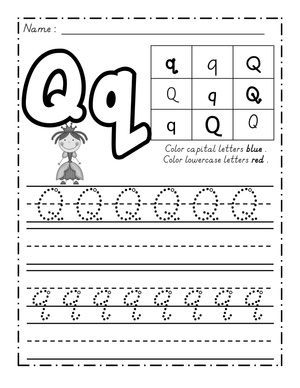
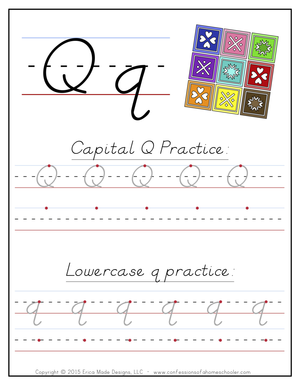
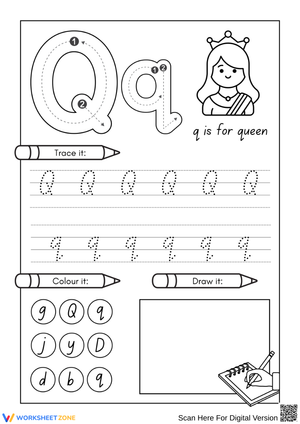
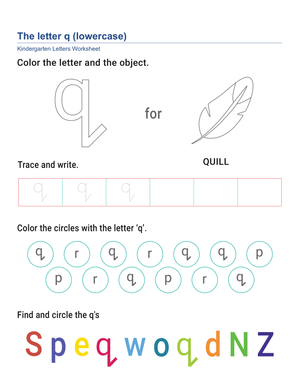
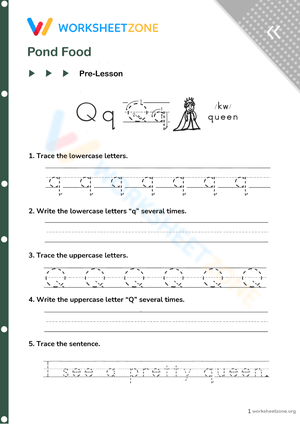
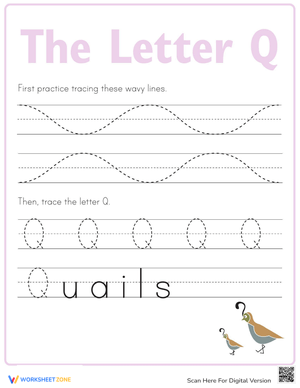
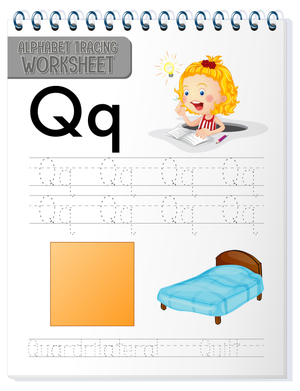
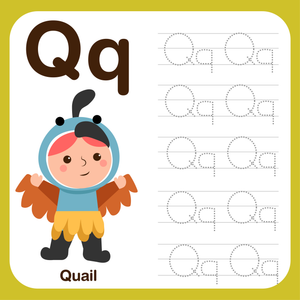
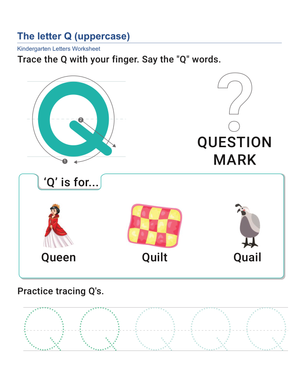
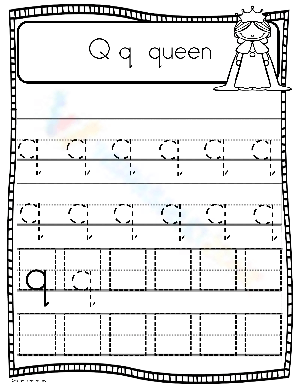
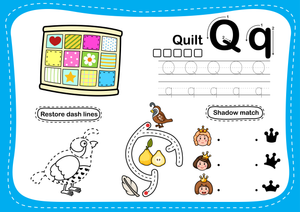
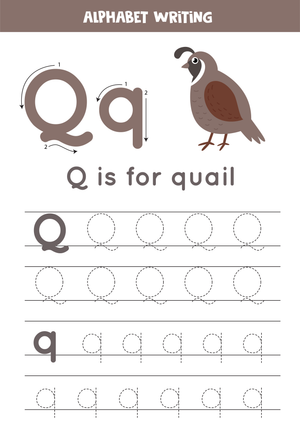
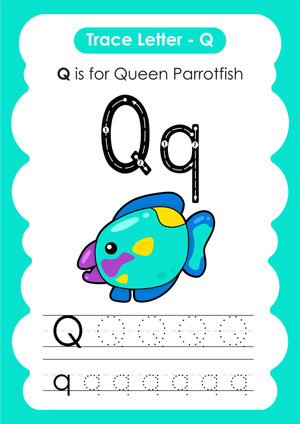
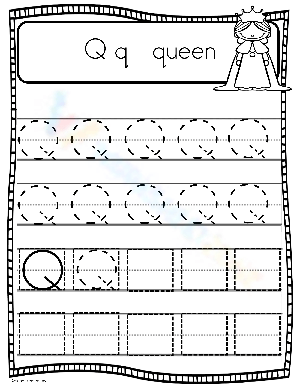
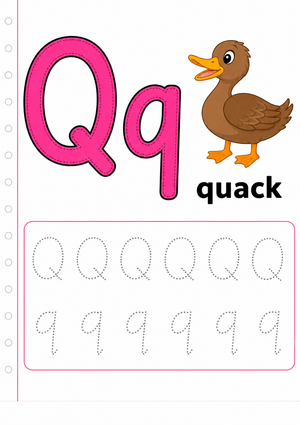
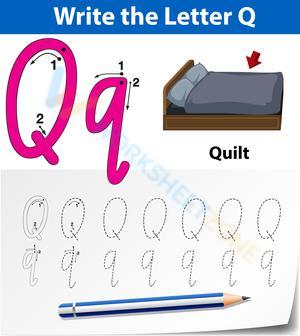
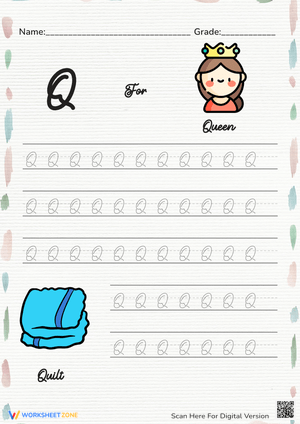
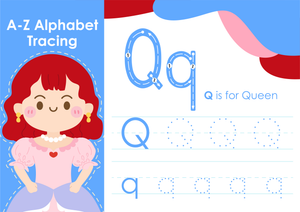
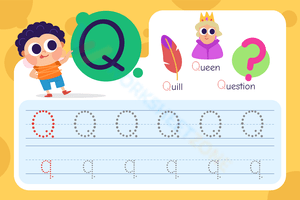
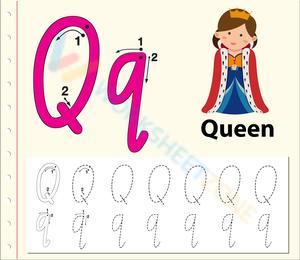
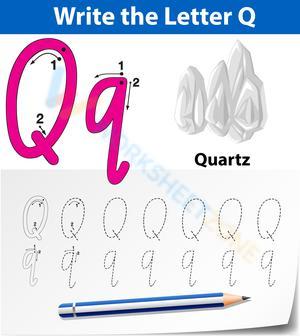
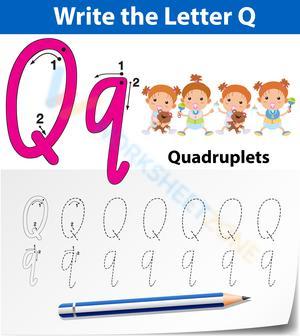
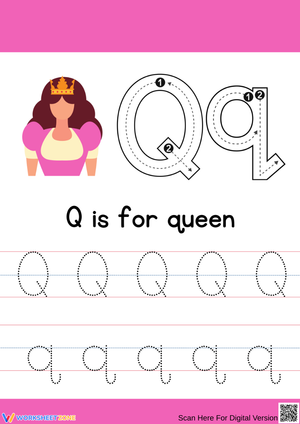
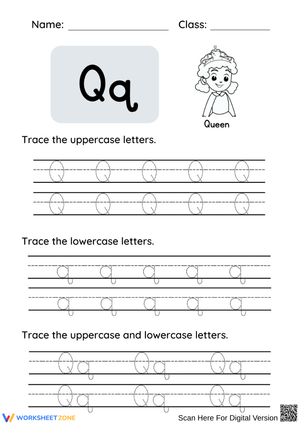
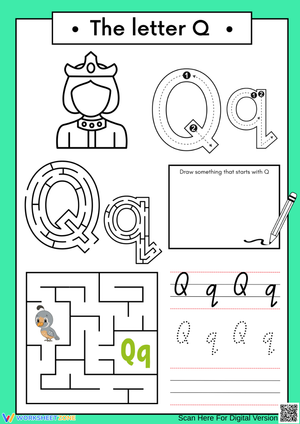
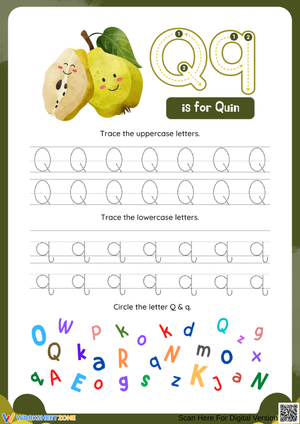
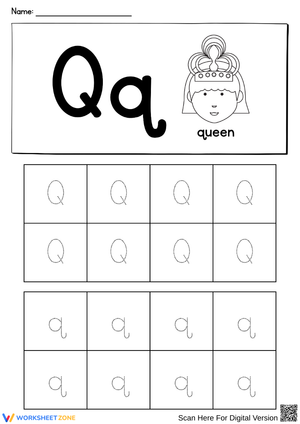
These kindergarten letter q tracing handwriting printable worksheets give teachers a low-prep, high-repetition activity that addresses one of the alphabet's least-practiced letters in a focused, manageable format. Students trace uppercase Q and lowercase q, work on correct stroke order, and begin to distinguish the two forms — all within a short session that fits naturally into morning work, a literacy center, or a small-group pull-out.
What These Worksheets Build
Each worksheet targets a specific cluster of early writing skills. Students trace the uppercase Q, which requires drawing a full circle and then placing a short diagonal line inside the lower right — a two-part stroke that trips up many beginners who try to draw both parts in one continuous motion. Lowercase q demands a different sequence: round part first, then a straight descender pulled below the baseline. That pull-down motion is the same one students use for g, p, and y, but students who have recently practiced lowercase d sometimes rotate it and produce a backward q. Naming this directly, before the habit forms, saves real time later.
Beyond the individual strokes, the worksheets build left-to-right directionality, consistent letter sizing, and the ability to work within a baseline-and-cap-height space. These goals happen simultaneously, through repetition, in a format young writers can navigate independently once the first row has been modeled together.
Frequent Student Errors Worth Watching For and Correcting
The most consistent error with uppercase Q is omitting the small interior line entirely. Students who correctly form the circle portion often treat it as a finished letter — it looks like an O, so they move on. Others do add the line but place it outside the circle, extending it from the bottom-right edge rather than drawing it across the interior. Either version misreads as something else entirely. A quick scan of the first row catches both problems before they repeat across the rest of the worksheet.
With lowercase q, the confusion with d is worth naming explicitly during the lesson. Both letters share the same round shape. The difference is which side the vertical line appears on and whether it descends below the baseline. Students who have not yet internalized this often default to whichever version they formed most recently — if they wrote several lowercase d's the day before, the q is more likely to come out wrong. Thirty seconds with a side-by-side comparison on the board does more than five minutes of verbal explanation.
Fitting These Worksheets Into Your Lesson Plans
The most effective placement for kindergarten letter q tracing handwriting printable worksheets is at the start of a new letter introduction cycle — typically the same day or the day after the letter appears in shared reading or phonics instruction. Students have just heard the letter name and sound; tracing gives motor memory a chance to attach to something they are already building mentally rather than starting cold.
For morning work, the structure earns its place because students know exactly what to do: sit down, pick up the pencil, trace. The directions do not change much from letter to letter, so there is no confusion at the door. In a literacy center, pair one worksheet with a small alphabet card showing Q and q alongside a picture cue. The visual reference reduces mid-rotation interruptions without requiring the teacher to be present.
In small groups, slow the pace considerably. Guide the first row closely — watch pencil grip, starting position, and stroke sequence — then pause and check every student before they continue. This midpoint check takes about ninety seconds and prevents a full worksheet of repeated errors. Students who receive brief, specific praise after that first row — "you started the circle at the top, that's exactly right" — tend to produce noticeably cleaner work on the rows that follow.
Adjusting the Work for a Range of Learners
Students with limited fine motor control benefit from tracing the letters with a finger or a dry-erase marker on a laminated card before they ever pick up a pencil. This step takes under two minutes and reduces the anxiety of making a permanent mark — which some kindergarteners feel sharply. Once they have run through the motion a couple of times, pencil work goes more smoothly and with less hesitation.
For students who move through the tracing rows quickly and accurately, the natural next step is independent writing: cover the dotted model with an index card and write Q and q from memory. If a student can do that reliably, the focus shifts to consistency across multiple letters rather than isolated practice on one. The kindergarten letter q tracing handwriting printable worksheets set still serves these students as a reference and a warm-up, but the assessment target moves forward.
Students who are significantly behind with letter formation may benefit from a hand-over-hand guide through the first attempt, followed immediately by an independent try on the second. This is not about doing the work for them — it is about giving the motor system one clear, correct experience to draw from before asking it to work alone.
Standard Alignment
These worksheets address two foundational standards directly. CCSS.ELA-LITERACY.RF.K.1d asks kindergarteners to recognize and name all upper- and lowercase letters of the alphabet — repeated tracing builds both visual recognition and the ability to distinguish Q from similar-looking letters like O and C. CCSS.ELA-LITERACY.L.K.1a requires students to print many upper- and lowercase letters, making correct stroke formation a grade-level expectation, not a supplemental concern. In practical terms, Q is often assessed later in the kindergarten year when letter-name knowledge is measured, so targeted practice before that window matters.
Frequently Asked Questions
Why is letter Q harder for kindergarteners to learn than most other letters?
Q appears in almost no early high-frequency words and rarely surfaces in the simple CVC words that anchor beginning reading instruction. Students encounter it far less often than M, S, or B, which means their recognition and writing are less practiced through natural exposure alone. The lowercase form also shares its round shape with d, b, and p — the notorious reversal cluster — so distinguishing q requires deliberate attention, not just repeated contact with print.
How many tracing rows should students complete before writing independently?
There is no fixed number, but the pattern that produces the clearest results is several traced rows followed by at least one fully independent attempt on the same worksheet. That independent attempt is the real diagnostic — it tells you whether tracing is translating into motor memory or just producing neat lines that disappear the moment the guide dots are gone. If the independent q looks nothing like the traced version, more structured practice with closer teacher monitoring is needed before moving on.
Can these worksheets help students who are still struggling with pencil grip?
The kindergarten letter q tracing handwriting printable worksheets work best when pencil grip is addressed before the writing begins rather than during it. Stopping mid-trace to correct a grip interrupts both the motor practice and the student's concentration. A brief grip check at the very start of the activity — placing fingers correctly before the pencil touches the paper — takes about ten seconds and produces steadier results throughout the rest of the work.
What is a realistic homework format for these worksheets?
Send one worksheet at a time with a single clear direction: say the letter name, trace the letter, then write it once on the back without looking at the model. Families do not need a detailed explanation of stroke sequence. A brief note — "Q makes the /kw/ sound, like in 'queen'" — gives parents just enough context to reinforce the letter without turning a short tracing task into a confusing multi-step assignment.