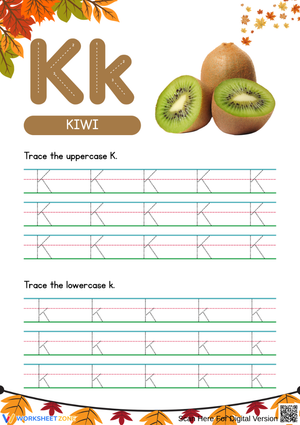
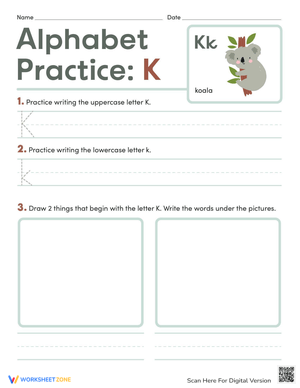
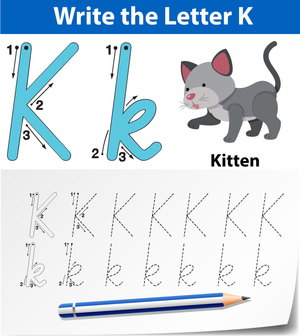
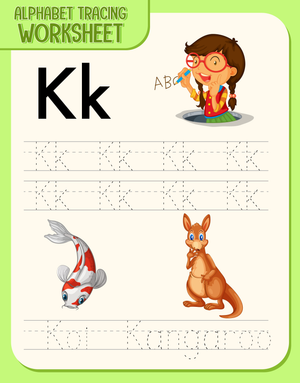
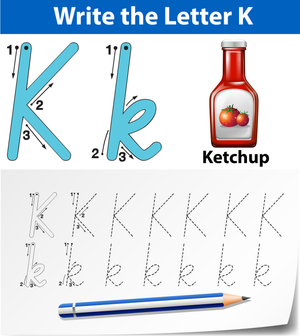
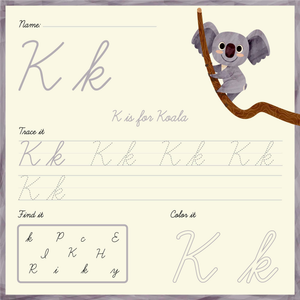
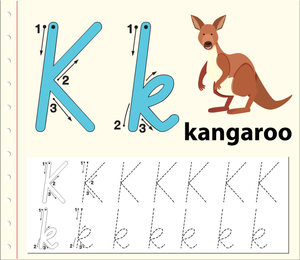
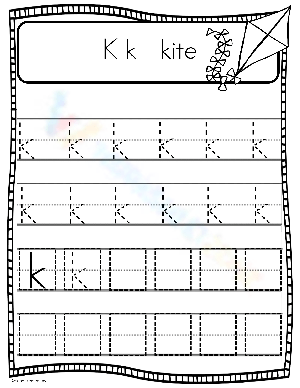
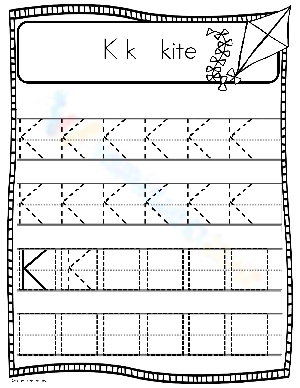
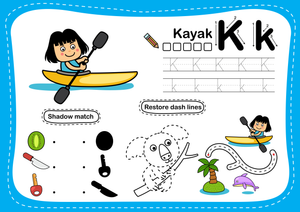
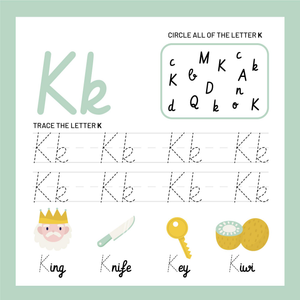
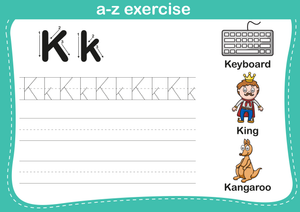
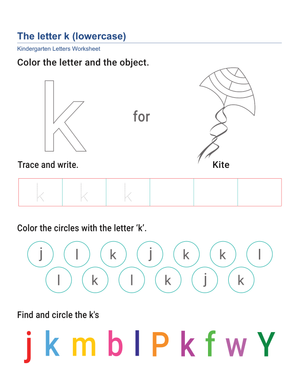
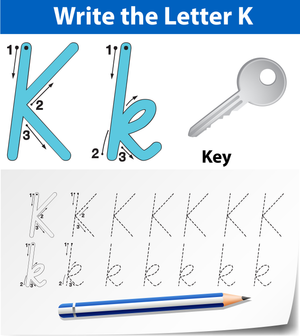
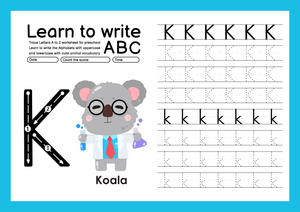
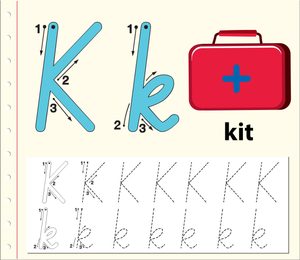
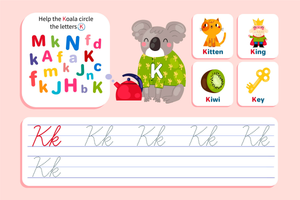
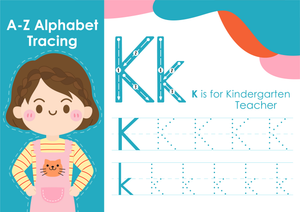
These kindergarten letter k tracing handwriting printable worksheets give teachers a print-and-go option for the daily handwriting block — five minutes of tracing and one independent writing line is enough to build formation habits when the routine stays consistent. Each worksheet targets both uppercase K and lowercase k, keeping the focus tight while giving students direct, repeated exposure to both forms.
What Each Worksheet Builds
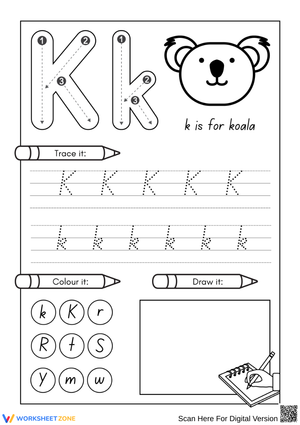
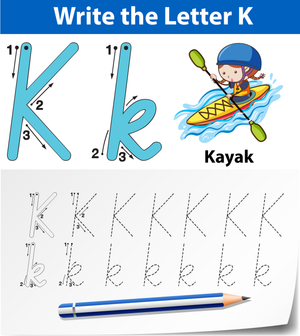
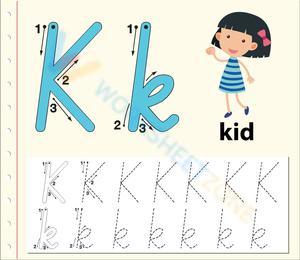
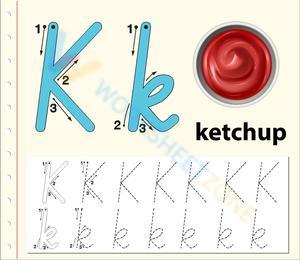
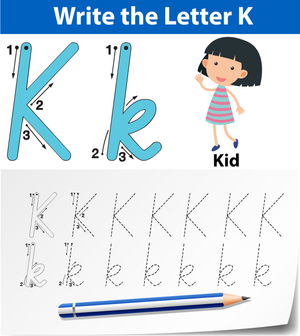
Letter K is one of the more demanding early alphabet letters to form because it requires diagonal strokes. Most kindergarteners arrive more comfortable with vertical and horizontal lines — think L, T, and I — than with the angled movements K demands. The two kick strokes create specific problems in student work: many children draw the upper diagonal correctly but angle the lower one too steeply, producing something that reads closer to a capital R than a K. The worksheets address that directly by showing each stroke in sequence, with clearly marked start points, before students attempt the full letter on their own.
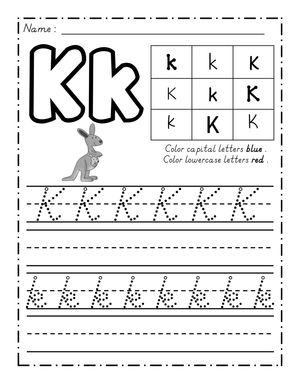
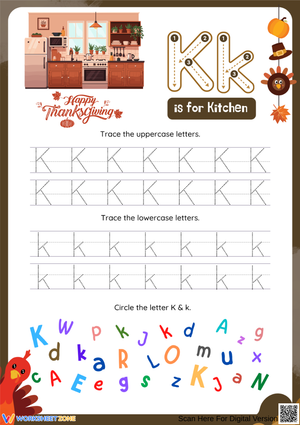
- Uppercase K formation: Students trace the vertical stroke and both diagonal strokes in order before writing the full letter independently.
- Lowercase k formation: The stick stroke and kick strokes are presented separately with directional cues at each start point.
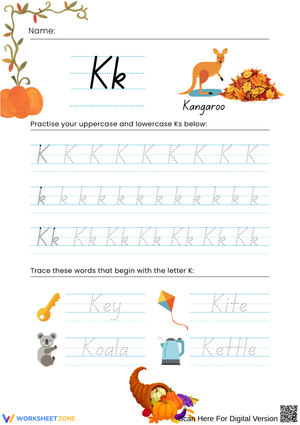
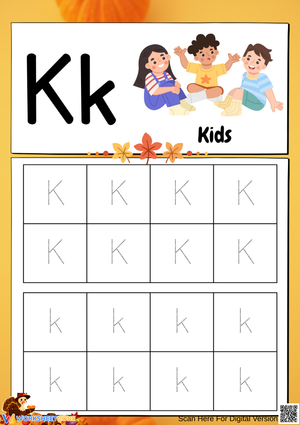
- Case comparison: Both forms appear on each worksheet so students see how K and k relate structurally — similar in stroke type, different in size and meeting point.
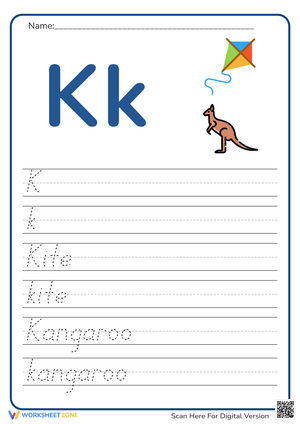
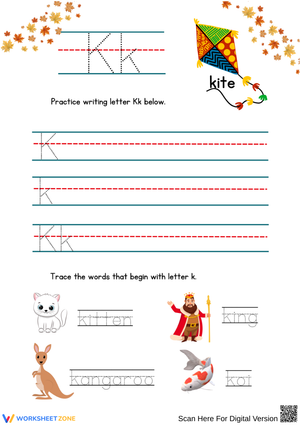
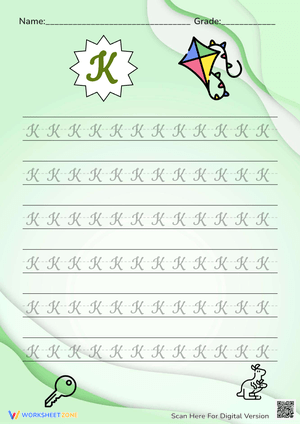
- Letter-sound connection: Picture prompts — kangaroo, key, kite — sit alongside the tracing rows for quick oral review during the writing task.
- Independent production: Every worksheet closes with unguided lines where students write from memory rather than following a trace path.
Frequent Student Errors Worth Watching For
The most consistent error with uppercase K is misdirected diagonals. Students draw the lower kick going up-right instead of down-right, producing something that resembles a partially formed X. This is not a reversal in the traditional sense — it is a stroke-sequence problem — and it is easier to catch early when the worksheet includes a marked start point for each stroke rather than a single directional arrow for the whole letter.
With lowercase k, the breakdown typically happens at the mid-line join. Many children write what functions as a small letter h, rotating it slightly instead of learning the proper meeting point where the two diagonal strokes connect to the vertical stroke. A worksheet that marks that join point — a dot, a small arrow — gives teachers a concrete reference during individual feedback: "Start your kick right at this dot, not above it."
A subtler issue appears in students who recognize K visually but write the diagonal strokes as detached lines, leaving a gap between the kick and the vertical stroke. That gap almost always shows up in the independent writing section, not the tracing rows — which is exactly why the independent section matters as more than extra practice. It is the only place on the worksheet where students have to produce the letter without a trace path to lean on.
How to Work These Worksheets Into Your Week
Morning work is the most reliable placement. One worksheet on each desk when students arrive gives the room a calm, purposeful start and gives the teacher time to handle attendance while children are already writing. The routine eliminates the need for daily verbal directions — students who know to sit down and begin spend more time on actual letter formation.
These kindergarten letter k tracing handwriting printable worksheets also work well in literacy centers when paired with a small set of picture cards sorted by beginning sound. Students find the /k/ pictures first, say the sound aloud, then move to the tracing rows. That sequence earns more phonics repetition without turning the worksheet into a multi-step task requiring constant teacher oversight. Once the routine is established, the center runs without a teacher present.
Small-group time is where targeted instruction pays off most. Sitting across from three or four students and narrating stroke order aloud — "tall stick down, kick from the middle going up-right, kick from the middle going down-right" — gives students a verbal anchor that tracing alone does not provide. Having students repeat that narration while they trace accelerates automaticity, particularly for students who are still building letter-name fluency.
Adjusting the Set for a Range of Learners
For students who need more support before pencil work, laminate one worksheet and have them trace with a finger first. A highlight-then-trace sequence also helps: the student follows the path with a yellow highlighter, then traces over that mark in pencil. This gives two separate motor passes through the stroke sequence without changing what the worksheet asks students to do. Some students also respond well to stroke-by-stroke verbal prompting from the teacher before attempting the full letter on their own.
Students ready for more challenge benefit from a quick extension after the independent writing rows — write one /k/ word from a picture prompt, label a small drawing of a kite, or sort a set of picture cards into /k/ and not-/k/ groups. Some kindergarten letter k tracing handwriting printable worksheets in this set include a small extension box at the bottom, so teachers who want to push advanced students do not need to add anything by hand. That box also keeps faster finishers engaged without pulling them into a separate activity that disrupts the center routine.
Standard Alignment
These worksheets address CCSS.ELA-LITERACY.L.K.1a, which requires kindergarteners to print many upper- and lowercase letters. In most scope-and-sequence plans, Letter K arrives mid-fall — after students have built pencil control on simpler vertical-stroke letters — and sits in a window where diagonal-stroke practice is developmentally timely but still requires substantial repetition before formation becomes automatic. The standard does not differentiate letters by difficulty, but classroom experience makes clear that diagonal-stroke letters like K take longer to stabilize than letters built entirely on vertical and horizontal lines. These worksheets provide the repetition that window demands without requiring additional prep work from the teacher.
Frequently Asked Questions
Should uppercase K and lowercase k appear on the same worksheet?
Putting both forms together is the stronger approach for most kindergarteners. Students at this stage need repeated side-by-side comparison to understand that K and k represent the same letter — that connection is not self-evident at age five or six. If a student freezes when seeing both forms at once, cover the lowercase section during the first attempt and reveal it only after the uppercase rows are finished.
How many tracing repetitions are enough before moving to independent writing?
Four to six deliberate repetitions produce better results than a full row completed quickly. Watch for students who race through the tracing section without lifting their pencil between letters — that habit creates fast, mechanical marks rather than intentional stroke practice. Slowing those students down during the tracing rows almost always improves what appears in the independent writing section at the bottom.
Can these worksheets support handwriting growth tracking?
The independent writing rows at the bottom of each worksheet function as a built-in formative check. Collect completed worksheets over several weeks and compare the independent rows across dates — changes in stroke direction, proportionality, and spacing show up clearly when samples are lined up side by side. These kindergarten letter k tracing handwriting printable worksheets are not a substitute for a formal handwriting assessment, but the independent section gives teachers observable evidence that can shape small-group decisions and parent communication.