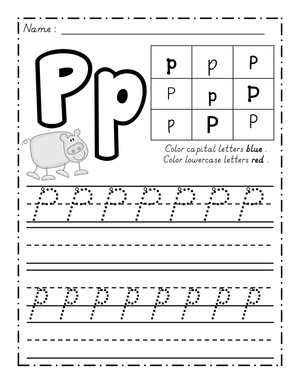
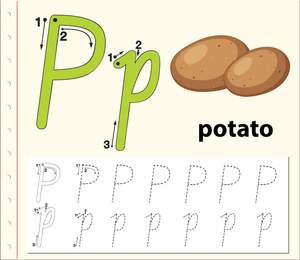
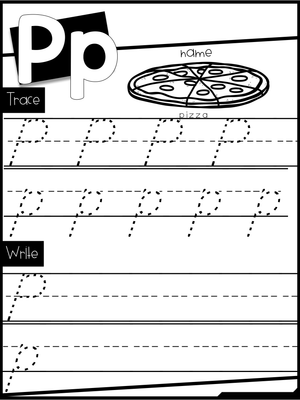
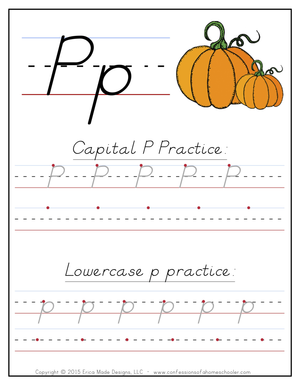
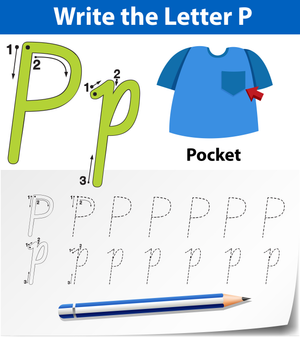
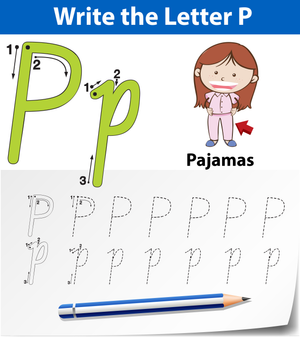
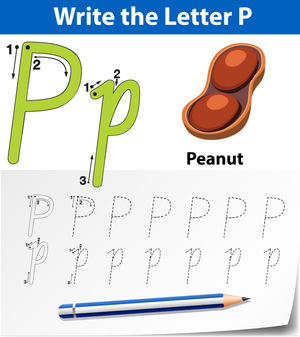
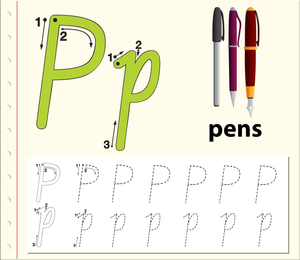
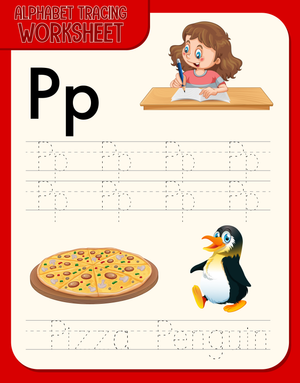
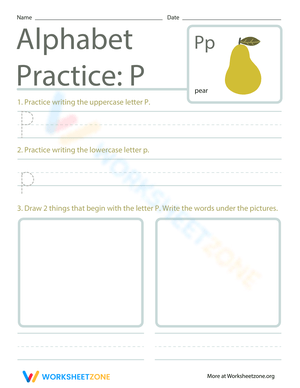
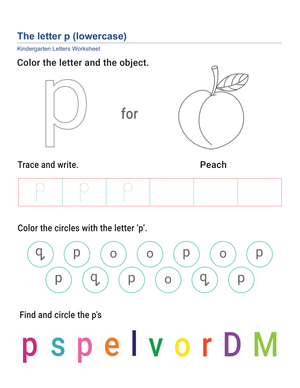
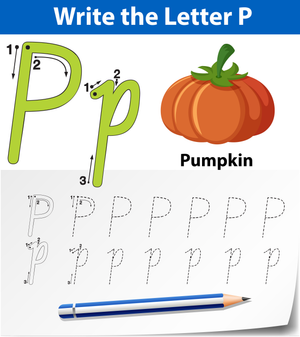
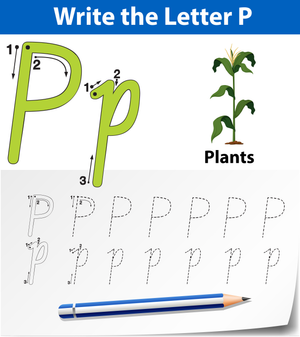
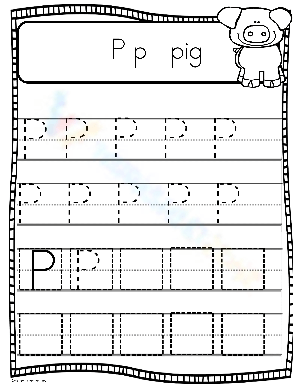
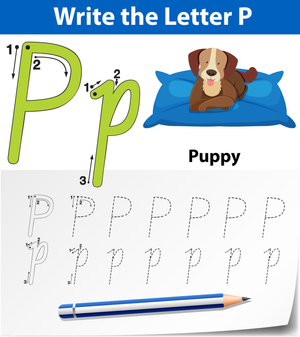
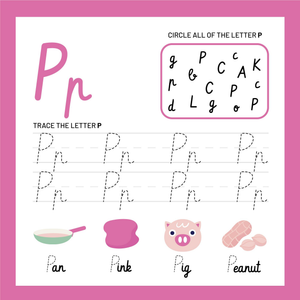
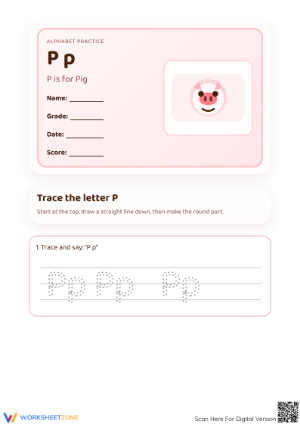
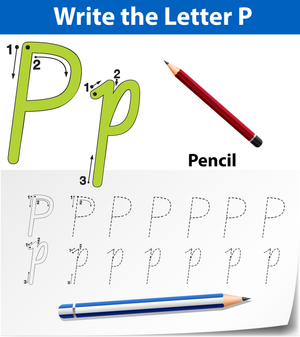
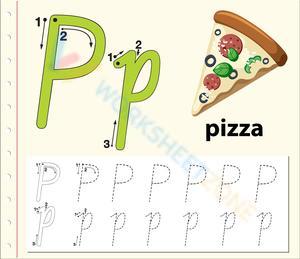
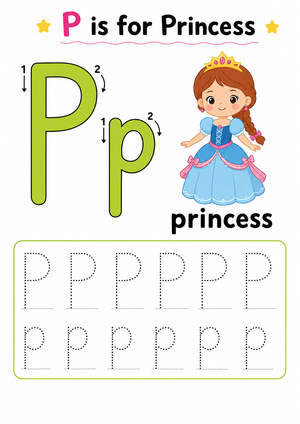
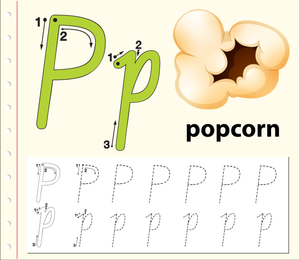
Kindergarten letter p tracing handwriting printable worksheets give students the directed repetition they need to move from tentative marks to confident letter formation — and the letter P is a particularly good target because both forms carry predictable trouble spots that focused practice addresses. Uppercase P and lowercase p look related but behave differently on the line, and students need to work with each form explicitly before those differences register.
What These Worksheets Help Students Build
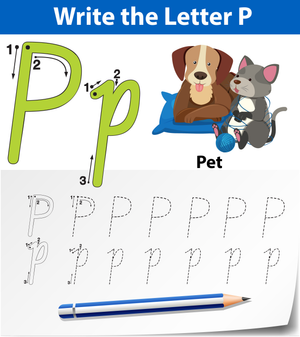
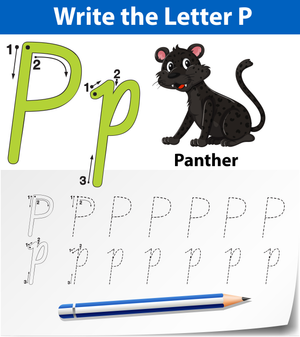
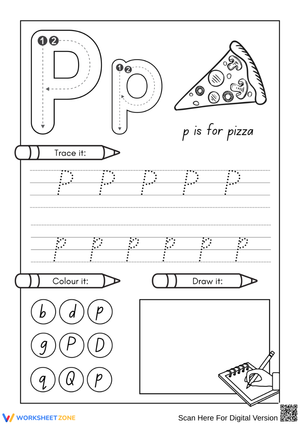
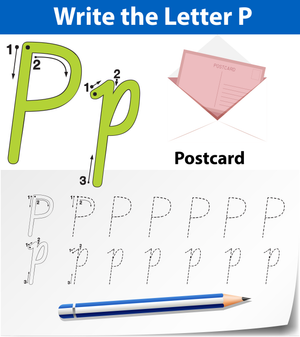
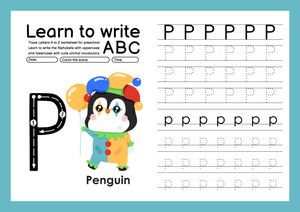
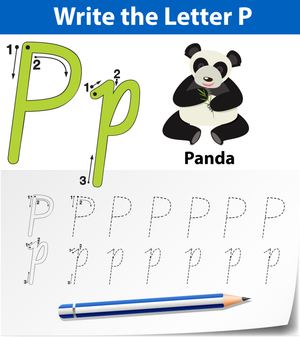
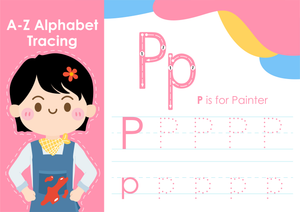
The core work across each worksheet is stroke sequencing: where the pencil starts, which direction it moves, and when to lift. For uppercase P, students practice a straight vertical pull followed by a curved bump that closes at roughly the midline. Lowercase p introduces something new — the vertical stroke drops below the baseline, a fact that surprises many kindergartners who have only worked with letters that sit on or above the line. Tracing gives repeated exposure to that descending stroke before students encounter it in independent writing.
Beyond stroke order, the worksheets build:
- Pencil grip awareness — tracing letters at an appropriate size requires sustained control, which reinforces proper hold without making grip the explicit lesson
- Visual discrimination — seeing P alongside b, d, and q in later lessons is easier when the P form is already automatic
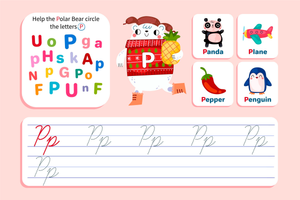
- Letter-sound connection — picture cues for /p/ words on each worksheet let sound work and handwriting reinforce each other in the same sitting
- Transition to independent writing — a row of open lines at the end of each worksheet asks students to write P and p without tracing support, which reveals whether formation has transferred
Student Errors With Letter P Formation That Come Up Almost Every Time
The most common error with uppercase P is an incomplete bump. Students pull the vertical stroke correctly, then draw the curved section without closing it fully at the midpoint — producing something closer to a lollipop than a letter. The fix is to explicitly show where the curve meets the vertical stroke before students trace. Pointing to that meeting point on a large board model and saying "the bump ends here, right in the middle" is usually enough to redirect the habit.
Lowercase p creates a different problem: students frequently flip the bump to the left instead of the right, producing a letter that looks exactly like a lowercase b or d. This is a genuine developmental pattern, not carelessness. The vertical stroke with an attached circle is the same structure in all four letters — p, b, d, and q — and only the circle's position distinguishes them. Tracing with attention to which side the bump appears on helps, but the confusion often persists until students have automatized all four letters separately. Watching for the flipped-bump error in these worksheets gives teachers early information about who may need targeted b/d/p/q comparison work later in the year.
A third error: students start the vertical stroke of lowercase p at the baseline rather than above it, leaving no room for the descender. This produces a p that appears to sit on a platform rather than drop through the line. Demonstrating the starting point clearly — "we start up here, not down here" — and having students touch the correct starting dot before each trace keeps this error manageable.
How to Fit These Worksheets Into Your Teaching Week
During the first week of letter P instruction, one worksheet works well as direct-instruction support: model the stroke order at the board, air-trace as a class, then have students trace their own worksheet while you circulate. That whole sequence runs about eight minutes — short enough to stay inside a literacy block without crowding out word work or read-aloud time.
Later in the week, the same worksheet type works in a literacy center. Set out pencils, the worksheet, and two or three picture cards showing P words. Students trace, name the pictures, then write one word from a class word wall if they're ready. This runs independently and gives you uninterrupted time to pull a small group. On Friday, sending one worksheet home as review closes the week with a familiar, low-pressure task that most families can support without explanation from a note.
Standard Alignment
These worksheets address CCSS.ELA-LITERACY.L.K.1.A, which requires students to print many upper- and lowercase letters. In classroom terms, that standard surfaces in kindergarten from roughly the second month of school onward, once students have worked through basic pencil mechanics and a handful of earlier letters. Letter P typically arrives mid-fall in handwriting programs that group letters by formation similarity — the pull-down stroke places P alongside B, R, and F in many common sequences.
Adjusting These Worksheets Across Student Readiness Levels
Kindergarten letter p tracing handwriting printable worksheets work across a wider readiness range than most teachers expect, because the format allows for low-effort modifications. For students who are just gaining pencil control, have them trace with a thick crayon before switching to a pencil. The heavier tool slows the stroke and reduces fine motor fatigue, keeping the focus on formation rather than grip management.
For students who trace accurately but write inconsistently, cover the dotted letters partway through the worksheet and ask them to complete the remaining rows from memory. That shift from supported tracing to prompted recall is a meaningful increase in difficulty that requires no new materials. Students who have already mastered formation can use the open writing lines for short word practice — writing "pig," "pat," or "pen" from a picture card — while classmates finish tracing. At the opposite end, students with significant fine motor delays benefit from printing the worksheet at 125 percent or on 11x17 paper, which gives them a much bigger target and reduces the precision required before they're developmentally ready for it.
Frequently Asked Questions
How many times should kindergartners trace each letter before writing independently?
There is no universal number, but four to six guided traces before attempting independent formation works for most students. What matters more than count is attention: a student who traces three times with focus and correct starting position benefits more than one who traces eight times while looking around the room. Build in a pause after the tracing rows and ask students to close their eyes and picture the letter before writing it independently — that brief retrieval step strengthens visual memory more than additional tracing does.
Should uppercase P and lowercase p appear on the same worksheet?
Yes, when the worksheet includes clear models of both. Teaching them together lets you highlight what they share — the vertical stroke — and what differs, namely where the bump sits and whether the vertical stroke drops below the baseline. Kindergartners benefit from that direct comparison. Separating them into different sessions risks students treating them as completely unrelated letters, which makes the later side-by-side comparison harder to land.
Can these worksheets support English language learners?
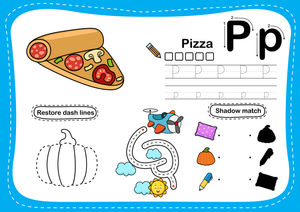
Kindergarten letter p tracing handwriting printable worksheets work well for ELL students because the tracing task itself requires minimal oral language. The picture vocabulary — words like "pizza," "pig," or "pen" — gives ELL students an accessible entry point for the sound connection. Pointing to the picture and repeating the /p/ sound is a simpler demand than producing a verbal explanation, so students participate fully in the handwriting portion even when spoken English is still developing.
When do most kindergartners need less tracing support?
Kindergarten letter p tracing handwriting printable worksheets serve their primary function in the fall and early winter. By late winter, many students write familiar letters from memory without needing dotted guides. A useful check: if a student can produce a recognizable P and p on a blank line after seeing a model for three seconds, they are likely ready to move toward more open-ended writing practice. Students who still reverse or mis-sequence the stroke benefit from continued tracing into spring — the worksheets remain useful without any adjustment other than returning to them.