


























Views
Downloads
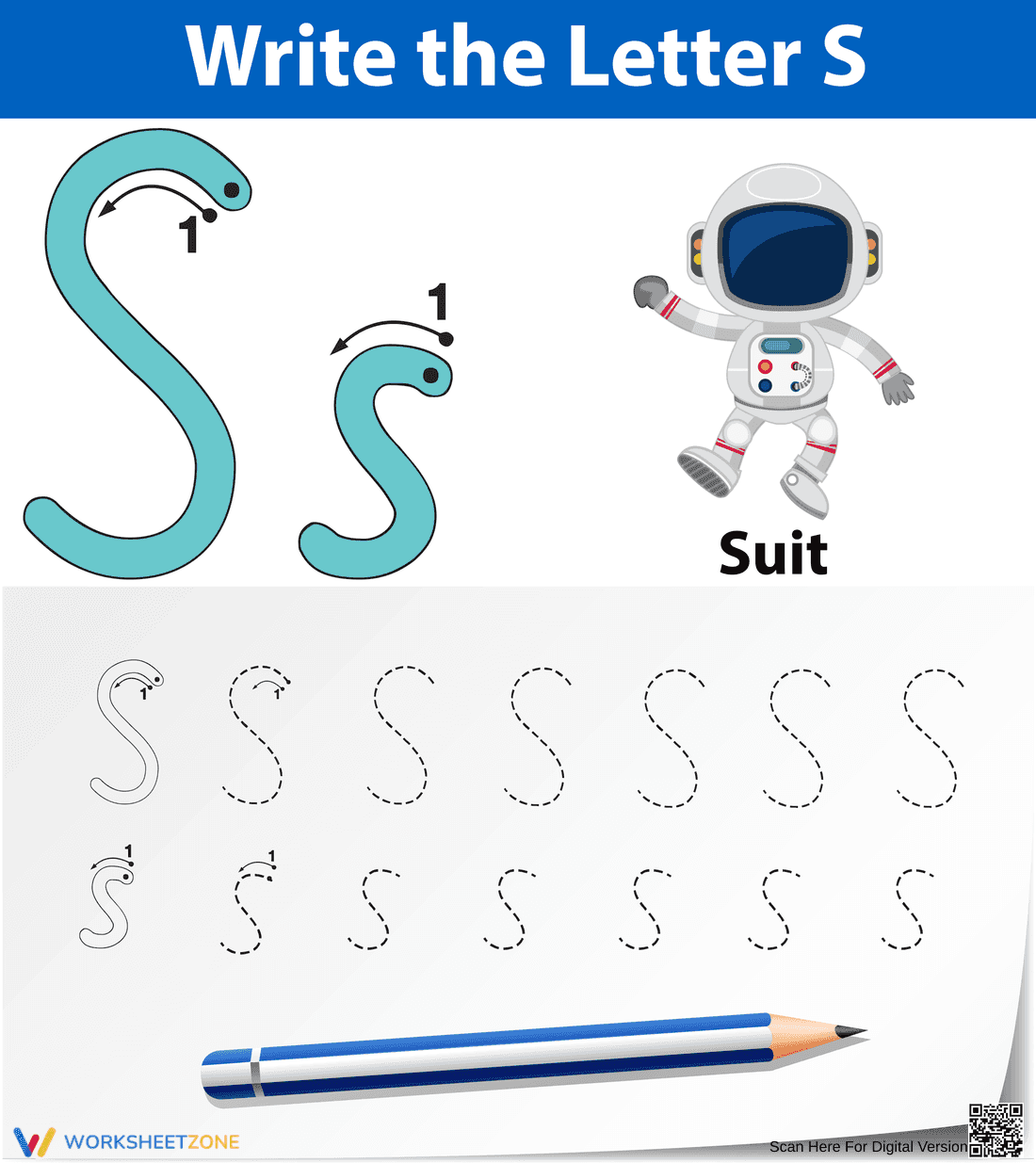

Printable Letter S Tracing Worksheet | Grade K
Paste this activity's link or code into your existing LMS (Google Classroom, Canvas, Teams, Schoology, Moodle, etc.).
Students can open and work on the activity right away, with no student login required.
You'll still be able to track student progress and results from your teacher account.
This printable handwriting worksheet helps early learners master the letter S through guided tracing practice. By following directional arrows and tracing dotted lines, students develop fine motor control and proper letter formation for both uppercase and lowercase letters. The engaging space theme keeps young writers focused and motivated.
At a Glance
- Grade: Kindergarten · Subject: Handwriting
- Standard:
CCSS.ELA-LITERACY.L.K.1.A— Print upper- and lowercase letters- Skill Focus: Letter S formation and tracing
- Format: 1 page · 14 problems · No answer key needed · PDF
- Best For: Independent morning work
- Time: 10–15 minutes
This single-page resource features a large, instructional uppercase and lowercase letter S with numbered directional arrows to model correct stroke order. Below the models, students will find two structured rows containing 14 dotted letters for tracing practice. An astronaut illustration labeled "Suit" provides a helpful visual cue to reinforce the letter's phonetic sound while students work.
Zero-Prep Workflow
This worksheet is designed for immediate classroom use with minimal teacher preparation.
- Print (1 minute): Simply download the PDF and print the required number of copies. The black-and-white dotted lines print clearly on standard paper.
- Distribute (1 minute): Hand out the worksheets along with pencils or crayons. The visual arrows make the task self-explanatory for early readers.
- Review (1 minute): Quickly scan student work to ensure they are starting their strokes at the correct numbered points.
Total teacher prep time is under two minutes, making this an excellent addition to any emergency sub plan or quick transition activity.
Standards Alignment
This handwriting practice aligns directly with CCSS.ELA-LITERACY.L.K.1.A, requiring students to print many upper- and lowercase letters. The structured tracing paths ensure students build the muscle memory necessary to meet this foundational writing standard. Both standard codes can be copied directly into lesson plans, IEP goals, or district curriculum mapping tools.
How to Use It
Deploy this worksheet during morning arrival as a quiet, independent task that settles students into the daily routine. It also functions perfectly as a targeted literacy center activity after direct instruction on the letter S. While students trace, teachers can conduct quick formative assessments by observing pencil grip and stroke direction. Expect students to complete the tracing tasks within 10 to 15 minutes.
Who It's For
This resource is primarily designed for Preschool and Kindergarten students who are developing foundational handwriting skills. It provides excellent fine motor scaffolding for students who struggle with freehand letter formation. Pair this worksheet with a read-aloud book about space or a classroom alphabet anchor chart to reinforce the letter-sound connection.
Mastering foundational handwriting skills, such as those aligned with CCSS.ELA-LITERACY.L.K.1.A to print upper- and lowercase letters, requires consistent and guided repetition. According to Fisher & Frey (2014), providing students with clear visual models and structured practice opportunities significantly improves their ability to transfer isolated skills into independent writing tasks. This letter S tracing worksheet utilizes numbered directional arrows to establish correct motor pathways before students attempt independent formation. By integrating visual cues like the astronaut illustration, the resource also supports dual-coding, linking the physical act of writing with phonetic recognition. Early intervention in letter formation prevents the development of ingrained, inefficient writing habits later in elementary school. Utilizing targeted, single-page practice sheets ensures that young learners receive the precise amount of cognitive load necessary to build automaticity without experiencing task fatigue during their literacy blocks.


