


























Views
Downloads
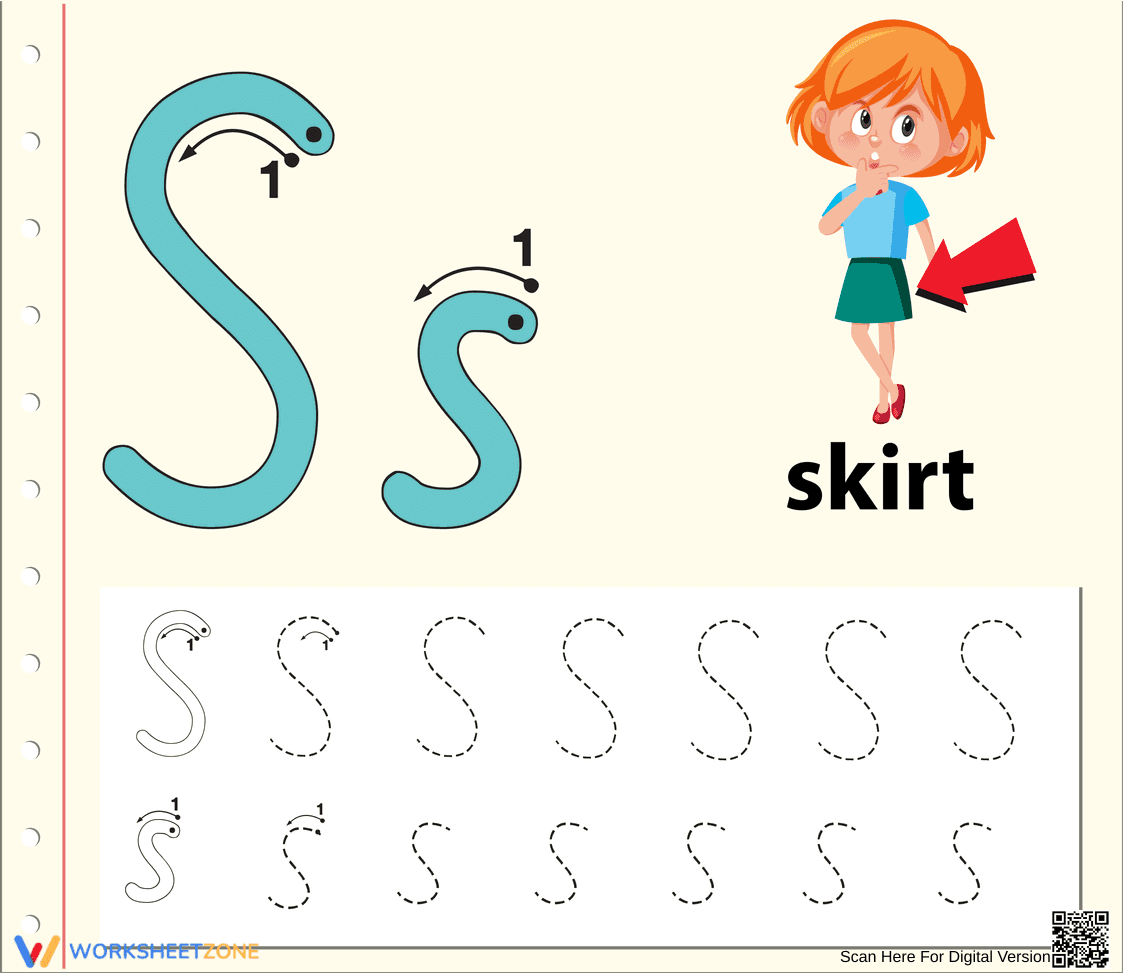

Letter S Tracing Worksheet | Essential Grade K Practice
Paste this activity's link or code into your existing LMS (Google Classroom, Canvas, Teams, Schoology, Moodle, etc.).
Students can open and work on the activity right away, with no student login required.
You'll still be able to track student progress and results from your teacher account.
This Kindergarten Letter S tracing worksheet provides young learners with a structured path to mastering alphabet formation. By combining visual cues with repetitive motor practice, students develop the muscle memory required for neat handwriting. This resource ensures students can confidently identify and write both uppercase and lowercase versions of the letter S.
At a Glance
- Grade: Kindergarten · Subject: Handwriting
- Standard:
CCSS.ELA-LITERACY.L.K.1.A— Print many upper- and lowercase letters- Skill Focus: Letter S formation
- Format: 1 page · 14 problems · Answer key included · PDF
- Best For: Morning work or literacy centers
- Time: 10–15 minutes
Inside this single-page PDF, you will find a large-format visual guide for the letter S, featuring numbered directional arrows to assist with proper stroke order. The worksheet includes 7 uppercase tracing tasks and 7 lowercase tracing tasks. A "skirt" illustration provides a phonics connection, helping students link the letter shape to its initial sound in a familiar word.
This resource is designed for a zero-prep classroom workflow. First, print the single-page PDF (30 seconds). Next, distribute the sheets to students during your phonics or handwriting block (1 minute). Finally, review the letter formation by observing student stroke order in real-time or checking the completed page (30 seconds). Total teacher preparation time is under two minutes.
This worksheet is aligned with CCSS.ELA-LITERACY.L.K.1.A, which requires students to print many upper- and lowercase letters. It specifically targets the fine motor control needed for the curved strokes of the letter S. This standard code can be copied directly into lesson plans, IEP goals, or district curriculum mapping tools.
Use this worksheet as a formative assessment during the "You Do" phase of a gradual release lesson. As students work through the 14 tracing tasks, circulate to ensure they are following the numbered arrows rather than drawing the letter from bottom to top. It also serves as an excellent quiet activity for early finishers or a simple homework assignment.
This practice page is ideal for preschool, kindergarten, and first-grade students who are developing foundational literacy skills. It is particularly helpful for learners who require extra visual support, such as those with occupational therapy goals. Pair this with a tactile sand tray or an alphabet anchor chart for a multi-sensory experience.
Research from Fisher & Frey (2014) emphasizes the importance of guided practice in the gradual release of responsibility model, particularly for foundational skills like handwriting. This worksheet facilitates that transition by providing clear visual scaffolds—numbered arrows and dashed lines—that reduce cognitive load while students focus on motor precision. According to the RAND AIRS 2024 report, consistent, short-burst practice of letter formation is more effective for long-term retention than infrequent, long-duration sessions. By focusing on 14 specific tasks for the letter S, this resource aligns with evidence-based instructional design that prioritizes mastery of individual characters before moving to word-level writing. The inclusion of the CCSS.ELA-LITERACY.L.K.1.A standard ensures that the activity meets rigorous academic expectations for early childhood education, providing a reliable tool for teachers to document student progress toward essential literacy milestones.


