




























Views
Downloads
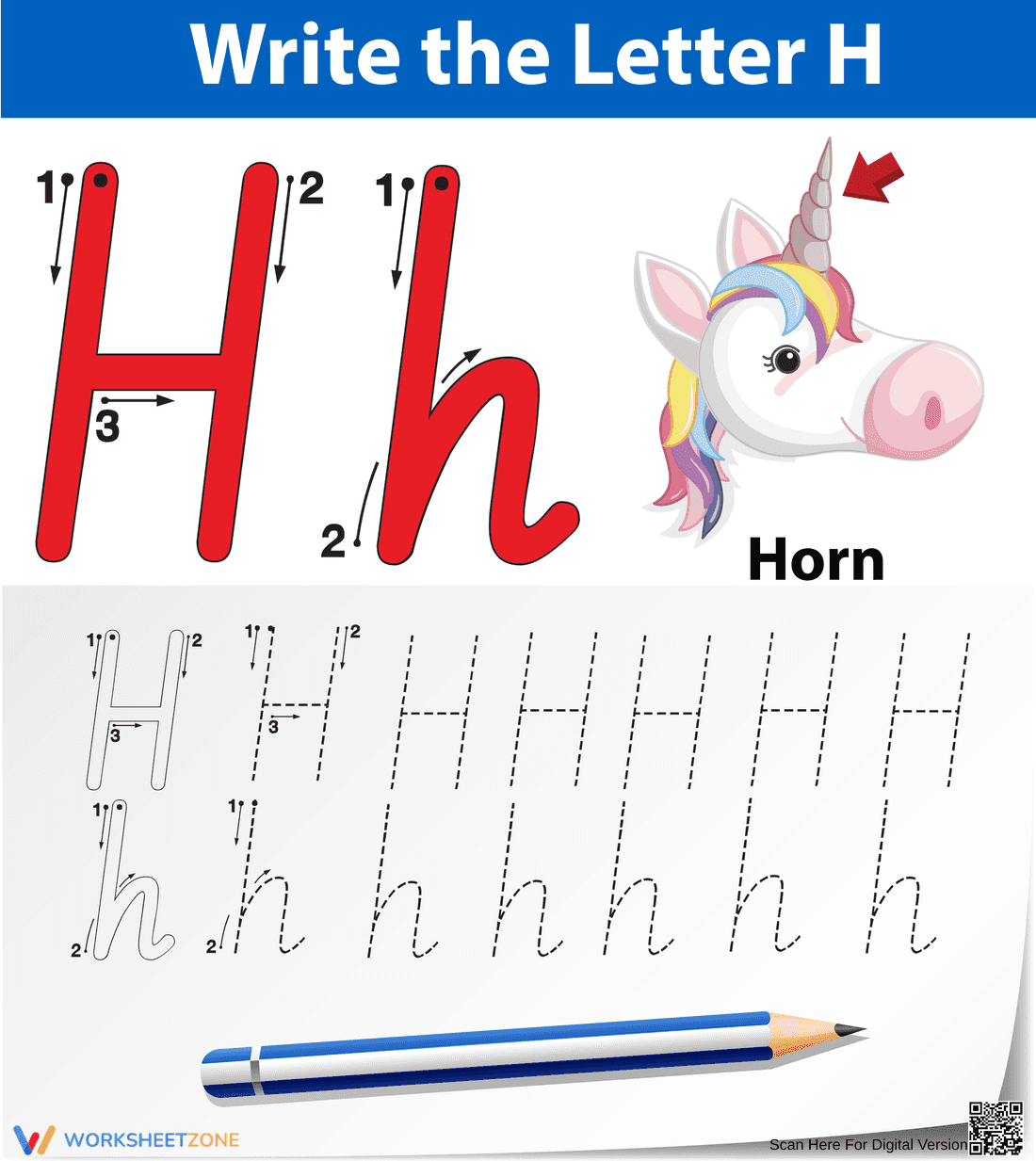

Letter H Tracing Worksheet | Printable Kindergarten ELA

Paste this activity's link or code into your existing LMS (Google Classroom, Canvas, Teams, Schoology, Moodle, etc.).
Students can open and work on the activity right away, with no student login required.
You'll still be able to track student progress and results from your teacher account.
This foundational handwriting worksheet helps early learners master the letter H through guided, numbered stroke practice. By tracing both uppercase and lowercase forms, students develop essential fine motor control and letter formation habits. The engaging unicorn theme keeps young writers focused while they build critical alphabet recognition skills.
At a Glance
- Grade: Kindergarten · Subject: English Language Arts
- Standard:
CCSS.ELA-LITERACY.L.K.1.A— Print upper- and lowercase letters- Skill Focus: Letter H Tracing
- Format: 1 page · 16 problems · No answer key · PDF
- Best For: Independent practice centers
- Time: 10–15 minutes
This single-page printable features a large instructional model at the top, demonstrating the exact stroke order for the letter H with clear directional arrows. Below the model, students will find two dedicated practice rows containing 16 total tracing opportunities—eight for the uppercase H and eight for the lowercase h. The dashed lines provide structured guidance to ensure proper proportion and alignment.
Zero-Prep Workflow
This resource is designed for immediate classroom implementation with minimal teacher setup:
- Print (1 minute): Generate the PDF and print a class set directly from your device.
- Distribute (1 minute): Hand out the sheets along with standard pencils or primary crayons.
- Review (1 minute): Briefly model the numbered strokes on the board before letting students begin.
With under three minutes of total prep time, this worksheet is an excellent addition to emergency sub plans or morning work folders.
Standards Alignment
This handwriting practice aligns directly with CCSS.ELA-LITERACY.L.K.1.A, which requires students to print many upper- and lowercase letters. The structured stroke order also supports foundational writing mechanics necessary for early literacy development. Both standard codes can be copied directly into lesson plans, IEP goals, or district curriculum mapping tools.
How to Use It
Deploy this worksheet during morning work routines to establish a calm, focused start to the school day. It also functions perfectly as a literacy center activity where students can practice letter formation independently. While students are tracing, teachers can conduct quick formative assessments by observing their pencil grip and stroke direction, correcting any reversed movements early. Expect most kindergarteners to complete the page in 10 to 15 minutes.
Who It's For
This resource is primarily designed for kindergarten students mastering their alphabet, but it serves equally well for preschool students ready for formal writing or first graders needing remediation. For students requiring extra tactile support, consider placing the printed sheet inside a dry-erase sleeve for repeated practice. Pair this activity with a read-aloud focusing on "H" words to reinforce the phonetic connection.
Effective handwriting instruction remains a critical component of early literacy, directly impacting a child's ability to express ideas fluently. According to a comprehensive review by Fisher & Frey (2014), explicit instruction in letter formation, such as the numbered stroke guidance provided here, significantly reduces cognitive load during early writing tasks. When students can automatically recall how to form letters, they free up working memory to focus on vocabulary and sentence structure. This resource supports that automaticity by targeting CCSS.ELA-LITERACY.L.K.1.A, ensuring students can accurately print upper- and lowercase letters. By isolating the letter H and providing repeated, guided practice, educators can build the foundational motor memory required for long-term writing success. Consistent, structured tracing activities like this one bridge the gap between visual letter recognition and physical letter production.


