




























Views
Downloads
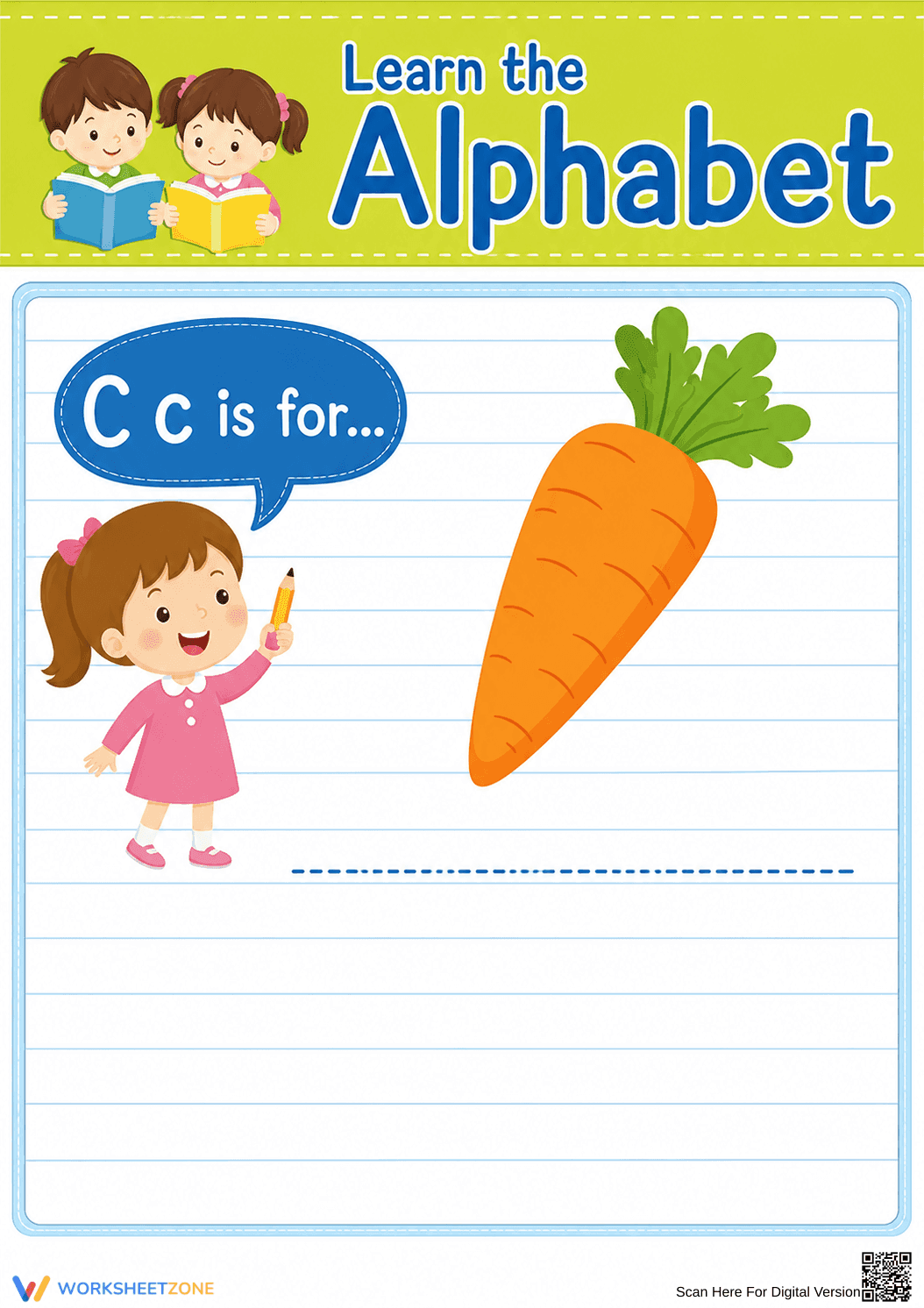

Grade K Letter C Sounds — Printable No-Prep Worksheet

Paste this activity's link or code into your existing LMS (Google Classroom, Canvas, Teams, Schoology, Moodle, etc.).
Students can open and work on the activity right away, with no student login required.
You'll still be able to track student progress and results from your teacher account.
This foundational phonics worksheet helps early learners master the beginning sound of the letter C. Students identify the initial consonant sound represented by a familiar image and practice writing the corresponding word. This targeted activity builds essential phonemic awareness and handwriting skills required for early reading success.
At a Glance
- Grade: K · Subject: ELA
- Standard:
CCSS.ELA-LITERACY.RF.K.3.A— Produce primary sounds for consonants- Skill Focus: Letter C beginning sound
- Format: 1 page · 1 problem · No answer key · PDF
- Best For: Independent phonics practice
- Time: 5–10 minutes
Inside this single-page resource, educators will find a clear phonics exercise centered on the letter C. The page features a large illustration of a carrot alongside a speech bubble prompting "C c is for...". Below the image, primary handwriting lines provide structured space for students to practice writing the word "carrot" or tracing the letter C. The layout is intentionally uncluttered to minimize distractions.
Zero-Prep Workflow
- Print (1 minute): Simply download the PDF and print the required number of copies. The high-contrast design ensures clear reproduction even in black and white.
- Distribute (1 minute): Hand out the worksheets along with pencils or crayons. No additional manipulatives or teacher setup are required.
- Review (3 minutes): Quickly check student work for correct letter formation and sound identification. Total teacher prep time is under two minutes, making this an excellent option for emergency sub plans or morning work.
Standards Alignment
This resource aligns directly with CCSS.ELA-LITERACY.RF.K.3.A, requiring students to demonstrate basic knowledge of one-to-one letter-sound correspondences by producing the primary sound or many of the most frequent sounds for each consonant. It also supports early handwriting standards by providing guided lines for letter formation. Both standard codes can be copied directly into lesson plans, IEP goals, or district curriculum mapping tools.
How to Use It
Deploy this worksheet during morning work routines to activate prior knowledge of alphabet sounds before formal phonics instruction. Alternatively, use it as an independent literacy center activity where students practice letter formation. As a formative assessment tip, observe students while they write to ensure correct pencil grip and top-line starting points. Expected completion time is five to ten minutes.
Who It's For
This worksheet is designed for Kindergarten students developing early phonemic awareness and handwriting skills. It also serves as a helpful review for first-grade students who need extra reinforcement with initial consonant sounds. For differentiation, teachers can provide a word bank or write the word in yellow highlighter for students needing tracing support. Pair this activity with a read-aloud book featuring words that start with the letter C to reinforce the sound in context.
Mastering initial consonant sounds is a critical milestone in early literacy development. According to a comprehensive EdReports 2024 analysis of foundational reading programs, explicit instruction in letter-sound correspondence significantly accelerates decoding proficiency in primary grades. This worksheet directly supports CCSS.ELA-LITERACY.RF.K.3.A by requiring students to produce primary sounds for consonants, specifically focusing on the hard C sound. By combining visual cues with physical handwriting practice, the activity engages multiple learning modalities to solidify phonemic retention. Early intervention and consistent practice with targeted resources like this one build the automaticity necessary for fluent reading. Educators can rely on this evidence-based approach to strengthen their phonics curriculum, support diverse learning needs, and ensure students develop the robust phonetic foundation required for long-term academic achievement across all subject areas.


