




























Views
Downloads
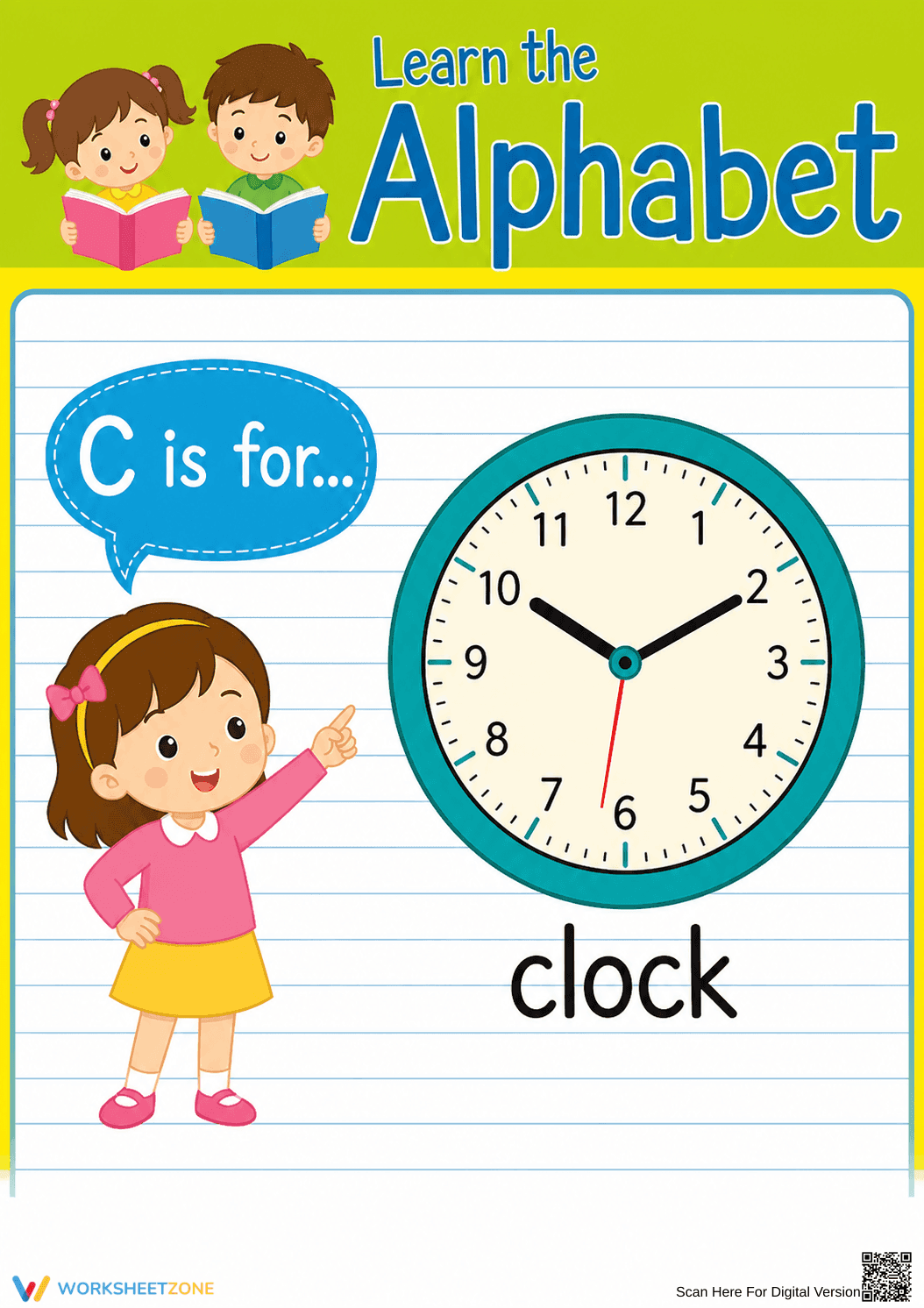

Letter C Beginning Sound Worksheet | Grade K-2 Essential

Paste this activity's link or code into your existing LMS (Google Classroom, Canvas, Teams, Schoology, Moodle, etc.).
Students can open and work on the activity right away, with no student login required.
You'll still be able to track student progress and results from your teacher account.
This Grade K-2 phonics resource provides a clear visual anchor for students to master the beginning sound of the letter C. By connecting the grapheme to a familiar object like a clock, learners develop the phonemic awareness necessary for early reading success. It serves as a foundational tool for letter-sound correspondence.
At a Glance
- Grade: K-2 · Subject: ELA
- Standard:
CCSS.ELA-LITERACY.RF.K.3.A— Produce the primary sound for each consonant through letter-sound correspondence.- Skill Focus: Beginning Sound Letter C
- Format: 1 page · 1 task · Visual anchor included · PDF
- Best For: Phonics introduction and visual reference
- Time: 5–10 minutes
This single-page visual aid features a large, colorful illustration of a clock paired with the lowercase word and the uppercase letter C. The high-contrast design and ruled background mimic classroom writing paper, helping students associate the letter sound with its written form. It functions as both a worksheet and a classroom poster.
Zero-Prep Workflow
- Print: Generate the high-resolution PDF in under 30 seconds for immediate use.
- Distribute: Hand out to students or display on a smartboard in less than 1 minute.
- Review: Spend 1 minute modeling the /k/ sound using the "C is for clock" visual anchor.
Total teacher preparation time is under 2 minutes, making this an ideal resource for morning work, literacy centers, or emergency sub plans.
Standards Alignment
This resource aligns with `CCSS.ELA-LITERACY.RF.K.3.A`: "Demonstrate basic knowledge of one-to-one letter-sound correspondences by producing the primary sound or many of the most frequent sounds for each consonant." It also supports RF.1.3. Both standard codes can be copied directly into lesson plans, IEP goals, or district curriculum mapping tools.
How to Use It
Use this as a focal point during a "Letter of the Week" circle time to introduce the hard /k/ sound. Alternatively, print copies for student phonics binders to serve as a permanent reference during independent writing blocks. Teachers can observe if students can independently name the object and isolate the initial sound, taking about 5-10 minutes.
Who It's For
This worksheet is designed for Kindergarten through Grade 2 students, particularly those in the emergent reader stage. It is highly effective for English Language Learners (ELL) who benefit from the direct image-to-word association. Pair this with a letter C tracing sheet or a physical clock for a multi-sensory learning experience.
According to the RAND AIRS 2024 report on early literacy, visual anchors that pair high-frequency vocabulary with specific graphemes significantly accelerate phonemic acquisition in Grade K-2 learners. This worksheet targets CCSS.ELA-LITERACY.RF.K.3.A by providing a concrete representation of the letter C beginning sound through the word "clock." Research indicates that consistent exposure to these one-to-one correspondences builds the decoding stamina required for more complex text interactions. By isolating the initial sound in a clear, uncluttered format, the resource reduces cognitive load, allowing students to focus entirely on the phonological task. This alignment with evidence-based practices ensures that students move from simple recognition to active production of consonant sounds. Educators can utilize this tool to bridge the gap between letter identification and fluent reading, providing a reliable reference point for early childhood literacy development. The integration of visual cues with written text supports long-term retention of phonics rules in diverse classroom settings.


