


























Views
Downloads
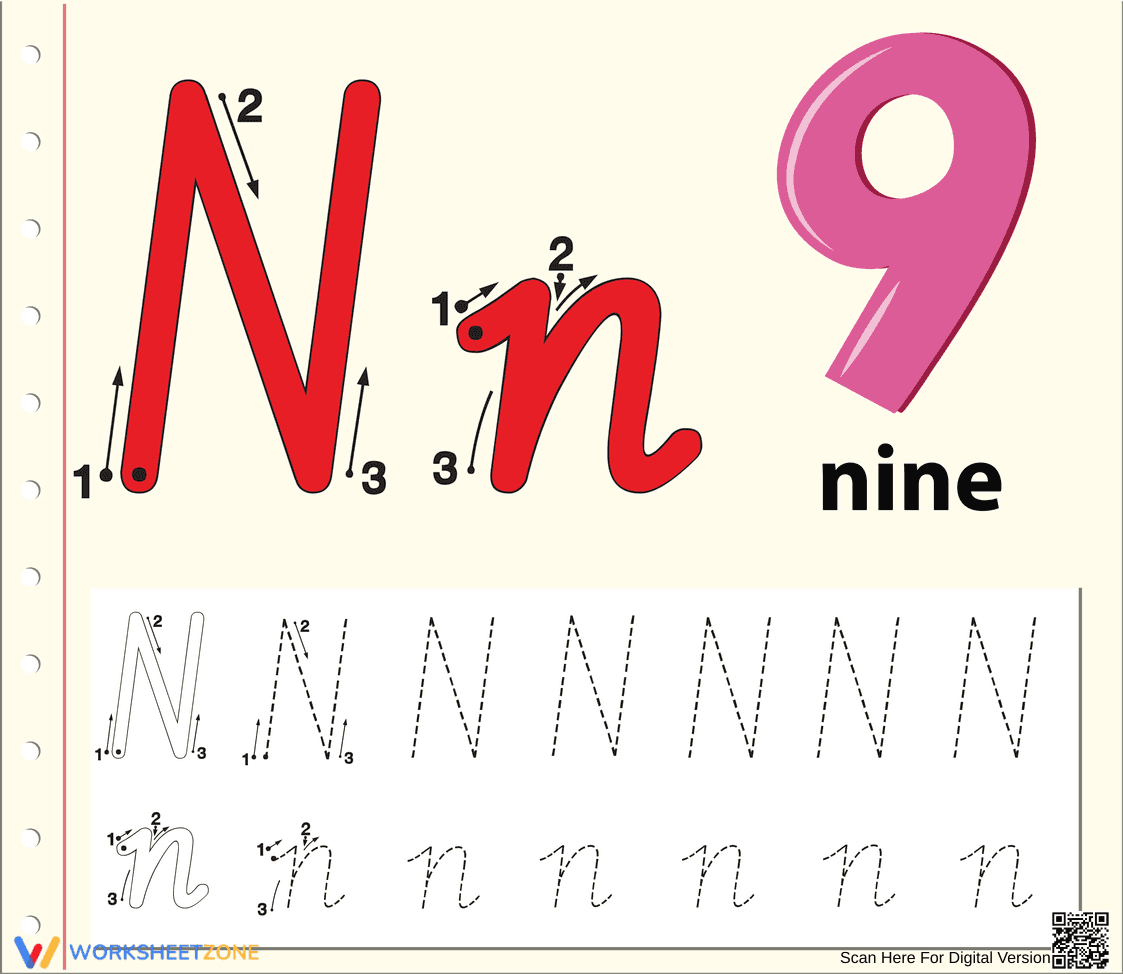

Kindergarten Letter N Tracing — Printable Worksheet
Paste this activity's link or code into your existing LMS (Google Classroom, Canvas, Teams, Schoology, Moodle, etc.).
Students can open and work on the activity right away, with no student login required.
You'll still be able to track student progress and results from your teacher account.
This Kindergarten handwriting worksheet provides targeted practice for forming the letter N. Students trace both uppercase and lowercase letters using guided directional arrows, building essential fine motor skills and letter recognition. The visual connection to the number nine reinforces early vocabulary while establishing proper stroke mechanics.
At a Glance
- Grade: Kindergarten · Subject: Handwriting
- Standard:
CCSS.ELA-LITERACY.L.K.1.A— Print many upper- and lowercase letters- Skill Focus: Letter N Tracing
- Format: 1 page · 14 problems · No answer key needed · PDF
- Best For: Independent practice and centers
- Time: 5–10 minutes
Inside this single-page resource, educators will find a clear, structured layout designed for early learners. The top section features large, color-coded examples of uppercase and lowercase N with numbered directional arrows to guide pencil strokes. A vibrant illustration of the number nine provides a helpful mnemonic anchor. Below, students complete 14 dashed-line tracing tasks—seven uppercase and seven lowercase—allowing for immediate application of the demonstrated letter formation techniques.
This resource is designed for immediate classroom implementation with a streamlined zero-prep workflow. First, print the PDF (under 30 seconds). Second, distribute the pages to student desks or literacy centers (1 minute). Third, review the directional arrows briefly before students begin (1 minute). Total teacher preparation requires less than two minutes. The intuitive design makes it an excellent addition to emergency sub plans, as guest teachers can easily facilitate the activity without prior setup.
This activity aligns directly with CCSS.ELA-LITERACY.L.K.1.A, requiring students to print many upper- and lowercase letters accurately. By following the explicit stroke sequences, young learners develop the foundational handwriting habits necessary for fluent written expression. Both standard codes can be copied directly into lesson plans, IEP goals, or district curriculum mapping tools.
Teachers can deploy this worksheet during morning work routines to establish a calm, focused start to the day. Alternatively, it serves as an effective station activity during small-group literacy blocks. As a formative assessment tip, observe students while they trace the first few letters to ensure they are starting at the top line and following the numbered arrows, rather than drawing from the bottom up. Most kindergarteners will complete this task within a 5 to 10-minute timeframe.
This printable is ideal for Kindergarten and Preschool students who are developing basic handwriting proficiency. It provides necessary scaffolding for learners struggling with fine motor control or letter reversals. For a comprehensive lesson, pair this tracing sheet with a read-aloud book featuring prominent "N" vocabulary or an anchor chart displaying words that begin with the target letter.
Explicit handwriting instruction, such as the guided tracing provided in this resource, plays a critical role in early literacy development. Aligned with CCSS.ELA-LITERACY.L.K.1.A, which requires students to print many upper- and lowercase letters, this activity builds automaticity in letter formation. According to a RAND AIRS 2024 report on foundational skills, students who receive systematic handwriting practice demonstrate improved spelling accuracy and written composition fluency in later grades. When children do not have to expend cognitive energy on the physical act of forming letters, they can allocate more working memory to generating ideas and applying phonics rules. This targeted letter N practice ensures that students internalize the correct stroke sequences early, preventing the formation of inefficient habits that can hinder writing speed and legibility as academic demands increase over time.


